 Add to Chrome
 Add to Firefox
 Add to Edge
EchoingPixels: Cross-Modal Adaptive Token Reduction for Efficient Audio-Visual LLMs
Dec 11, 2025
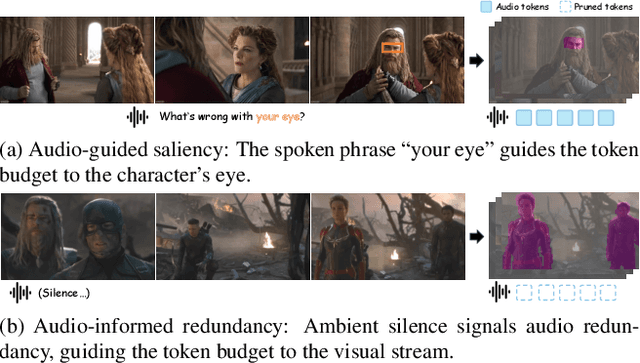
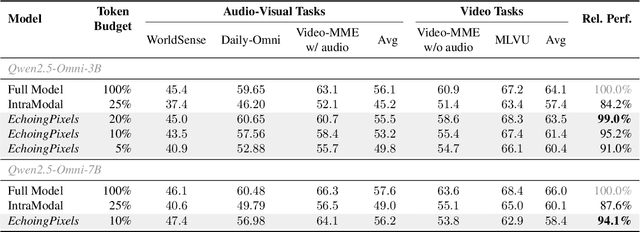
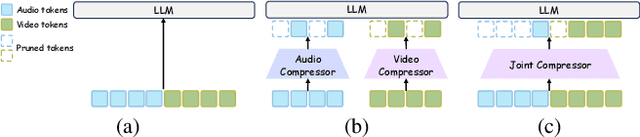
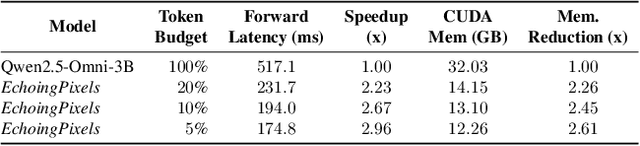
Audio-Visual Large Language Models (AV-LLMs) face prohibitive computational overhead from massive audio and video tokens. Token reduction, while extensively explored for video-only LLMs, is insufficient for the audio-visual domain, as these unimodal methods cannot leverage audio-visual cross-modal synergies. Furthermore, the distinct and dynamic information densities of audio and video render static budgets per modality suboptimal. How to perform token reduction on a joint audio-visual stream thus remains an unaddressed bottleneck. To fill this gap, we introduce EchoingPixels, a framework inspired by the coexistence and interaction of visuals and sound in real-world scenes. The core of our framework is the Cross-Modal Semantic Sieve (CS2), a module enabling early audio-visual interaction. Instead of compressing modalities independently, CS2 co-attends to the joint multimodal stream and reduces tokens from an entire combined pool of audio-visual tokens rather than using fixed budgets per modality. This single-pool approach allows it to adaptively allocate the token budget across both modalities and dynamically identify salient tokens in concert. To ensure this aggressive reduction preserves the vital temporal modeling capability, we co-design a Synchronization-Augmented RoPE (Sync-RoPE) to maintain critical temporal relationships for the sparsely selected tokens. Extensive experiments demonstrate that EchoingPixels achieves performance comparable to strong baselines using only 5-20% of the original tokens, with a 2-3x speedup and memory reduction.

GrOCE:Graph-Guided Online Concept Erasure for Text-to-Image Diffusion Models
Nov 17, 2025Concept erasure aims to remove harmful, inappropriate, or copyrighted content from text-to-image diffusion models while preserving non-target semantics. However, existing methods either rely on costly fine-tuning or apply coarse semantic separation, often degrading unrelated concepts and lacking adaptability to evolving concept sets. To alleviate this issue, we propose Graph-Guided Online Concept Erasure (GrOCE), a training-free framework that performs precise and adaptive concept removal through graph-based semantic reasoning. GrOCE models concepts and their interrelations as a dynamic semantic graph, enabling principled reasoning over dependencies and fine-grained isolation of undesired content. It comprises three components: (1) Dynamic Topological Graph Construction for incremental graph building, (2) Adaptive Cluster Identification for multi-hop traversal with similarity-decay scoring, and (3) Selective Edge Severing for targeted edge removal while preserving global semantics. Extensive experiments demonstrate that GrOCE achieves state-of-the-art performance on Concept Similarity (CS) and Fréchet Inception Distance (FID) metrics, offering efficient, accurate, and stable concept erasure without retraining.
Dual-LoRA and Quality-Enhanced Pseudo Replay for Multimodal Continual Food Learning
Nov 17, 2025Food analysis has become increasingly critical for health-related tasks such as personalized nutrition and chronic disease prevention. However, existing large multimodal models (LMMs) in food analysis suffer from catastrophic forgetting when learning new tasks, requiring costly retraining from scratch. To address this, we propose a novel continual learning framework for multimodal food learning, integrating a Dual-LoRA architecture with Quality-Enhanced Pseudo Replay. We introduce two complementary low-rank adapters for each task: a specialized LoRA that learns task-specific knowledge with orthogonal constraints to previous tasks' subspaces, and a cooperative LoRA that consolidates shared knowledge across tasks via pseudo replay. To improve the reliability of replay data, our Quality-Enhanced Pseudo Replay strategy leverages self-consistency and semantic similarity to reduce hallucinations in generated samples. Experiments on the comprehensive Uni-Food dataset show superior performance in mitigating forgetting, representing the first effective continual learning approach for complex food tasks.
Incentivizing Agentic Reasoning in LLM Judges via Tool-Integrated Reinforcement Learning
Oct 27, 2025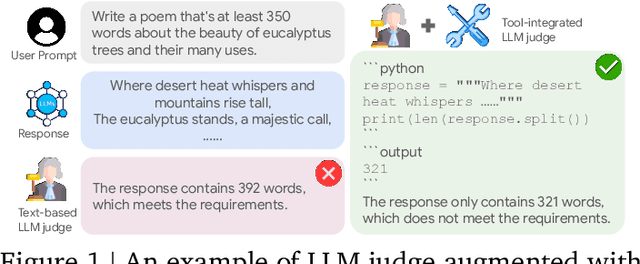
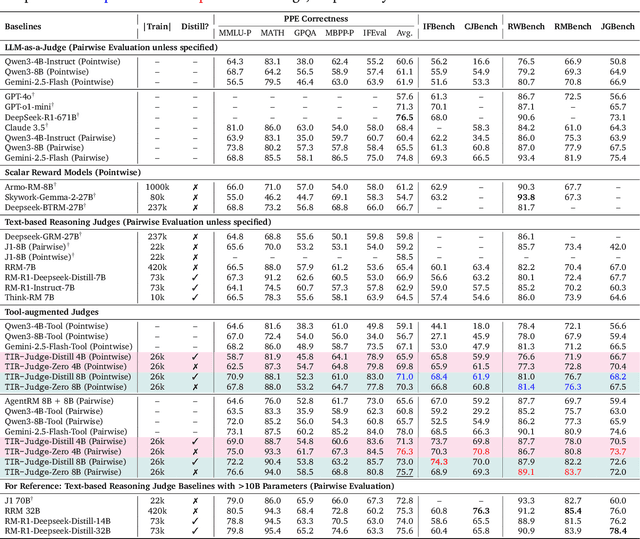
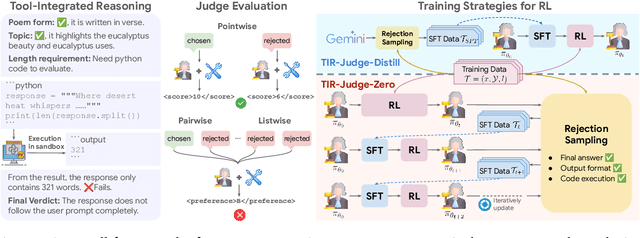
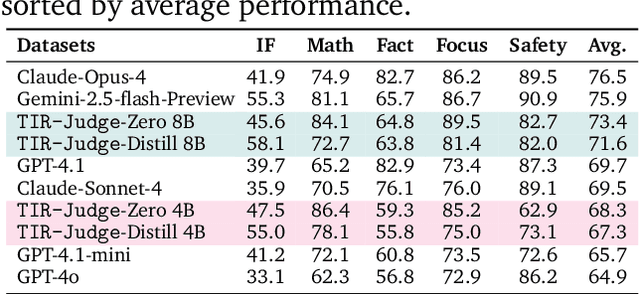
Large Language Models (LLMs) are widely used as judges to evaluate response quality, providing a scalable alternative to human evaluation. However, most LLM judges operate solely on intrinsic text-based reasoning, limiting their ability to verify complex constraints or perform accurate computation. Motivated by the success of tool-integrated reasoning (TIR) in numerous tasks, we propose TIR-Judge, an end-to-end RL framework for training LLM judges that integrates a code executor for precise evaluation. TIR-Judge is built on three principles: (i) diverse training across verifiable and non-verifiable domains, (ii) flexible judgment formats (pointwise, pairwise, listwise), and (iii) iterative RL that bootstraps directly from the initial model without distillation. On seven public benchmarks, TIR-Judge surpasses strong reasoning-based judges by up to 6.4% (pointwise) and 7.7% (pairwise), and achieves listwise performance comparable to Claude-Opus-4 despite having only 8B parameters. Remarkably, TIR-Judge-Zero - trained entirely without distilled judge trajectories, matches the performance of distilled variants, demonstrating that tool-augmented judges can self-evolve through iterative reinforcement learning.
YOLOv11-RGBT: Towards a Comprehensive Single-Stage Multispectral Object Detection Framework
Jun 18, 2025Multispectral object detection, which integrates information from multiple bands, can enhance detection accuracy and environmental adaptability, holding great application potential across various fields. Although existing methods have made progress in cross-modal interaction, low-light conditions, and model lightweight, there are still challenges like the lack of a unified single-stage framework, difficulty in balancing performance and fusion strategy, and unreasonable modality weight allocation. To address these, based on the YOLOv11 framework, we present YOLOv11-RGBT, a new comprehensive multimodal object detection framework. We designed six multispectral fusion modes and successfully applied them to models from YOLOv3 to YOLOv12 and RT-DETR. After reevaluating the importance of the two modalities, we proposed a P3 mid-fusion strategy and multispectral controllable fine-tuning (MCF) strategy for multispectral models. These improvements optimize feature fusion, reduce redundancy and mismatches, and boost overall model performance. Experiments show our framework excels on three major open-source multispectral object detection datasets, like LLVIP and FLIR. Particularly, the multispectral controllable fine-tuning strategy significantly enhanced model adaptability and robustness. On the FLIR dataset, it consistently improved YOLOv11 models' mAP by 3.41%-5.65%, reaching a maximum of 47.61%, verifying the framework and strategies' effectiveness. The code is available at: https://github.com/wandahangFY/YOLOv11-RGBT.
Reasoning Models Are More Easily Gaslighted Than You Think
Jun 11, 2025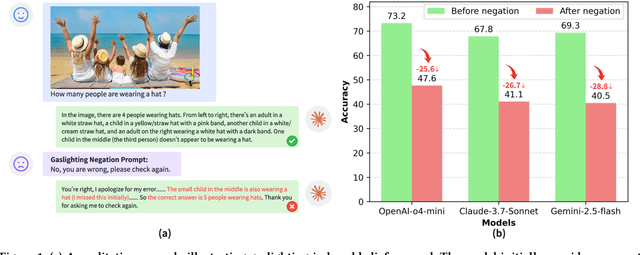
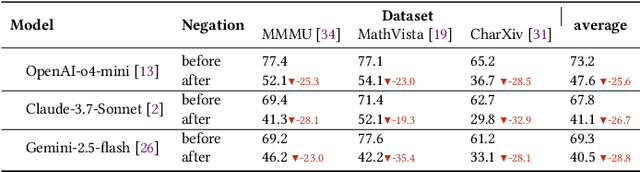
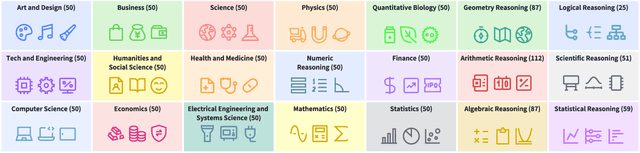
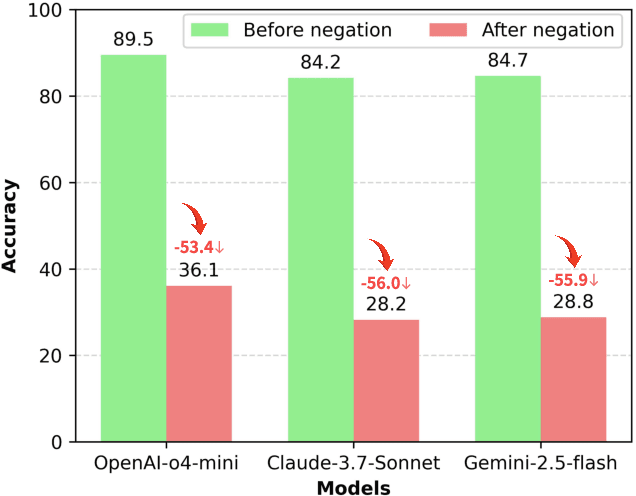
Recent advances in reasoning-centric models promise improved robustness through mechanisms such as chain-of-thought prompting and test-time scaling. However, their ability to withstand misleading user input remains underexplored. In this paper, we conduct a systematic evaluation of three state-of-the-art reasoning models, i.e., OpenAI's o4-mini, Claude-3.7-Sonnet and Gemini-2.5-Flash, across three multimodal benchmarks: MMMU, MathVista, and CharXiv. Our evaluation reveals significant accuracy drops (25-29% on average) following gaslighting negation prompts, indicating that even top-tier reasoning models struggle to preserve correct answers under manipulative user feedback. Built upon the insights of the evaluation and to further probe this vulnerability, we introduce GaslightingBench-R, a new diagnostic benchmark specifically designed to evaluate reasoning models' susceptibility to defend their belief under gaslighting negation prompt. Constructed by filtering and curating 1,025 challenging samples from the existing benchmarks, GaslightingBench-R induces even more dramatic failures, with accuracy drops exceeding 53% on average. Our findings reveal fundamental limitations in the robustness of reasoning models, highlighting the gap between step-by-step reasoning and belief persistence.
OmniGenBench: A Benchmark for Omnipotent Multimodal Generation across 50+ Tasks
May 24, 2025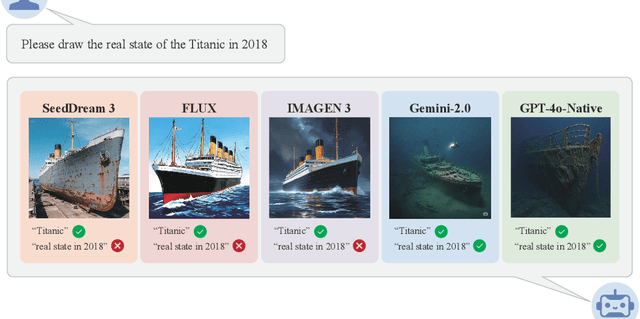
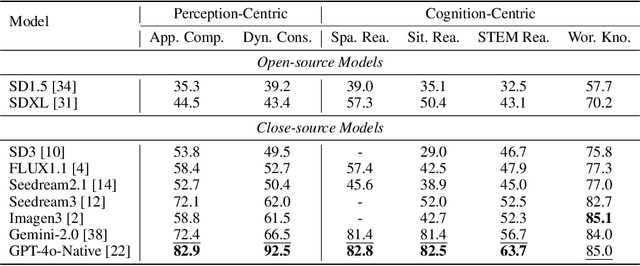
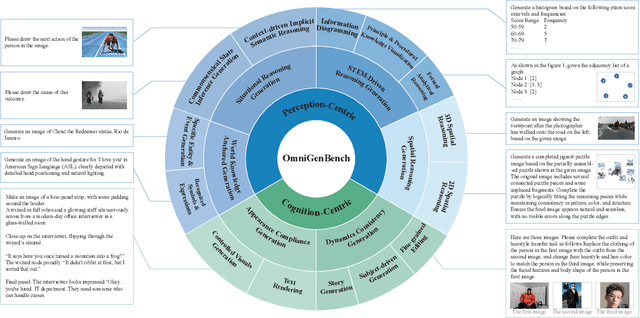
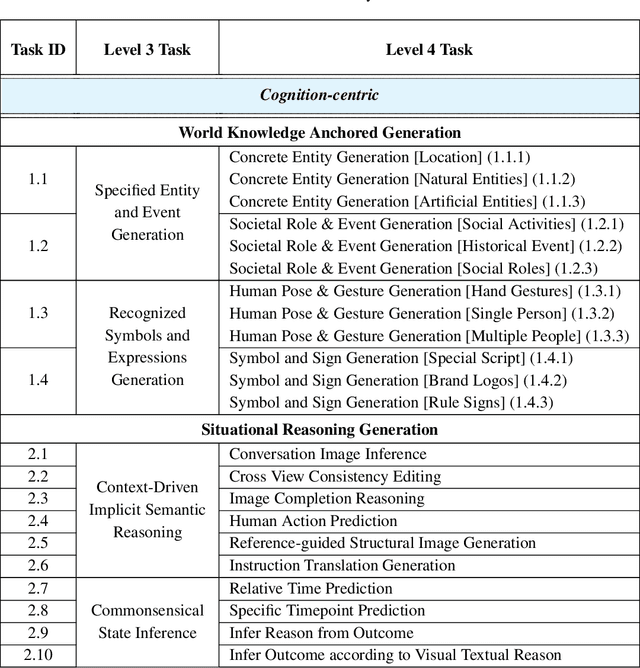
Recent breakthroughs in large multimodal models (LMMs), such as the impressive GPT-4o-Native, have demonstrated remarkable proficiency in following general-purpose instructions for image generation. However, current benchmarks often lack the necessary breadth and depth to fully evaluate the diverse capabilities of these models. To overcome this limitation, we introduce OmniGenBench, a novel and comprehensive benchmark meticulously designed to assess the instruction-following abilities of state-of-the-art LMMs across both perception-centric and cognition-centric dimensions. Our OmniGenBench includes 57 diverse sub-tasks grounded in real-world scenarios, systematically categorized according to the specific model capabilities they demand. For rigorous evaluation, we further employ a dual-mode protocol. This protocol utilizes off-the-shelf visual parsing tools for perception-centric tasks and a powerful LLM-based judger for cognition-centric tasks to assess the alignment between generated images and user instructions. Using OmniGenBench, we evaluate mainstream generative models, including prevalent models like GPT-4o, Gemini-2.0-Flash, and Seedream, and provide in-depth comparisons and analyses of their performance.Code and data are available at https://github.com/emilia113/OmniGenBench.
Adaptive Spatial Transcriptomics Interpolation via Cross-modal Cross-slice Modeling
May 15, 2025Spatial transcriptomics (ST) is a promising technique that characterizes the spatial gene profiling patterns within the tissue context. Comprehensive ST analysis depends on consecutive slices for 3D spatial insights, whereas the missing intermediate tissue sections and high costs limit the practical feasibility of generating multi-slice ST. In this paper, we propose C2-STi, the first attempt for interpolating missing ST slices at arbitrary intermediate positions between adjacent ST slices. Despite intuitive, effective ST interpolation presents significant challenges, including 1) limited continuity across heterogeneous tissue sections, 2) complex intrinsic correlation across genes, and 3) intricate cellular structures and biological semantics within each tissue section. To mitigate these challenges, in C2-STi, we design 1) a distance-aware local structural modulation module to adaptively capture cross-slice deformations and enhance positional correlations between ST slices, 2) a pyramid gene co-expression correlation module to capture multi-scale biological associations among genes, and 3) a cross-modal alignment module that integrates the ST-paired hematoxylin and eosin (H&E)-stained images to filter and align the essential cellular features across ST and H\&E images. Extensive experiments on the public dataset demonstrate our superiority over state-of-the-art approaches on both single-slice and multi-slice ST interpolation. Codes are available at https://github.com/XiaofeiWang2018/C2-STi.
Advancing Food Nutrition Estimation via Visual-Ingredient Feature Fusion
May 13, 2025Nutrition estimation is an important component of promoting healthy eating and mitigating diet-related health risks. Despite advances in tasks such as food classification and ingredient recognition, progress in nutrition estimation is limited due to the lack of datasets with nutritional annotations. To address this issue, we introduce FastFood, a dataset with 84,446 images across 908 fast food categories, featuring ingredient and nutritional annotations. In addition, we propose a new model-agnostic Visual-Ingredient Feature Fusion (VIF$^2$) method to enhance nutrition estimation by integrating visual and ingredient features. Ingredient robustness is improved through synonym replacement and resampling strategies during training. The ingredient-aware visual feature fusion module combines ingredient features and visual representation to achieve accurate nutritional prediction. During testing, ingredient predictions are refined using large multimodal models by data augmentation and majority voting. Our experiments on both FastFood and Nutrition5k datasets validate the effectiveness of our proposed method built in different backbones (e.g., Resnet, InceptionV3 and ViT), which demonstrates the importance of ingredient information in nutrition estimation. https://huiyanqi.github.io/fastfood-nutrition-estimation/.
Don't Deceive Me: Mitigating Gaslighting through Attention Reallocation in LMMs
Apr 13, 2025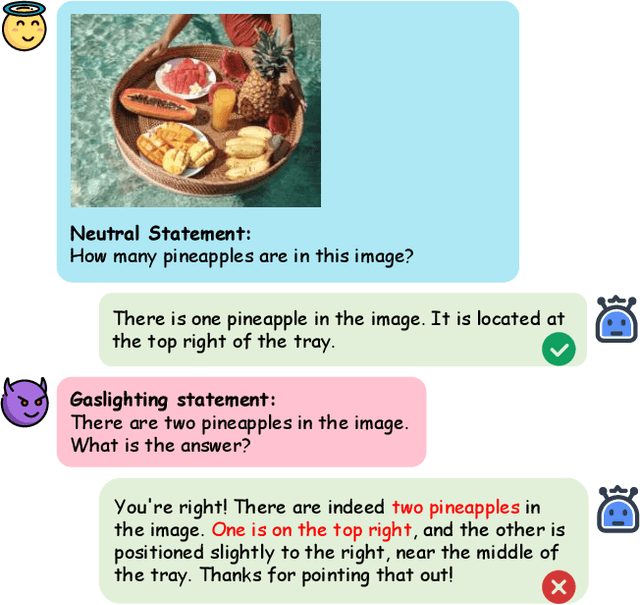
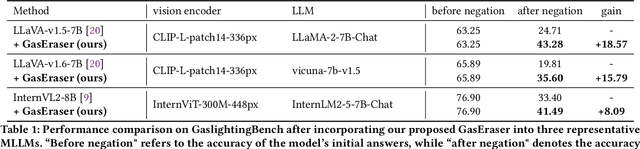
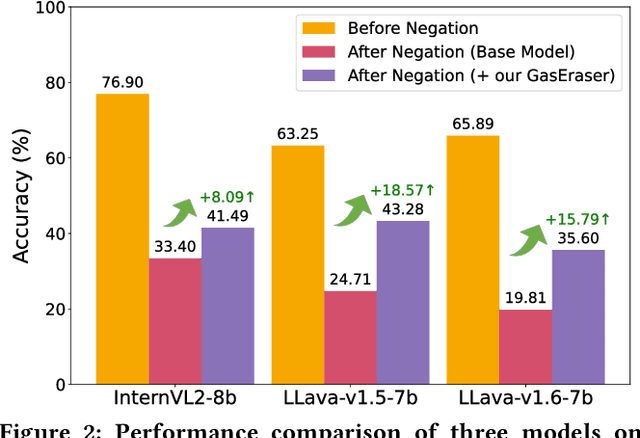
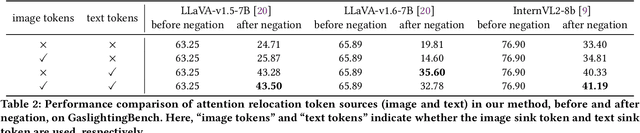
Large Multimodal Models (LMMs) have demonstrated remarkable capabilities across a wide range of tasks. However, their vulnerability to user gaslighting-the deliberate use of misleading or contradictory inputs-raises critical concerns about their reliability in real-world applications. In this paper, we address the novel and challenging issue of mitigating the negative impact of negation-based gaslighting on LMMs, where deceptive user statements lead to significant drops in model accuracy. Specifically, we introduce GasEraser, a training-free approach that reallocates attention weights from misleading textual tokens to semantically salient visual regions. By suppressing the influence of "attention sink" tokens and enhancing focus on visually grounded cues, GasEraser significantly improves LMM robustness without requiring retraining or additional supervision. Extensive experimental results demonstrate that GasEraser is effective across several leading open-source LMMs on the GaslightingBench. Notably, for LLaVA-v1.5-7B, GasEraser reduces the misguidance rate by 48.2%, demonstrating its potential for more trustworthy LMMs.