 Add to Chrome
 Add to Firefox
 Add to Edge
Accelerating Conformal Prediction via Approximate Leave-One-Out
Jun 30, 2026
While conformal prediction provides a general framework for uncertainty quantification in predictive inference, its application is often limited by computational cost. Recent methods, including Jackknife+ and Jackknife-minmax, achieve faster computation by trading a slight loss of efficiency relative to full conformal prediction, but still requires computing leave-one-out refits for all observations. In this paper, we further accelerate conformal prediction by incorporating approximate leave-one-out (ALO) estimators, and establish asymptotic coverage and efficiency. While our proof draws on methods developed for analyzing the consistency of ALO cross-validation risk estimators in high-dimensional statistics, it requires adaptations to handle conformal prediction, where leave-$i$-out residuals are needed for predictions at $x_{n+1}$ rather than just at the training covariate $x_i$. Simulation results validate our theoretical findings, showing that the ALO-based methods achieve coverage and efficiency comparable to the exact methods, while significantly reducing the runtime.

Compact Object-Level Representations with Open-Vocabulary Understanding for Indoor Visual Relocalization
Jun 23, 2026Indoor visual relocalization plays a critical role in emerging spatial and embodied AI applications. However, prior research was predominantly devoted to low-level vision schemes, struggling to perceive scene semantics and compositions, which limits both interpretability and applicability. In this paper, we explore the issue of how to organize rich object information in a scene, including semantics, layout, and geometry, into a structured map representation, thereby utilizing object units exclusively to drive the camera relocalization task. To this end, we propose OpenReLoc, a camera relocalization system designed to provide scene understanding and accurate pose estimation capabilities. Leveraging recent foundation models, we first introduce a multi-modal mechanism to integrate open-vocabulary semantic knowledge for effective 2D-3D object matching. Additionally, we design object-oriented reference frames as position priors, paired with a reference frame selection strategy based on the Distance-IoU (DIOU), enabling extension to scalable scenes. Moreover, to ensure stable and accurate pose optimization, we also propose a dual-path 2D Iterative Closest Pixel loss guided by object shape. Experimental results demonstrate that OpenReLoc achieves superior relocalization recall and accuracy across various datasets. Our source code will be released upon acceptance.
Smoothed Score Queries and the Complexity of Sampling
May 26, 2026We study the query complexity of sampling from high-dimensional Gaussian distributions using gradient information. In the standard oracle model, exact gradients expose only matrix-vector products with the precision matrix, leading to polynomial approximation barriers and a characteristic \(\sqrtκ\) dependence on the condition number. We show that this barrier disappears when the sampler is allowed to query \emph{smoothed scores}, namely gradients of the logarithms of the Gaussian-convolved densities. For a Gaussian target with precision matrix \(Λ\), a smoothed-score query at noise level \(τ\) gives access to the resolvent \((Λ+τ^{-1}I)^{-1}\). Combining geometrically spaced noise levels with sinc-quadrature rational approximation, we obtain a sampler with $q=O\!\left(\bigl(\logκ+\log(e\sqrt d/δ_{\rm TV})\bigr)\log(e\sqrt d/δ_{\rm TV})\right)$ smoothed-score queries for total variation error \(δ_{\rm TV}\), improving the condition-number dependence from \(\sqrtκ\) to logarithmic. We also study finite-bit gradient oracles. Using coordinatewise quantization of the transformed smoothed-score answers and a final dithering step, we obtain a sampling scheme whose total communicated gradient information is polylogarithmic in \(κ\); in particular, for fixed dimension and accuracy, the bit complexity is \(O(\log^2κ)\). To complement these upper bounds, we introduce a channel-synthesis, or reverse-Shannon, converse technique for sampling lower bounds. This converts total-variation simulation guarantees into communication requirements and yields an \(Ω(\logκ)\) lower bound on the required gradient information. Together, these results identify smoothed scores as a provably more informative oracle for sampling and give nearly matching upper and lower bounds for its finite-bit complexity.
Two-Sided Bounds for Entropic Optimal Transport via a Rate-Distortion Integral
Apr 15, 2026We show that the maximum expected inner product between a random vector and the standard normal vector over all couplings subject to a mutual information constraint or regularization is equivalent to a truncated integral involving the rate-distortion function, up to universal multiplicative constants. The proof is based on a lifting technique, which constructs a Gaussian process indexed by a random subset of the type class of the probability distribution involved in the information-theoretic inequality, and then applying a form of the majorizing measure theorem.
Feedback-Free Resource Scheduling: Towards Flexible Multi-BS Cooperation in FD-RAN
Feb 25, 2025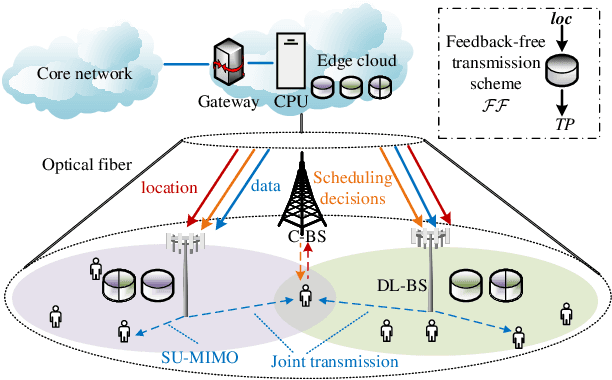
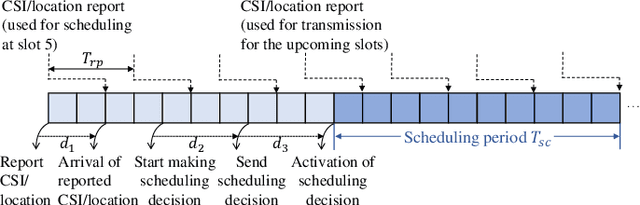
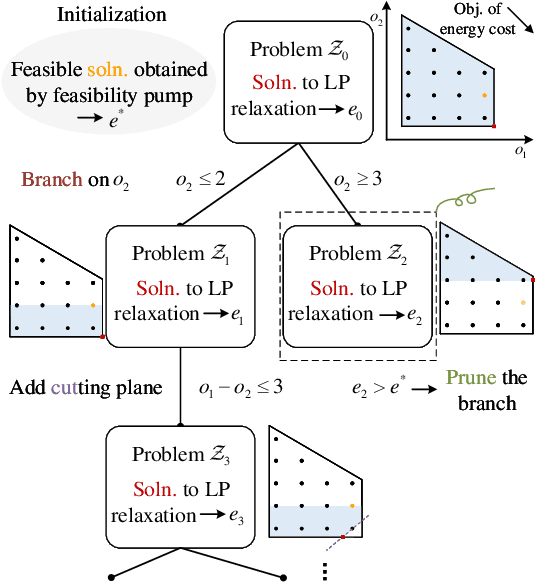
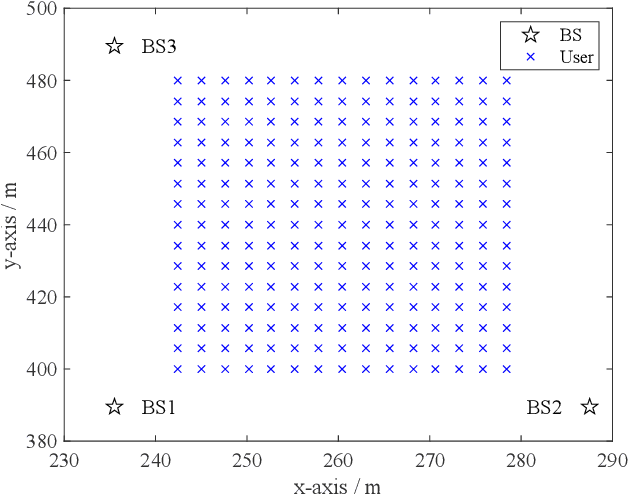
Flexible cooperation among base stations (BSs) is critical to improve resource utilization efficiency and meet personalized user demands. However, its practical implementation is hindered by the current radio access network (RAN), which relies on the coupling of uplink and downlink transmissions and channel state information feedback with inherent issues such as overheads and delays. To overcome these limitations, we consider the fully-decoupled RAN (FD-RAN), in which uplink and downlink networks are independent, and feedback-free MIMO transmission is adopted at the physical layer. To further deliver flexible cooperation in FD-RAN, we investigate the practical scheduling process and study feedback-free downlink multi-BS resource scheduling. The problem is considered based on network load conditions. In heavy-load states where it is impossible for all user demands to be met, an optimal greedy algorithm is proposed, maximizing the weighted sum of user demand satisfaction rates. In light-load states where at least one solution exists to satisfy all user demands, an optimal two-stage resource allocation algorithm is designed to further minimize network energy consumption by leveraging the flexibility of cooperation. Extensive simulations validate the superiority of proposed algorithms in performance and running time, and highlight the potential for realizing flexible cooperation in practice.
A Global Depth-Range-Free Multi-View Stereo Transformer Network with Pose Embedding
Nov 04, 2024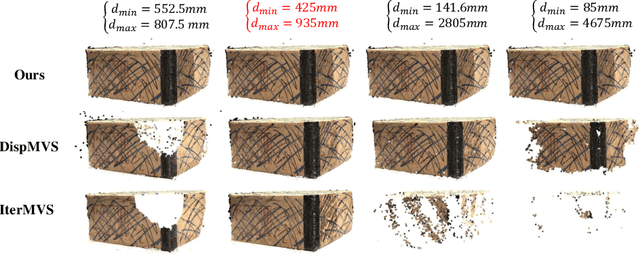
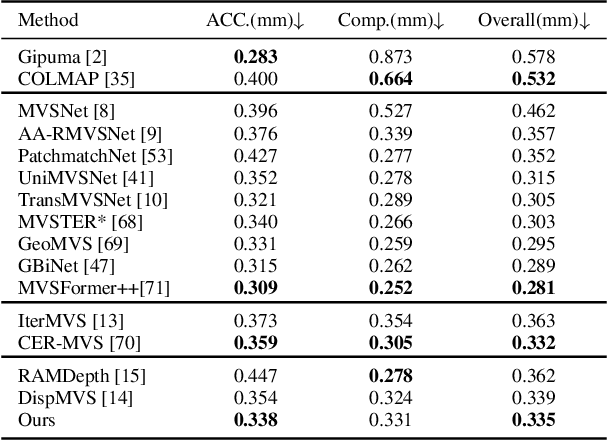
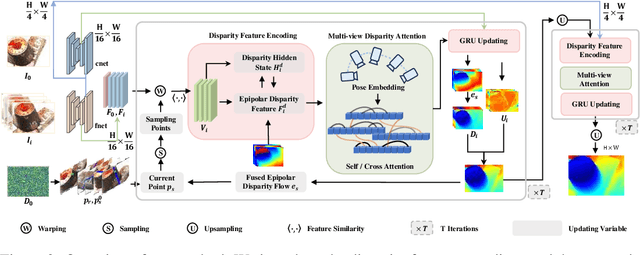

In this paper, we propose a novel multi-view stereo (MVS) framework that gets rid of the depth range prior. Unlike recent prior-free MVS methods that work in a pair-wise manner, our method simultaneously considers all the source images. Specifically, we introduce a Multi-view Disparity Attention (MDA) module to aggregate long-range context information within and across multi-view images. Considering the asymmetry of the epipolar disparity flow, the key to our method lies in accurately modeling multi-view geometric constraints. We integrate pose embedding to encapsulate information such as multi-view camera poses, providing implicit geometric constraints for multi-view disparity feature fusion dominated by attention. Additionally, we construct corresponding hidden states for each source image due to significant differences in the observation quality of the same pixel in the reference frame across multiple source frames. We explicitly estimate the quality of the current pixel corresponding to sampled points on the epipolar line of the source image and dynamically update hidden states through the uncertainty estimation module. Extensive results on the DTU dataset and Tanks&Temple benchmark demonstrate the effectiveness of our method. The code is available at our project page: https://zju3dv.github.io/GD-PoseMVS/.
Long or Short or Both? An Exploration on Lookback Time Windows of Behavioral Features in Product Search Ranking
Sep 26, 2024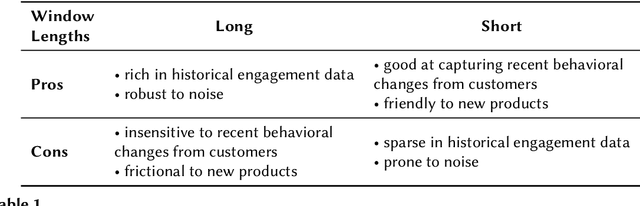



Customer shopping behavioral features are core to product search ranking models in eCommerce. In this paper, we investigate the effect of lookback time windows when aggregating these features at the (query, product) level over history. By studying the pros and cons of using long and short time windows, we propose a novel approach to integrating these historical behavioral features of different time windows. In particular, we address the criticality of using query-level vertical signals in ranking models to effectively aggregate all information from different behavioral features. Anecdotal evidence for the proposed approach is also provided using live product search traffic on Walmart.com.
Towards More Relevant Product Search Ranking Via Large Language Models: An Empirical Study
Sep 26, 2024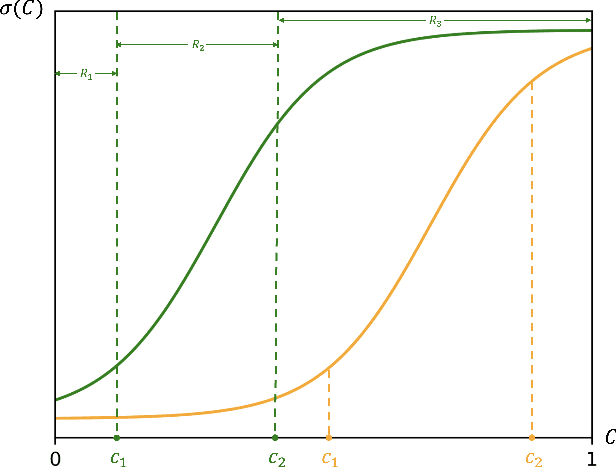
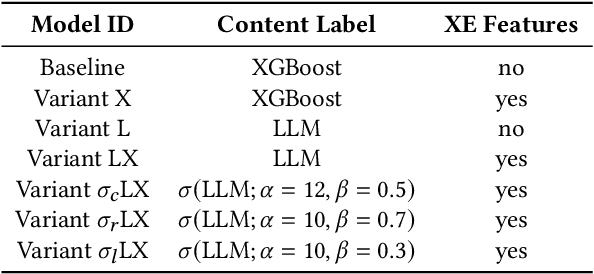
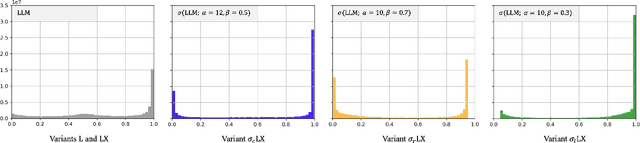
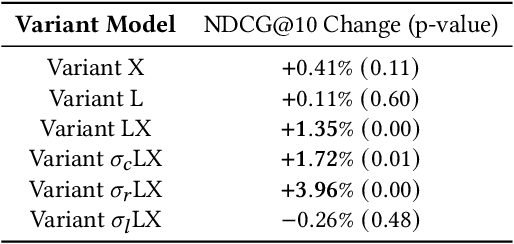
Training Learning-to-Rank models for e-commerce product search ranking can be challenging due to the lack of a gold standard of ranking relevance. In this paper, we decompose ranking relevance into content-based and engagement-based aspects, and we propose to leverage Large Language Models (LLMs) for both label and feature generation in model training, primarily aiming to improve the model's predictive capability for content-based relevance. Additionally, we introduce different sigmoid transformations on the LLM outputs to polarize relevance scores in labeling, enhancing the model's ability to balance content-based and engagement-based relevances and thus prioritize highly relevant items overall. Comprehensive online tests and offline evaluations are also conducted for the proposed design. Our work sheds light on advanced strategies for integrating LLMs into e-commerce product search ranking model training, offering a pathway to more effective and balanced models with improved ranking relevance.
Stability of a Generalized Debiased Lasso with Applications to Resampling-Based Variable Selection
May 05, 2024Suppose that we first apply the Lasso to a design matrix, and then update one of its columns. In general, the signs of the Lasso coefficients may change, and there is no closed-form expression for updating the Lasso solution exactly. In this work, we propose an approximate formula for updating a debiased Lasso coefficient. We provide general nonasymptotic error bounds in terms of the norms and correlations of a given design matrix's columns, and then prove asymptotic convergence results for the case of a random design matrix with i.i.d.\ sub-Gaussian row vectors and i.i.d.\ Gaussian noise. Notably, the approximate formula is asymptotically correct for most coordinates in the proportional growth regime, under the mild assumption that each row of the design matrix is sub-Gaussian with a covariance matrix having a bounded condition number. Our proof only requires certain concentration and anti-concentration properties to control various error terms and the number of sign changes. In contrast, rigorously establishing distributional limit properties (e.g.\ Gaussian limits for the debiased Lasso) under similarly general assumptions has been considered open problem in the universality theory. As applications, we show that the approximate formula allows us to reduce the computation complexity of variable selection algorithms that require solving multiple Lasso problems, such as the conditional randomization test and a variant of the knockoff filter.
Minimax Optimality of Score-based Diffusion Models: Beyond the Density Lower Bound Assumptions
Feb 23, 2024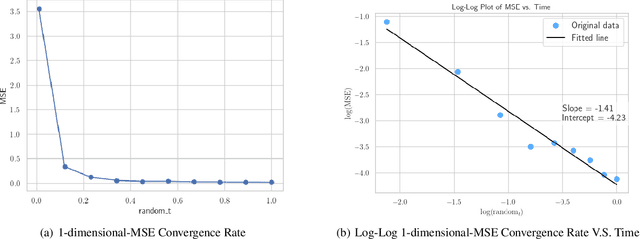
We study the asymptotic error of score-based diffusion model sampling in large-sample scenarios from a non-parametric statistics perspective. We show that a kernel-based score estimator achieves an optimal mean square error of $\widetilde{O}\left(n^{-1} t^{-\frac{d+2}{2}}(t^{\frac{d}{2}} \vee 1)\right)$ for the score function of $p_0*\mathcal{N}(0,t\boldsymbol{I}_d)$, where $n$ and $d$ represent the sample size and the dimension, $t$ is bounded above and below by polynomials of $n$, and $p_0$ is an arbitrary sub-Gaussian distribution. As a consequence, this yields an $\widetilde{O}\left(n^{-1/2} t^{-\frac{d}{4}}\right)$ upper bound for the total variation error of the distribution of the sample generated by the diffusion model under a mere sub-Gaussian assumption. If in addition, $p_0$ belongs to the nonparametric family of the $\beta$-Sobolev space with $\beta\le 2$, by adopting an early stopping strategy, we obtain that the diffusion model is nearly (up to log factors) minimax optimal. This removes the crucial lower bound assumption on $p_0$ in previous proofs of the minimax optimality of the diffusion model for nonparametric families.