 Add to Chrome
 Add to Firefox
 Add to Edge
Adjacent Leader Decentralized Stochastic Gradient Descent
May 18, 2024
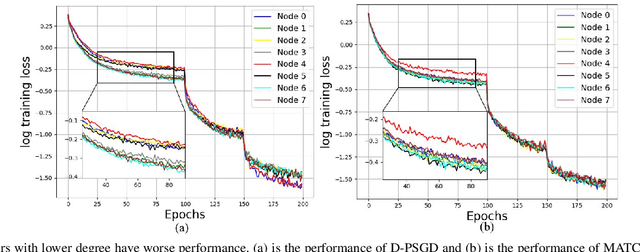
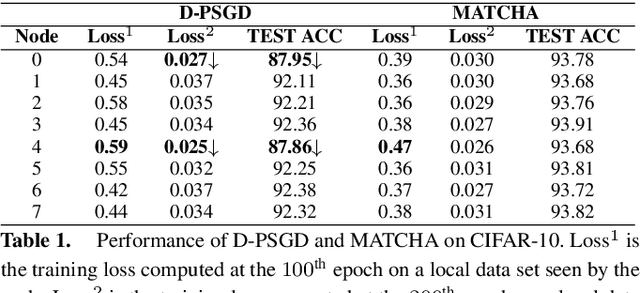
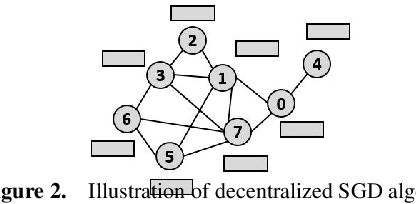
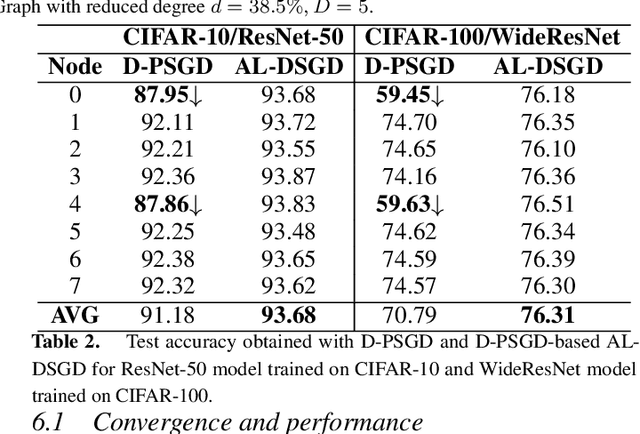
This work focuses on the decentralized deep learning optimization framework. We propose Adjacent Leader Decentralized Gradient Descent (AL-DSGD), for improving final model performance, accelerating convergence, and reducing the communication overhead of decentralized deep learning optimizers. AL-DSGD relies on two main ideas. Firstly, to increase the influence of the strongest learners on the learning system it assigns weights to different neighbor workers according to both their performance and the degree when averaging among them, and it applies a corrective force on the workers dictated by both the currently best-performing neighbor and the neighbor with the maximal degree. Secondly, to alleviate the problem of the deterioration of the convergence speed and performance of the nodes with lower degrees, AL-DSGD relies on dynamic communication graphs, which effectively allows the workers to communicate with more nodes while keeping the degrees of the nodes low. Experiments demonstrate that AL-DSGD accelerates the convergence of the decentralized state-of-the-art techniques and improves their test performance especially in the communication constrained environments. We also theoretically prove the convergence of the proposed scheme. Finally, we release to the community a highly general and concise PyTorch-based library for distributed training of deep learning models that supports easy implementation of any distributed deep learning approach ((a)synchronous, (de)centralized).

Advancing Head and Neck Cancer Survival Prediction via Multi-Label Learning and Deep Model Interpretation
May 09, 2024A comprehensive and reliable survival prediction model is of great importance to assist in the personalized management of Head and Neck Cancer (HNC) patients treated with curative Radiation Therapy (RT). In this work, we propose IMLSP, an Interpretable Multi-Label multi-modal deep Survival Prediction framework for predicting multiple HNC survival outcomes simultaneously and provide time-event specific visual explanation of the deep prediction process. We adopt Multi-Task Logistic Regression (MTLR) layers to convert survival prediction from a regression problem to a multi-time point classification task, and to enable predicting of multiple relevant survival outcomes at the same time. We also present Grad-TEAM, a Gradient-weighted Time-Event Activation Mapping approach specifically developed for deep survival model visual explanation, to generate patient-specific time-to-event activation maps. We evaluate our method with the publicly available RADCURE HNC dataset, where it outperforms the corresponding single-modal models and single-label models on all survival outcomes. The generated activation maps show that the model focuses primarily on the tumor and nodal volumes when making the decision and the volume of interest varies for high- and low-risk patients. We demonstrate that the multi-label learning strategy can improve the learning efficiency and prognostic performance, while the interpretable survival prediction model is promising to help understand the decision-making process of AI and facilitate personalized treatment.
TransAnaNet: Transformer-based Anatomy Change Prediction Network for Head and Neck Cancer Patient Radiotherapy
May 09, 2024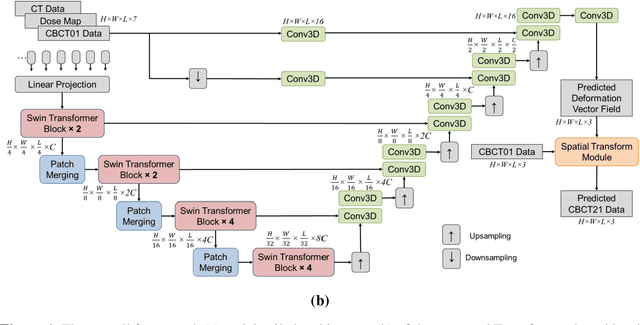


Early identification of head and neck cancer (HNC) patients who would experience significant anatomical change during radiotherapy (RT) is important to optimize patient clinical benefit and treatment resources. This study aims to assess the feasibility of using a vision-transformer (ViT) based neural network to predict RT-induced anatomic change in HNC patients. We retrospectively included 121 HNC patients treated with definitive RT/CRT. We collected the planning CT (pCT), planned dose, CBCTs acquired at the initial treatment (CBCT01) and fraction 21 (CBCT21), and primary tumor volume (GTVp) and involved nodal volume (GTVn) delineated on both pCT and CBCTs for model construction and evaluation. A UNet-style ViT network was designed to learn spatial correspondence and contextual information from embedded CT, dose, CBCT01, GTVp, and GTVn image patches. The model estimated the deformation vector field between CBCT01 and CBCT21 as the prediction of anatomic change, and deformed CBCT01 was used as the prediction of CBCT21. We also generated binary masks of GTVp, GTVn, and patient body for volumetric change evaluation. The predicted image from the proposed method yielded the best similarity to the real image (CBCT21) over pCT, CBCT01, and predicted CBCTs from other comparison models. The average MSE and SSIM between the normalized predicted CBCT to CBCT21 are 0.009 and 0.933, while the average dice coefficient between body mask, GTVp mask, and GTVn mask are 0.972, 0.792, and 0.821 respectively. The proposed method showed promising performance for predicting radiotherapy-induced anatomic change, which has the potential to assist in the decision-making of HNC Adaptive RT.
GaitMotion: A Multitask Dataset for Pathological Gait Forecasting
May 09, 2024



Gait benchmark empowers uncounted encouraging research fields such as gait recognition, humanoid locomotion, etc. Despite the growing focus on gait analysis, the research community is hindered by the limitations of the currently available databases, which mostly consist of videos or images with limited labeling. In this paper, we introduce GaitMotion, a multitask dataset leveraging wearable sensors to capture the patients' real-time movement with pathological gait. This dataset offers extensive ground-truth labeling for multiple tasks, including step/stride segmentation and step/stride length prediction, empowers researchers with a more holistic understanding of gait disturbances linked to neurological impairments. The wearable gait analysis suit captures the gait cycle, pattern, and parameters for both normal and pathological subjects. This data may prove beneficial for healthcare products focused on patient progress monitoring and post-disease recovery, as well as for forensics technologies aimed at person reidentification, and biomechanics research to aid in the development of humanoid robotics. Moreover, the analysis has considered the drift in data distribution across individual subjects. This drift can be attributed to each participant's unique behavioral habits or potential displacement of the sensor. Stride length variance for normal, Parkinson's, and stroke patients are compared to recognize the pathological walking pattern. As the baseline and benchmark, we provide an error of 14.1, 13.3, and 12.2 centimeters of stride length prediction for normal, Parkinson's, and Stroke gaits separately. We also analyzed the gait characteristics for normal and pathological gaits in terms of the gait cycle and gait parameters.
Towards Coarse-to-Fine Evaluation of Inference Efficiency for Large Language Models
Apr 17, 2024
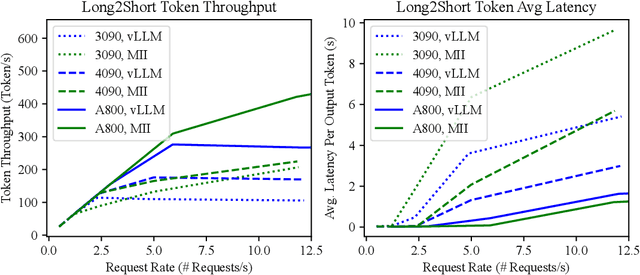

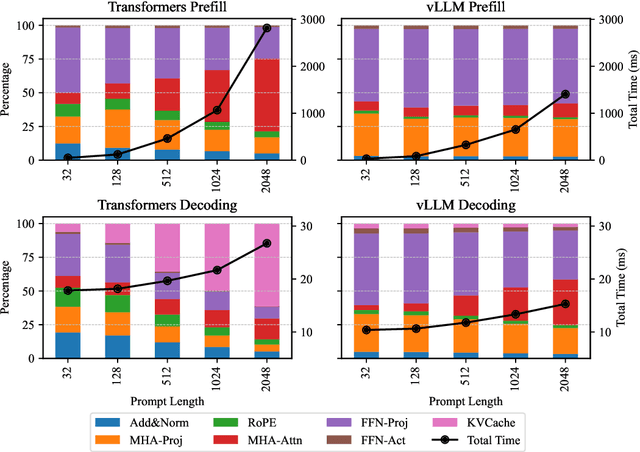
In real world, large language models (LLMs) can serve as the assistant to help users accomplish their jobs, and also support the development of advanced applications. For the wide application of LLMs, the inference efficiency is an essential concern, which has been widely studied in existing work, and numerous optimization algorithms and code libraries have been proposed to improve it. Nonetheless, users still find it challenging to compare the effectiveness of all the above methods and understand the underlying mechanisms. In this work, we perform a detailed coarse-to-fine analysis of the inference performance of various code libraries. To evaluate the overall effectiveness, we examine four usage scenarios within two practical applications. We further provide both theoretical and empirical fine-grained analyses of each module in the Transformer architecture. Our experiments yield comprehensive results that are invaluable for researchers to evaluate code libraries and improve inference strategies.
LiDAR-Guided Cross-Attention Fusion for Hyperspectral Band Selection and Image Classification
Apr 15, 2024

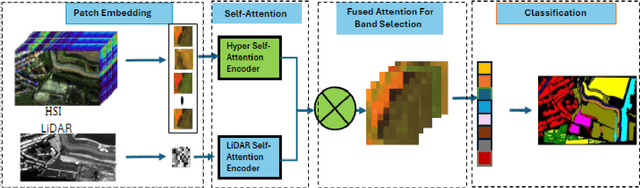

The fusion of hyperspectral and LiDAR data has been an active research topic. Existing fusion methods have ignored the high-dimensionality and redundancy challenges in hyperspectral images, despite that band selection methods have been intensively studied for hyperspectral image (HSI) processing. This paper addresses this significant gap by introducing a cross-attention mechanism from the transformer architecture for the selection of HSI bands guided by LiDAR data. LiDAR provides high-resolution vertical structural information, which can be useful in distinguishing different types of land cover that may have similar spectral signatures but different structural profiles. In our approach, the LiDAR data are used as the "query" to search and identify the "key" from the HSI to choose the most pertinent bands for LiDAR. This method ensures that the selected HSI bands drastically reduce redundancy and computational requirements while working optimally with the LiDAR data. Extensive experiments have been undertaken on three paired HSI and LiDAR data sets: Houston 2013, Trento and MUUFL. The results highlight the superiority of the cross-attention mechanism, underlining the enhanced classification accuracy of the identified HSI bands when fused with the LiDAR features. The results also show that the use of fewer bands combined with LiDAR surpasses the performance of state-of-the-art fusion models.
* 15 pages, 13 figures
Unsupervised Band Selection Using Fused HSI and LiDAR Attention Integrating With Autoencoder
Apr 08, 2024Band selection in hyperspectral imaging (HSI) is critical for optimising data processing and enhancing analytical accuracy. Traditional approaches have predominantly concentrated on analysing spectral and pixel characteristics within individual bands independently. These approaches overlook the potential benefits of integrating multiple data sources, such as Light Detection and Ranging (LiDAR), and is further challenged by the limited availability of labeled data in HSI processing, which represents a significant obstacle. To address these challenges, this paper introduces a novel unsupervised band selection framework that incorporates attention mechanisms and an Autoencoder for reconstruction-based band selection. Our methodology distinctively integrates HSI with LiDAR data through an attention score, using a convolutional Autoencoder to process the combined feature mask. This fusion effectively captures essential spatial and spectral features and reduces redundancy in hyperspectral datasets. A comprehensive comparative analysis of our innovative fused band selection approach is performed against existing unsupervised band selection and fusion models. We used data sets such as Houston 2013, Trento, and MUUFLE for our experiments. The results demonstrate that our method achieves superior classification accuracy and significantly outperforms existing models. This enhancement in HSI band selection, facilitated by the incorporation of LiDAR features, underscores the considerable advantages of integrating features from different sources.
HSIMamba: Hyperpsectral Imaging Efficient Feature Learning with Bidirectional State Space for Classification
Mar 30, 2024Classifying hyperspectral images is a difficult task in remote sensing, due to their complex high-dimensional data. To address this challenge, we propose HSIMamba, a novel framework that uses bidirectional reversed convolutional neural network pathways to extract spectral features more efficiently. Additionally, it incorporates a specialized block for spatial analysis. Our approach combines the operational efficiency of CNNs with the dynamic feature extraction capability of attention mechanisms found in Transformers. However, it avoids the associated high computational demands. HSIMamba is designed to process data bidirectionally, significantly enhancing the extraction of spectral features and integrating them with spatial information for comprehensive analysis. This approach improves classification accuracy beyond current benchmarks and addresses computational inefficiencies encountered with advanced models like Transformers. HSIMamba were tested against three widely recognized datasets Houston 2013, Indian Pines, and Pavia University and demonstrated exceptional performance, surpassing existing state-of-the-art models in HSI classification. This method highlights the methodological innovation of HSIMamba and its practical implications, which are particularly valuable in contexts where computational resources are limited. HSIMamba redefines the standards of efficiency and accuracy in HSI classification, thereby enhancing the capabilities of remote sensing applications. Hyperspectral imaging has become a crucial tool for environmental surveillance, agriculture, and other critical areas that require detailed analysis of the Earth surface. Please see our code in HSIMamba for more details.
Empowering Segmentation Ability to Multi-modal Large Language Models
Mar 21, 2024Multi-modal large language models (MLLMs) can understand image-language prompts and demonstrate impressive reasoning ability. In this paper, we extend MLLMs' output by empowering MLLMs with the segmentation ability. The extended MLLMs can both output language responses to the image-language prompts and segment the regions that the complex question or query in the language prompts focuses on. To this end, the existing work, LISA, enlarges the original word embeddings with an additional segment token and fine-tunes dialogue generation and query-focused segmentation together, where the feature of the segment token is used to prompt the segment-anything model. Although they achieve superior segmentation performance, we observe that the dialogue ability decreases by a large margin compared to the original MLLMs. To maintain the original MLLMs' dialogue ability, we propose a novel MLLMs framework, coined as LLaVASeg, which leverages a chain-of-thought prompting strategy to instruct the MLLMs to segment the target region queried by the user. The MLLMs are first prompted to reason about the simple description of the target region from the complicated user query, then extract the visual attributes of the target region according to the understanding of MLLMs to the image. These visual attributes, such as color and relative locations, are utilized to prompt the downstream segmentation model. Experiments show that the proposed method keeps the original dialogue ability and equips the MLLMs' model with strong reasoning segmentation ability. The code is available at https://github.com/YuqiYang213/LLaVASeg.
Bit Rate Matching Algorithm Optimization in JPEG-AI Verification Model
Feb 27, 2024The research on neural network (NN) based image compression has shown superior performance compared to classical compression frameworks. Unlike the hand-engineered transforms in the classical frameworks, NN-based models learn the non-linear transforms providing more compact bit representations, and achieve faster coding speed on parallel devices over their classical counterparts. Those properties evoked the attention of both scientific and industrial communities, resulting in the standardization activity JPEG-AI. The verification model for the standardization process of JPEG-AI is already in development and has surpassed the advanced VVC intra codec. To generate reconstructed images with the desired bits per pixel and assess the BD-rate performance of both the JPEG-AI verification model and VVC intra, bit rate matching is employed. However, the current state of the JPEG-AI verification model experiences significant slowdowns during bit rate matching, resulting in suboptimal performance due to an unsuitable model. The proposed methodology offers a gradual algorithmic optimization for matching bit rates, resulting in a fourfold acceleration and over 1% improvement in BD-rate at the base operation point. At the high operation point, the acceleration increases up to sixfold.