 Add to Chrome
 Add to Firefox
 Add to Edge
Is Sora a World Simulator? A Comprehensive Survey on General World Models and Beyond
May 06, 2024
General world models represent a crucial pathway toward achieving Artificial General Intelligence (AGI), serving as the cornerstone for various applications ranging from virtual environments to decision-making systems. Recently, the emergence of the Sora model has attained significant attention due to its remarkable simulation capabilities, which exhibits an incipient comprehension of physical laws. In this survey, we embark on a comprehensive exploration of the latest advancements in world models. Our analysis navigates through the forefront of generative methodologies in video generation, where world models stand as pivotal constructs facilitating the synthesis of highly realistic visual content. Additionally, we scrutinize the burgeoning field of autonomous-driving world models, meticulously delineating their indispensable role in reshaping transportation and urban mobility. Furthermore, we delve into the intricacies inherent in world models deployed within autonomous agents, shedding light on their profound significance in enabling intelligent interactions within dynamic environmental contexts. At last, we examine challenges and limitations of world models, and discuss their potential future directions. We hope this survey can serve as a foundational reference for the research community and inspire continued innovation. This survey will be regularly updated at: https://github.com/GigaAI-research/General-World-Models-Survey.

Spectrally Pruned Gaussian Fields with Neural Compensation
May 01, 2024Recently, 3D Gaussian Splatting, as a novel 3D representation, has garnered attention for its fast rendering speed and high rendering quality. However, this comes with high memory consumption, e.g., a well-trained Gaussian field may utilize three million Gaussian primitives and over 700 MB of memory. We credit this high memory footprint to the lack of consideration for the relationship between primitives. In this paper, we propose a memory-efficient Gaussian field named SUNDAE with spectral pruning and neural compensation. On one hand, we construct a graph on the set of Gaussian primitives to model their relationship and design a spectral down-sampling module to prune out primitives while preserving desired signals. On the other hand, to compensate for the quality loss of pruning Gaussians, we exploit a lightweight neural network head to mix splatted features, which effectively compensates for quality losses while capturing the relationship between primitives in its weights. We demonstrate the performance of SUNDAE with extensive results. For example, SUNDAE can achieve 26.80 PSNR at 145 FPS using 104 MB memory while the vanilla Gaussian splatting algorithm achieves 25.60 PSNR at 160 FPS using 523 MB memory, on the Mip-NeRF360 dataset. Codes are publicly available at https://runyiyang.github.io/projects/SUNDAE/.
Two in One Go: Single-stage Emotion Recognition with Decoupled Subject-context Transformer
Apr 29, 2024Emotion recognition aims to discern the emotional state of subjects within an image, relying on subject-centric and contextual visual cues. Current approaches typically follow a two-stage pipeline: first localize subjects by off-the-shelf detectors, then perform emotion classification through the late fusion of subject and context features. However, the complicated paradigm suffers from disjoint training stages and limited interaction between fine-grained subject-context elements. To address the challenge, we present a single-stage emotion recognition approach, employing a Decoupled Subject-Context Transformer (DSCT), for simultaneous subject localization and emotion classification. Rather than compartmentalizing training stages, we jointly leverage box and emotion signals as supervision to enrich subject-centric feature learning. Furthermore, we introduce DSCT to facilitate interactions between fine-grained subject-context cues in a decouple-then-fuse manner. The decoupled query token--subject queries and context queries--gradually intertwine across layers within DSCT, during which spatial and semantic relations are exploited and aggregated. We evaluate our single-stage framework on two widely used context-aware emotion recognition datasets, CAER-S and EMOTIC. Our approach surpasses two-stage alternatives with fewer parameter numbers, achieving a 3.39% accuracy improvement and a 6.46% average precision gain on CAER-S and EMOTIC datasets, respectively.
LEAF: Unveiling Two Sides of the Same Coin in Semi-supervised Facial Expression Recognition
Apr 26, 2024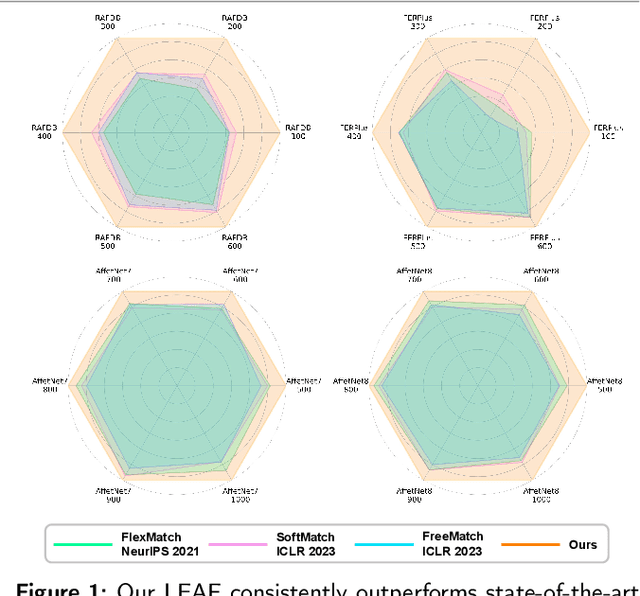
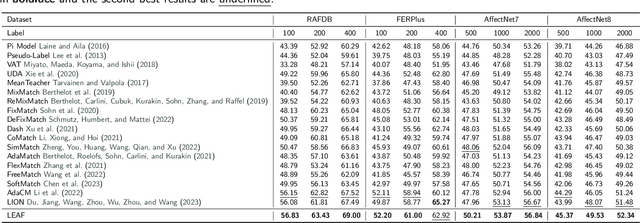
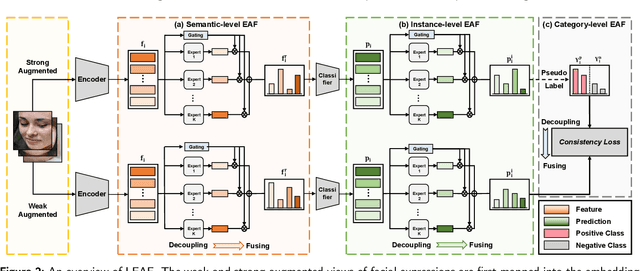

Semi-supervised learning has emerged as a promising approach to tackle the challenge of label scarcity in facial expression recognition (FER) task. However, current state-of-the-art methods primarily focus on one side of the coin, i.e., generating high-quality pseudo-labels, while overlooking the other side: enhancing expression-relevant representations. In this paper, we unveil both sides of the coin by proposing a unified framework termed hierarchicaL dEcoupling And Fusing (LEAF) to coordinate expression-relevant representations and pseudo-labels for semi-supervised FER. LEAF introduces a hierarchical expression-aware aggregation strategy that operates at three levels: semantic, instance, and category. (1) At the semantic and instance levels, LEAF decouples representations into expression-agnostic and expression-relevant components, and adaptively fuses them using learnable gating weights. (2) At the category level, LEAF assigns ambiguous pseudo-labels by decoupling predictions into positive and negative parts, and employs a consistency loss to ensure agreement between two augmented views of the same image. Extensive experiments on benchmark datasets demonstrate that by unveiling and harmonizing both sides of the coin, LEAF outperforms state-of-the-art semi-supervised FER methods, effectively leveraging both labeled and unlabeled data. Moreover, the proposed expression-aware aggregation strategy can be seamlessly integrated into existing semi-supervised frameworks, leading to significant performance gains. Our code is available at https://anonymous.4open.science/r/LEAF-BC57/.
Confidence-Aware RGB-D Face Recognition via Virtual Depth Synthesis
Mar 16, 2024


2D face recognition encounters challenges in unconstrained environments due to varying illumination, occlusion, and pose. Recent studies focus on RGB-D face recognition to improve robustness by incorporating depth information. However, collecting sufficient paired RGB-D training data is expensive and time-consuming, hindering wide deployment. In this work, we first construct a diverse depth dataset generated by 3D Morphable Models for depth model pre-training. Then, we propose a domain-independent pre-training framework that utilizes readily available pre-trained RGB and depth models to separately perform face recognition without needing additional paired data for retraining. To seamlessly integrate the two distinct networks and harness the complementary benefits of RGB and depth information for improved accuracy, we propose an innovative Adaptive Confidence Weighting (ACW). This mechanism is designed to learn confidence estimates for each modality to achieve modality fusion at the score level. Our method is simple and lightweight, only requiring ACW training beyond the backbone models. Experiments on multiple public RGB-D face recognition benchmarks demonstrate state-of-the-art performance surpassing previous methods based on depth estimation and feature fusion, validating the efficacy of our approach.
HAM-TTS: Hierarchical Acoustic Modeling for Token-Based Zero-Shot Text-to-Speech with Model and Data Scaling
Mar 09, 2024


Token-based text-to-speech (TTS) models have emerged as a promising avenue for generating natural and realistic speech, yet they grapple with low pronunciation accuracy, speaking style and timbre inconsistency, and a substantial need for diverse training data. In response, we introduce a novel hierarchical acoustic modeling approach complemented by a tailored data augmentation strategy and train it on the combination of real and synthetic data, scaling the data size up to 650k hours, leading to the zero-shot TTS model with 0.8B parameters. Specifically, our method incorporates a latent variable sequence containing supplementary acoustic information based on refined self-supervised learning (SSL) discrete units into the TTS model by a predictor. This significantly mitigates pronunciation errors and style mutations in synthesized speech. During training, we strategically replace and duplicate segments of the data to enhance timbre uniformity. Moreover, a pretrained few-shot voice conversion model is utilized to generate a plethora of voices with identical content yet varied timbres. This facilitates the explicit learning of utterance-level one-to-many mappings, enriching speech diversity and also ensuring consistency in timbre. Comparative experiments (Demo page: https://anonymous.4open.science/w/ham-tts/)demonstrate our model's superiority over VALL-E in pronunciation precision and maintaining speaking style, as well as timbre continuity.
PRCL: Probabilistic Representation Contrastive Learning for Semi-Supervised Semantic Segmentation
Feb 28, 2024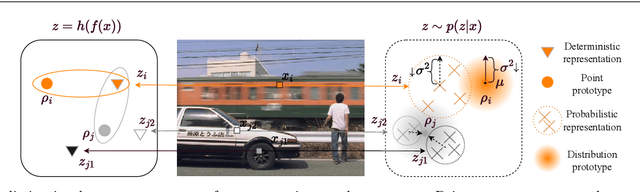
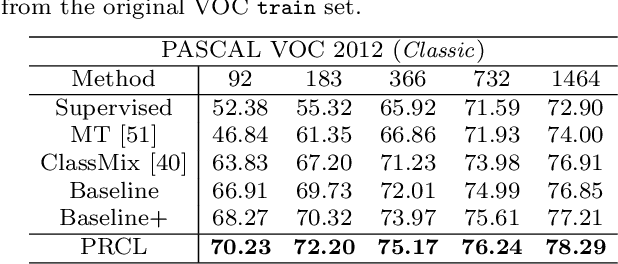
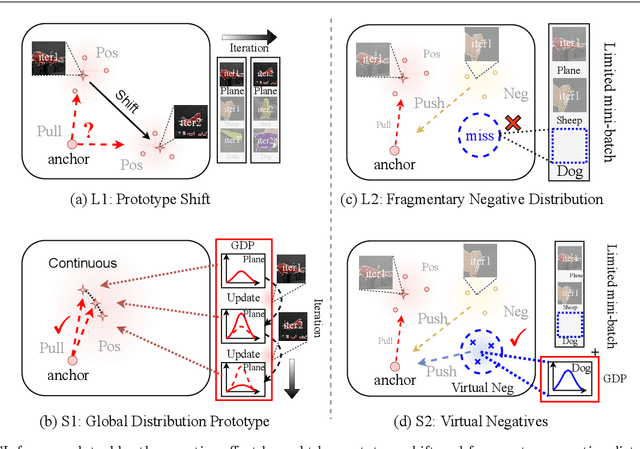
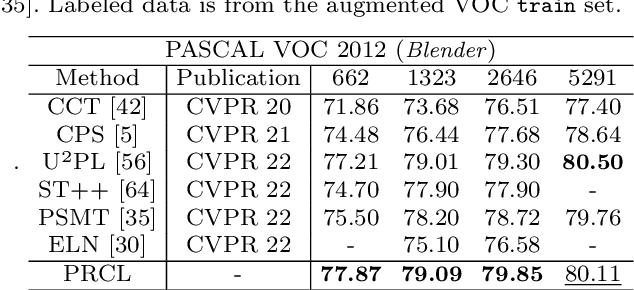
Tremendous breakthroughs have been developed in Semi-Supervised Semantic Segmentation (S4) through contrastive learning. However, due to limited annotations, the guidance on unlabeled images is generated by the model itself, which inevitably exists noise and disturbs the unsupervised training process. To address this issue, we propose a robust contrastive-based S4 framework, termed the Probabilistic Representation Contrastive Learning (PRCL) framework to enhance the robustness of the unsupervised training process. We model the pixel-wise representation as Probabilistic Representations (PR) via multivariate Gaussian distribution and tune the contribution of the ambiguous representations to tolerate the risk of inaccurate guidance in contrastive learning. Furthermore, we introduce Global Distribution Prototypes (GDP) by gathering all PRs throughout the whole training process. Since the GDP contains the information of all representations with the same class, it is robust from the instant noise in representations and bears the intra-class variance of representations. In addition, we generate Virtual Negatives (VNs) based on GDP to involve the contrastive learning process. Extensive experiments on two public benchmarks demonstrate the superiority of our PRCL framework.
EmoWear: Exploring Emotional Teasers for Voice Message Interaction on Smartwatches
Feb 11, 2024Voice messages, by nature, prevent users from gauging the emotional tone without fully diving into the audio content. This hinders the shared emotional experience at the pre-retrieval stage. Research scarcely explored "Emotional Teasers"-pre-retrieval cues offering a glimpse into an awaiting message's emotional tone without disclosing its content. We introduce EmoWear, a smartwatch voice messaging system enabling users to apply 30 animation teasers on message bubbles to reflect emotions. EmoWear eases senders' choice by prioritizing emotions based on semantic and acoustic processing. EmoWear was evaluated in comparison with a mirroring system using color-coded message bubbles as emotional cues (N=24). Results showed EmoWear significantly enhanced emotional communication experience in both receiving and sending messages. The animated teasers were considered intuitive and valued for diverse expressions. Desirable interaction qualities and practical implications are distilled for future design. We thereby contribute both a novel system and empirical knowledge concerning emotional teasers for voice messaging.
Not All Data Matters: An End-to-End Adaptive Dataset Pruning Framework for Enhancing Model Performance and Efficiency
Dec 09, 2023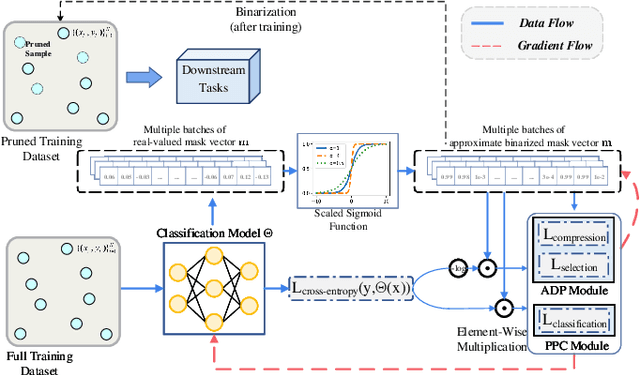
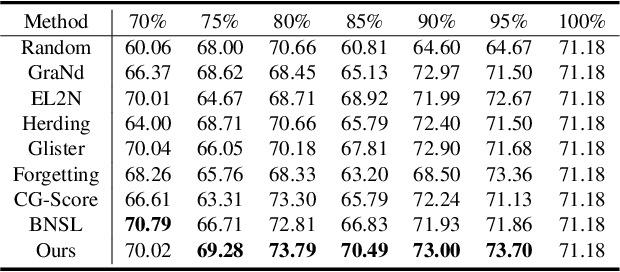
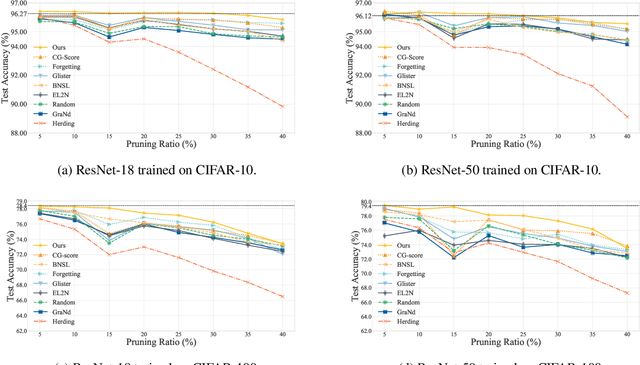
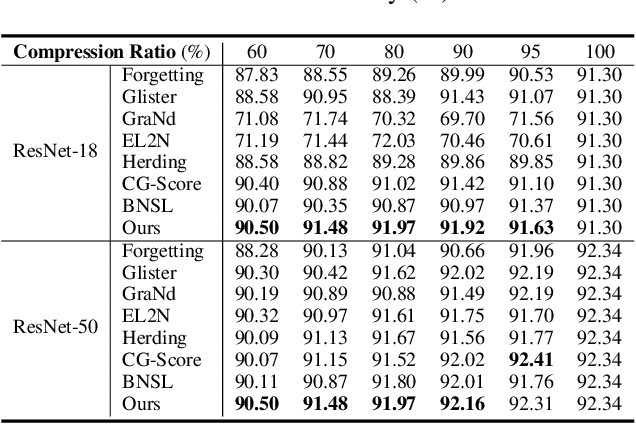
While deep neural networks have demonstrated remarkable performance across various tasks, they typically require massive training data. Due to the presence of redundancies and biases in real-world datasets, not all data in the training dataset contributes to the model performance. To address this issue, dataset pruning techniques have been introduced to enhance model performance and efficiency by eliminating redundant training samples and reducing computational and memory overhead. However, previous works most rely on manually crafted scalar scores, limiting their practical performance and scalability across diverse deep networks and datasets. In this paper, we propose AdaPruner, an end-to-end Adaptive DAtaset PRUNing framEwoRk. AdaPruner can perform effective dataset pruning without the need for explicitly defined metrics. Our framework jointly prunes training data and fine-tunes models with task-specific optimization objectives. AdaPruner leverages (1) An adaptive dataset pruning (ADP) module, which iteratively prunes redundant samples to an expected pruning ratio; and (2) A pruning performance controller (PPC) module, which optimizes the model performance for accurate pruning. Therefore, AdaPruner exhibits high scalability and compatibility across various datasets and deep networks, yielding improved dataset distribution and enhanced model performance. AdaPruner can still significantly enhance model performance even after pruning up to 10-30\% of the training data. Notably, these improvements are accompanied by substantial savings in memory and computation costs. Qualitative and quantitative experiments suggest that AdaPruner outperforms other state-of-the-art dataset pruning methods by a large margin.
DanZero+: Dominating the GuanDan Game through Reinforcement Learning
Dec 05, 2023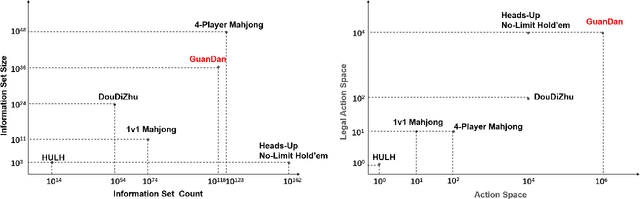
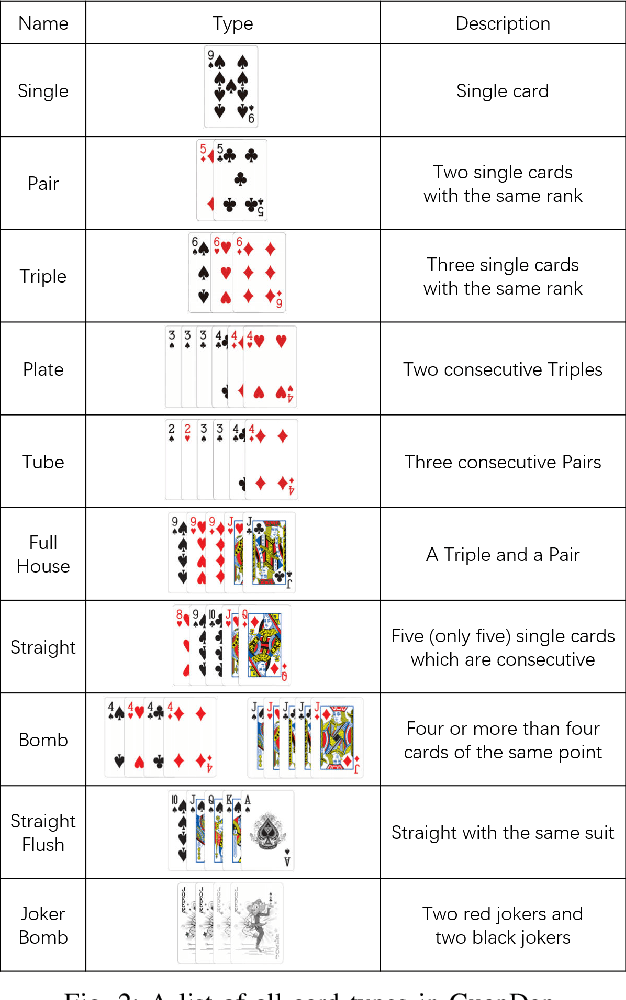
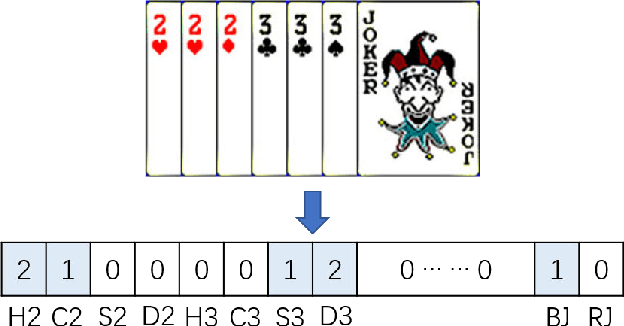
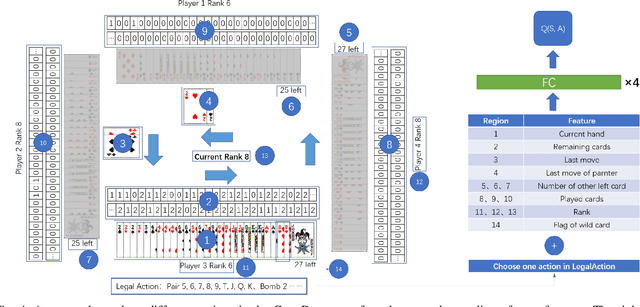
The utilization of artificial intelligence (AI) in card games has been a well-explored subject within AI research for an extensive period. Recent advancements have propelled AI programs to showcase expertise in intricate card games such as Mahjong, DouDizhu, and Texas Hold'em. In this work, we aim to develop an AI program for an exceptionally complex and popular card game called GuanDan. This game involves four players engaging in both competitive and cooperative play throughout a long process to upgrade their level, posing great challenges for AI due to its expansive state and action space, long episode length, and complex rules. Employing reinforcement learning techniques, specifically Deep Monte Carlo (DMC), and a distributed training framework, we first put forward an AI program named DanZero for this game. Evaluation against baseline AI programs based on heuristic rules highlights the outstanding performance of our bot. Besides, in order to further enhance the AI's capabilities, we apply policy-based reinforcement learning algorithm to GuanDan. To address the challenges arising from the huge action space, which will significantly impact the performance of policy-based algorithms, we adopt the pre-trained model to facilitate the training process and the achieved AI program manages to achieve a superior performance.