 Add to Chrome
 Add to Firefox
 Add to Edge
MemoryDocDataSet: A Benchmark for Joint Conversational Memory and Long Document Reasoning
Jun 03, 2026
AI systems increasingly need to combine two demanding capabilities: navigating multi-session conversation history and performing deep reading comprehension within long documents. Yet no existing benchmark evaluates both simultaneously. We introduce MemoryDocDataSet, a synthetic benchmark of 50 micro-worlds and 1,000 QA pairs in which each instance comprises 3-5 personas, a temporal event graph spanning months of activity, 3-5 real long documents (20,000-50,000 tokens each sourced from the Caselaw Access Project), multi-session conversations grounded on those documents, and 20 question-answer pairs across five reasoning categories. The defining feature is the Hybrid source tag: questions requiring a system to first navigate conversation history to identify which document is relevant, then extract the answer from within that document. Hybrid questions account for 75.1% of the dataset. Dataset quality is characterised through a prompt-sensitivity self-consistency analysis using LLM-as-judge, yielding a median Cohen's $κ= 0.634$ across all 50 micro-worlds. We evaluate six baseline configurations spanning truncated context, long-context LLMs, retrieval-augmented generation (RAG), and memory systems. The best baseline (RAG-Both) achieves 0.358 overall F1 and 0.342 on Hybrid. Document-only retrieval (RAG-Doc) collapses to 0.267 on Hybrid despite achieving 0.453 on Doc-only questions, demonstrating a clear joint-retrieval gap that motivates architectures unifying conversational memory with long-document navigation. We release the dataset, generation pipeline, and all baseline implementations.

When Does Persona Prompting Actually Help? A Retrieval and Metric Analysis of Expert Role Injection in LLMs
May 28, 2026Persona prompting is widely used to steer large language models, yet its practical value remains unclear. Prior work often evaluates persona prompting using aggregate scores, making it difficult to determine whether expert-role prompting consistently improves response quality or instead changes responses along different quality dimensions. We study this question through a controlled comparison of four prompting conditions across 1,140 open-ended questions spanning 38 expert roles and six domains: no role prompt, a generic domain-expert prompt, embedding-based role retrieval, and a hybrid retrieval method combining embedding search with LLM-based role selection. Aggregate results show only small overall differences between conditions. However, metric-level analysis reveals a consistent tradeoff that aggregate averages obscure: role prompting systematically increases expertise depth while reducing clarity. These effects are highly conditional rather than universal. Role prompting performs best on advisory questions and in domains such as medicine and psychology, where structured expert framing and risk communication are intrinsically valuable. In contrast, baseline prompting performs better on conceptual and explanatory questions in finance, legal, science, and technology domains, where concise plain-language explanation is more important. We further show that hybrid retrieval significantly improves over embedding-only role selection, although better role retrieval does not eliminate the broader expertise-depth versus clarity tradeoff. Overall, our findings suggest that persona prompting primarily reshapes response characteristics rather than broadly improving capability, and that multi-metric evaluation is necessary for understanding its effects.
What Training Data Teaches RL Memory Agents: An Empirical Study of Curriculum Effects in Memory-Augmented QA
May 21, 2026Reinforcement learning (RL) has emerged as a viable recipe for training LLM agents to reason over external memory banks in multi-session dialogue. Existing work trains exclusively on a single benchmark, leaving open how the composition of training data shapes the skills a memory agent acquires. We present a controlled empirical study that holds architecture, RL algorithm, and all hyperparameters fixed and varies only the training curriculum across three conditions: in-domain (LoCoMo), mixed-benchmark (LoCoMo + LongMemEval), and out-of-domain (LongMemEval only). Across two benchmarks and ten question types, curriculum composition acts as a fine-grained lever on specialization rather than a uniform scaling factor on performance. The mixed curriculum yields the strongest overall F1 on both evaluation sets. Training on a narrow out-of-domain set transfers a targeted skill - temporal reasoning - despite weak aggregate performance. Per-type differences substantially exceed aggregate differences, indicating that single-number benchmark comparisons systematically underreport curriculum effects. We further report two practical lessons from adapting GRPO to a single-GPU regime: cross-benchmark mixing requires filtering format-specific noise from memory banks to preserve training signal, and binary exact-match reward produces no learning signal at the small group sizes (G = 4) required on one GPU, motivating continuous reward functions in this regime.
iEmoTTS: Toward Robust Cross-Speaker Emotion Transfer and Control for Speech Synthesis based on Disentanglement between Prosody and Timbre
Jun 29, 2022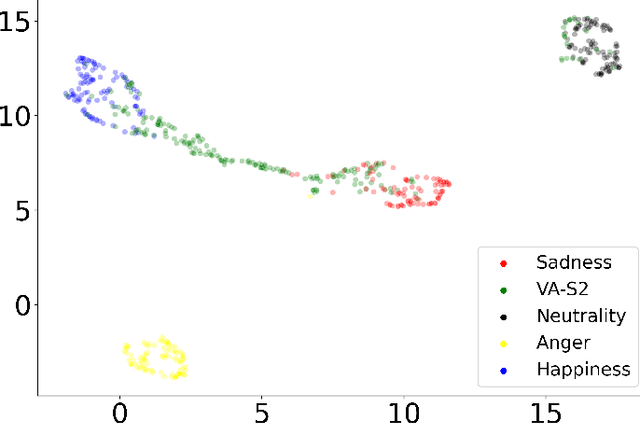
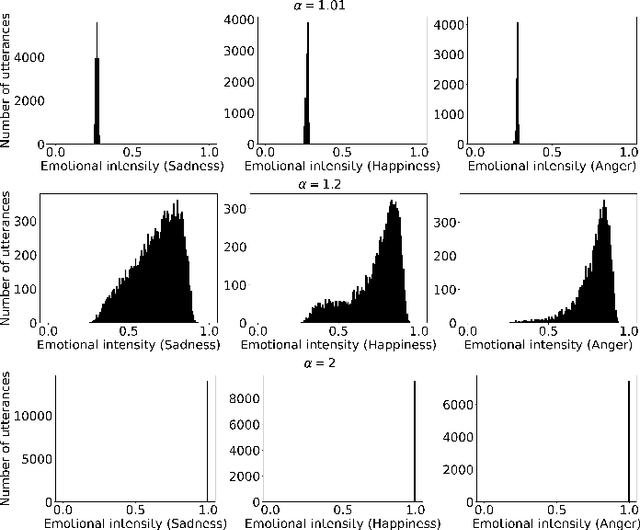
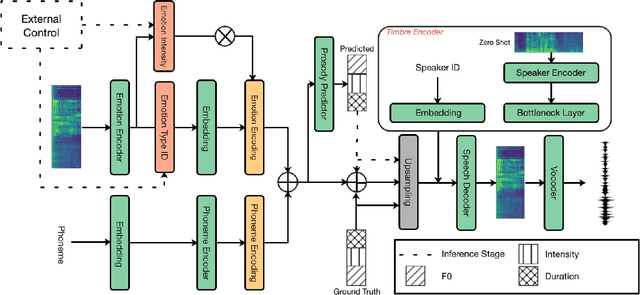
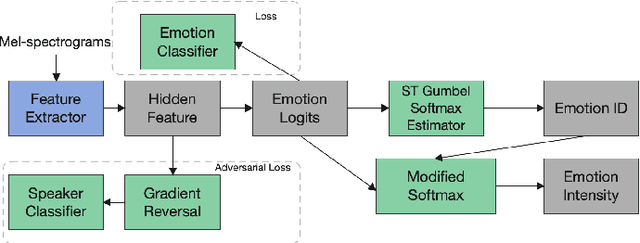
The capability of generating speech with specific type of emotion is desired for many applications of human-computer interaction. Cross-speaker emotion transfer is a common approach to generating emotional speech when speech with emotion labels from target speakers is not available for model training. This paper presents a novel cross-speaker emotion transfer system, named iEmoTTS. The system is composed of an emotion encoder, a prosody predictor, and a timbre encoder. The emotion encoder extracts the identity of emotion type as well as the respective emotion intensity from the mel-spectrogram of input speech. The emotion intensity is measured by the posterior probability that the input utterance carries that emotion. The prosody predictor is used to provide prosodic features for emotion transfer. The timber encoder provides timbre-related information for the system. Unlike many other studies which focus on disentangling speaker and style factors of speech, the iEmoTTS is designed to achieve cross-speaker emotion transfer via disentanglement between prosody and timbre. Prosody is considered as the main carrier of emotion-related speech characteristics and timbre accounts for the essential characteristics for speaker identification. Zero-shot emotion transfer, meaning that speech of target speakers are not seen in model training, is also realized with iEmoTTS. Extensive experiments of subjective evaluation have been carried out. The results demonstrate the effectiveness of iEmoTTS as compared with other recently proposed systems of cross-speaker emotion transfer. It is shown that iEmoTTS can produce speech with designated emotion type and controllable emotion intensity. With appropriate information bottleneck capacity, iEmoTTS is able to effectively transfer emotion information to a new speaker. Audio samples are publicly available\footnote{https://patrick-g-zhang.github.io/iemotts/}.
PIMIP: An Open Source Platform for Pathology Information Management and Integration
Nov 09, 2021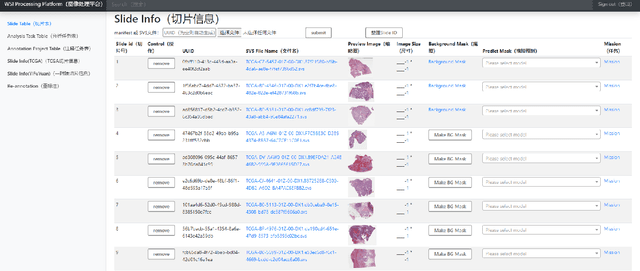
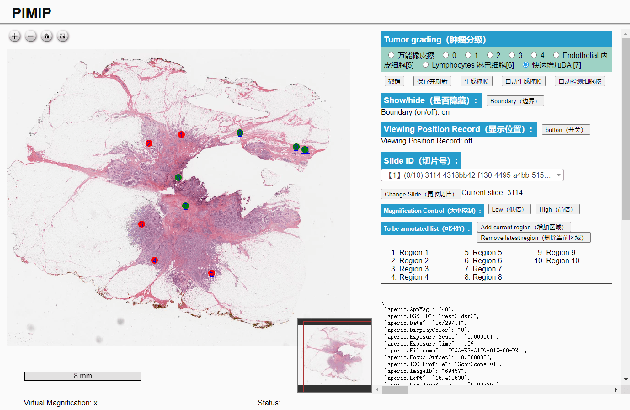
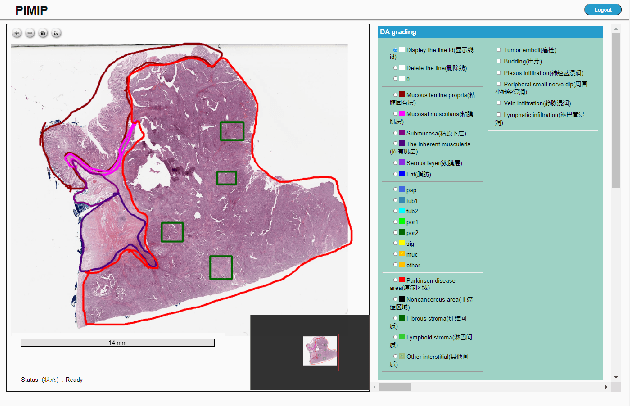
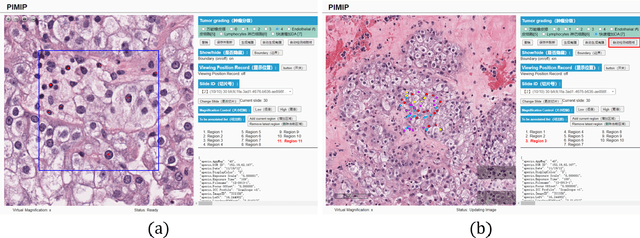
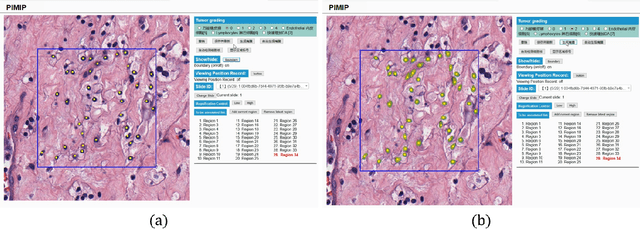
Digital pathology plays a crucial role in the development of artificial intelligence in the medical field. The digital pathology platform can make the pathological resources digital and networked, and realize the permanent storage of visual data and the synchronous browsing processing without the limitation of time and space. It has been widely used in various fields of pathology. However, there is still a lack of an open and universal digital pathology platform to assist doctors in the management and analysis of digital pathological sections, as well as the management and structured description of relevant patient information. Most platforms cannot integrate image viewing, annotation and analysis, and text information management. To solve the above problems, we propose a comprehensive and extensible platform PIMIP. Our PIMIP has developed the image annotation functions based on the visualization of digital pathological sections. Our annotation functions support multi-user collaborative annotation and multi-device annotation, and realize the automation of some annotation tasks. In the annotation task, we invited a professional pathologist for guidance. We introduce a machine learning module for image analysis. The data we collected included public data from local hospitals and clinical examples. Our platform is more clinical and suitable for clinical use. In addition to image data, we also structured the management and display of text information. So our platform is comprehensive. The platform framework is built in a modular way to support users to add machine learning modules independently, which makes our platform extensible.
BioIE: Biomedical Information Extraction with Multi-head Attention Enhanced Graph Convolutional Network
Oct 26, 2021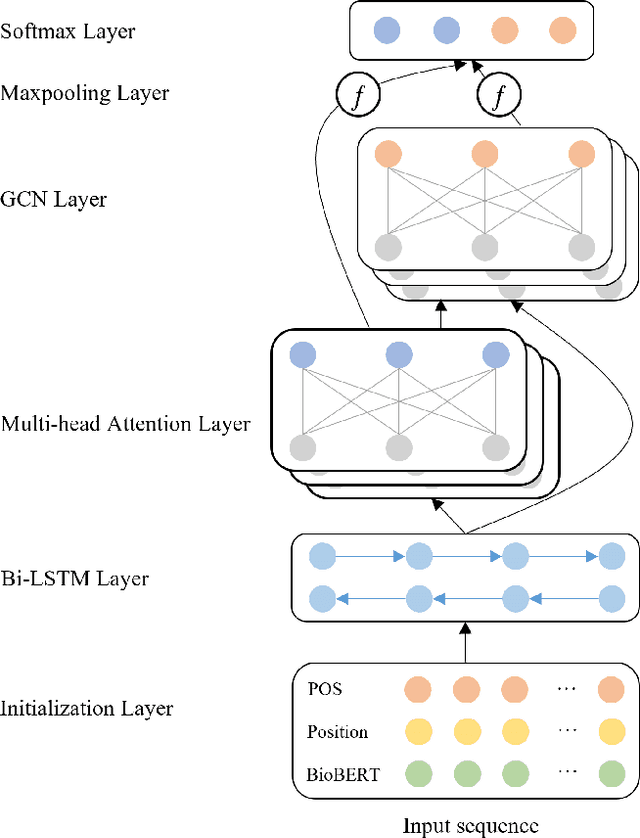

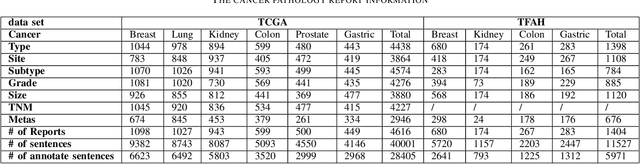

Constructing large-scaled medical knowledge graphs can significantly boost healthcare applications for medical surveillance, bring much attention from recent research. An essential step in constructing large-scale MKG is extracting information from medical reports. Recently, information extraction techniques have been proposed and show promising performance in biomedical information extraction. However, these methods only consider limited types of entity and relation due to the noisy biomedical text data with complex entity correlations. Thus, they fail to provide enough information for constructing MKGs and restrict the downstream applications. To address this issue, we propose Biomedical Information Extraction, a hybrid neural network to extract relations from biomedical text and unstructured medical reports. Our model utilizes a multi-head attention enhanced graph convolutional network to capture the complex relations and context information while resisting the noise from the data. We evaluate our model on two major biomedical relationship extraction tasks, chemical-disease relation and chemical-protein interaction, and a cross-hospital pan-cancer pathology report corpus. The results show that our method achieves superior performance than baselines. Furthermore, we evaluate the applicability of our method under a transfer learning setting and show that BioIE achieves promising performance in processing medical text from different formats and writing styles.
A Personalized Diagnostic Generation Framework Based on Multi-source Heterogeneous Data
Oct 26, 2021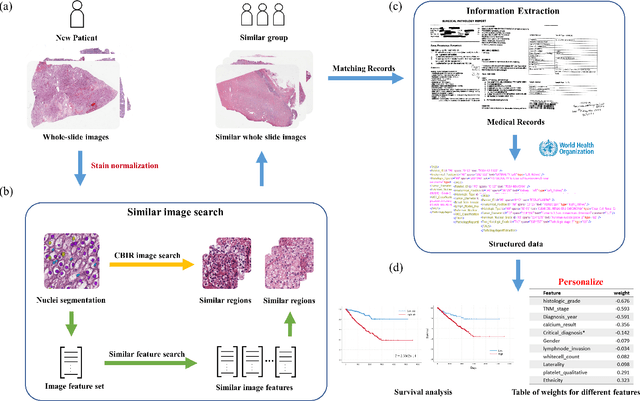
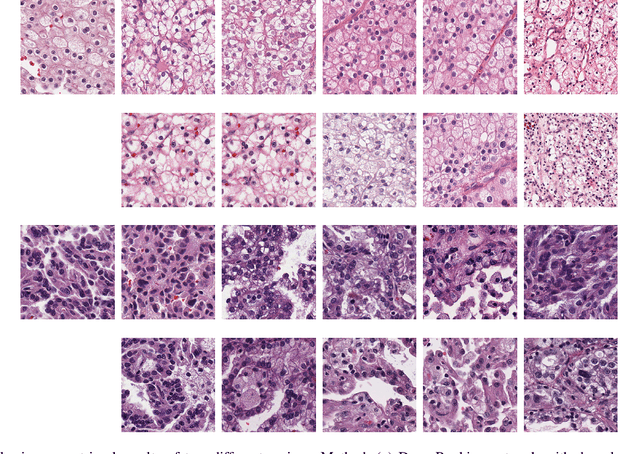
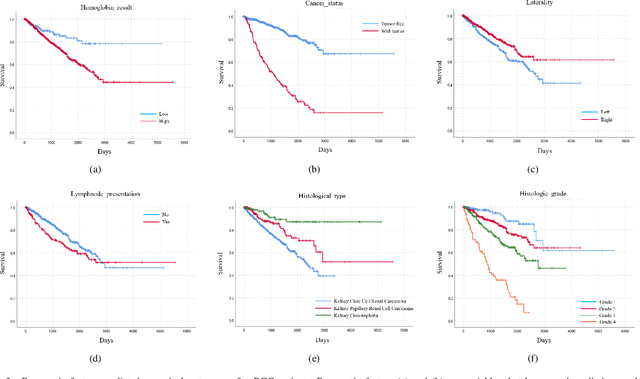
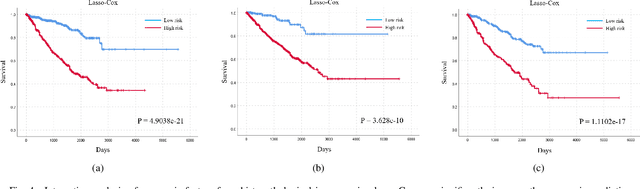
Personalized diagnoses have not been possible due to sear amount of data pathologists have to bear during the day-to-day routine. This lead to the current generalized standards that are being continuously updated as new findings are reported. It is noticeable that these effective standards are developed based on a multi-source heterogeneous data, including whole-slide images and pathology and clinical reports. In this study, we propose a framework that combines pathological images and medical reports to generate a personalized diagnosis result for individual patient. We use nuclei-level image feature similarity and content-based deep learning method to search for a personalized group of population with similar pathological characteristics, extract structured prognostic information from descriptive pathology reports of the similar patient population, and assign importance of different prognostic factors to generate a personalized pathological diagnosis result. We use multi-source heterogeneous data from TCGA (The Cancer Genome Atlas) database. The result demonstrate that our framework matches the performance of pathologists in the diagnosis of renal cell carcinoma. This framework is designed to be generic, thus could be applied for other types of cancer. The weights could provide insights to the known prognostic factors and further guide more precise clinical treatment protocols.
W-Net: A Two-Stage Convolutional Network for Nucleus Detection in Histopathology Image
Oct 26, 2021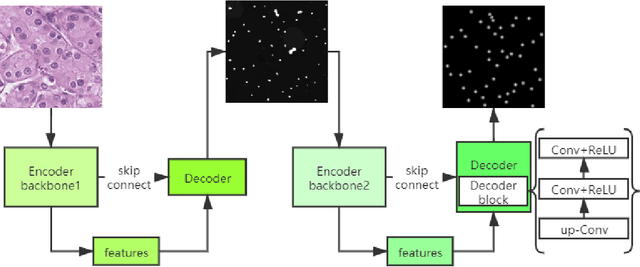
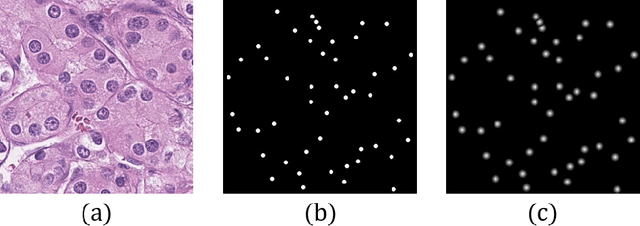
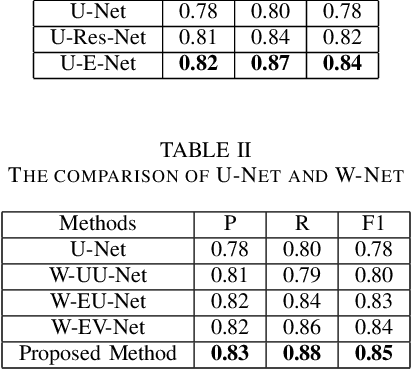
Pathological diagnosis is the gold standard for cancer diagnosis, but it is labor-intensive, in which tasks such as cell detection, classification, and counting are particularly prominent. A common solution for automating these tasks is using nucleus segmentation technology. However, it is hard to train a robust nucleus segmentation model, due to several challenging problems, the nucleus adhesion, stacking, and excessive fusion with the background. Recently, some researchers proposed a series of automatic nucleus segmentation methods based on point annotation, which can significant improve the model performance. Nevertheless, the point annotation needs to be marked by experienced pathologists. In order to take advantage of segmentation methods based on point annotation, further alleviate the manual workload, and make cancer diagnosis more efficient and accurate, it is necessary to develop an automatic nucleus detection algorithm, which can automatically and efficiently locate the position of the nucleus in the pathological image and extract valuable information for pathologists. In this paper, we propose a W-shaped network for automatic nucleus detection. Different from the traditional U-Net based method, mapping the original pathology image to the target mask directly, our proposed method split the detection task into two sub-tasks. The first sub-task maps the original pathology image to the binary mask, then the binary mask is mapped to the density mask in the second sub-task. After the task is split, the task's difficulty is significantly reduced, and the network's overall performance is improved.
A Precision Diagnostic Framework of Renal Cell Carcinoma on Whole-Slide Images using Deep Learning
Oct 26, 2021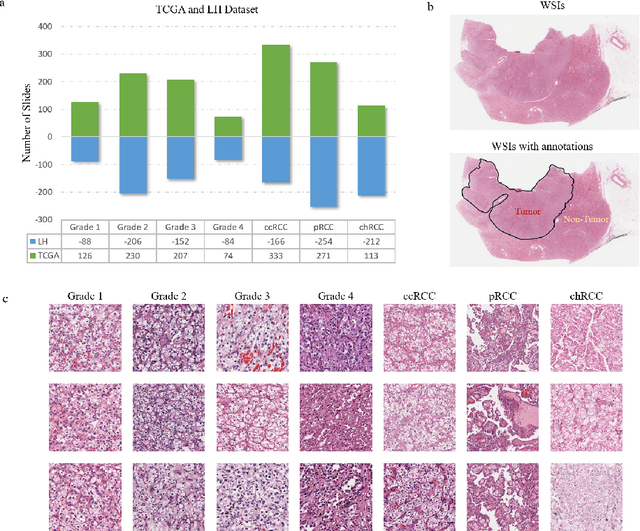
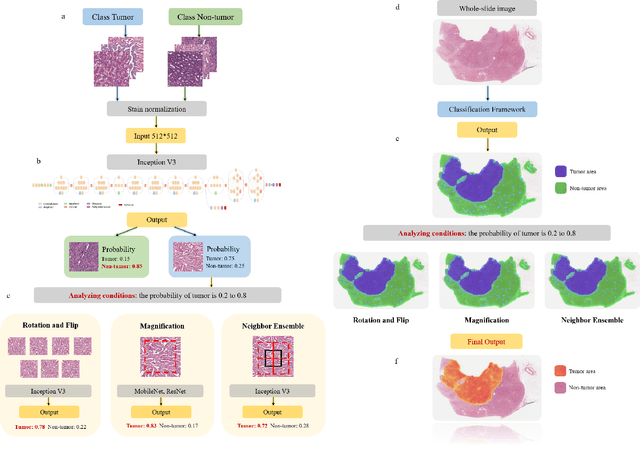
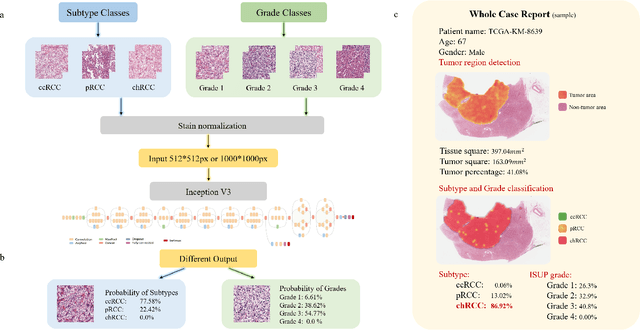
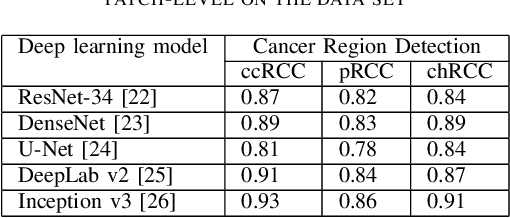
Diagnostic pathology, which is the basis and gold standard of cancer diagnosis, provides essential information on the prognosis of the disease and vital evidence for clinical treatment. Tumor region detection, subtype and grade classification are the fundamental diagnostic indicators for renal cell carcinoma (RCC) in whole-slide images (WSIs). However, pathological diagnosis is subjective, differences in observation and diagnosis between pathologists is common in hospitals with inadequate diagnostic capacity. The main challenge for developing deep learning based RCC diagnostic system is the lack of large-scale datasets with precise annotations. In this work, we proposed a deep learning-based framework for analyzing histopathological images of patients with renal cell carcinoma, which has the potential to achieve pathologist-level accuracy in diagnosis. A deep convolutional neural network (InceptionV3) was trained on the high-quality annotated dataset of The Cancer Genome Atlas (TCGA) whole-slide histopathological image for accurate tumor area detection, classification of RCC subtypes, and ISUP grades classification of clear cell carcinoma subtypes. These results suggest that our framework can help pathologists in the detection of cancer region and classification of subtypes and grades, which could be applied to any cancer type, providing auxiliary diagnosis and promoting clinical consensus.
Instance-based Vision Transformer for Subtyping of Papillary Renal Cell Carcinoma in Histopathological Image
Jun 23, 2021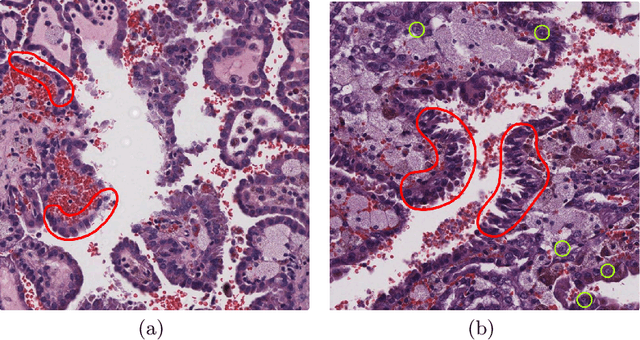
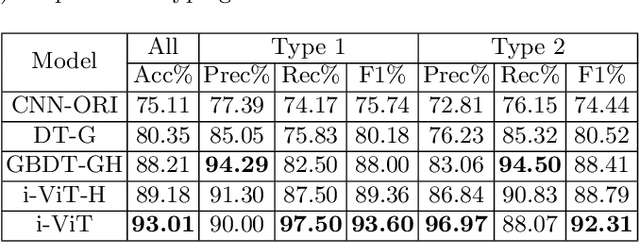
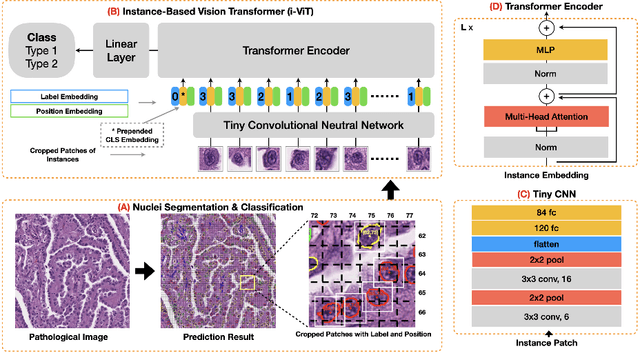
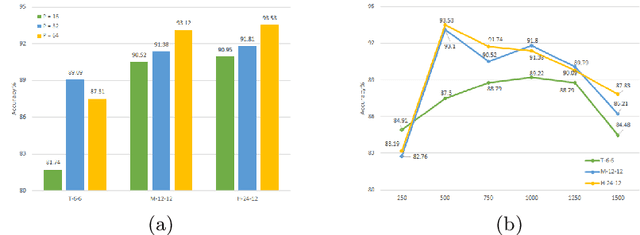
Histological subtype of papillary (p) renal cell carcinoma (RCC), type 1 vs. type 2, is an essential prognostic factor. The two subtypes of pRCC have a similar pattern, i.e., the papillary architecture, yet some subtle differences, including cellular and cell-layer level patterns. However, the cellular and cell-layer level patterns almost cannot be captured by existing CNN-based models in large-size histopathological images, which brings obstacles to directly applying these models to such a fine-grained classification task. This paper proposes a novel instance-based Vision Transformer (i-ViT) to learn robust representations of histopathological images for the pRCC subtyping task by extracting finer features from instance patches (by cropping around segmented nuclei and assigning predicted grades). The proposed i-ViT takes top-K instances as input and aggregates them for capturing both the cellular and cell-layer level patterns by a position-embedding layer, a grade-embedding layer, and a multi-head multi-layer self-attention module. To evaluate the performance of the proposed framework, experienced pathologists are invited to selected 1162 regions of interest from 171 whole slide images of type 1 and type 2 pRCC. Experimental results show that the proposed method achieves better performance than existing CNN-based models with a significant margin.