 Add to Chrome
 Add to Firefox
 Add to Edge
Metacognition in LLMs: Foundations, Progress, and Opportunities
Jul 13, 2026
Metacognition is a foundational component of intelligence critical to effective learning, problem solving, decision-making, communication, and more. In recent years, it has become increasingly recognized as a cornerstone of capable, transparent AI systems. Yet while LLMs have made significant progress across diverse real-world tasks, it is not yet clear when, how, or to what extent they can exhibit or be endowed with effective metacognitive abilities, nor how such abilities can be adapted to advance the fundamental capabilities, reliability, and intelligence of AI systems. This paper bridges this gap by presenting the first comprehensive overview of the current state of knowledge on metacognition for LLMs. We analyze and taxonomize the landscape of this emerging field and summarize recent technical advancements, including methods and benchmarks to measure and evaluate LLMs' metacognitive abilities, techniques to elicit, improve, and apply metacognition in LLMs, and findings and implications of ongoing research. We also discuss applications, open questions and challenges, and promising directions for future work. Our aim is to provide a detailed and up-to-date review of this topic and stimulate meaningful research and discussion. An organized list of papers can be found at https://github.com/yale-nlp/LLM-Metacognition.

Reinforcement Learning with Metacognitive Feedback Elicits Faithful Uncertainty Expression in LLMs
Jun 30, 2026Metacognition is a critical component of intelligence that describes the ability to monitor and regulate one's own cognitive processes. Yet LLMs exhibit systemic deficiencies in key metacognitive faculties: they hallucinate with high confidence, fail to recognize knowledge boundaries, and misrepresent their internal uncertainty--undermining trustworthiness and reliability. Since monitoring task performance and adapting behavior accordingly are central to metacognition, we posit that models capable of accurately judging their own performance are better positioned to improve it. We operationalize this idea via two novel mechanisms: reinforcement learning with metacognitive feedback (RLMF), a paradigm to refine completion rankings during preference optimization based on the quality of a model's self-judgments of performance, and metacognitive data selection, which uses similar self-judgments to identify high-value training examples, outperforming naive active learning. We apply these innovations to the problem of faithful calibration (FC), a task that is itself fundamentally metacognitive: the goal is to align expressed with intrinsic uncertainty, difficult even for frontier LLMs. We adopt a two-stage, decoupled approach, first using these methods to calibrate the faithfulness of models' self-reported confidence scores, then mapping to natural, context-adaptable linguistic uncertainty via targeted output editing. Extensive experiments show RLMF achieves generalizable, state-of-the-art FC on diverse tasks while preserving accuracy. Further, RLMF surpasses standard RL by up to 63% while enhancing models' ability to assess and express their own capability limits. This positions RLMF as a promising paradigm to enhance LLM metacognition toward improved abilities and alignment, and suggests metacognitive performance as an effective RL signal to overcome limits of prior intrinsic feedback methods.
Quantifying Faithful Confidence Expression in Large Reasoning Models
Jun 02, 2026Reliable uncertainty communication is critical to the trustworthiness of LLMs, yet faithful calibration (FC)--the alignment between models' intrinsic and (linguistically) expressed confidence--is a persistent failure mode. This challenge is key for large reasoning models (LRMs), whose extended reasoning traces are often interpreted by users as evidence of deliberation, competence, and confidence. Despite the importance of FC and wide usage of LRMs, the extent to which LRMs can faithfully express their confidence remains poorly understood. Moreover, the prevailing paradigm to measure FC does not generalize well to the long chain-of-thought outputs generated by LRMs, which tend to lack clear step boundaries, involve inconsistent step structure, and encode complex conditional dependencies throughout the trace--complicating estimation of intrinsic confidence. To address this challenge, we introduce a novel framework to systematically quantify FC of LRMs. Our framework analyzes linguistic decisiveness relative to three sources of internal uncertainty, based on token probabilities, hidden states, and sampled response consistency. We also devise a prefix-conditioned sampling approach to control for conditional and structural variation across traces. Applying our framework to a diverse suite of leading models, datasets, and prompts, we find that faithful confidence expression is a significant challenge for LRMs. Reasoning behaviors do not automatically translate to improved FC, and prompt interventions for non-reasoning models do not improve faithfulness in the reasoning setting. Different confidence estimators further produce divergent assessments of the same traces, revealing fragility in prior evaluation methodologies. Taken together, our work establishes FC as a distinct reliability and alignment target for LRMs, particularly as such systems are increasingly deployed in high-stakes contexts.
Can LLMs Use Linguistic Uncertainty Markers to Reliably Reflect Intrinsic Confidence?
May 27, 2026LLMs' linguistically expressed confidence should faithfully reflect their intrinsic uncertainty. While recent work shows LLMs struggle to use epistemic markers (e.g., "it is likely...") in a human-aligned fashion, it remains unclear whether models can apply their own linguistic confidence framework to associate markers with specific confidence levels in a stable and generalizable way, and how contextual features impact this ability. We conduct the first systematic study of this question, formalizing _marker internal confidence_ (MIC) as the estimated intrinsic confidence a model associates with a specific epistemic marker in a given task domain. We present 7 metrics to evaluate the stability of MICs within and across distributions. Applying our analysis framework to diverse models and tasks, we find that LLMs remain faithfully miscalibrated even under model-centric interpretation of marker meanings, struggling to differentiate markers by internal confidence across distributions despite preserving a somewhat consistent ranking order across tasks. This supplies critical, complementary evidence to existing work toward a holistic understanding of faithful calibration in LLMs, emphasizing the need for more aligned and stable marker use to improve trustworthiness and reliability.
DoGMaTiQ: Automated Generation of Question-and-Answer Nuggets for Report Evaluation
May 06, 2026Evaluation of long-form, citation-backed reports has lately received significant attention due to the wide-scale adoption of retrieval-augmented generation (RAG) systems. Core to many evaluation frameworks is the use of atomic facts, or nuggets, to assess a report's coverage of query-relevant information attested in the underlying collection. While nuggets have traditionally been represented as short statements, recent work has used question-answer (QA) representations, enabling fine-grained evaluations that decouple the information need (i.e. the question) from the potentially diverse content that satisfies it (i.e. its answers). A persistent challenge for nugget-based evaluation is the need to manually curate sets of nuggets for each topic in a test collection -- a laborious process that scales poorly to novel information needs. This challenge is acute in cross-lingual settings, where information is found in multilingual source documents. Accordingly, we introduce DoGMaTiQ, a pipeline for generating high-quality QA-based nugget sets in three stages: (1) document-grounded nugget generation, (2) paraphrase clustering, and (3) nugget subselection based on principled quality criteria. We integrate DoGMaTiQ nuggets with AutoArgue -- a recent nugget-based evaluation framework -- to enable fully automatic evaluation of generated reports. We conduct extensive experiments on two cross-lingual TREC shared tasks, NeuCLIR and RAGTIME, showing strong rank correlations with both human-in-the-loop and fully manual judgments. Finally, detailed analysis of our pipeline reveals that a strong LLM nugget generator is key, and that the system rankings induced by DoGMaTiQ are robust to outlier systems. We facilitate future research in report evaluation by publicly releasing our code and artifacts at https://github.com/manestay/dogmatiq.
MetaFaith: Faithful Natural Language Uncertainty Expression in LLMs
May 30, 2025A critical component in the trustworthiness of LLMs is reliable uncertainty communication, yet LLMs often use assertive language when conveying false claims, leading to over-reliance and eroded trust. We present the first systematic study of $\textit{faithful confidence calibration}$ of LLMs, benchmarking models' ability to use linguistic expressions of uncertainty that $\textit{faithfully reflect}$ their intrinsic uncertainty, across a comprehensive array of models, datasets, and prompting strategies. Our results demonstrate that LLMs largely fail at this task, and that existing interventions are insufficient: standard prompt approaches provide only marginal gains, and existing, factuality-based calibration techniques can even harm faithful calibration. To address this critical gap, we introduce MetaFaith, a novel prompt-based calibration approach inspired by human metacognition. We show that MetaFaith robustly improves faithful calibration across diverse models and task domains, enabling up to 61% improvement in faithfulness and achieving an 83% win rate over original generations as judged by humans.
MDCure: A Scalable Pipeline for Multi-Document Instruction-Following
Oct 30, 2024
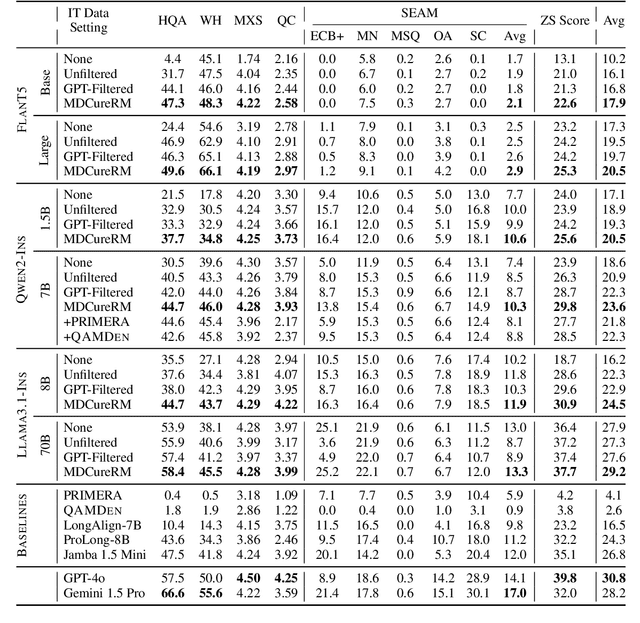
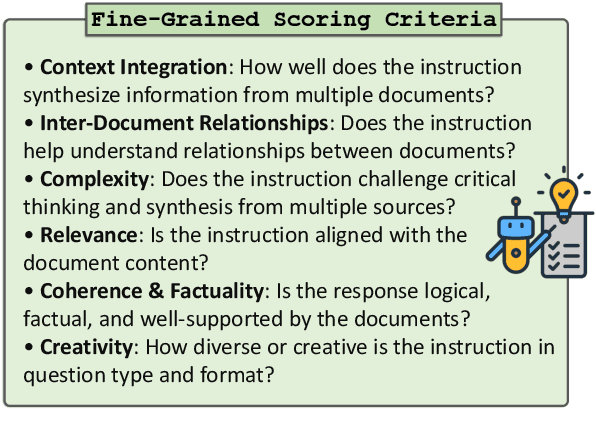

Multi-document (MD) processing is crucial for LLMs to handle real-world tasks such as summarization and question-answering across large sets of documents. While LLMs have improved at processing long inputs, MD contexts still present challenges, such as managing inter-document dependencies, redundancy, and incoherent structures. We introduce MDCure, a scalable and effective fine-tuning pipeline to enhance the MD capabilities of LLMs without the computational cost of pre-training or reliance on human annotated data. MDCure is based on generation of high-quality synthetic MD instruction data from sets of related articles via targeted prompts. We further introduce MDCureRM, a multi-objective reward model which filters generated data based on their training utility for MD settings. With MDCure, we fine-tune a variety of LLMs, from the FlanT5, Qwen2, and LLAMA3.1 model families, up to 70B parameters in size. Extensive evaluations on a wide range of MD and long-context benchmarks spanning various tasks show MDCure consistently improves performance over pre-trained baselines and over corresponding base models by up to 75.5%. Our code, datasets, and models are available at https://github.com/yale-nlp/MDCure.
Perspectives on the Social Impacts of Reinforcement Learning with Human Feedback
Mar 06, 2023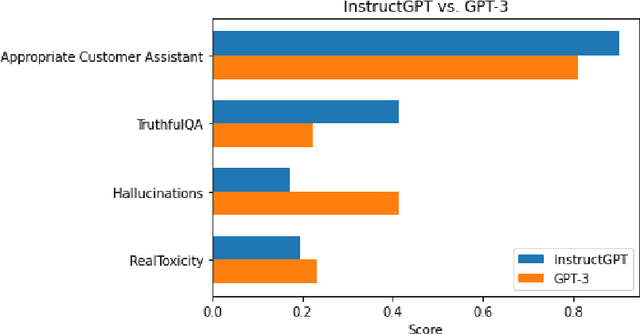
Is it possible for machines to think like humans? And if it is, how should we go about teaching them to do so? As early as 1950, Alan Turing stated that we ought to teach machines in the way of teaching a child. Reinforcement learning with human feedback (RLHF) has emerged as a strong candidate toward allowing agents to learn from human feedback in a naturalistic manner. RLHF is distinct from traditional reinforcement learning as it provides feedback from a human teacher in addition to a reward signal. It has been catapulted into public view by multiple high-profile AI applications, including OpenAI's ChatGPT, DeepMind's Sparrow, and Anthropic's Claude. These highly capable chatbots are already overturning our understanding of how AI interacts with humanity. The wide applicability and burgeoning success of RLHF strongly motivate the need to evaluate its social impacts. In light of recent developments, this paper considers an important question: can RLHF be developed and used without negatively affecting human societies? Our objectives are threefold: to provide a systematic study of the social effects of RLHF; to identify key social and ethical issues of RLHF; and to discuss social impacts for stakeholders. Although text-based applications of RLHF have received much attention, it is crucial to consider when evaluating its social implications the diverse range of areas to which it may be deployed. We describe seven primary ways in which RLHF-based technologies will affect society by positively transforming human experiences with AI. This paper ultimately proposes that RLHF has potential to net positively impact areas of misinformation, AI value-alignment, bias, AI access, cross-cultural dialogue, industry, and workforce. As RLHF raises concerns that echo those of existing AI technologies, it will be important for all to be aware and intentional in the adoption of RLHF.
Streaming Inference for Infinite Non-Stationary Clustering
May 02, 2022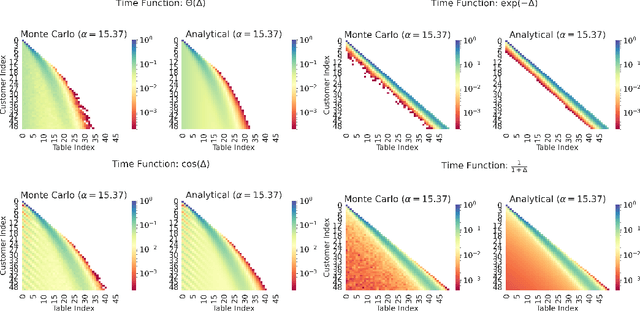



Learning from a continuous stream of non-stationary data in an unsupervised manner is arguably one of the most common and most challenging settings facing intelligent agents. Here, we attack learning under all three conditions (unsupervised, streaming, non-stationary) in the context of clustering, also known as mixture modeling. We introduce a novel clustering algorithm that endows mixture models with the ability to create new clusters online, as demanded by the data, in a probabilistic, time-varying, and principled manner. To achieve this, we first define a novel stochastic process called the Dynamical Chinese Restaurant Process (Dynamical CRP), which is a non-exchangeable distribution over partitions of a set; next, we show that the Dynamical CRP provides a non-stationary prior over cluster assignments and yields an efficient streaming variational inference algorithm. We conclude with experiments showing that the Dynamical CRP can be applied on diverse synthetic and real data with Gaussian and non-Gaussian likelihoods.