 Add to Chrome
 Add to Firefox
 Add to Edge
Metacognition in LLMs: Foundations, Progress, and Opportunities
Jul 13, 2026
Metacognition is a foundational component of intelligence critical to effective learning, problem solving, decision-making, communication, and more. In recent years, it has become increasingly recognized as a cornerstone of capable, transparent AI systems. Yet while LLMs have made significant progress across diverse real-world tasks, it is not yet clear when, how, or to what extent they can exhibit or be endowed with effective metacognitive abilities, nor how such abilities can be adapted to advance the fundamental capabilities, reliability, and intelligence of AI systems. This paper bridges this gap by presenting the first comprehensive overview of the current state of knowledge on metacognition for LLMs. We analyze and taxonomize the landscape of this emerging field and summarize recent technical advancements, including methods and benchmarks to measure and evaluate LLMs' metacognitive abilities, techniques to elicit, improve, and apply metacognition in LLMs, and findings and implications of ongoing research. We also discuss applications, open questions and challenges, and promising directions for future work. Our aim is to provide a detailed and up-to-date review of this topic and stimulate meaningful research and discussion. An organized list of papers can be found at https://github.com/yale-nlp/LLM-Metacognition.

From `May' to `Is': Certainty Distortion in Language Model Rewriting
Jun 06, 2026Humans increasingly turn to Language Models (LMs) in ways that shape beliefs and drive decisions, including discussing, rewriting, and summarizing information from scientific articles, news, and medical reports. However, in these domains, where how confidently a claim is expressed matters, little is known about whether LMs faithfully preserve it. In this work, we investigate certainty distortion in LMs, defined as meaningful changes in expressed certainty when semantic content is preserved. We propose an LM-based evaluation metric that is consistent with population-level judgments of certainty. Using this metric, we characterize certainty distortion across different sizes and families of models in the context of scientific and medical communication tasks. Our results show that certainty distortion affects up to 75\% of LM outputs and is systematically asymmetric in rewriting tasks with most LMs being 1.5-2$\times$ more likely to increase the expressed certainty than to decrease it. These effects can compound over repeated paraphrasing: in the medical domain, claude-haiku-4-5 increases certainty of 20\% examples after a single iteration, increasing to 40\% after five iterations. Prompt-based interventions reduce overall certainty distortion but do not eliminate it. Together, these findings reveal a general bias toward inflating expressed certainty, with direct implications for users who rely on LMs in high-stakes domains.
The Impact of AI Usage and Informativeness on Skill Development in Logical Reasoning
May 20, 2026Artificial intelligence (AI) is being increasingly integrated into human problem-solving, yet its effects on individual skill development remain unclear. We examine how both AI usage and informativeness can shape learning in the context of a controlled logical reasoning task with on-demand access to AI assistance. We find that greater AI usage is associated with weaker skill development: heavy AI users underperform relative to comparable peers, whereas light AI users perform similarly to matched users who do not use AI. We also find in our study that these patterns are mediated by AI informativeness. Low-information AI neither improves immediate performance nor preserves performance after AI assistance is removed, and is linked to weaker learning overall. On the other hand, high-information AI was found to improve short-run performance without reducing post-AI outcomes on average in our experiments, but with heterogeneous effects. Our findings in general suggest that AI can, depending on context, either complement human skill development by amplifying independent reasoning or can act as a substitute that undermines such reasoning, with the implication that regulating AI access and usage will be important for promoting skill development in the presence of AI assistance.
Learning to Trust: How Humans Mentally Recalibrate AI Confidence Signals
Mar 23, 2026Productive human-AI collaboration requires appropriate reliance, yet contemporary AI systems are often miscalibrated, exhibiting systematic overconfidence or underconfidence. We investigate whether humans can learn to mentally recalibrate AI confidence signals through repeated experience. In a behavioral experiment (N = 200), participants predicted the AI's correctness across four AI calibration conditions: standard, overconfidence, underconfidence, and a counterintuitive "reverse confidence" mapping. Results demonstrate robust learning across all conditions, with participants significantly improving their accuracy, discrimination, and calibration alignment over 50 trials. We present a computational model utilizing a linear-in-log-odds (LLO) transformation and a Rescorla-Wagner learning rule to explain these dynamics. The model reveals that humans adapt by updating their baseline trust and confidence sensitivity, using asymmetric learning rates to prioritize the most informative errors. While humans can compensate for monotonic miscalibration, we identify a significant boundary in the reverse confidence scenario, where a substantial proportion of participants struggled to override initial inductive biases. These findings provide a mechanistic account of how humans adapt their trust in AI confidence signals through experience.
Strategic Shaping of Human Prosociality: A Latent-State POMDP Framework
Mar 02, 2026We propose a decision-theoretic framework in which a robot strategically can shape inferred human's prosocial state during repeated interactions. Modeling the human's prosociality as a latent state that evolves over time, the robot learns to infer and influence this state through its own actions, including helping and signaling. We formalize this as a latent-state POMDP with limited observations and learn the transition and observation dynamics using expectation maximization. The resulting belief-based policy balances task and social objectives, selecting actions that maximize long-term cooperative outcomes. We evaluate the model using data from user studies and show that the learned policy outperforms baseline strategies in both team performance and increasing observed human cooperative behavior.
Beyond Accuracy: How AI Metacognitive Sensitivity improves AI-assisted Decision Making
Jul 30, 2025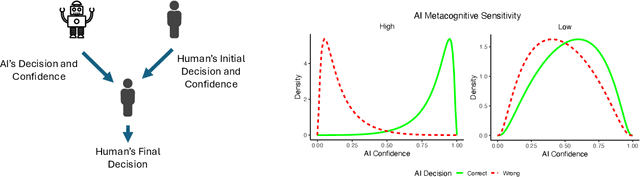


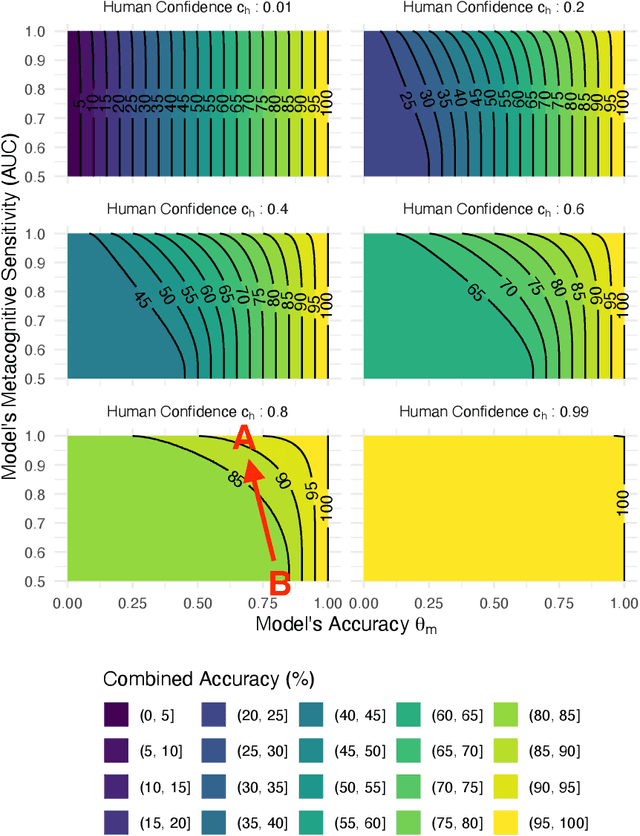
In settings where human decision-making relies on AI input, both the predictive accuracy of the AI system and the reliability of its confidence estimates influence decision quality. We highlight the role of AI metacognitive sensitivity -- its ability to assign confidence scores that accurately distinguish correct from incorrect predictions -- and introduce a theoretical framework for assessing the joint impact of AI's predictive accuracy and metacognitive sensitivity in hybrid decision-making settings. Our analysis identifies conditions under which an AI with lower predictive accuracy but higher metacognitive sensitivity can enhance the overall accuracy of human decision making. Finally, a behavioral experiment confirms that greater AI metacognitive sensitivity improves human decision performance. Together, these findings underscore the importance of evaluating AI assistance not only by accuracy but also by metacognitive sensitivity, and of optimizing both to achieve superior decision outcomes.
Bayesian Inference for Correlated Human Experts and Classifiers
Jun 05, 2025
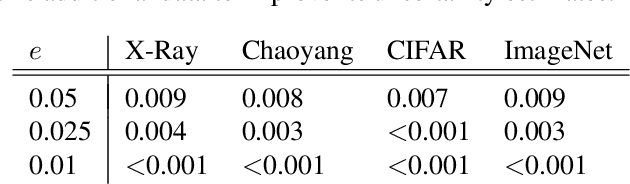
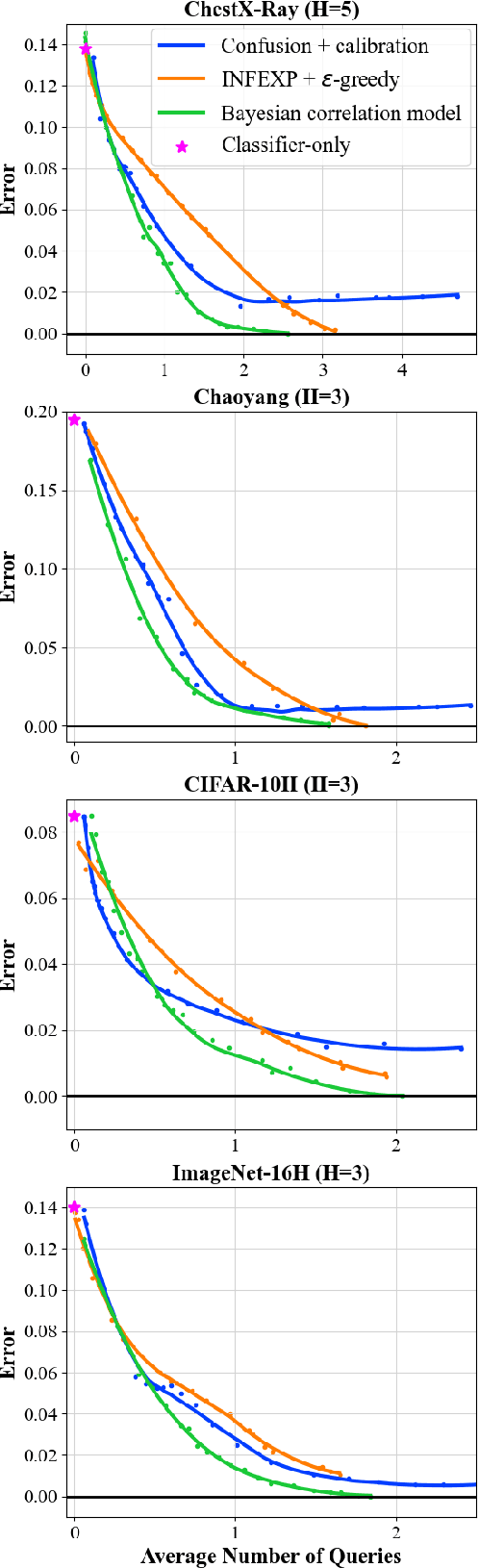
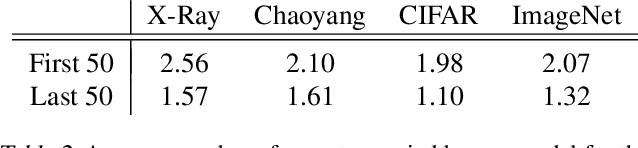
Applications of machine learning often involve making predictions based on both model outputs and the opinions of human experts. In this context, we investigate the problem of querying experts for class label predictions, using as few human queries as possible, and leveraging the class probability estimates of pre-trained classifiers. We develop a general Bayesian framework for this problem, modeling expert correlation via a joint latent representation, enabling simulation-based inference about the utility of additional expert queries, as well as inference of posterior distributions over unobserved expert labels. We apply our approach to two real-world medical classification problems, as well as to CIFAR-10H and ImageNet-16H, demonstrating substantial reductions relative to baselines in the cost of querying human experts while maintaining high prediction accuracy.
Metacognition and Uncertainty Communication in Humans and Large Language Models
Apr 18, 2025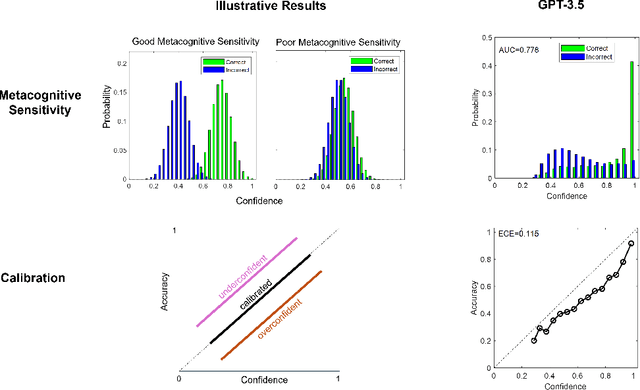
Metacognition, the capacity to monitor and evaluate one's own knowledge and performance, is foundational to human decision-making, learning, and communication. As large language models (LLMs) become increasingly embedded in high-stakes decision contexts, it is critical to assess whether, how, and to what extent they exhibit metacognitive abilities. Here, we provide an overview of current knowledge of LLMs' metacognitive capacities, how they might be studied, and how they relate to our knowledge of metacognition in humans. We show that while humans and LLMs can sometimes appear quite aligned in their metacognitive capacities and behaviors, it is clear many differences remain. Attending to these differences is crucial not only for enhancing human-AI collaboration, but also for promoting the development of more capable and trustworthy artificial systems. Finally, we discuss how endowing future LLMs with more sensitive and more calibrated metacognition may also help them develop new capacities such as more efficient learning, self-direction, and curiosity.
Hybrid Forecasting of Geopolitical Events
Dec 14, 2024


Sound decision-making relies on accurate prediction for tangible outcomes ranging from military conflict to disease outbreaks. To improve crowdsourced forecasting accuracy, we developed SAGE, a hybrid forecasting system that combines human and machine generated forecasts. The system provides a platform where users can interact with machine models and thus anchor their judgments on an objective benchmark. The system also aggregates human and machine forecasts weighting both for propinquity and based on assessed skill while adjusting for overconfidence. We present results from the Hybrid Forecasting Competition (HFC) - larger than comparable forecasting tournaments - including 1085 users forecasting 398 real-world forecasting problems over eight months. Our main result is that the hybrid system generated more accurate forecasts compared to a human-only baseline which had no machine generated predictions. We found that skilled forecasters who had access to machine-generated forecasts outperformed those who only viewed historical data. We also demonstrated the inclusion of machine-generated forecasts in our aggregation algorithms improved performance, both in terms of accuracy and scalability. This suggests that hybrid forecasting systems, which potentially require fewer human resources, can be a viable approach for maintaining a competitive level of accuracy over a larger number of forecasting questions.
* 20 pages, 6 figures, 4 tables
Perceptions of Linguistic Uncertainty by Language Models and Humans
Jul 22, 2024Uncertainty expressions such as ``probably'' or ``highly unlikely'' are pervasive in human language. While prior work has established that there is population-level agreement in terms of how humans interpret these expressions, there has been little inquiry into the abilities of language models to interpret such expressions. In this paper, we investigate how language models map linguistic expressions of uncertainty to numerical responses. Our approach assesses whether language models can employ theory of mind in this setting: understanding the uncertainty of another agent about a particular statement, independently of the model's own certainty about that statement. We evaluate both humans and 10 popular language models on a task created to assess these abilities. Unexpectedly, we find that 8 out of 10 models are able to map uncertainty expressions to probabilistic responses in a human-like manner. However, we observe systematically different behavior depending on whether a statement is actually true or false. This sensitivity indicates that language models are substantially more susceptible to bias based on their prior knowledge (as compared to humans). These findings raise important questions and have broad implications for human-AI alignment and AI-AI communication.