 Add to Chrome
 Add to Firefox
 Add to Edge
Mitigating Label Bias in Machine Learning: Fairness through Confident Learning
Dec 24, 2023
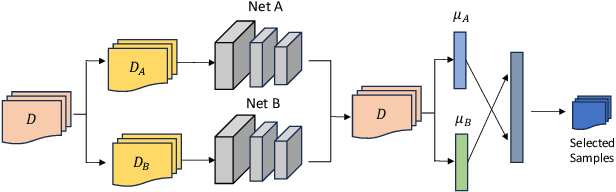
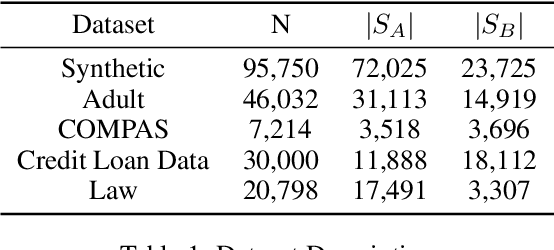
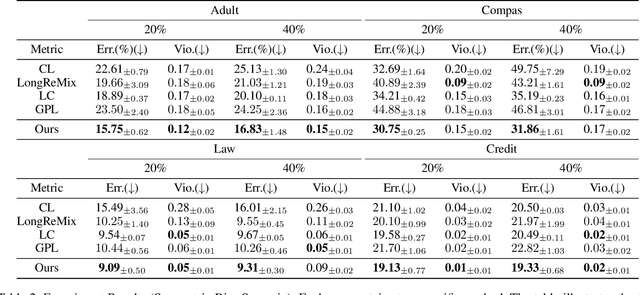

Discrimination can occur when the underlying unbiased labels are overwritten by an agent with potential bias, resulting in biased datasets that unfairly harm specific groups and cause classifiers to inherit these biases. In this paper, we demonstrate that despite only having access to the biased labels, it is possible to eliminate bias by filtering the fairest instances within the framework of confident learning. In the context of confident learning, low self-confidence usually indicates potential label errors; however, this is not always the case. Instances, particularly those from underrepresented groups, might exhibit low confidence scores for reasons other than labeling errors. To address this limitation, our approach employs truncation of the confidence score and extends the confidence interval of the probabilistic threshold. Additionally, we incorporate with co-teaching paradigm for providing a more robust and reliable selection of fair instances and effectively mitigating the adverse effects of biased labels. Through extensive experimentation and evaluation of various datasets, we demonstrate the efficacy of our approach in promoting fairness and reducing the impact of label bias in machine learning models.

Concept-centric Personalization with Large-scale Diffusion Priors
Dec 13, 2023Despite large-scale diffusion models being highly capable of generating diverse open-world content, they still struggle to match the photorealism and fidelity of concept-specific generators. In this work, we present the task of customizing large-scale diffusion priors for specific concepts as concept-centric personalization. Our goal is to generate high-quality concept-centric images while maintaining the versatile controllability inherent to open-world models, enabling applications in diverse tasks such as concept-centric stylization and image translation. To tackle these challenges, we identify catastrophic forgetting of guidance prediction from diffusion priors as the fundamental issue. Consequently, we develop a guidance-decoupled personalization framework specifically designed to address this task. We propose Generalized Classifier-free Guidance (GCFG) as the foundational theory for our framework. This approach extends Classifier-free Guidance (CFG) to accommodate an arbitrary number of guidances, sourced from a variety of conditions and models. Employing GCFG enables us to separate conditional guidance into two distinct components: concept guidance for fidelity and control guidance for controllability. This division makes it feasible to train a specialized model for concept guidance, while ensuring both control and unconditional guidance remain intact. We then present a null-text Concept-centric Diffusion Model as a concept-specific generator to learn concept guidance without the need for text annotations. Code will be available at https://github.com/PRIV-Creation/Concept-centric-Personalization.
Revisiting Logistic-softmax Likelihood in Bayesian Meta-Learning for Few-Shot Classification
Oct 16, 2023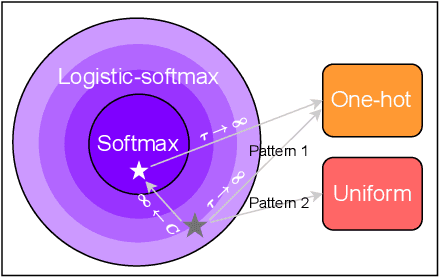
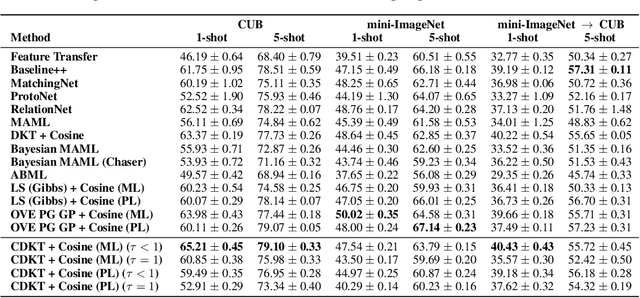
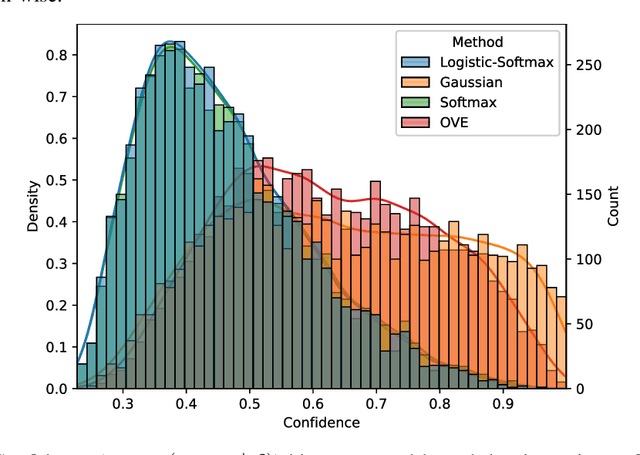
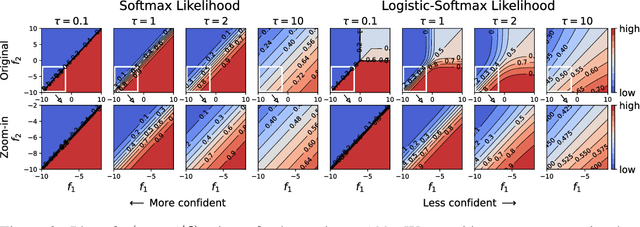
Meta-learning has demonstrated promising results in few-shot classification (FSC) by learning to solve new problems using prior knowledge. Bayesian methods are effective at characterizing uncertainty in FSC, which is crucial in high-risk fields. In this context, the logistic-softmax likelihood is often employed as an alternative to the softmax likelihood in multi-class Gaussian process classification due to its conditional conjugacy property. However, the theoretical property of logistic-softmax is not clear and previous research indicated that the inherent uncertainty of logistic-softmax leads to suboptimal performance. To mitigate these issues, we revisit and redesign the logistic-softmax likelihood, which enables control of the \textit{a priori} confidence level through a temperature parameter. Furthermore, we theoretically and empirically show that softmax can be viewed as a special case of logistic-softmax and logistic-softmax induces a larger family of data distribution than softmax. Utilizing modified logistic-softmax, we integrate the data augmentation technique into the deep kernel based Gaussian process meta-learning framework, and derive an analytical mean-field approximation for task-specific updates. Our approach yields well-calibrated uncertainty estimates and achieves comparable or superior results on standard benchmark datasets. Code is publicly available at \url{https://github.com/keanson/revisit-logistic-softmax}.
A Frustratingly Easy Plug-and-Play Detection-and-Reasoning Module for Chinese Spelling Check
Oct 13, 2023In recent years, Chinese Spelling Check (CSC) has been greatly improved by designing task-specific pre-training methods or introducing auxiliary tasks, which mostly solve this task in an end-to-end fashion. In this paper, we propose to decompose the CSC workflow into detection, reasoning, and searching subtasks so that the rich external knowledge about the Chinese language can be leveraged more directly and efficiently. Specifically, we design a plug-and-play detection-and-reasoning module that is compatible with existing SOTA non-autoregressive CSC models to further boost their performance. We find that the detection-and-reasoning module trained for one model can also benefit other models. We also study the primary interpretability provided by the task decomposition. Extensive experiments and detailed analyses demonstrate the effectiveness and competitiveness of the proposed module.
Integration-free Training for Spatio-temporal Multimodal Covariate Deep Kernel Point Processes
Oct 09, 2023In this study, we propose a novel deep spatio-temporal point process model, Deep Kernel Mixture Point Processes (DKMPP), that incorporates multimodal covariate information. DKMPP is an enhanced version of Deep Mixture Point Processes (DMPP), which uses a more flexible deep kernel to model complex relationships between events and covariate data, improving the model's expressiveness. To address the intractable training procedure of DKMPP due to the non-integrable deep kernel, we utilize an integration-free method based on score matching, and further improve efficiency by adopting a scalable denoising score matching method. Our experiments demonstrate that DKMPP and its corresponding score-based estimators outperform baseline models, showcasing the advantages of incorporating covariate information, utilizing a deep kernel, and employing score-based estimators.
RRCNN$^{+}$: An Enhanced Residual Recursive Convolutional Neural Network for Non-stationary Signal Decomposition
Sep 09, 2023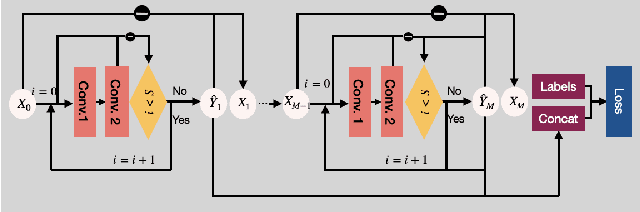
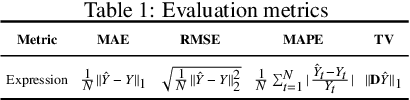
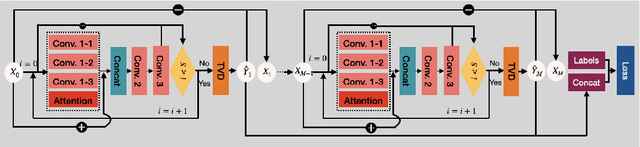
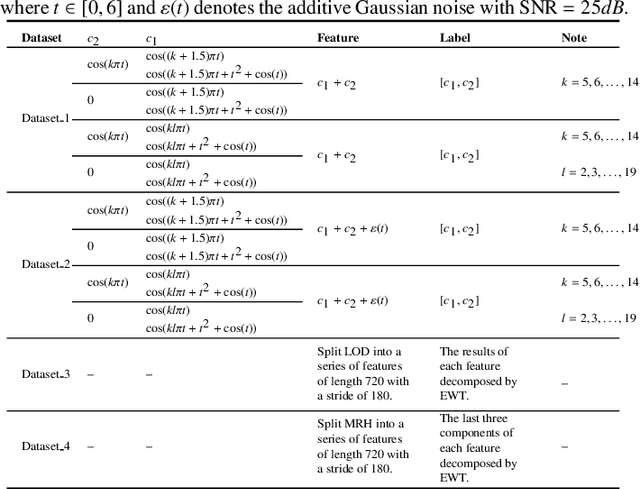
Time-frequency analysis is an important and challenging task in many applications. Fourier and wavelet analysis are two classic methods that have achieved remarkable success in many fields. They also exhibit limitations when applied to nonlinear and non-stationary signals. To address this challenge, a series of nonlinear and adaptive methods, pioneered by the empirical mode decomposition method have been proposed. Their aim is to decompose a non-stationary signal into quasi-stationary components which reveal better features in the time-frequency analysis. Recently, inspired by deep learning, we proposed a novel method called residual recursive convolutional neural network (RRCNN). Not only RRCNN can achieve more stable decomposition than existing methods while batch processing large-scale signals with low computational cost, but also deep learning provides a unique perspective for non-stationary signal decomposition. In this study, we aim to further improve RRCNN with the help of several nimble techniques from deep learning and optimization to ameliorate the method and overcome some of the limitations of this technique.
From Text to Mask: Localizing Entities Using the Attention of Text-to-Image Diffusion Models
Sep 08, 2023Diffusion models have revolted the field of text-to-image generation recently. The unique way of fusing text and image information contributes to their remarkable capability of generating highly text-related images. From another perspective, these generative models imply clues about the precise correlation between words and pixels. In this work, a simple but effective method is proposed to utilize the attention mechanism in the denoising network of text-to-image diffusion models. Without re-training nor inference-time optimization, the semantic grounding of phrases can be attained directly. We evaluate our method on Pascal VOC 2012 and Microsoft COCO 2014 under weakly-supervised semantic segmentation setting and our method achieves superior performance to prior methods. In addition, the acquired word-pixel correlation is found to be generalizable for the learned text embedding of customized generation methods, requiring only a few modifications. To validate our discovery, we introduce a new practical task called "personalized referring image segmentation" with a new dataset. Experiments in various situations demonstrate the advantages of our method compared to strong baselines on this task. In summary, our work reveals a novel way to extract the rich multi-modal knowledge hidden in diffusion models for segmentation.
Zero-shot Inversion Process for Image Attribute Editing with Diffusion Models
Aug 30, 2023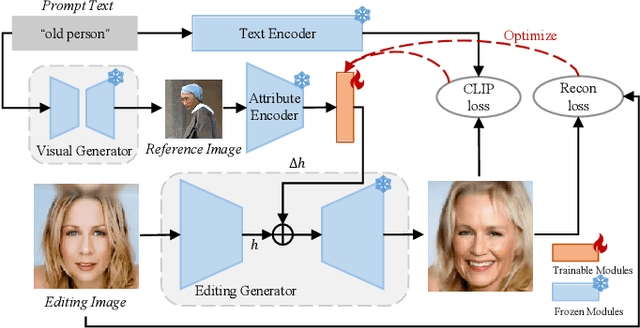
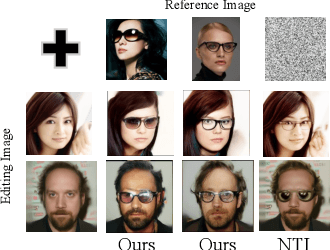
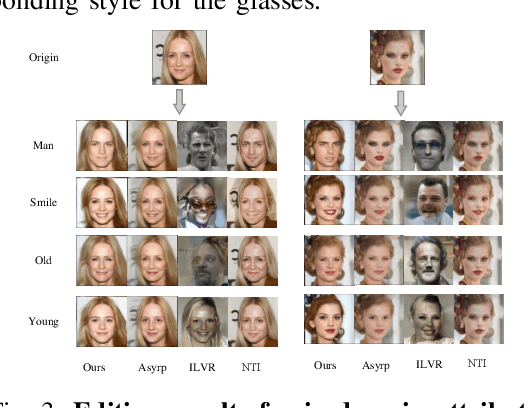
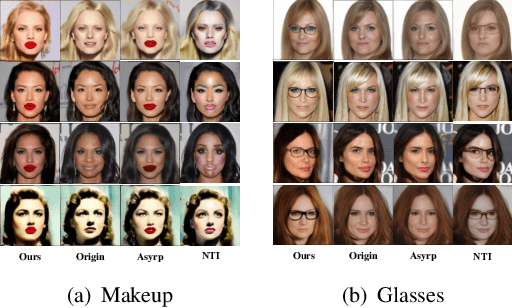
Denoising diffusion models have shown outstanding performance in image editing. Existing works tend to use either image-guided methods, which provide a visual reference but lack control over semantic coherence, or text-guided methods, which ensure faithfulness to text guidance but lack visual quality. To address the problem, we propose the Zero-shot Inversion Process (ZIP), a framework that injects a fusion of generated visual reference and text guidance into the semantic latent space of a \textit{frozen} pre-trained diffusion model. Only using a tiny neural network, the proposed ZIP produces diverse content and attributes under the intuitive control of the text prompt. Moreover, ZIP shows remarkable robustness for both in-domain and out-of-domain attribute manipulation on real images. We perform detailed experiments on various benchmark datasets. Compared to state-of-the-art methods, ZIP produces images of equivalent quality while providing a realistic editing effect.
Heterogeneous Multi-Task Gaussian Cox Processes
Aug 29, 2023This paper presents a novel extension of multi-task Gaussian Cox processes for modeling multiple heterogeneous correlated tasks jointly, e.g., classification and regression, via multi-output Gaussian processes (MOGP). A MOGP prior over the parameters of the dedicated likelihoods for classification, regression and point process tasks can facilitate sharing of information between heterogeneous tasks, while allowing for nonparametric parameter estimation. To circumvent the non-conjugate Bayesian inference in the MOGP modulated heterogeneous multi-task framework, we employ the data augmentation technique and derive a mean-field approximation to realize closed-form iterative updates for estimating model parameters. We demonstrate the performance and inference on both 1D synthetic data as well as 2D urban data of Vancouver.
Enhancing Phrase Representation by Information Bottleneck Guided Text Diffusion Process for Keyphrase Extraction
Aug 17, 2023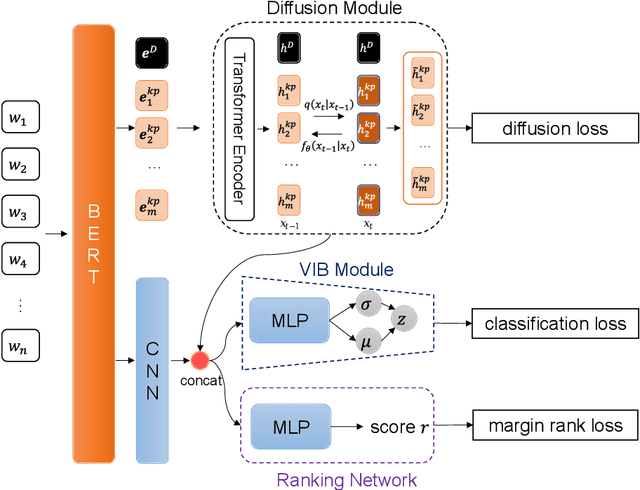
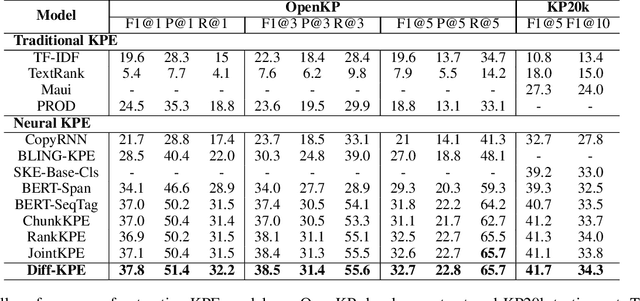

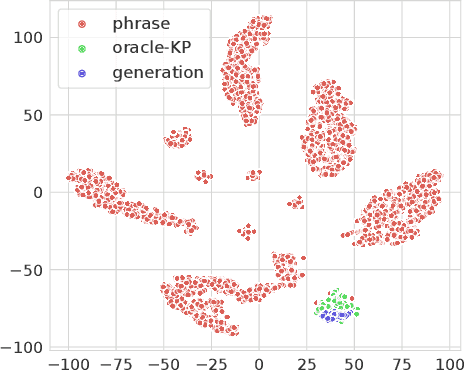
Keyphrase extraction (KPE) is an important task in Natural Language Processing for many scenarios, which aims to extract keyphrases that are present in a given document. Many existing supervised methods treat KPE as sequential labeling, span-level classification, or generative tasks. However, these methods lack the ability to utilize keyphrase information, which may result in biased results. In this study, we propose Diff-KPE, which leverages the supervised Variational Information Bottleneck (VIB) to guide the text diffusion process for generating enhanced keyphrase representations. Diff-KPE first generates the desired keyphrase embeddings conditioned on the entire document and then injects the generated keyphrase embeddings into each phrase representation. A ranking network and VIB are then optimized together with rank loss and classification loss, respectively. This design of Diff-KPE allows us to rank each candidate phrase by utilizing both the information of keyphrases and the document. Experiments show that Diff-KPE outperforms existing KPE methods on a large open domain keyphrase extraction benchmark, OpenKP, and a scientific domain dataset, KP20K.