 Add to Chrome
 Add to Firefox
 Add to Edge
Learning the meanings of function words from grounded language using a visual question answering model
Aug 16, 2023

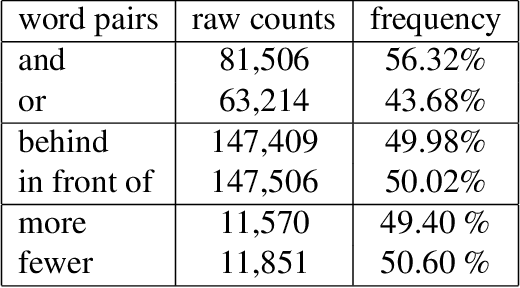
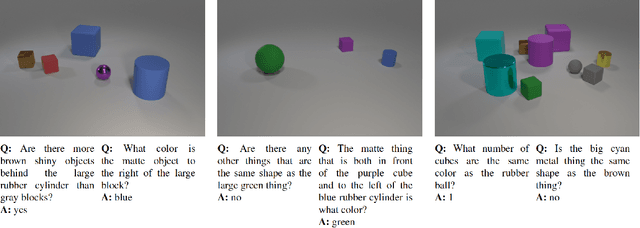
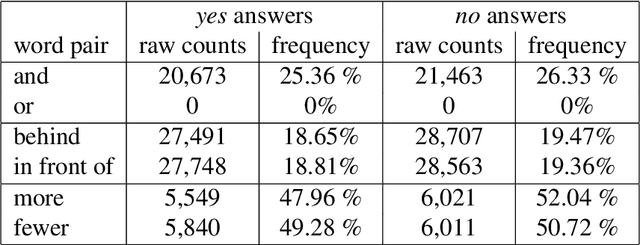
Interpreting a seemingly-simple function word like "or", "behind", or "more" can require logical, numerical, and relational reasoning. How are such words learned by children? Prior acquisition theories have often relied on positing a foundation of innate knowledge. Yet recent neural-network based visual question answering models apparently can learn to use function words as part of answering questions about complex visual scenes. In this paper, we study what these models learn about function words, in the hope of better understanding how the meanings of these words can be learnt by both models and children. We show that recurrent models trained on visually grounded language learn gradient semantics for function words requiring spacial and numerical reasoning. Furthermore, we find that these models can learn the meanings of logical connectives "and" and "or" without any prior knowledge of logical reasoning, as well as early evidence that they can develop the ability to reason about alternative expressions when interpreting language. Finally, we show that word learning difficulty is dependent on frequency in models' input. Our findings offer evidence that it is possible to learn the meanings of function words in visually grounded context by using non-symbolic general statistical learning algorithms, without any prior knowledge of linguistic meaning.

Othering and low prestige framing of immigrant cuisines in US restaurant reviews and large language models
Jul 14, 2023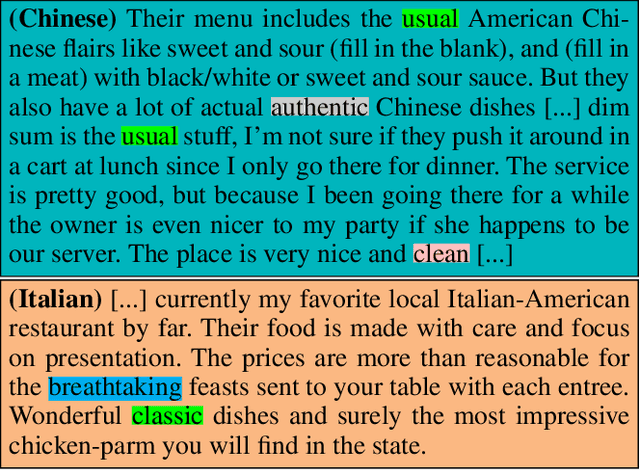
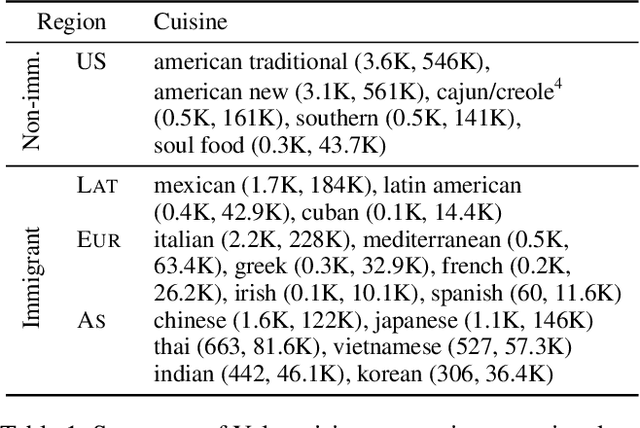
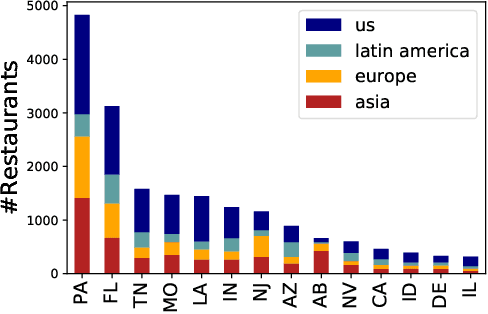
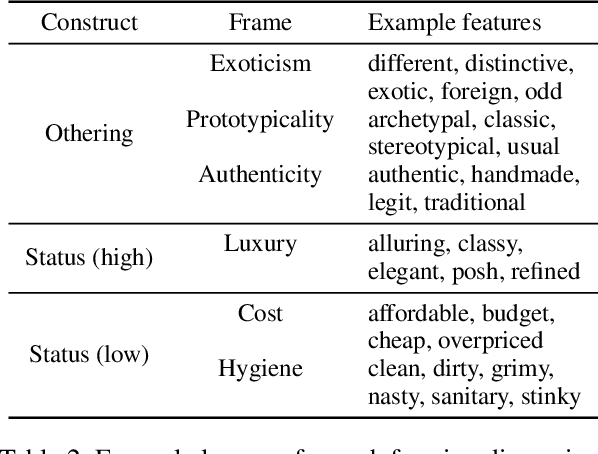
Identifying and understanding implicit attitudes toward food can help efforts to mitigate social prejudice due to food's pervasive role as a marker of cultural and ethnic identity. Stereotypes about food are a form of microaggression that contribute to harmful public discourse that may in turn perpetuate prejudice toward ethnic groups and negatively impact economic outcomes for restaurants. Through careful linguistic analyses, we evaluate social theories about attitudes toward immigrant cuisine in a large-scale study of framing differences in 2.1M English language Yelp reviews of restaurants in 14 US states. Controlling for factors such as restaurant price and neighborhood racial diversity, we find that immigrant cuisines are more likely to be framed in objectifying and othering terms of authenticity (e.g., authentic, traditional), exoticism (e.g., exotic, different), and prototypicality (e.g., typical, usual), but that non-Western immigrant cuisines (e.g., Indian, Mexican) receive more othering than European cuisines (e.g., French, Italian). We further find that non-Western immigrant cuisines are framed less positively and as lower status, being evaluated in terms of affordability and hygiene. Finally, we show that reviews generated by large language models (LLMs) reproduce many of the same framing tendencies. Our results empirically corroborate social theories of taste and gastronomic stereotyping, and reveal linguistic processes by which such attitudes are reified.
Ecosystem-level Analysis of Deployed Machine Learning Reveals Homogeneous Outcomes
Jul 12, 2023Machine learning is traditionally studied at the model level: researchers measure and improve the accuracy, robustness, bias, efficiency, and other dimensions of specific models. In practice, the societal impact of machine learning is determined by the surrounding context of machine learning deployments. To capture this, we introduce ecosystem-level analysis: rather than analyzing a single model, we consider the collection of models that are deployed in a given context. For example, ecosystem-level analysis in hiring recognizes that a job candidate's outcomes are not only determined by a single hiring algorithm or firm but instead by the collective decisions of all the firms they applied to. Across three modalities (text, images, speech) and 11 datasets, we establish a clear trend: deployed machine learning is prone to systemic failure, meaning some users are exclusively misclassified by all models available. Even when individual models improve at the population level over time, we find these improvements rarely reduce the prevalence of systemic failure. Instead, the benefits of these improvements predominantly accrue to individuals who are already correctly classified by other models. In light of these trends, we consider medical imaging for dermatology where the costs of systemic failure are especially high. While traditional analyses reveal racial performance disparities for both models and humans, ecosystem-level analysis reveals new forms of racial disparity in model predictions that do not present in human predictions. These examples demonstrate ecosystem-level analysis has unique strengths for characterizing the societal impact of machine learning.
Developing Speech Processing Pipelines for Police Accountability
Jun 09, 2023Police body-worn cameras have the potential to improve accountability and transparency in policing. Yet in practice, they result in millions of hours of footage that is never reviewed. We investigate the potential of large pre-trained speech models for facilitating reviews, focusing on ASR and officer speech detection in footage from traffic stops. Our proposed pipeline includes training data alignment and filtering, fine-tuning with resource constraints, and combining officer speech detection with ASR for a fully automated approach. We find that (1) fine-tuning strongly improves ASR performance on officer speech (WER=12-13%), (2) ASR on officer speech is much more accurate than on community member speech (WER=43.55-49.07%), (3) domain-specific tasks like officer speech detection and diarization remain challenging. Our work offers practical applications for reviewing body camera footage and general guidance for adapting pre-trained speech models to noisy multi-speaker domains.
Marked Personas: Using Natural Language Prompts to Measure Stereotypes in Language Models
May 29, 2023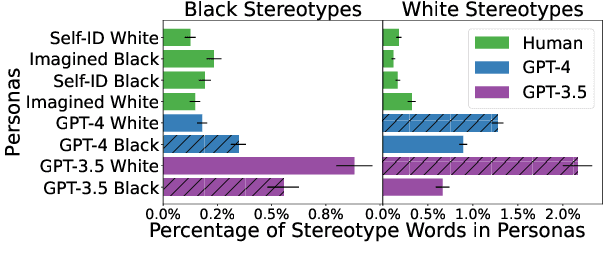
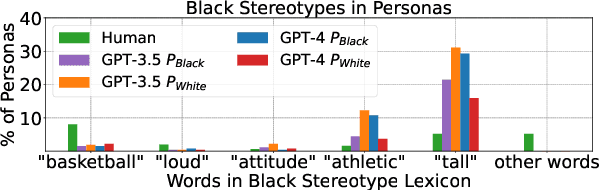
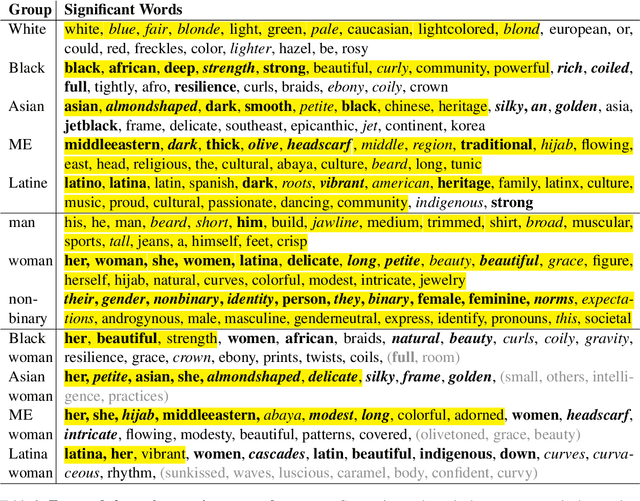
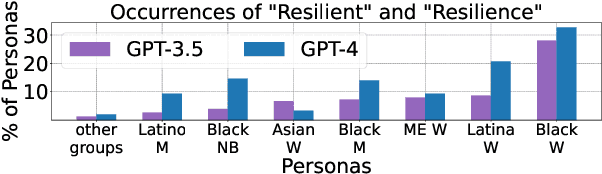
To recognize and mitigate harms from large language models (LLMs), we need to understand the prevalence and nuances of stereotypes in LLM outputs. Toward this end, we present Marked Personas, a prompt-based method to measure stereotypes in LLMs for intersectional demographic groups without any lexicon or data labeling. Grounded in the sociolinguistic concept of markedness (which characterizes explicitly linguistically marked categories versus unmarked defaults), our proposed method is twofold: 1) prompting an LLM to generate personas, i.e., natural language descriptions, of the target demographic group alongside personas of unmarked, default groups; 2) identifying the words that significantly distinguish personas of the target group from corresponding unmarked ones. We find that the portrayals generated by GPT-3.5 and GPT-4 contain higher rates of racial stereotypes than human-written portrayals using the same prompts. The words distinguishing personas of marked (non-white, non-male) groups reflect patterns of othering and exoticizing these demographics. An intersectional lens further reveals tropes that dominate portrayals of marginalized groups, such as tropicalism and the hypersexualization of minoritized women. These representational harms have concerning implications for downstream applications like story generation.
Making More of Little Data: Improving Low-Resource Automatic Speech Recognition Using Data Augmentation
May 19, 2023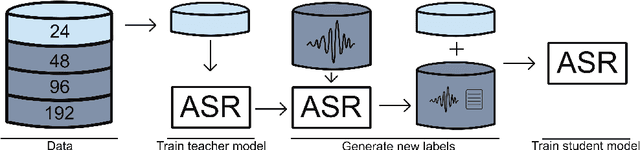
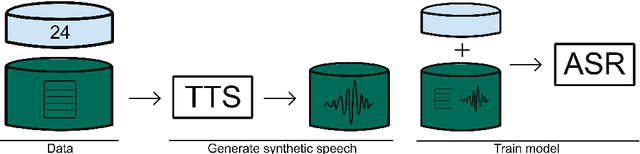
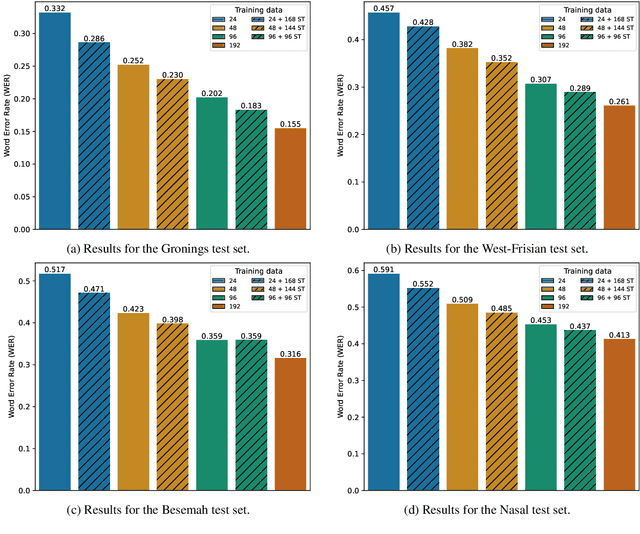
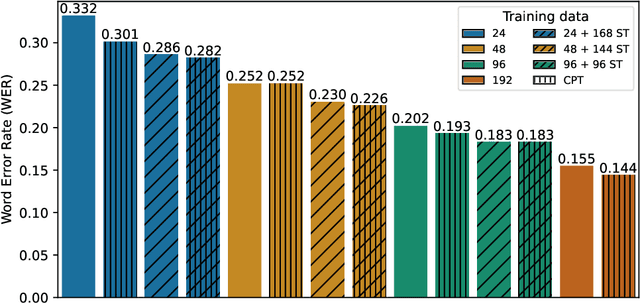
The performance of automatic speech recognition (ASR) systems has advanced substantially in recent years, particularly for languages for which a large amount of transcribed speech is available. Unfortunately, for low-resource languages, such as minority languages, regional languages or dialects, ASR performance generally remains much lower. In this study, we investigate whether data augmentation techniques could help improve low-resource ASR performance, focusing on four typologically diverse minority languages or language variants (West Germanic: Gronings, West-Frisian; Malayo-Polynesian: Besemah, Nasal). For all four languages, we examine the use of self-training, where an ASR system trained with the available human-transcribed data is used to generate transcriptions, which are then combined with the original data to train a new ASR system. For Gronings, for which there was a pre-existing text-to-speech (TTS) system available, we also examined the use of TTS to generate ASR training data from text-only sources. We find that using a self-training approach consistently yields improved performance (a relative WER reduction up to 20.5% compared to using an ASR system trained on 24 minutes of manually transcribed speech). The performance gain from TTS augmentation for Gronings was even stronger (up to 25.5% relative reduction in WER compared to a system based on 24 minutes of manually transcribed speech). In sum, our results show the benefit of using self-training or (if possible) TTS-generated data as an efficient solution to overcome the limitations of data availability for resource-scarce languages in order to improve ASR performance.
string2string: A Modern Python Library for String-to-String Algorithms
Apr 27, 2023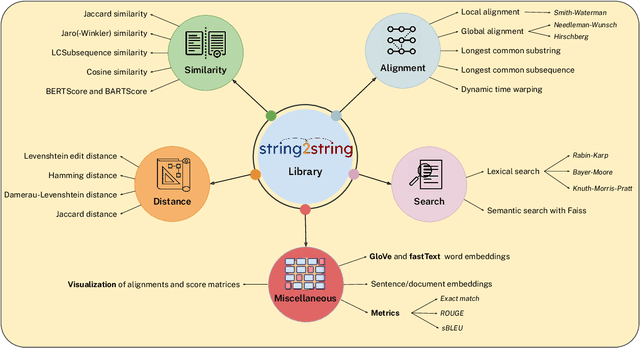
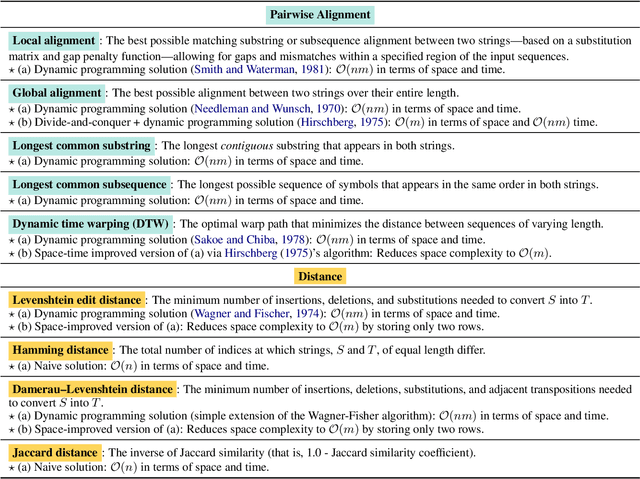
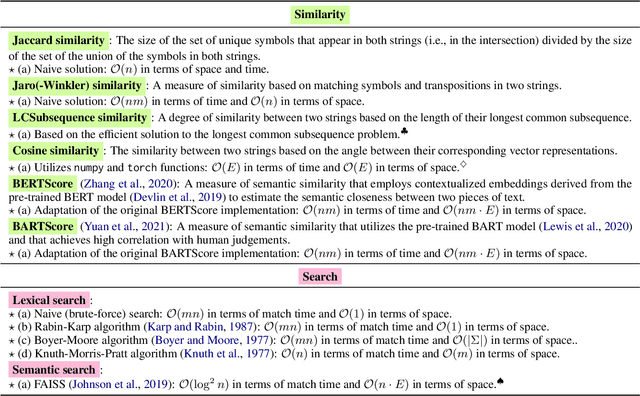
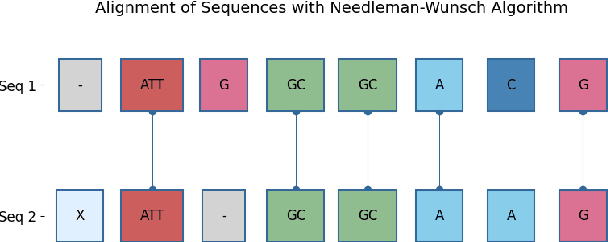
We introduce string2string, an open-source library that offers a comprehensive suite of efficient algorithms for a broad range of string-to-string problems. It includes traditional algorithmic solutions as well as recent advanced neural approaches to tackle various problems in string alignment, distance measurement, lexical and semantic search, and similarity analysis -- along with several helpful visualization tools and metrics to facilitate the interpretation and analysis of these methods. Notable algorithms featured in the library include the Smith-Waterman algorithm for pairwise local alignment, the Hirschberg algorithm for global alignment, the Wagner-Fisher algorithm for edit distance, BARTScore and BERTScore for similarity analysis, the Knuth-Morris-Pratt algorithm for lexical search, and Faiss for semantic search. Besides, it wraps existing efficient and widely-used implementations of certain frameworks and metrics, such as sacreBLEU and ROUGE, whenever it is appropriate and suitable. Overall, the library aims to provide extensive coverage and increased flexibility in comparison to existing libraries for strings. It can be used for many downstream applications, tasks, and problems in natural-language processing, bioinformatics, and computational social sciences. It is implemented in Python, easily installable via pip, and accessible through a simple API. Source code, documentation, and tutorials are all available on our GitHub page: https://github.com/stanfordnlp/string2string.
Pretrain on just structure: Understanding linguistic inductive biases using transfer learning
Apr 25, 2023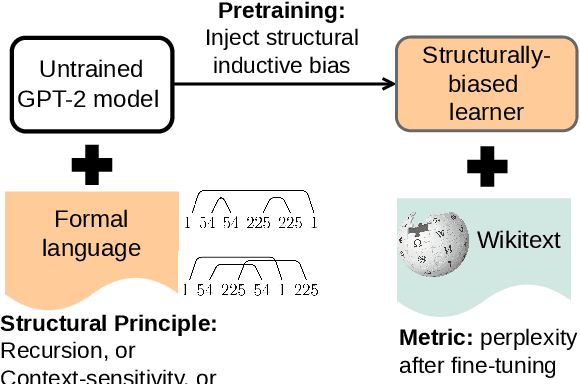
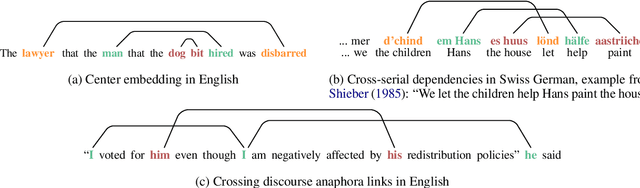
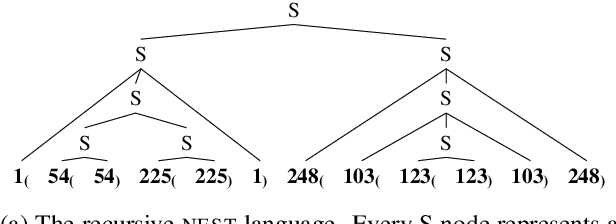

Both humans and transformer language models are able to learn language without explicit structural supervision. What inductive learning biases make this learning possible? In this study, we examine the effect of different inductive learning biases by predisposing language models with structural biases through pretraining on artificial structured data, and then evaluating by fine-tuning on English. Our experimental setup gives us the ability to actively control the inductive bias of language models. With our experiments, we investigate the comparative success of three types of inductive bias: 1) an inductive bias for recursive, hierarchical processing 2) an inductive bias for unrestricted token-token dependencies that can't be modeled by context-free grammars, and 3) an inductive bias for a Zipfian power-law vocabulary distribution. We show that complex token-token interactions form the best inductive biases, and that this is strongest in the non-context-free case. We also show that a Zipfian vocabulary distribution forms a good inductive bias independently from grammatical structure. Our study leverages the capabilities of transformer models to run controlled language learning experiments that are not possible to run in humans, and surfaces hypotheses about the structures that facilitate language learning in both humans and machines.
Foundation Models and Fair Use
Mar 28, 2023Existing foundation models are trained on copyrighted material. Deploying these models can pose both legal and ethical risks when data creators fail to receive appropriate attribution or compensation. In the United States and several other countries, copyrighted content may be used to build foundation models without incurring liability due to the fair use doctrine. However, there is a caveat: If the model produces output that is similar to copyrighted data, particularly in scenarios that affect the market of that data, fair use may no longer apply to the output of the model. In this work, we emphasize that fair use is not guaranteed, and additional work may be necessary to keep model development and deployment squarely in the realm of fair use. First, we survey the potential risks of developing and deploying foundation models based on copyrighted content. We review relevant U.S. case law, drawing parallels to existing and potential applications for generating text, source code, and visual art. Experiments confirm that popular foundation models can generate content considerably similar to copyrighted material. Second, we discuss technical mitigations that can help foundation models stay in line with fair use. We argue that more research is needed to align mitigation strategies with the current state of the law. Lastly, we suggest that the law and technical mitigations should co-evolve. For example, coupled with other policy mechanisms, the law could more explicitly consider safe harbors when strong technical tools are used to mitigate infringement harms. This co-evolution may help strike a balance between intellectual property and innovation, which speaks to the original goal of fair use. But we emphasize that the strategies we describe here are not a panacea and more work is needed to develop policies that address the potential harms of foundation models.
Navigating the Grey Area: Expressions of Overconfidence and Uncertainty in Language Models
Feb 26, 2023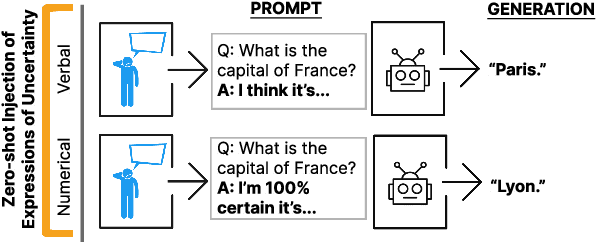
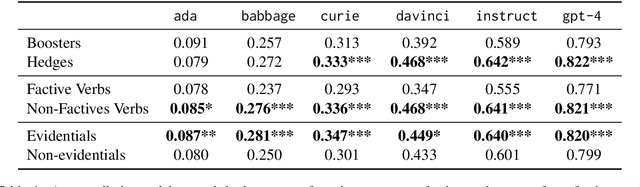
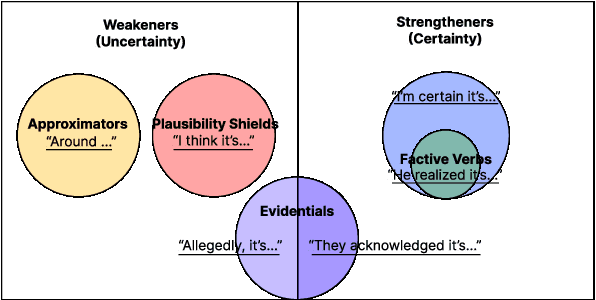
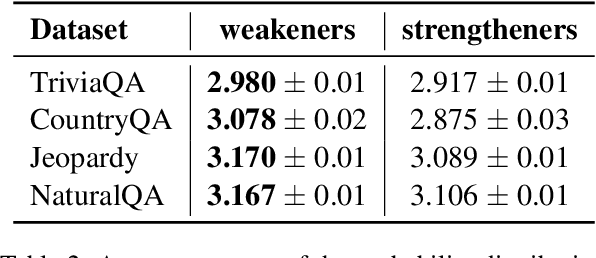
Despite increasingly fluent, relevant, and coherent language generation, major gaps remain between how humans and machines use language. We argue that a key dimension that is missing from our understanding of language models (LMs) is the model's ability to interpret and generate expressions of uncertainty. Whether it be the weatherperson announcing a chance of rain or a doctor giving a diagnosis, information is often not black-and-white and expressions of uncertainty provide nuance to support human-decision making. The increasing deployment of LMs in the wild motivates us to investigate whether LMs are capable of interpreting expressions of uncertainty and how LMs' behaviors change when learning to emit their own expressions of uncertainty. When injecting expressions of uncertainty into prompts (e.g., "I think the answer is..."), we discover that GPT3's generations vary upwards of 80% in accuracy based on the expression used. We analyze the linguistic characteristics of these expressions and find a drop in accuracy when naturalistic expressions of certainty are present. We find similar effects when teaching models to emit their own expressions of uncertainty, where model calibration suffers when teaching models to emit certainty rather than uncertainty. Together, these results highlight the challenges of building LMs that interpret and generate trustworthy expressions of uncertainty.