 Add to Chrome
 Add to Firefox
 Add to Edge
Sharper Guarantees for Misspecified Kernelized Bandit Optimization
May 07, 2026
Existing guarantees for misspecified kernelized bandit optimization pay for misspecification through kernel complexity: in generic offline bounds, the misspecification level $\varepsilon$ is multiplied by $\sqrt{d_\mathrm{eff}}$, where $d_\mathrm{eff}$ is the kernel effective dimension, while in online regret bounds, the corresponding penalty is $\sqrt{γ_n}\,n\varepsilon$, where $γ_n$ is the maximum information gain after $n$ rounds of interaction. In this work, we show that, for a large class of kernels, the misspecification amplification can be reduced to logarithmic or polylogarithmic growth. In the offline setting, we first prove high-probability simple-regret bounds whose misspecification term is governed by a spectral Lebesgue constant. This yields logarithmic amplification for one-dimensional monotone spectra and polylogarithmic amplification for multivariate Fourier-diagonal product kernels. In the online setting, we modify a domain-splitting algorithm and prove a cumulative regret bound of $\widetilde{\mathcal O}(\sqrt{γ_n n}+n\varepsilon)$ under mild localized eigendecay assumptions, removing the extra $\sqrt{γ_n}$ factor from the misspecification term. The common principle is localization: spectral localization controls the Lebesgue constant of the offline approximation operator, while domain splitting implements the spatial analogue of this mechanism in the online setting, preventing local misspecification errors from being amplified globally.

To See the Unseen: on the Generalization Ability of Transformers in Symbolic Reasoning
Apr 23, 2026We investigate the ability of decoder-only transformer models to perform abstract symbolic reasoning; specifically solving propositional logic reasoning problems given in-context. Previous work demonstrated that models fail to generalize to problems involving variable names that were not observed during training, and it was shown that one reason behind this is the difficulty of copying (or generating) unseen tokens. We show both theoretically and empirically that a particular representational collapse also has a crucial role: the unembeddings (last-layer weights) of unseen tokens collapse to nearly the same vector during training. The collapse makes distinguishing multiple unseen variables difficult for the model (especially when the embedding and unembedding parameters are shared), and provides a mechanistic explanation for the effectiveness of existing heuristic interventions like "active forgetting", which periodically reset the token (un)embeddings. Based on these observations, we devise a combination of techniques, involving a small architecture change facilitating copying, data diversity, and freezing or resetting (un)embeddings, that achieves generalization to unseen tokens. We support our claims with extensive controlled experiments on propositional logic reasoning problems. Beyond synthetic experiments, we also observe evidence of (un)embedding collapse in the open-weight models in the Gemma 3 family, which includes 99 unused tokens reserved for downstream use. Empirically we find that the correlated embeddings of these tokens are a poor initialization for finetuning applications.
LACONIC: Length-Aware Constrained Reinforcement Learning for LLM
Feb 16, 2026Reinforcement learning (RL) has enhanced the capabilities of large language models (LLMs) through reward-driven training. Nevertheless, this process can introduce excessively long responses, inflating inference latency and computational overhead. Prior length-control approaches typically rely on fixed heuristic reward shaping, which can misalign with the task objective and require brittle tuning. In this work, we propose LACONIC, a reinforcement learning method that enforces a target token budget during training. Specifically, we update policy models using an augmented objective that combines the task reward with a length-based cost. To balance brevity and task performance, the cost scale is adaptively adjusted throughout training. This yields robust length control while preserving task reward. We provide a theoretical guarantee that support the method. Across mathematical reasoning models and datasets, LACONIC preserves or improves pass@1 while reducing output length by over 50%. It maintains out-of-domain performance on general knowledge and multilingual benchmarks with 44% fewer tokens. Moreover, LACONIC integrates into standard RL-tuning with no inference changes and minimal deployment overhead.
Sharp analysis of linear ensemble sampling
Feb 08, 2026We analyse linear ensemble sampling (ES) with standard Gaussian perturbations in stochastic linear bandits. We show that for ensemble size $m=Θ(d\log n)$, ES attains $\tilde O(d^{3/2}\sqrt n)$ high-probability regret, closing the gap to the Thompson sampling benchmark while keeping computation comparable. The proof brings a new perspective on randomized exploration in linear bandits by reducing the analysis to a time-uniform exceedance problem for $m$ independent Brownian motions. Intriguingly, this continuous-time lens is not forced; it appears natural--and perhaps necessary: the discrete-time problem seems to be asking for a continuous-time solution, and we know of no other way to obtain a sharp ES bound.
Efficient Simple Regret Algorithms for Stochastic Contextual Bandits
Jan 29, 2026We study stochastic contextual logistic bandits under the simple regret objective. While simple regret guarantees have been established for the linear case, no such results were previously known for the logistic setting. Building on ideas from contextual linear bandits and self-concordant analysis, we propose the first algorithm that achieves simple regret $\tilde{\mathcal{O}}(d/\sqrt{T})$. Notably, the leading term of our regret bound is free of the constant $κ= \mathcal O(\exp(S))$, where $S$ is a bound on the magnitude of the unknown parameter vector. The algorithm is shown to be fully tractable when the action set is finite. We also introduce a new variant of Thompson Sampling tailored to the simple-regret setting. This yields the first simple regret guarantee for randomized algorithms in stochastic contextual linear bandits, with regret $\tilde{\mathcal{O}}(d^{3/2}/\sqrt{T})$. Extending this method to the logistic case, we obtain a similarly structured Thompson Sampling algorithm that achieves the same regret bound -- $\tilde{\mathcal{O}}(d^{3/2}/\sqrt{T})$ -- again with no dependence on $κ$ in the leading term. The randomized algorithms, as expected, are cheaper to run than their deterministic counterparts. Finally, we conducted a series of experiments to empirically validate these theoretical guarantees.
Eluder dimension: localise it!
Jan 14, 2026We establish a lower bound on the eluder dimension of generalised linear model classes, showing that standard eluder dimension-based analysis cannot lead to first-order regret bounds. To address this, we introduce a localisation method for the eluder dimension; our analysis immediately recovers and improves on classic results for Bernoulli bandits, and allows for the first genuine first-order bounds for finite-horizon reinforcement learning tasks with bounded cumulative returns.
Frontier LLMs Still Struggle with Simple Reasoning Tasks
Jul 09, 2025
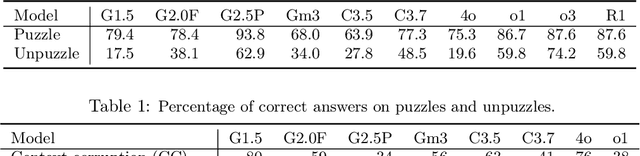
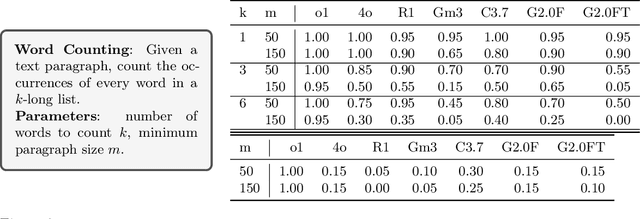
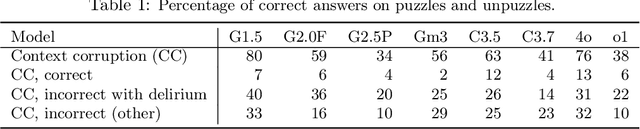
While state-of-the-art large language models (LLMs) demonstrate advanced reasoning capabilities-achieving remarkable performance on challenging competitive math and coding benchmarks-they also frequently fail on tasks that are easy for humans. This work studies the performance of frontier LLMs on a broad set of such "easy" reasoning problems. By extending previous work in the literature, we create a suite of procedurally generated simple reasoning tasks, including counting, first-order logic, proof trees, and travel planning, with changeable parameters (such as document length. or the number of variables in a math problem) that can arbitrarily increase the amount of computation required to produce the answer while preserving the fundamental difficulty. While previous work showed that traditional, non-thinking models can be made to fail on such problems, we demonstrate that even state-of-the-art thinking models consistently fail on such problems and for similar reasons (e.g. statistical shortcuts, errors in intermediate steps, and difficulties in processing long contexts). To further understand the behavior of the models, we introduce the unpuzzles dataset, a different "easy" benchmark consisting of trivialized versions of well-known math and logic puzzles. Interestingly, while modern LLMs excel at solving the original puzzles, they tend to fail on the trivialized versions, exhibiting several systematic failure patterns related to memorizing the originals. We show that this happens even if the models are otherwise able to solve problems with different descriptions but requiring the same logic. Our results highlight that out-of-distribution generalization is still problematic for frontier language models and the new generation of thinking models, even for simple reasoning tasks, and making tasks easier does not necessarily imply improved performance.
Almost Free: Self-concordance in Natural Exponential Families and an Application to Bandits
Oct 01, 2024We prove that single-parameter natural exponential families with subexponential tails are self-concordant with polynomial-sized parameters. For subgaussian natural exponential families we establish an exact characterization of the growth rate of the self-concordance parameter. Applying these findings to bandits allows us to fill gaps in the literature: We show that optimistic algorithms for generalized linear bandits enjoy regret bounds that are both second-order (scale with the variance of the optimal arm's reward distribution) and free of an exponential dependence on the bound of the problem parameter in the leading term. To the best of our knowledge, ours is the first regret bound for generalized linear bandits with subexponential tails, broadening the class of problems to include Poisson, exponential and gamma bandits.
Confident Natural Policy Gradient for Local Planning in $q_π$-realizable Constrained MDPs
Jun 26, 2024The constrained Markov decision process (CMDP) framework emerges as an important reinforcement learning approach for imposing safety or other critical objectives while maximizing cumulative reward. However, the current understanding of how to learn efficiently in a CMDP environment with a potentially infinite number of states remains under investigation, particularly when function approximation is applied to the value functions. In this paper, we address the learning problem given linear function approximation with $q_{\pi}$-realizability, where the value functions of all policies are linearly representable with a known feature map, a setting known to be more general and challenging than other linear settings. Utilizing a local-access model, we propose a novel primal-dual algorithm that, after $\tilde{O}(\text{poly}(d) \epsilon^{-3})$ queries, outputs with high probability a policy that strictly satisfies the constraints while nearly optimizing the value with respect to a reward function. Here, $d$ is the feature dimension and $\epsilon > 0$ is a given error. The algorithm relies on a carefully crafted off-policy evaluation procedure to evaluate the policy using historical data, which informs policy updates through policy gradients and conserves samples. To our knowledge, this is the first result achieving polynomial sample complexity for CMDP in the $q_{\pi}$-realizable setting.
Trajectory Data Suffices for Statistically Efficient Learning in Offline RL with Linear $q^π$-Realizability and Concentrability
May 27, 2024We consider offline reinforcement learning (RL) in $H$-horizon Markov decision processes (MDPs) under the linear $q^\pi$-realizability assumption, where the action-value function of every policy is linear with respect to a given $d$-dimensional feature function. The hope in this setting is that learning a good policy will be possible without requiring a sample size that scales with the number of states in the MDP. Foster et al. [2021] have shown this to be impossible even under $\textit{concentrability}$, a data coverage assumption where a coefficient $C_\text{conc}$ bounds the extent to which the state-action distribution of any policy can veer off the data distribution. However, the data in this previous work was in the form of a sequence of individual transitions. This leaves open the question of whether the negative result mentioned could be overcome if the data was composed of sequences of full trajectories. In this work we answer this question positively by proving that with trajectory data, a dataset of size $\text{poly}(d,H,C_\text{conc})/\epsilon^2$ is sufficient for deriving an $\epsilon$-optimal policy, regardless of the size of the state space. The main tool that makes this result possible is due to Weisz et al. [2023], who demonstrate that linear MDPs can be used to approximate linearly $q^\pi$-realizable MDPs. The connection to trajectory data is that the linear MDP approximation relies on "skipping" over certain states. The associated estimation problems are thus easy when working with trajectory data, while they remain nontrivial when working with individual transitions. The question of computational efficiency under our assumptions remains open.