 Add to Chrome
 Add to Firefox
 Add to Edge
Reasoning Jury: Multi-Model Consensus for Evaluating Reasoning Traces
Aug 12, 2026
Improving reasoning LLMs requires the ability to judge the quality of long reasoning traces for effective reasoning data curation, strong training signals during reinforcement learning, and an in-depth understanding of reasoning behaviors during model performance evaluation. Additionally, surfacing reasoning mistakes that the model makes would enable improving the model's performance at runtime through providing feedback. Due to the difficulty of this complex task on long reasoning traces, single-model judges (even frontier models) do not do well at identifying reasoning defects. Additionally, leveraging frontier models during online training of reasoning LLMs is generally prohibited due to guardrails in terms of use. In this work, we introduce Reasoning Jury, a system that replaces the single judge with a jury of LLMs and a moderated consensus mechanism, to improve the fidelity of judgments for identifying reasoning defects. In reasoning jury, defects of a reasoning trace and their severity are surfaced through a deliberation where a moderator conducts a discussion amongst the jury where the jurors critique each other's judgments and get to modify their initial votes. The moderator derives a consensus through deliberation amongst jurors or consolidation of judgements. We show that Reasoning Jury with a jury of open-weight models (e.g., gpt-oss-120b) is able to significantly outperform frontier models (opus-4.6, sonnet-4.6, and gemini-3.1-pro) at correctly identifying reasoning defects. Besides accuracy performance improvements, the aggregated cost of the jury (initial verdicts, deliberations, consolidation, etc.) is a fraction (8 to 15%) of the cost of running frontier models in LLM-as-a-judge setup. We also show how these judgements can be leveraged to understand failure modes of reasoning LLMs on benchmarks, which allows much deeper understanding of a model's performance.

Critic Experience Bank: Self-Evolving Step-Level Confidence Estimation for LLM Agents
Jul 14, 2026LLM agents act in external environments where each action changes the state that later decisions condition on, and where a single wrong step can waste interaction budget or trigger irreversible side effects long before the final failure is observed. Reliable deployment therefore requires \emph{step-level confidence estimation}: a calibrated probability that each proposed action is productive, available \emph{before} the action is executed. Existing LLM confidence estimators are designed to score a response from the given prompt, but agent confidence also depends on execution consequences: whether similar actions in similar situations actually advanced the task after the environment responded. We introduce the \method (\methodshort), a self-evolving critic framework in which an LLM critic accumulates evidence from its own past judgments and their observed consequences. After each trajectory, a hindsight LLM that sees the full execution feedback votes on whether each step was productive. The resulting pseudo-labels populate a memory bank from which related productive and unproductive experiences are retrieved into the critic's prompt whenever a similar step recurs. \methodshort requires no training and uses no ground truth step labels. Across three agent benchmarks and three critic backbones, \methodshort attains the best calibration (ECE and Brier) and ranking (AUC) in every dataset--critic combination, reducing ECE by up to $54\%$ relative to the strongest training-free baseline.
ReLope: KL-Regularized LoRA Probes for Multimodal LLM Routing
Mar 25, 2026Routing has emerged as a promising strategy for balancing performance and cost in large language model (LLM) systems that combine lightweight models with powerful but expensive large models. Recent studies show that \emph{probe routing}, which predicts the correctness of a small model using its hidden states, provides an effective solution in text-only LLMs. However, we observe that these probes degrade substantially when applied to multimodal LLMs (MLLMs). Through empirical analysis, we find that the presence of visual inputs weakens the separability of correctness signals in hidden states, making them harder to extract using standard probe designs. To address this challenge, we introduce two complementary approaches for improving probe routing in MLLMs. First, we propose the \emph{Attention Probe}, which aggregates hidden states from the preceding layer based on attention scores to recover distributed correctness signals. Second, we present the \emph{KL-Regularized LoRA Probe (ReLope)}, which inserts a lightweight LoRA adapter and applies a KL regularizer to learn routing-aware representations. Comprehensive experiments show that our methods consistently outperform baselines, suggesting that improving the quality of hidden states is key to effective routing in MLLMs. Our code is available at https://github.com/Spinozaaa/ReLope.
I Know What I Don't Know: Improving Model Cascades Through Confidence Tuning
Feb 26, 2025Large-scale machine learning models deliver strong performance across a wide range of tasks but come with significant computational and resource constraints. To mitigate these challenges, local smaller models are often deployed alongside larger models, relying on routing and deferral mechanisms to offload complex tasks. However, existing approaches inadequately balance the capabilities of these models, often resulting in unnecessary deferrals or sub-optimal resource usage. In this work we introduce a novel loss function called Gatekeeper for calibrating smaller models in cascade setups. Our approach fine-tunes the smaller model to confidently handle tasks it can perform correctly while deferring complex tasks to the larger model. Moreover, it incorporates a mechanism for managing the trade-off between model performance and deferral accuracy, and is broadly applicable across various tasks and domains without any architectural changes. We evaluate our method on encoder-only, decoder-only, and encoder-decoder architectures. Experiments across image classification, language modeling, and vision-language tasks show that our approach substantially improves deferral performance.
LLM Cascade with Multi-Objective Optimal Consideration
Oct 10, 2024

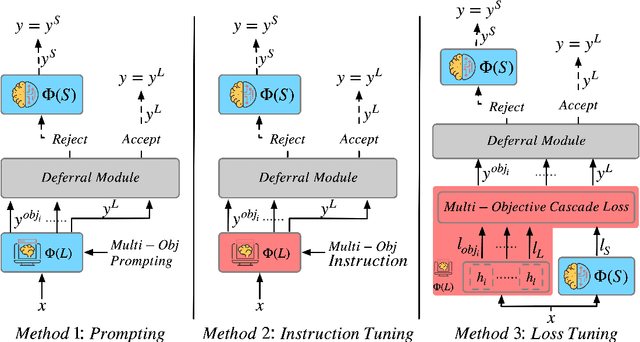

Large Language Models (LLMs) have demonstrated exceptional capabilities in understanding and generating natural language. However, their high deployment costs often pose a barrier to practical applications, especially. Cascading local and server models offers a promising solution to this challenge. While existing studies on LLM cascades have primarily focused on the performance-cost trade-off, real-world scenarios often involve more complex requirements. This paper introduces a novel LLM Cascade strategy with Multi-Objective Optimization, enabling LLM cascades to consider additional objectives (e.g., privacy) and better align with the specific demands of real-world applications while maintaining their original cascading abilities. Extensive experiments on three benchmarks validate the effectiveness and superiority of our approach.
Cascade-Aware Training of Language Models
May 29, 2024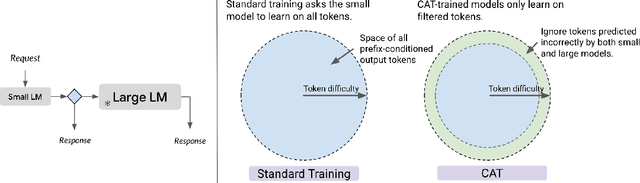
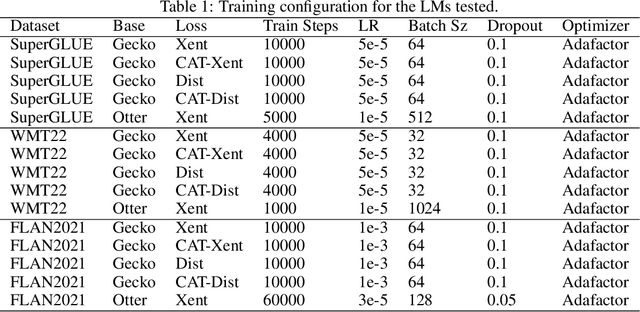
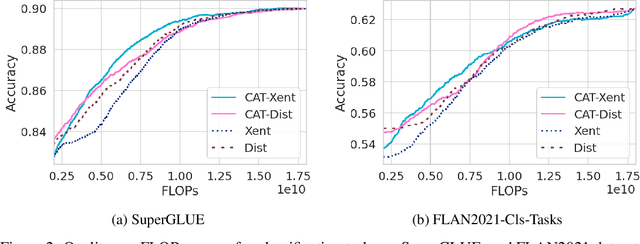
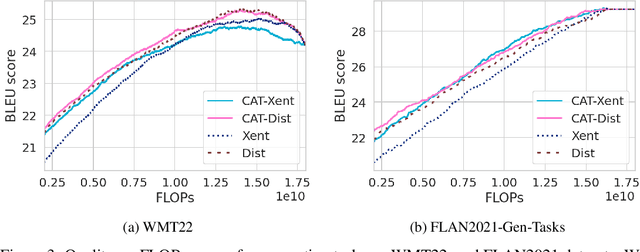
Reducing serving cost and latency is a fundamental concern for the deployment of language models (LMs) in business applications. To address this, cascades of LMs offer an effective solution that conditionally employ smaller models for simpler queries. Cascaded systems are typically built with independently trained models, neglecting the advantages of considering inference-time interactions of the cascaded LMs during training. In this paper, we present cascade-aware training(CAT), an approach to optimizing the overall quality-cost performance tradeoff of a cascade of LMs. We achieve inference-time benefits by training the small LM with awareness of its place in a cascade and downstream capabilities. We demonstrate the value of the proposed method with over 60 LM tasks of the SuperGLUE, WMT22, and FLAN2021 datasets.
Efficient Global Multi-object Tracking Under Minimum-cost Circulation Framework
Nov 02, 2019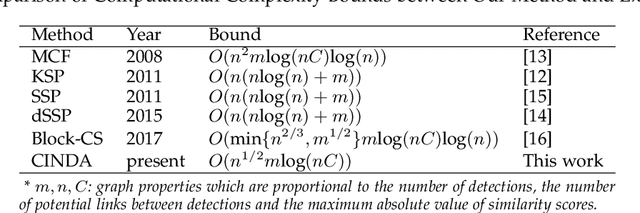
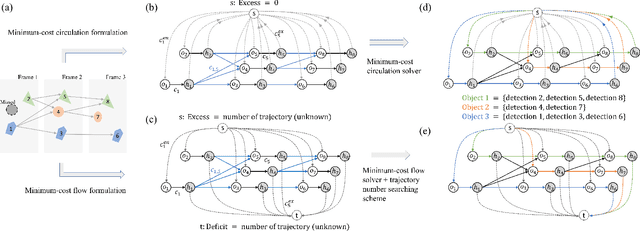
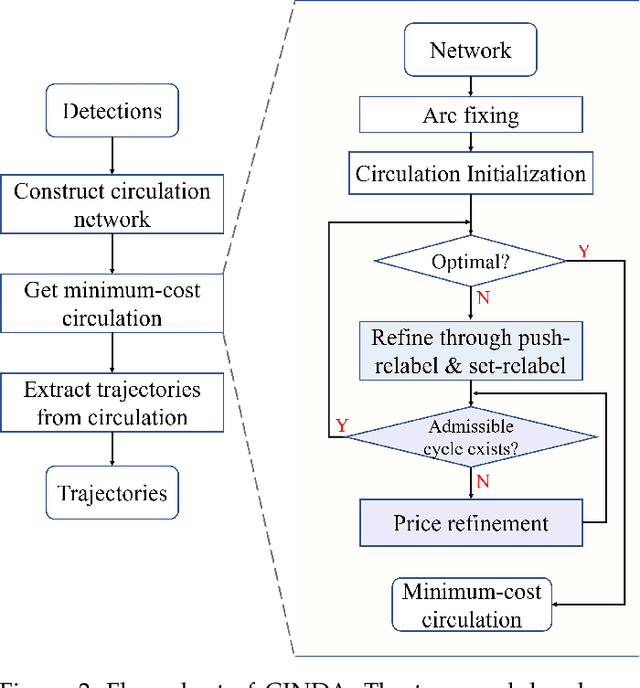
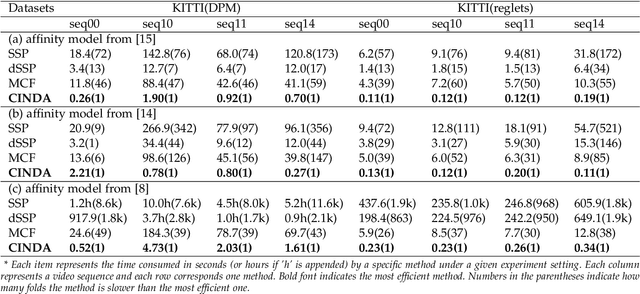
We developed a minimum-cost circulation framework for solving the global data association problem, which plays a key role in the tracking-by-detection paradigm of multi-object tracking. The global data association problem was extensively studied under the minimum-cost flow framework, which is theoretically attractive as being flexible and globally solvable. However, the high computational burden has been a long-standing obstacle to its wide adoption in practice. While enjoying the same theoretical advantages and maintaining the same optimal solution as the minimum-cost flow framework, our new framework has a better theoretical complexity bound and leads to orders of practical efficiency improvement. This new framework is motivated by the observation that minimum-cost flow only partially models the data association problem and must be accompanied by an additional and time-consuming searching scheme to determine the optimal object number. By employing a minimum-cost circulation framework, we eliminate the searching step and naturally integrate the number of objects into the optimization problem. By exploring the special property of the associated graph, that is, an overwhelming majority of the vertices are with unit capacity, we designed an implementation of the framework and proved it has the best theoretical complexity so far for the global data association problem. We evaluated our method with 40 experiments on five MOT benchmark datasets. Our method was always the most efficient and averagely 53 to 1,192 times faster than the three state-of-the-art methods. When our method served as a sub-module for global data association methods using higher-order constraints, similar efficiency improvement was attained. We further illustrated through several case studies how the improved computational efficiency enables more sophisticated tracking models and yields better tracking accuracy.