 Add to Chrome
 Add to Firefox
 Add to Edge
CLBench-V: Evaluating Multimodal Context Learning from Grounding to Knowledge Acquisition
Jul 28, 2026
Real-world tasks often require models to learn from task-specific context rather than relying only on pre-trained knowledge. While recent work has highlighted this capability as context learning, existing evaluations mainly focus on textual contexts. In many practical settings, however, the context to be learned from is multimodal: scientific findings are conveyed through figures and tables, financial indicators are scattered across converted reports, and spatial decisions depend on maps, scenes, or web pages. We introduce CLBench-V, a benchmark for multimodal context learning that addresses the difficulty of localizing where context use breaks down by organizing tasks around three dimensions: context grounding, new information application, and new knowledge learning. CLBench-V combines converted public benchmarks with newly constructed datasets spanning domains such as science, finance, long-document understanding, spatial reasoning, and web-based visual question answering. To reduce the cost of constructing domain-specific context-learning tasks, we further use automated construction and filtering procedures for our newly built datasets. Across 3,443 instances and six recent multimodal models, the best overall score is only 0.2847, indicating that multimodal context learning remains far from saturated. Moreover, InternVL3.5-30B-A3B performs best on context grounding and new knowledge learning, while Qwen3.5-Plus performs best on new information application. We further analyze judge reliability, context length, image count, and representative failure cases. Code is available at https://github.com/IamLihua/CLBench-V.

XMix: Combating Extremely Noisy Labels via Local Smoothness in Self-Supervised Feature Space
Jul 26, 2026Supervised deep learning models rely on large, accurately labeled datasets, yet noisy annotations are often unavoidable and can severely degrade performance under high noise levels. Recent state-of-the-art methods tackle this by using sample selection strategies that exploit the memorization effect to filter out clean data for semi-supervised learning. However, these methods struggle with extreme noise, class imbalance, and require careful tuning or prior noise knowledge. To address these limitations, we propose XMix, a novel framework that leverages local smoothness in the self-supervised feature space to systematically enhance all stages of the sample selection process, without dependence on potentially corrupted labels. First, XMix estimates the noise rate using maximum likelihood among self-supervised feature neighbors. Second, these neighbors then help identify additional clean samples and ensure balanced selection across classes during sample selection. Finally, in the semi-supervised learning phase, XMix uses neighboring samples to generate more reliable pseudo-labels. Our empirical results show that XMix substantially outperforms existing methods in extremely noisy environments and maintains superior performance in standard LNL benchmarks.
LDP-Slicing: Local Differential Privacy for Images via Randomized Bit-Plane Slicing
Mar 04, 2026Local Differential Privacy (LDP) is the gold standard trust model for privacy-preserving machine learning by guaranteeing privacy at the data source. However, its application to image data has long been considered impractical due to the high dimensionality of pixel space. Canonical LDP mechanisms are designed for low-dimensional data, resulting in severe utility degradation when applied to high-dimensional pixel spaces. This paper demonstrates that this utility loss is not inherent to LDP, but from its application to an inappropriate data representation. We introduce LDP-Slicing, a lightweight, training-free framework that resolves this domain mismatch. Our key insight is to decompose pixel values into a sequence of binary bit-planes. This transformation allows us to apply the LDP mechanism directly to the bit-level representation. To further strengthen privacy and preserve utility, we integrate a perceptual obfuscation module that mitigates human-perceivable leakage and an optimization-based privacy budget allocation strategy. This pipeline satisfies rigorous pixel-level $\varepsilon$-LDP while producing images that retain high utility for downstream tasks. Extensive experiments on face recognition and image classification demonstrate that LDP-Slicing outperforms existing DP/LDP baselines under comparable privacy budgets, with negligible computational overhead.
Learning for Unconstrained Space-Time Video Super-Resolution
Feb 25, 2021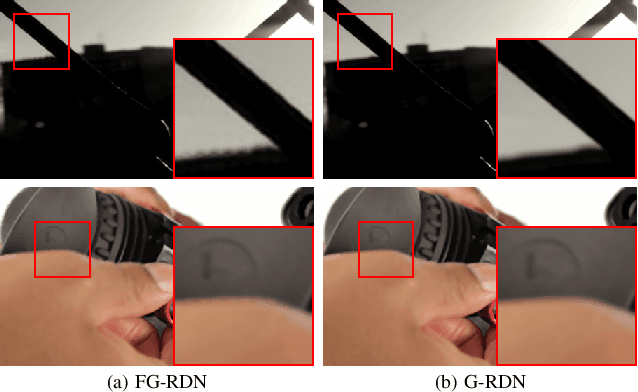
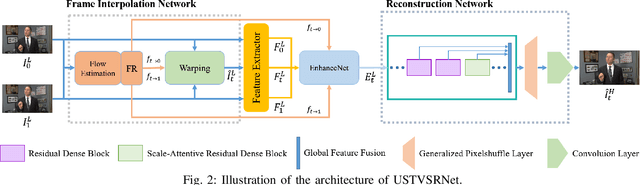
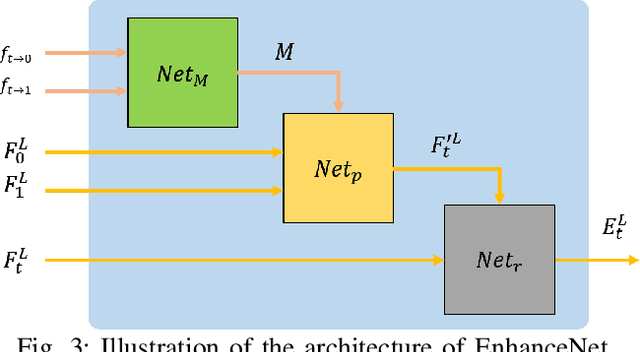
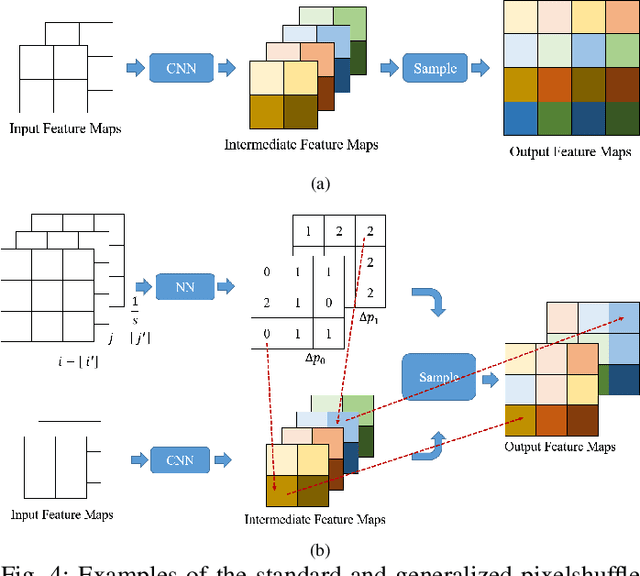
Recent years have seen considerable research activities devoted to video enhancement that simultaneously increases temporal frame rate and spatial resolution. However, the existing methods either fail to explore the intrinsic relationship between temporal and spatial information or lack flexibility in the choice of final temporal/spatial resolution. In this work, we propose an unconstrained space-time video super-resolution network, which can effectively exploit space-time correlation to boost performance. Moreover, it has complete freedom in adjusting the temporal frame rate and spatial resolution through the use of the optical flow technique and a generalized pixelshuffle operation. Our extensive experiments demonstrate that the proposed method not only outperforms the state-of-the-art, but also requires far fewer parameters and less running time.
AIM 2020 Challenge on Learned Image Signal Processing Pipeline
Nov 10, 2020
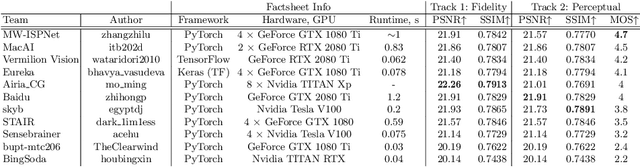
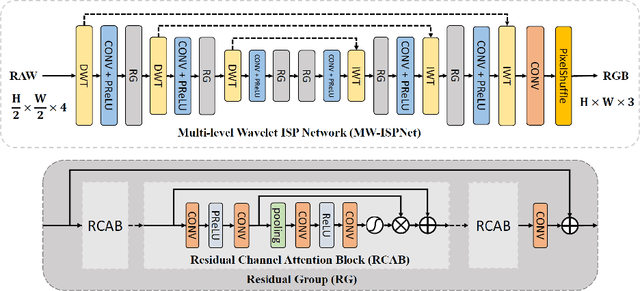
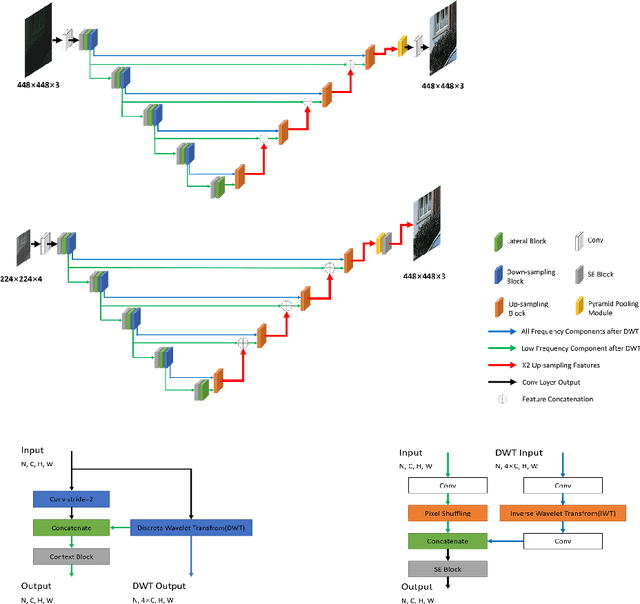
This paper reviews the second AIM learned ISP challenge and provides the description of the proposed solutions and results. The participating teams were solving a real-world RAW-to-RGB mapping problem, where to goal was to map the original low-quality RAW images captured by the Huawei P20 device to the same photos obtained with the Canon 5D DSLR camera. The considered task embraced a number of complex computer vision subtasks, such as image demosaicing, denoising, white balancing, color and contrast correction, demoireing, etc. The target metric used in this challenge combined fidelity scores (PSNR and SSIM) with solutions' perceptual results measured in a user study. The proposed solutions significantly improved the baseline results, defining the state-of-the-art for practical image signal processing pipeline modeling.
AWNet: Attentive Wavelet Network for Image ISP
Sep 13, 2020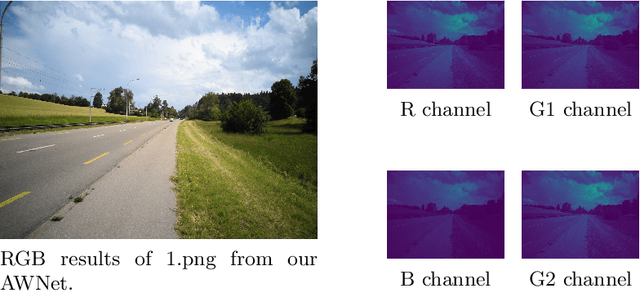
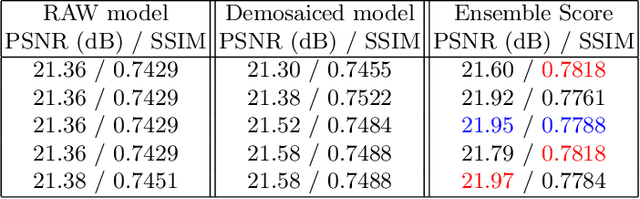
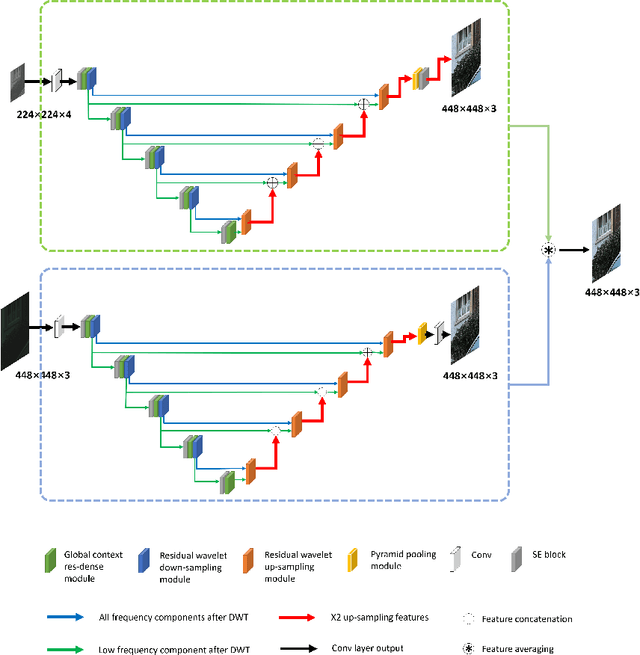
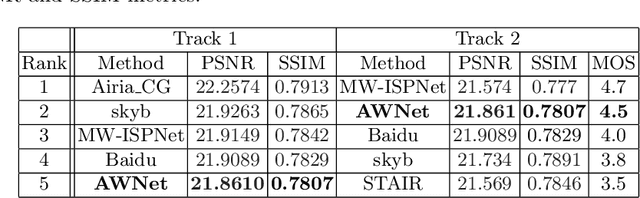
As the revolutionary improvement being made on the performance of smartphones over the last decade, mobile photography becomes one of the most common practices among the majority of smartphone users. However, due to the limited size of camera sensors on phone, the photographed image is still visually distinct to the one taken by the digital single-lens reflex (DSLR) camera. To narrow this performance gap, one is to redesign the camera image signal processor (ISP) to improve the image quality. Owing to the rapid rise of deep learning, recent works resort to the deep convolutional neural network (CNN) to develop a sophisticated data-driven ISP that directly maps the phone-captured image to the DSLR-captured one. In this paper, we introduce a novel network that utilizes the attention mechanism and wavelet transform, dubbed AWNet, to tackle this learnable image ISP problem. By adding the wavelet transform, our proposed method enables us to restore favorable image details from RAW information and achieve a larger receptive field while remaining high efficiency in terms of computational cost. The global context block is adopted in our method to learn the non-local color mapping for the generation of appealing RGB images. More importantly, this block alleviates the influence of image misalignment occurred on the provided dataset. Experimental results indicate the advances of our design in both qualitative and quantitative measurements. The code is available publically.