 Add to Chrome
 Add to Firefox
 Add to Edge
CP-VoteNet: Contrastive Prototypical VoteNet for Few-Shot Point Cloud Object Detection
Aug 30, 2024
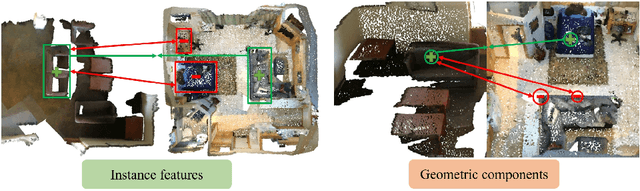
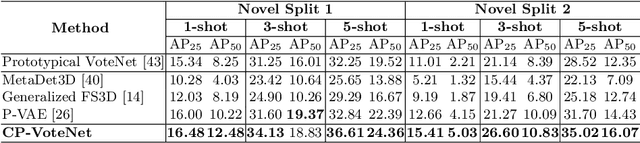
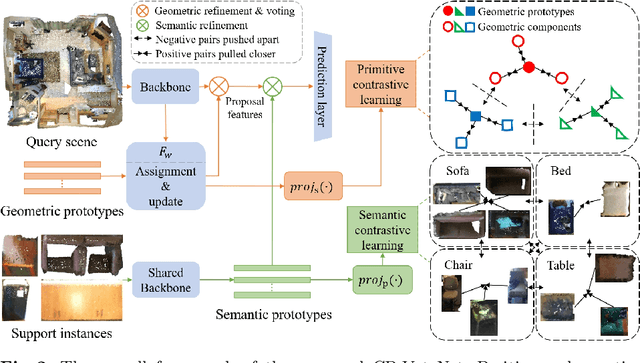
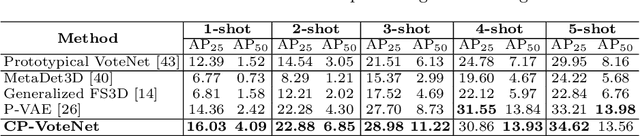
Few-shot point cloud 3D object detection (FS3D) aims to identify and localise objects of novel classes from point clouds, using knowledge learnt from annotated base classes and novel classes with very few annotations. Thus far, this challenging task has been approached using prototype learning, but the performance remains far from satisfactory. We find that in existing methods, the prototypes are only loosely constrained and lack of fine-grained awareness of the semantic and geometrical correlation embedded within the point cloud space. To mitigate these issues, we propose to leverage the inherent contrastive relationship within the semantic and geometrical subspaces to learn more refined and generalisable prototypical representations. To this end, we first introduce contrastive semantics mining, which enables the network to extract discriminative categorical features by constructing positive and negative pairs within training batches. Meanwhile, since point features representing local patterns can be clustered into geometric components, we further propose to impose contrastive relationship at the primitive level. Through refined primitive geometric structures, the transferability of feature encoding from base to novel classes is significantly enhanced. The above designs and insights lead to our novel Contrastive Prototypical VoteNet (CP-VoteNet). Extensive experiments on two FS3D benchmarks FS-ScanNet and FS-SUNRGBD demonstrate that CP-VoteNet surpasses current state-of-the-art methods by considerable margins across different FS3D settings. Further ablation studies conducted corroborate the rationale and effectiveness of our designs.

Free-breathing 3D cardiac extracellular volume (ECV) mapping using a linear tangent space alignment (LTSA) model
Aug 22, 2024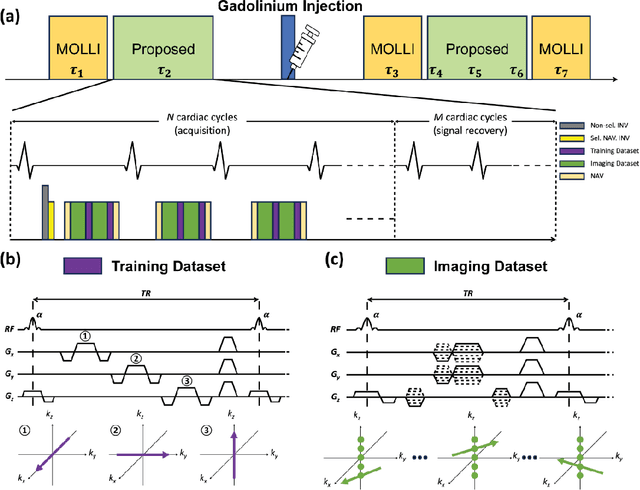
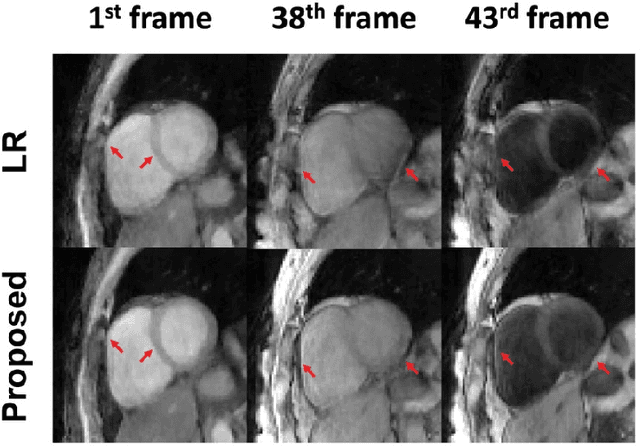
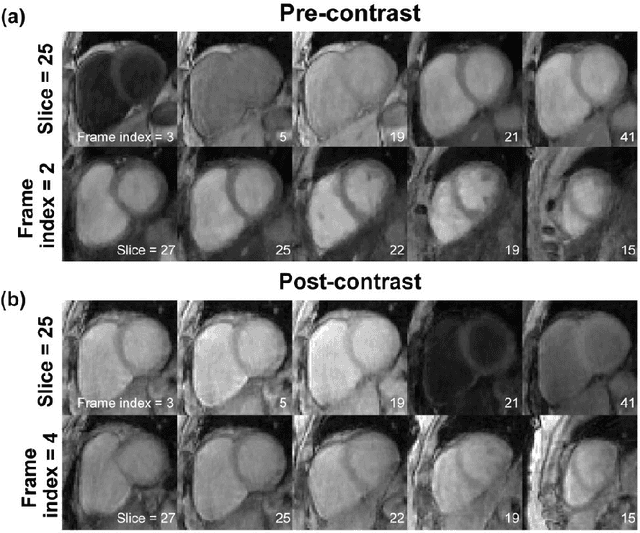
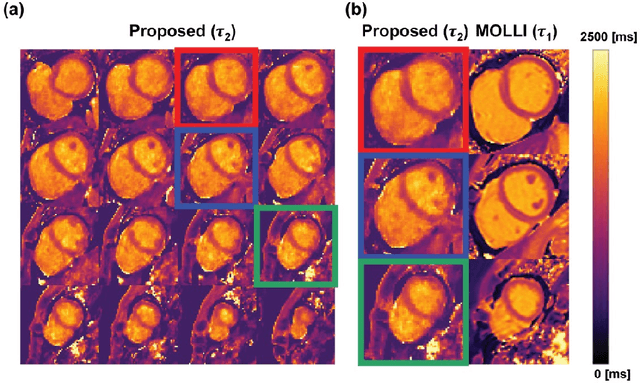
$\textbf{Purpose:}$ To develop a new method for free-breathing 3D extracellular volume (ECV) mapping of the whole heart at 3T. $\textbf{Methods:}$ A free-breathing 3D cardiac ECV mapping method was developed at 3T. T1 mapping was performed before and after contrast agent injection using a free-breathing ECG-gated inversion-recovery sequence with spoiled gradient echo readout. A linear tangent space alignment (LTSA) model-based method was used to reconstruct high-frame-rate dynamic images from (k,t)-space data sparsely sampled along a random stack-of-stars trajectory. Joint T1 and transmit B1 estimation was performed voxel-by-voxel for pre- and post-contrast T1 mapping. To account for the time-varying T1 after contrast agent injection, a linearly time-varying T1 model was introduced for post-contrast T1 mapping. ECV maps were generated by aligning pre- and post-contrast T1 maps through affine transformation. $\textbf{Results:}$ The feasibility of the proposed method was demonstrated using in vivo studies with six healthy volunteers at 3T. We obtained 3D ECV maps at a spatial resolution of 1.9$\times$1.9$\times$4.5 $mm^{3}$ and a FOV of 308$\times$308$\times$144 $mm^{3}$, with a scan time of 10.1$\pm$1.4 and 10.6$\pm$1.6 min before and after contrast agent injection, respectively. The ECV maps and the pre- and post-contrast T1 maps obtained by the proposed method were in good agreement with the 2D MOLLI method both qualitatively and quantitatively. $\textbf{Conclusion:}$ The proposed method allows for free-breathing 3D ECV mapping of the whole heart within a practically feasible imaging time. The estimated ECV values from the proposed method were comparable to those from the existing method. $\textbf{Keywords:}$ cardiac extracellular volume (ECV) mapping, cardiac T1 mapping, linear tangent space alignment (LTSA), manifold learning
TSC: A Simple Two-Sided Constraint against Over-Smoothing
Aug 06, 2024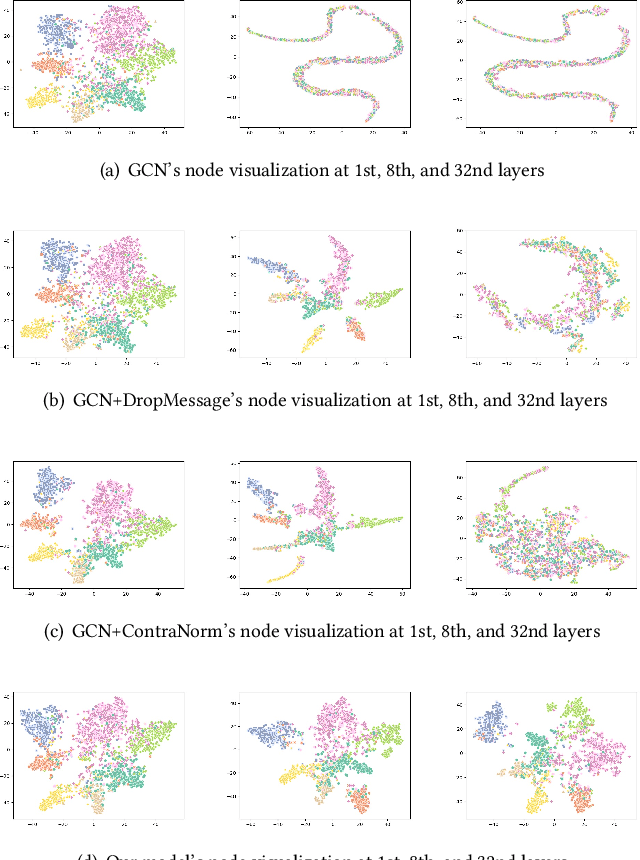
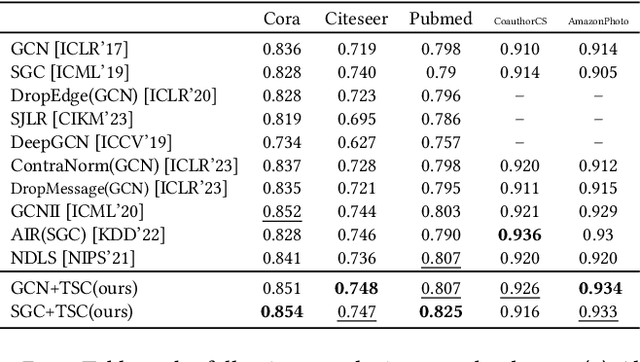
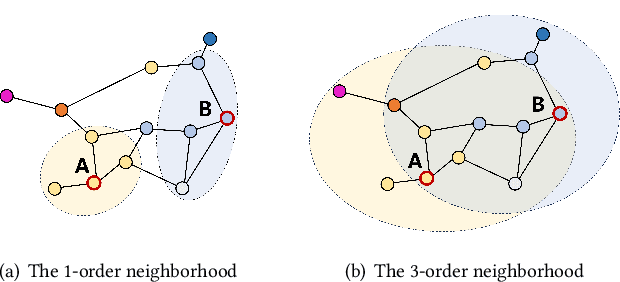
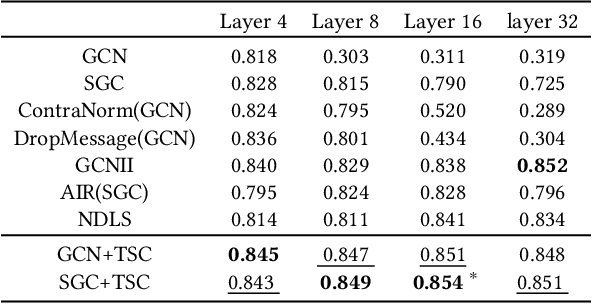
Graph Convolutional Neural Network (GCN), a widely adopted method for analyzing relational data, enhances node discriminability through the aggregation of neighboring information. Usually, stacking multiple layers can improve the performance of GCN by leveraging information from high-order neighbors. However, the increase of the network depth will induce the over-smoothing problem, which can be attributed to the quality and quantity of neighbors changing: (a) neighbor quality, node's neighbors become overlapping in high order, leading to aggregated information becoming indistinguishable, (b) neighbor quantity, the exponentially growing aggregated neighbors submerges the node's initial feature by recursively aggregating operations. Current solutions mainly focus on one of the above causes and seldom consider both at once. Aiming at tackling both causes of over-smoothing in one shot, we introduce a simple Two-Sided Constraint (TSC) for GCNs, comprising two straightforward yet potent techniques: random masking and contrastive constraint. The random masking acts on the representation matrix's columns to regulate the degree of information aggregation from neighbors, thus preventing the convergence of node representations. Meanwhile, the contrastive constraint, applied to the representation matrix's rows, enhances the discriminability of the nodes. Designed as a plug-in module, TSC can be easily coupled with GCN or SGC architectures. Experimental analyses on diverse real-world graph datasets verify that our approach markedly reduces the convergence of node's representation and the performance degradation in deeper GCN.
Point-supervised Brain Tumor Segmentation with Box-prompted MedSAM
Aug 01, 2024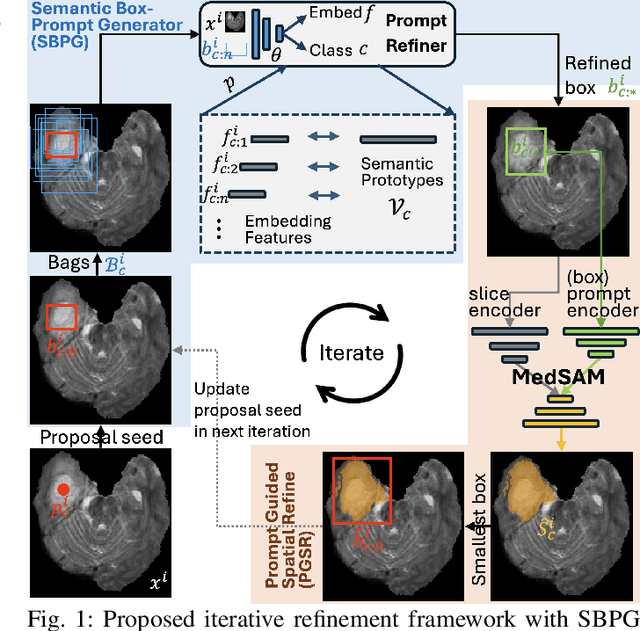

Delineating lesions and anatomical structure is important for image-guided interventions. Point-supervised medical image segmentation (PSS) has great potential to alleviate costly expert delineation labeling. However, due to the lack of precise size and boundary guidance, the effectiveness of PSS often falls short of expectations. Although recent vision foundational models, such as the medical segment anything model (MedSAM), have made significant advancements in bounding-box-prompted segmentation, it is not straightforward to utilize point annotation, and is prone to semantic ambiguity. In this preliminary study, we introduce an iterative framework to facilitate semantic-aware point-supervised MedSAM. Specifically, the semantic box-prompt generator (SBPG) module has the capacity to convert the point input into potential pseudo bounding box suggestions, which are explicitly refined by the prototype-based semantic similarity. This is then succeeded by a prompt-guided spatial refinement (PGSR) module that harnesses the exceptional generalizability of MedSAM to infer the segmentation mask, which also updates the box proposal seed in SBPG. Performance can be progressively improved with adequate iterations. We conducted an evaluation on BraTS2018 for the segmentation of whole brain tumors and demonstrated its superior performance compared to traditional PSS methods and on par with box-supervised methods.
SaccadeDet: A Novel Dual-Stage Architecture for Rapid and Accurate Detection in Gigapixel Images
Jul 25, 2024The advancement of deep learning in object detection has predominantly focused on megapixel images, leaving a critical gap in the efficient processing of gigapixel images. These super high-resolution images present unique challenges due to their immense size and computational demands. To address this, we introduce 'SaccadeDet', an innovative architecture for gigapixel-level object detection, inspired by the human eye saccadic movement. The cornerstone of SaccadeDet is its ability to strategically select and process image regions, dramatically reducing computational load. This is achieved through a two-stage process: the 'saccade' stage, which identifies regions of probable interest, and the 'gaze' stage, which refines detection in these targeted areas. Our approach, evaluated on the PANDA dataset, not only achieves an 8x speed increase over the state-of-the-art methods but also demonstrates significant potential in gigapixel-level pathology analysis through its application to Whole Slide Imaging.
* This paper is accepted to ECML-PKDD 2024
VEON: Vocabulary-Enhanced Occupancy Prediction
Jul 17, 2024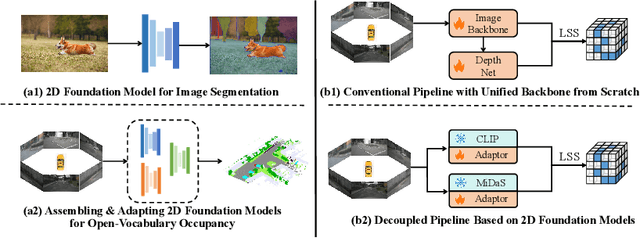
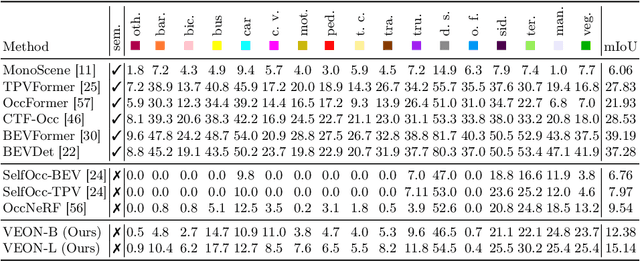


Perceiving the world as 3D occupancy supports embodied agents to avoid collision with any types of obstacle. While open-vocabulary image understanding has prospered recently, how to bind the predicted 3D occupancy grids with open-world semantics still remains under-explored due to limited open-world annotations. Hence, instead of building our model from scratch, we try to blend 2D foundation models, specifically a depth model MiDaS and a semantic model CLIP, to lift the semantics to 3D space, thus fulfilling 3D occupancy. However, building upon these foundation models is not trivial. First, the MiDaS faces the depth ambiguity problem, i.e., it only produces relative depth but fails to estimate bin depth for feature lifting. Second, the CLIP image features lack high-resolution pixel-level information, which limits the 3D occupancy accuracy. Third, open vocabulary is often trapped by the long-tail problem. To address these issues, we propose VEON for Vocabulary-Enhanced Occupancy predictioN by not only assembling but also adapting these foundation models. We first equip MiDaS with a Zoedepth head and low-rank adaptation (LoRA) for relative-metric-bin depth transformation while reserving beneficial depth prior. Then, a lightweight side adaptor network is attached to the CLIP vision encoder to generate high-resolution features for fine-grained 3D occupancy prediction. Moreover, we design a class reweighting strategy to give priority to the tail classes. With only 46M trainable parameters and zero manual semantic labels, VEON achieves 15.14 mIoU on Occ3D-nuScenes, and shows the capability of recognizing objects with open-vocabulary categories, meaning that our VEON is label-efficient, parameter-efficient, and precise enough.
$\mathrm{E^{2}CFD}$: Towards Effective and Efficient Cost Function Design for Safe Reinforcement Learning via Large Language Model
Jul 08, 2024Different classes of safe reinforcement learning algorithms have shown satisfactory performance in various types of safety requirement scenarios. However, the existing methods mainly address one or several classes of specific safety requirement scenario problems and cannot be applied to arbitrary safety requirement scenarios. In addition, the optimization objectives of existing reinforcement learning algorithms are misaligned with the task requirements. Based on the need to address these issues, we propose $\mathrm{E^{2}CFD}$, an effective and efficient cost function design framework. $\mathrm{E^{2}CFD}$ leverages the capabilities of a large language model (LLM) to comprehend various safety scenarios and generate corresponding cost functions. It incorporates the \textit{fast performance evaluation (FPE)} method to facilitate rapid and iterative updates to the generated cost function. Through this iterative process, $\mathrm{E^{2}CFD}$ aims to obtain the most suitable cost function for policy training, tailored to the specific tasks within the safety scenario. Experiments have proven that the performance of policies trained using this framework is superior to traditional safe reinforcement learning algorithms and policies trained with carefully designed cost functions.
Axiomatization of Gradient Smoothing in Neural Networks
Jun 29, 2024Gradients play a pivotal role in neural networks explanation. The inherent high dimensionality and structural complexity of neural networks result in the original gradients containing a significant amount of noise. While several approaches were proposed to reduce noise with smoothing, there is little discussion of the rationale behind smoothing gradients in neural networks. In this work, we proposed a gradient smooth theoretical framework for neural networks based on the function mollification and Monte Carlo integration. The framework intrinsically axiomatized gradient smoothing and reveals the rationale of existing methods. Furthermore, we provided an approach to design new smooth methods derived from the framework. By experimental measurement of several newly designed smooth methods, we demonstrated the research potential of our framework.
Towards a Generalist and Blind RGB-X Tracker
May 28, 2024With the emergence of a single large model capable of successfully solving a multitude of tasks in NLP, there has been growing research interest in achieving similar goals in computer vision. On the one hand, most of these generic models, referred to as generalist vision models, aim at producing unified outputs serving different tasks. On the other hand, some existing models aim to combine different input types (aka data modalities), which are then processed by a single large model. Yet, this step of combination remains specialized, which falls short of serving the initial ambition. In this paper, we showcase that such specialization (during unification) is unnecessary, in the context of RGB-X video object tracking. Our single model tracker, termed XTrack, can remain blind to any modality X during inference time. Our tracker employs a mixture of modal experts comprising those dedicated to shared commonality and others capable of flexibly performing reasoning conditioned on input modality. Such a design ensures the unification of input modalities towards a common latent space, without weakening the modality-specific information representation. With this idea, our training process is extremely simple, integrating multi-label classification loss with a routing function, thereby effectively aligning and unifying all modalities together, even from only paired data. Thus, during inference, we can adopt any modality without relying on the inductive bias of the modal prior and achieve generalist performance. Without any bells and whistles, our generalist and blind tracker can achieve competitive performance compared to well-established modal-specific models on 5 benchmarks across 3 auxiliary modalities, covering commonly used depth, thermal, and event data.
OccGen: Generative Multi-modal 3D Occupancy Prediction for Autonomous Driving
Apr 23, 2024


Existing solutions for 3D semantic occupancy prediction typically treat the task as a one-shot 3D voxel-wise segmentation perception problem. These discriminative methods focus on learning the mapping between the inputs and occupancy map in a single step, lacking the ability to gradually refine the occupancy map and the reasonable scene imaginative capacity to complete the local regions somewhere. In this paper, we introduce OccGen, a simple yet powerful generative perception model for the task of 3D semantic occupancy prediction. OccGen adopts a ''noise-to-occupancy'' generative paradigm, progressively inferring and refining the occupancy map by predicting and eliminating noise originating from a random Gaussian distribution. OccGen consists of two main components: a conditional encoder that is capable of processing multi-modal inputs, and a progressive refinement decoder that applies diffusion denoising using the multi-modal features as conditions. A key insight of this generative pipeline is that the diffusion denoising process is naturally able to model the coarse-to-fine refinement of the dense 3D occupancy map, therefore producing more detailed predictions. Extensive experiments on several occupancy benchmarks demonstrate the effectiveness of the proposed method compared to the state-of-the-art methods. For instance, OccGen relatively enhances the mIoU by 9.5%, 6.3%, and 13.3% on nuScenes-Occupancy dataset under the muli-modal, LiDAR-only, and camera-only settings, respectively. Moreover, as a generative perception model, OccGen exhibits desirable properties that discriminative models cannot achieve, such as providing uncertainty estimates alongside its multiple-step predictions.