 Add to Chrome
 Add to Firefox
 Add to Edge
Feature Space Renormalization for Semi-supervised Learning
Nov 07, 2023
Semi-supervised learning (SSL) has been proven to be a powerful method for leveraging unlabelled data to alleviate models' dependence on large labelled datasets. The common framework among recent approaches is to train the model on a large amount of unlabelled data with consistency regularization to constrain the model predictions to be invariant to input perturbation. However, the existing SSL frameworks still have room for improvement in the consistency regularization method. Instead of regularizing category predictions in the label space as in existing frameworks, this paper proposes a feature space renormalization (FSR) mechanism for SSL. First, we propose a feature space renormalization mechanism to substitute for the commonly used consistency regularization mechanism to learn better discriminative features. To apply this mechanism, we start by building a basic model and an empirical model and then introduce our mechanism to renormalize the feature learning of the basic model with the guidance of the empirical model. Second, we combine the proposed mechanism with pseudo-labelling to obtain a novel effective SSL model named FreMatch. The experimental results show that our method can achieve better performance on a variety of standard SSL benchmark datasets, and the proposed feature space renormalization mechanism can also enhance the performance of other SSL approaches.

RiskQ: Risk-sensitive Multi-Agent Reinforcement Learning Value Factorization
Nov 03, 2023Multi-agent systems are characterized by environmental uncertainty, varying policies of agents, and partial observability, which result in significant risks. In the context of Multi-Agent Reinforcement Learning (MARL), learning coordinated and decentralized policies that are sensitive to risk is challenging. To formulate the coordination requirements in risk-sensitive MARL, we introduce the Risk-sensitive Individual-Global-Max (RIGM) principle as a generalization of the Individual-Global-Max (IGM) and Distributional IGM (DIGM) principles. This principle requires that the collection of risk-sensitive action selections of each agent should be equivalent to the risk-sensitive action selection of the central policy. Current MARL value factorization methods do not satisfy the RIGM principle for common risk metrics such as the Value at Risk (VaR) metric or distorted risk measurements. Therefore, we propose RiskQ to address this limitation, which models the joint return distribution by modeling quantiles of it as weighted quantile mixtures of per-agent return distribution utilities. RiskQ satisfies the RIGM principle for the VaR and distorted risk metrics. We show that RiskQ can obtain promising performance through extensive experiments. The source code of RiskQ is available in https://github.com/xmu-rl-3dv/RiskQ.
Exploring Data Augmentations on Self-/Semi-/Fully- Supervised Pre-trained Models
Oct 28, 2023Data augmentation has become a standard component of vision pre-trained models to capture the invariance between augmented views. In practice, augmentation techniques that mask regions of a sample with zero/mean values or patches from other samples are commonly employed in pre-trained models with self-/semi-/fully-supervised contrastive losses. However, the underlying mechanism behind the effectiveness of these augmentation techniques remains poorly explored. To investigate the problems, we conduct an empirical study to quantify how data augmentation affects performance. Concretely, we apply 4 types of data augmentations termed with Random Erasing, CutOut, CutMix and MixUp to a series of self-/semi-/fully- supervised pre-trained models. We report their performance on vision tasks such as image classification, object detection, instance segmentation, and semantic segmentation. We then explicitly evaluate the invariance and diversity of the feature embedding. We observe that: 1) Masking regions of the images decreases the invariance of the learned feature embedding while providing a more considerable diversity. 2) Manual annotations do not change the invariance or diversity of the learned feature embedding. 3) The MixUp approach improves the diversity significantly, with only a marginal decrease in terms of the invariance.
Keep Various Trajectories: Promoting Exploration of Ensemble Policies in Continuous Control
Oct 17, 2023The combination of deep reinforcement learning (DRL) with ensemble methods has been proved to be highly effective in addressing complex sequential decision-making problems. This success can be primarily attributed to the utilization of multiple models, which enhances both the robustness of the policy and the accuracy of value function estimation. However, there has been limited analysis of the empirical success of current ensemble RL methods thus far. Our new analysis reveals that the sample efficiency of previous ensemble DRL algorithms may be limited by sub-policies that are not as diverse as they could be. Motivated by these findings, our study introduces a new ensemble RL algorithm, termed \textbf{T}rajectories-awar\textbf{E} \textbf{E}nsemble exploratio\textbf{N} (TEEN). The primary goal of TEEN is to maximize the expected return while promoting more diverse trajectories. Through extensive experiments, we demonstrate that TEEN not only enhances the sample diversity of the ensemble policy compared to using sub-policies alone but also improves the performance over ensemble RL algorithms. On average, TEEN outperforms the baseline ensemble DRL algorithms by 41\% in performance on the tested representative environments.
Asca: less audio data is more insightful
Sep 23, 2023Audio recognition in specialized areas such as birdsong and submarine acoustics faces challenges in large-scale pre-training due to the limitations in available samples imposed by sampling environments and specificity requirements. While the Transformer model excels in audio recognition, its dependence on vast amounts of data becomes restrictive in resource-limited settings. Addressing this, we introduce the Audio Spectrogram Convolution Attention (ASCA) based on CoAtNet, integrating a Transformer-convolution hybrid architecture, novel network design, and attention techniques, further augmented with data enhancement and regularization strategies. On the BirdCLEF2023 and AudioSet(Balanced), ASCA achieved accuracies of 81.2% and 35.1%, respectively, significantly outperforming competing methods. The unique structure of our model enriches output, enabling generalization across various audio detection tasks. Our code can be found at https://github.com/LeeCiang/ASCA.
KernelWarehouse: Towards Parameter-Efficient Dynamic Convolution
Aug 16, 2023Dynamic convolution learns a linear mixture of $n$ static kernels weighted with their sample-dependent attentions, demonstrating superior performance compared to normal convolution. However, existing designs are parameter-inefficient: they increase the number of convolutional parameters by $n$ times. This and the optimization difficulty lead to no research progress in dynamic convolution that can allow us to use a significant large value of $n$ (e.g., $n>100$ instead of typical setting $n<10$) to push forward the performance boundary. In this paper, we propose $KernelWarehouse$, a more general form of dynamic convolution, which can strike a favorable trade-off between parameter efficiency and representation power. Its key idea is to redefine the basic concepts of "$kernels$" and "$assembling$ $kernels$" in dynamic convolution from the perspective of reducing kernel dimension and increasing kernel number significantly. In principle, KernelWarehouse enhances convolutional parameter dependencies within the same layer and across successive layers via tactful kernel partition and warehouse sharing, yielding a high degree of freedom to fit a desired parameter budget. We validate our method on ImageNet and MS-COCO datasets with different ConvNet architectures, and show that it attains state-of-the-art results. For instance, the ResNet18|ResNet50|MobileNetV2|ConvNeXt-Tiny model trained with KernelWarehouse on ImageNet reaches 76.05%|81.05%|75.52%|82.51% top-1 accuracy. Thanks to its flexible design, KernelWarehouse can even reduce the model size of a ConvNet while improving the accuracy, e.g., our ResNet18 model with 36.45%|65.10% parameter reduction to the baseline shows 2.89%|2.29% absolute improvement to top-1 accuracy.
Analyzing and controlling diversity in quantum-behaved particle swarm optimization
Aug 09, 2023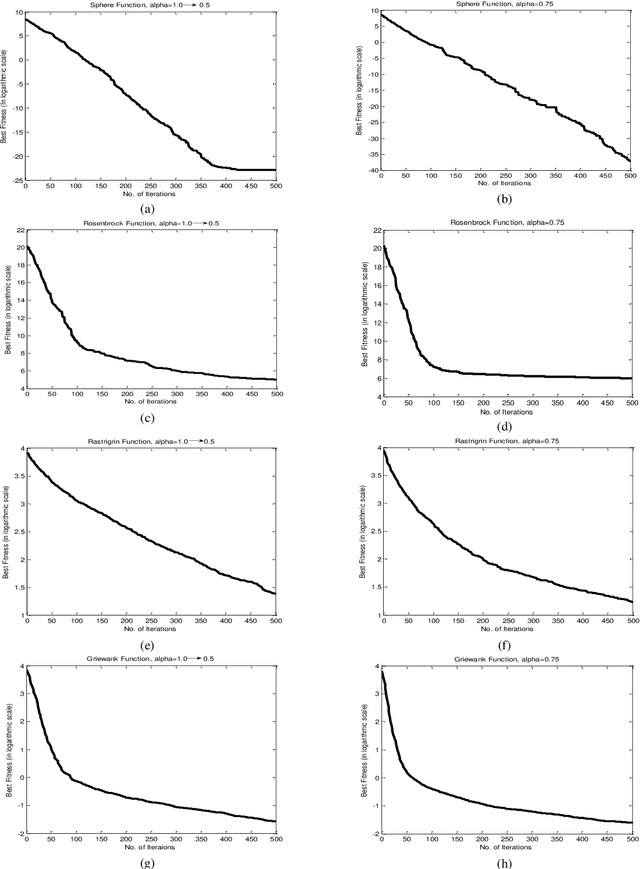
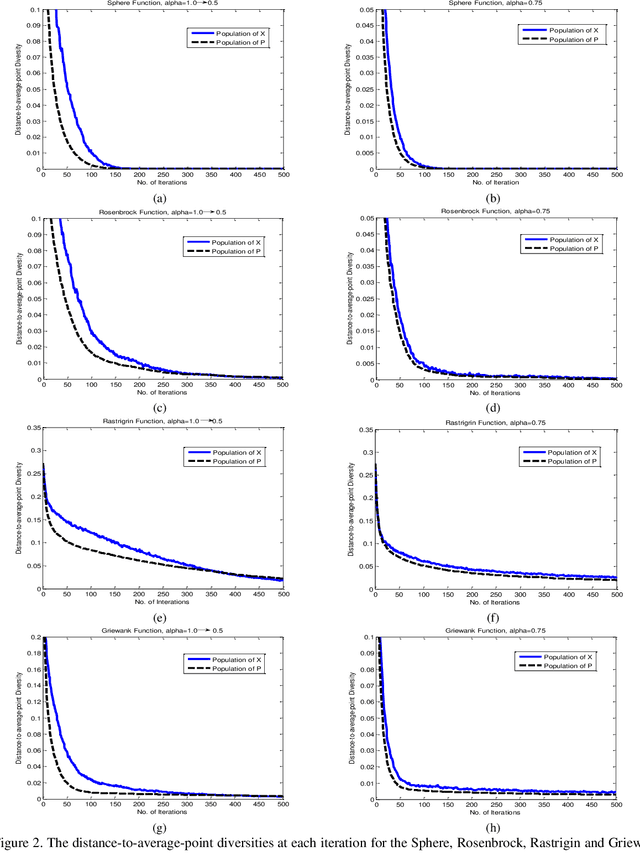
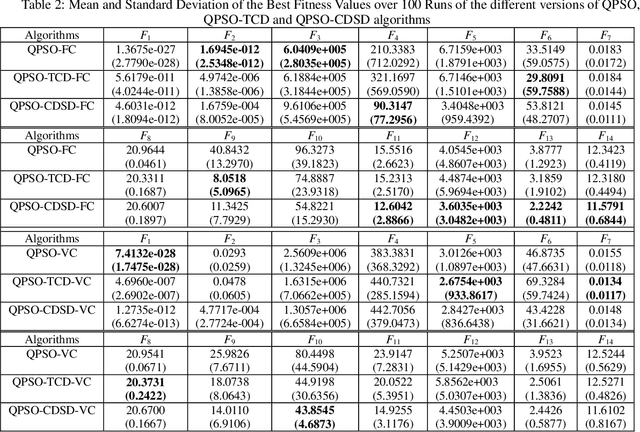
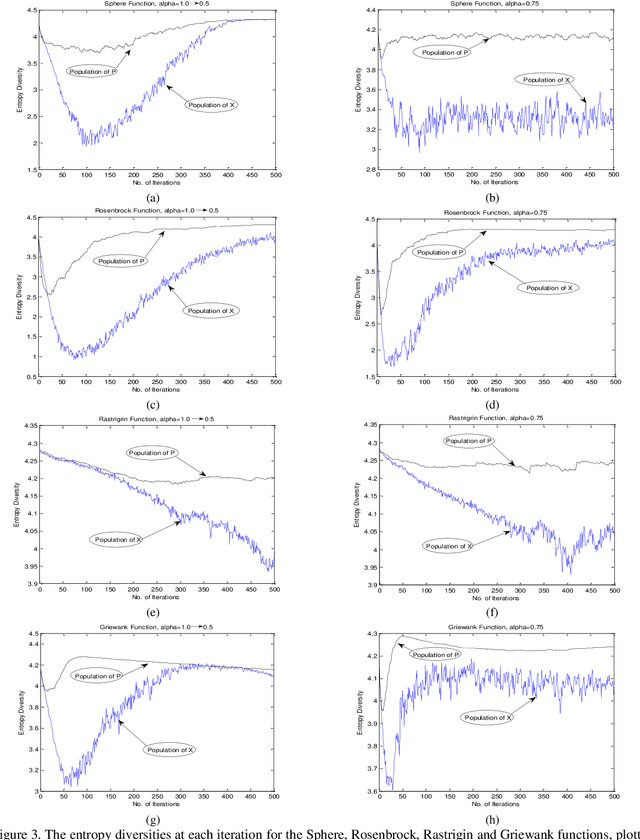
This paper addresses the issues of controlling and analyzing the population diversity in quantum-behaved particle swarm optimization (QPSO), which is an optimization approach motivated by concepts in quantum mechanics and PSO. In order to gain an in-depth understanding of the role the diversity plays in the evolving process, we first define the genotype diversity by the distance to the average point of the particles' positions and the phenotype diversity by the fitness values for the QPSO. Then, the correlations between the two types of diversities and the search performance are tested and analyzed on several benchmark functions, and the distance-to-average-point diversity is showed to have stronger association with the search performance during the evolving processes. Finally, in the light of the performed diversity analyses, two strategies for controlling the distance-to-average-point diversities are proposed for the purpose of improving the search ability of the QPSO algorithm. Empirical studies on the QPSO with the introduced diversity control methods are performed on a set of benchmark functions from the CEC 2005 benchmark suite. The performance of the proposed methods are evaluated and compared with the original QPSO and other PSO variants.
Long-range Dependency based Multi-Layer Perceptron for Heterogeneous Information Networks
Jul 17, 2023Existing heterogeneous graph neural networks (HGNNs) have achieved great success in utilizing the rich semantic information in heterogeneous information networks (HINs). However, few works have delved into the utilization of long-range dependencies in HINs, which is extremely valuable as many real-world HINs are sparse, and each node has only a few directly connected neighbors. Although some HGNNs can utilize distant neighbors by stacking multiple layers or leveraging long meta-paths, the exponentially increased number of nodes in the receptive field or the number of meta-paths incurs high computation and memory costs. To address these issues, we investigate the importance of different meta-paths and propose Long-range Dependency based Multi-Layer Perceptron (LDMLP). Specifically, to solve the high-cost problem of leveraging long-range dependencies, LDMLP adopts a search stage to discover effective meta-paths automatically, reducing the exponentially increased number of meta-paths to a constant. To avoid the influence of specific modules on search results, LDMLP utilizes a simple architecture with only multi-layer perceptions in the search stage, improving the generalization of searched meta-paths. As a result, the searched meta-paths not only perform well in LDMLP but also enable other HGNNs like HAN and SeHGNN to perform better. Extensive experiments on eight heterogeneous datasets demonstrate that LDMLP achieves state-of-the-art performance while enjoying high efficiency and generalization, especially on sparse HINs.
Inverse Evolution Layers: Physics-informed Regularizers for Deep Neural Networks
Jul 14, 2023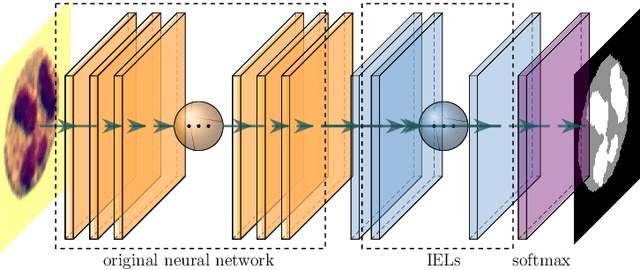
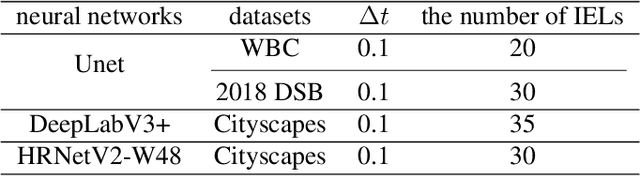
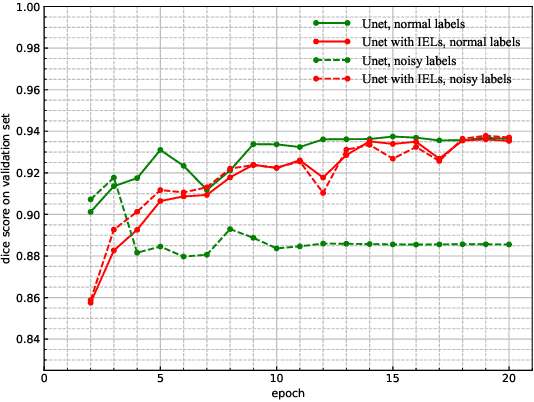
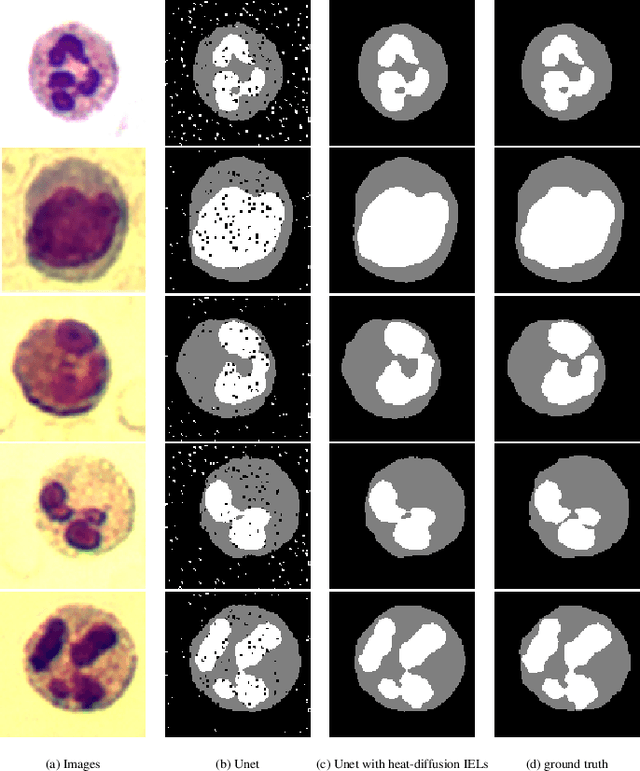
This paper proposes a novel approach to integrating partial differential equation (PDE)-based evolution models into neural networks through a new type of regularization. Specifically, we propose inverse evolution layers (IELs) based on evolution equations. These layers can achieve specific regularization objectives and endow neural networks' outputs with corresponding properties of the evolution models. Moreover, IELs are straightforward to construct and implement, and can be easily designed for various physical evolutions and neural networks. Additionally, the design process for these layers can provide neural networks with intuitive and mathematical interpretability, thus enhancing the transparency and explainability of the approach. To demonstrate the effectiveness, efficiency, and simplicity of our approach, we present an example of endowing semantic segmentation models with the smoothness property based on the heat diffusion model. To achieve this goal, we design heat-diffusion IELs and apply them to address the challenge of semantic segmentation with noisy labels. The experimental results demonstrate that the heat-diffusion IELs can effectively mitigate the overfitting problem caused by noisy labels.
RFLA: A Stealthy Reflected Light Adversarial Attack in the Physical World
Jul 14, 2023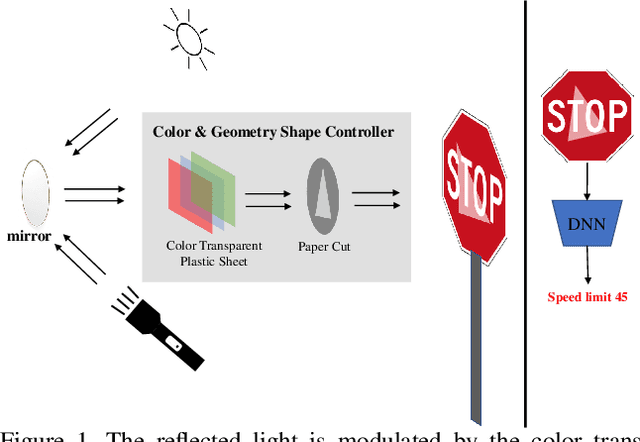
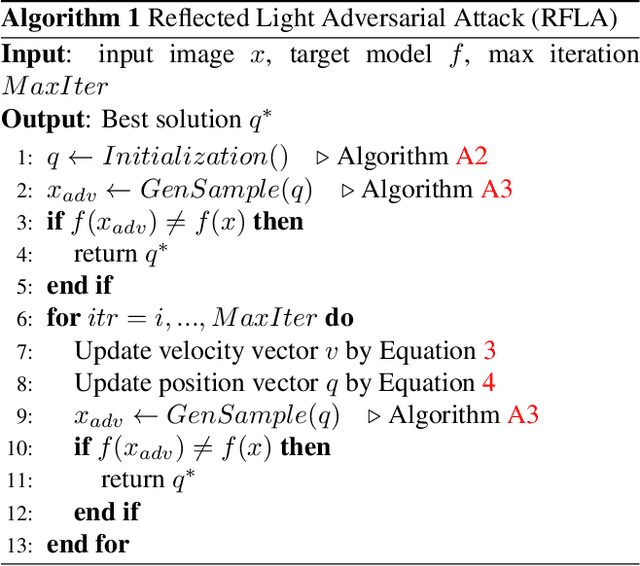
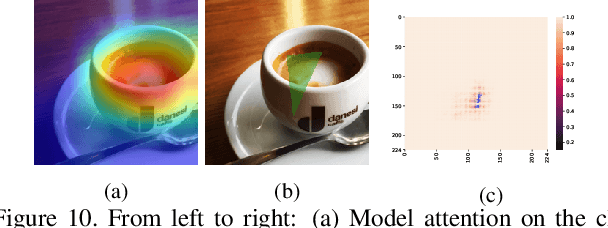
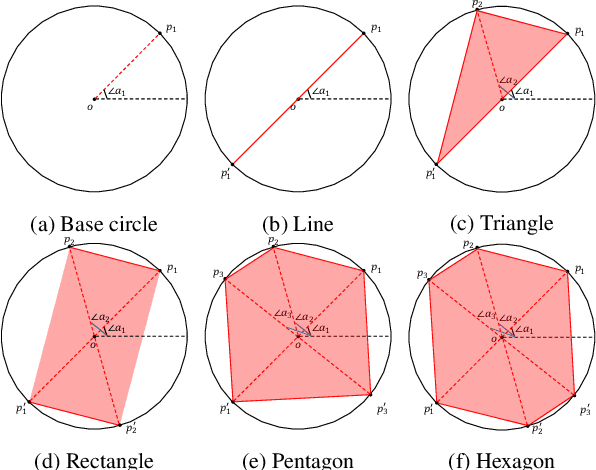
Physical adversarial attacks against deep neural networks (DNNs) have recently gained increasing attention. The current mainstream physical attacks use printed adversarial patches or camouflage to alter the appearance of the target object. However, these approaches generate conspicuous adversarial patterns that show poor stealthiness. Another physical deployable attack is the optical attack, featuring stealthiness while exhibiting weakly in the daytime with sunlight. In this paper, we propose a novel Reflected Light Attack (RFLA), featuring effective and stealthy in both the digital and physical world, which is implemented by placing the color transparent plastic sheet and a paper cut of a specific shape in front of the mirror to create different colored geometries on the target object. To achieve these goals, we devise a general framework based on the circle to model the reflected light on the target object. Specifically, we optimize a circle (composed of a coordinate and radius) to carry various geometrical shapes determined by the optimized angle. The fill color of the geometry shape and its corresponding transparency are also optimized. We extensively evaluate the effectiveness of RFLA on different datasets and models. Experiment results suggest that the proposed method achieves over 99% success rate on different datasets and models in the digital world. Additionally, we verify the effectiveness of the proposed method in different physical environments by using sunlight or a flashlight.