 Add to Chrome
 Add to Firefox
 Add to Edge
Inductive Deductive Synthesis: Enabling AI to Generate Formally Verified Systems
May 22, 2026
AI agents increasingly excel at generating, testing, and refining code. However, they fall short on tasks requiring formal guarantees of full coverage that testing alone cannot provide. Distributed systems are a prime example: properties such as consistency between reads and writes must hold under every possible interleaving of events. Mechanized formal verification can guarantee such correctness, but typically demands months to years of expert effort. As evidence, even SOTA coding agents (Codex with GPT-5.4 and Claude Code with Opus 4.6) succeed on only 2/7 distributed key-value-store specifications. In this paper, we present the first effective approach to addressing this gap, Inductive Deductive Synthesis (IDS), which jointly and incrementally synthesizes implementation and proof, and learns from failed attempts to systematically try promising strategies. Built as an agentic LLM system, IDS achieves 7/7 in about 6.8 hours and $106 per spec on average, roughly 200x faster than expert effort and 17% cheaper than SOTA agents. IDS further incorporates performance feedback into the same loop, yielding implementations up to 3x faster than published verified systems.

AI-Driven Research for Databases
Apr 08, 2026As the complexity of modern workloads and hardware increasingly outpaces human research and engineering capacity, existing methods for database performance optimization struggle to keep pace. To address this gap, a new class of techniques, termed AI-Driven Research for Systems (ADRS), uses large language models to automate solution discovery. This approach shifts optimization from manual system design to automated code generation. The key obstacle, however, in applying ADRS is the evaluation pipeline. Since these frameworks rapidly generate hundreds of candidates without human supervision, they depend on fast and accurate feedback from evaluators to converge on effective solutions. Building such evaluators is especially difficult for complex database systems. To enable the practical application of ADRS in this domain, we propose automating the design of evaluators by co-evolving them with the solutions. We demonstrate the effectiveness of this approach through three case studies optimizing buffer management, query rewriting, and index selection. Our automated evaluators enable the discovery of novel algorithms that outperform state-of-the-art baselines (e.g., a deterministic query rewrite policy that achieves up to 6.8x lower latency), demonstrating that addressing the evaluation bottleneck unlocks the potential of ADRS to generate highly optimized, deployable code for next-generation data systems.
AdaEvolve: Adaptive LLM Driven Zeroth-Order Optimization
Feb 23, 2026The paradigm of automated program generation is shifting from one-shot generation to inference-time search, where Large Language Models (LLMs) function as semantic mutation operators within evolutionary loops. While effective, these systems are currently governed by static schedules that fail to account for the non-stationary dynamics of the search process. This rigidity results in substantial computational waste, as resources are indiscriminately allocated to stagnating populations while promising frontiers remain under-exploited. We introduce AdaEvolve, a framework that reformulates LLM-driven evolution as a hierarchical adaptive optimization problem. AdaEvolve uses an "accumulated improvement signal" to unify decisions across three levels: Local Adaptation, which dynamically modulates the exploration intensity within a population of solution candidates; Global Adaptation, which routes the global resource budget via bandit-based scheduling across different solution candidate populations; and Meta-Guidance which generates novel solution tactics based on the previously generated solutions and their corresponding improvements when the progress stalls. We demonstrate that AdaEvolve consistently outperforms the open-sourced baselines across 185 different open-ended optimization problems including combinatorial, systems optimization and algorithm design problems.
Let the Barbarians In: How AI Can Accelerate Systems Performance Research
Dec 22, 2025Artificial Intelligence (AI) is beginning to transform the research process by automating the discovery of new solutions. This shift depends on the availability of reliable verifiers, which AI-driven approaches require to validate candidate solutions. Research focused on improving systems performance is especially well-suited to this paradigm because system performance problems naturally admit such verifiers: candidates can be implemented in real systems or simulators and evaluated against predefined workloads. We term this iterative cycle of generation, evaluation, and refinement AI-Driven Research for Systems (ADRS). Using several open-source ADRS instances (i.e., OpenEvolve, GEPA, and ShinkaEvolve), we demonstrate across ten case studies (e.g., multi-region cloud scheduling, mixture-of-experts load balancing, LLM-based SQL, transaction scheduling) that ADRS-generated solutions can match or even outperform human state-of-the-art designs. Based on these findings, we outline best practices (e.g., level of prompt specification, amount of feedback, robust evaluation) for effectively using ADRS, and we discuss future research directions and their implications. Although we do not yet have a universal recipe for applying ADRS across all of systems research, we hope our preliminary findings, together with the challenges we identify, offer meaningful guidance for future work as researcher effort shifts increasingly toward problem formulation and strategic oversight. Note: This paper is an extension of our prior work [14]. It adds extensive evaluation across multiple ADRS frameworks and provides deeper analysis and insights into best practices.
Optimizing LLM Queries in Relational Workloads
Mar 09, 2024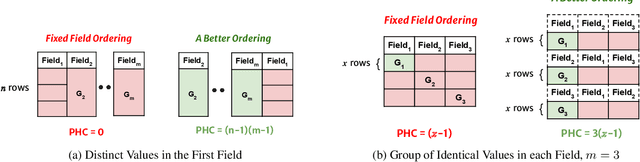
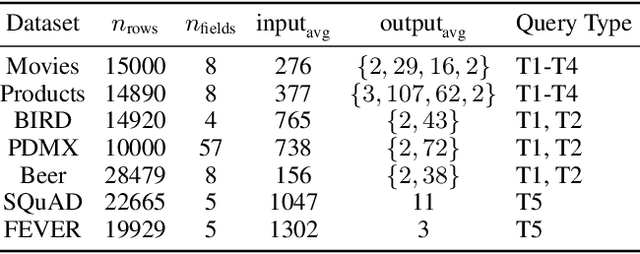
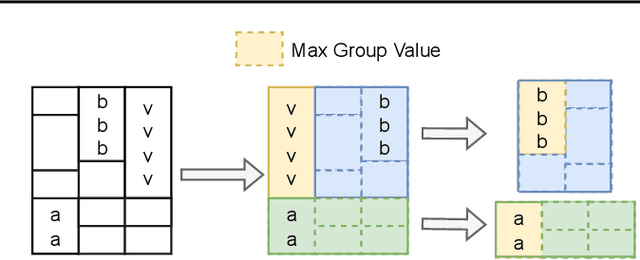
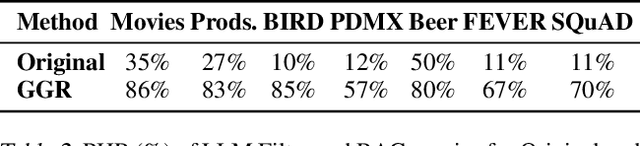
Analytical database providers (e.g., Redshift, Databricks, BigQuery) have rapidly added support for invoking Large Language Models (LLMs) through native user-defined functions (UDFs) to help users perform natural language tasks, such as classification, entity extraction, and translation, inside analytical workloads. For instance, an analyst might want to extract customer sentiments on millions of product reviews. However, LLM inference is highly expensive in both computational and economic terms: for example, an NVIDIA L4 GPU running Llama2-7B can only process 6 KB of text per second. In this paper, we explore how to optimize LLM inference for analytical workloads that invoke LLMs within relational queries. We show that relational queries present novel opportunities for accelerating LLM inference, including reordering rows to maximize key-value (KV) cache reuse within the LLM inference engine, reordering columns within a row to further increase cache reuse, and deduplicating redundant inference requests. We implement these optimizations in Apache Spark, with vLLM as the model serving backend and achieve up to 4.4x improvement in end-to-end latency on a benchmark of diverse LLM-based queries on real datasets. To the best of our knowledge, this is the first work to explicitly address the problem of optimizing LLM invocations within SQL queries.