 Add to Chrome
 Add to Firefox
 Add to Edge
Mammogram
Papers and Code
Unsupervised Hybrid framework for ANomaly Detection (HAND) -- applied to Screening Mammogram
Sep 17, 2024
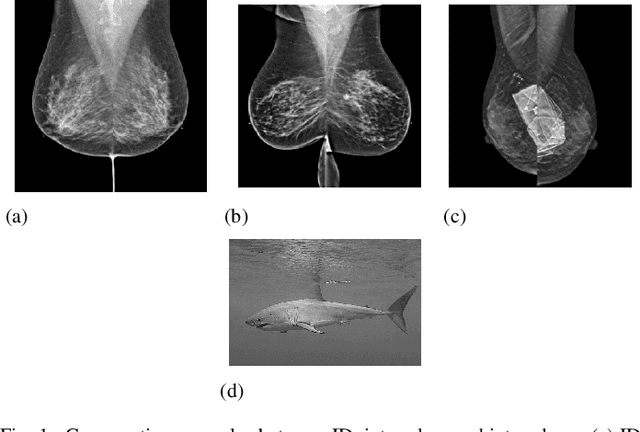

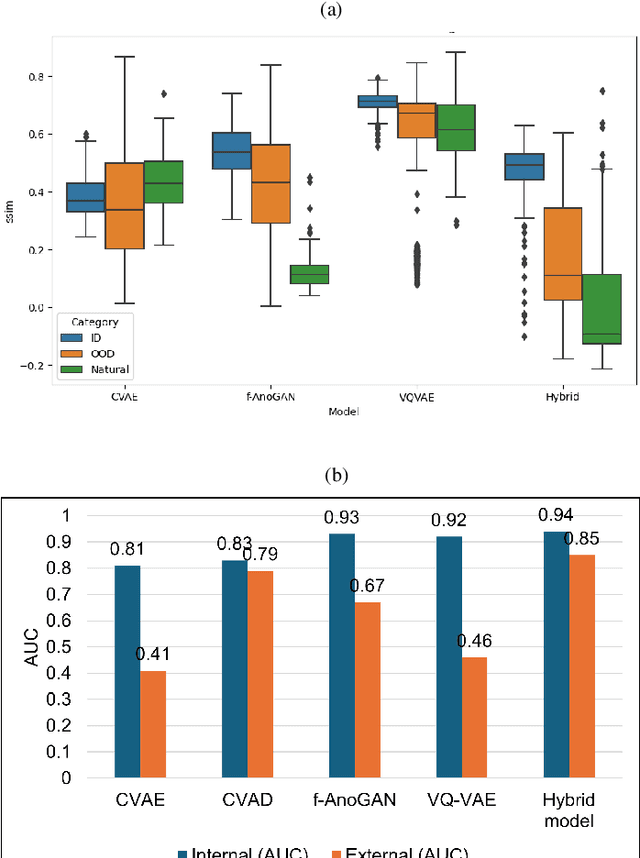
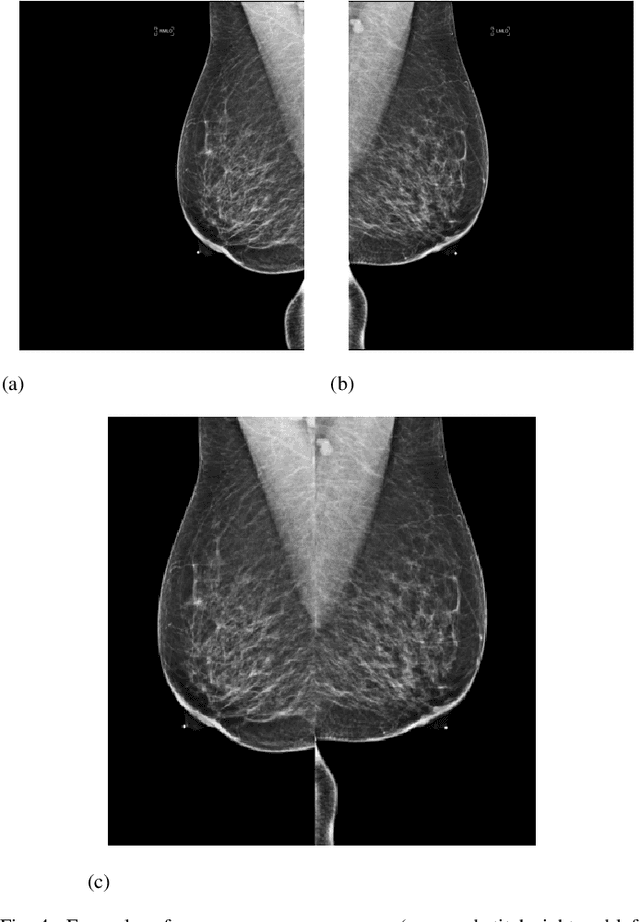
Out-of-distribution (OOD) detection is crucial for enhancing the generalization of AI models used in mammogram screening. Given the challenge of limited prior knowledge about OOD samples in external datasets, unsupervised generative learning is a preferable solution which trains the model to discern the normal characteristics of in-distribution (ID) data. The hypothesis is that during inference, the model aims to reconstruct ID samples accurately, while OOD samples exhibit poorer reconstruction due to their divergence from normality. Inspired by state-of-the-art (SOTA) hybrid architectures combining CNNs and transformers, we developed a novel backbone - HAND, for detecting OOD from large-scale digital screening mammogram studies. To boost the learning efficiency, we incorporated synthetic OOD samples and a parallel discriminator in the latent space to distinguish between ID and OOD samples. Gradient reversal to the OOD reconstruction loss penalizes the model for learning OOD reconstructions. An anomaly score is computed by weighting the reconstruction and discriminator loss. On internal RSNA mammogram held-out test and external Mayo clinic hand-curated dataset, the proposed HAND model outperformed encoder-based and GAN-based baselines, and interestingly, it also outperformed the hybrid CNN+transformer baselines. Therefore, the proposed HAND pipeline offers an automated efficient computational solution for domain-specific quality checks in external screening mammograms, yielding actionable insights without direct exposure to the private medical imaging data.

Ordinal Learning: Longitudinal Attention Alignment Model for Predicting Time to Future Breast Cancer Events from Mammograms
Sep 10, 2024Precision breast cancer (BC) risk assessment is crucial for developing individualized screening and prevention. Despite the promising potential of recent mammogram (MG) based deep learning models in predicting BC risk, they mostly overlook the 'time-to-future-event' ordering among patients and exhibit limited explorations into how they track history changes in breast tissue, thereby limiting their clinical application. In this work, we propose a novel method, named OA-BreaCR, to precisely model the ordinal relationship of the time to and between BC events while incorporating longitudinal breast tissue changes in a more explainable manner. We validate our method on public EMBED and inhouse datasets, comparing with existing BC risk prediction and time prediction methods. Our ordinal learning method OA-BreaCR outperforms existing methods in both BC risk and time-to-future-event prediction tasks. Additionally, ordinal heatmap visualizations show the model's attention over time. Our findings underscore the importance of interpretable and precise risk assessment for enhancing BC screening and prevention efforts. The code will be accessible to the public.
Interpretable breast cancer classification using CNNs on mammographic images
Aug 23, 2024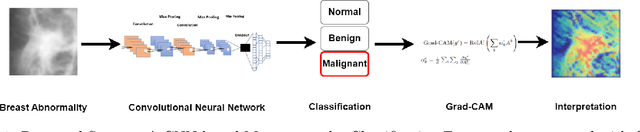

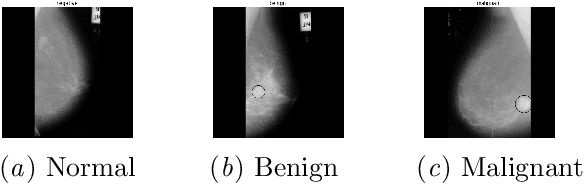
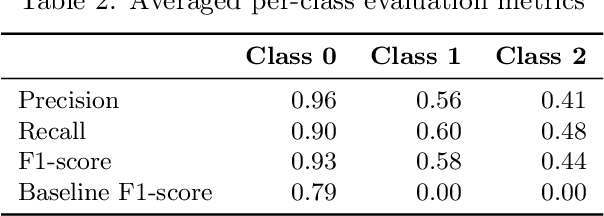
Deep learning models have achieved promising results in breast cancer classification, yet their 'black-box' nature raises interpretability concerns. This research addresses the crucial need to gain insights into the decision-making process of convolutional neural networks (CNNs) for mammogram classification, specifically focusing on the underlying reasons for the CNN's predictions of breast cancer. For CNNs trained on the Mammographic Image Analysis Society (MIAS) dataset, we compared the post-hoc interpretability techniques LIME, Grad-CAM, and Kernel SHAP in terms of explanatory depth and computational efficiency. The results of this analysis indicate that Grad-CAM, in particular, provides comprehensive insights into the behavior of the CNN, revealing distinctive patterns in normal, benign, and malignant breast tissue. We discuss the implications of the current findings for the use of machine learning models and interpretation techniques in clinical practice.
* 16 pages, 13 figures (9 in the main text, 3 in the appendix). Accepted at PMLR 2024
A training regime to learn unified representations from complementary breast imaging modalities
Aug 16, 2024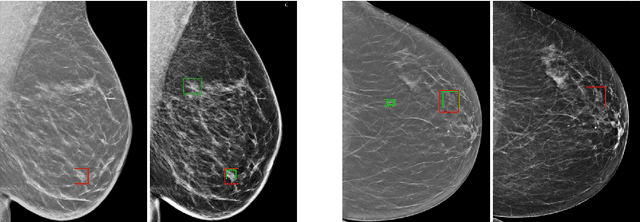

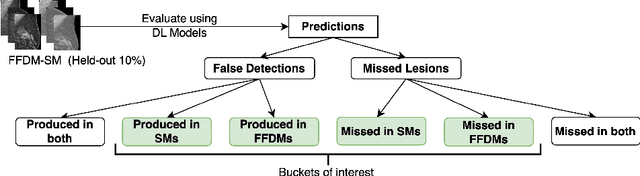

Full Field Digital Mammograms (FFDMs) and Digital Breast Tomosynthesis (DBT) are the two most widely used imaging modalities for breast cancer screening. Although DBT has increased cancer detection compared to FFDM, its widespread adoption in clinical practice has been slowed by increased interpretation times and a perceived decrease in the conspicuity of specific lesion types. Specifically, the non-inferiority of DBT for microcalcifications remains under debate. Due to concerns about the decrease in visual acuity, combined DBT-FFDM acquisitions remain popular, leading to overall increased exam times and radiation dosage. Enabling DBT to provide diagnostic information present in both FFDM and DBT would reduce reliance on FFDM, resulting in a reduction in both quantities. We propose a machine learning methodology that learns high-level representations leveraging the complementary diagnostic signal from both DBT and FFDM. Experiments on a large-scale data set validate our claims and show that our representations enable more accurate breast lesion detection than any DBT- or FFDM-based model.
Panoptic Segmentation of Mammograms with Text-To-Image Diffusion Model
Jul 19, 2024
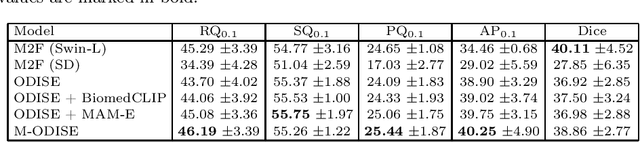
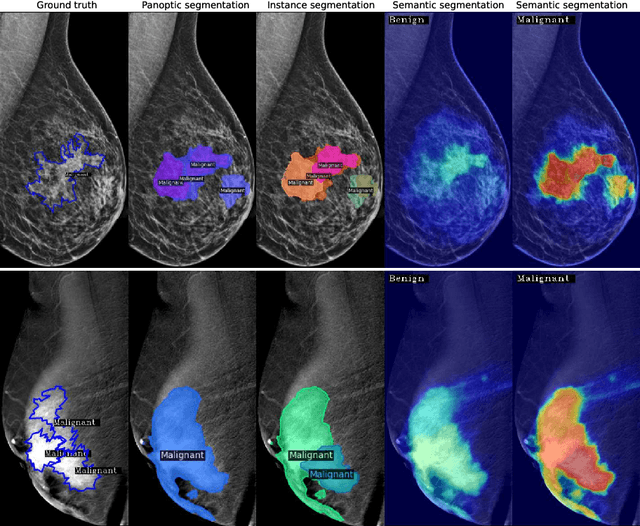
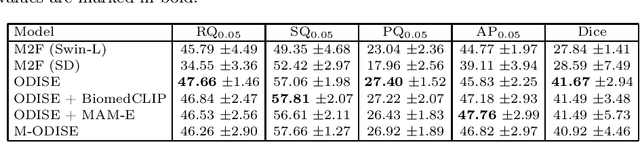
Mammography is crucial for breast cancer surveillance and early diagnosis. However, analyzing mammography images is a demanding task for radiologists, who often review hundreds of mammograms daily, leading to overdiagnosis and overtreatment. Computer-Aided Diagnosis (CAD) systems have been developed to assist in this process, but their capabilities, particularly in lesion segmentation, remained limited. With the contemporary advances in deep learning their performance may be improved. Recently, vision-language diffusion models emerged, demonstrating outstanding performance in image generation and transferability to various downstream tasks. We aim to harness their capabilities for breast lesion segmentation in a panoptic setting, which encompasses both semantic and instance-level predictions. Specifically, we propose leveraging pretrained features from a Stable Diffusion model as inputs to a state-of-the-art panoptic segmentation architecture, resulting in accurate delineation of individual breast lesions. To bridge the gap between natural and medical imaging domains, we incorporated a mammography-specific MAM-E diffusion model and BiomedCLIP image and text encoders into this framework. We evaluated our approach on two recently published mammography datasets, CDD-CESM and VinDr-Mammo. For the instance segmentation task, we noted 40.25 AP0.1 and 46.82 AP0.05, as well as 25.44 PQ0.1 and 26.92 PQ0.05. For the semantic segmentation task, we achieved Dice scores of 38.86 and 40.92, respectively.
Mammographic Breast Positioning Assessment via Deep Learning
Jul 15, 2024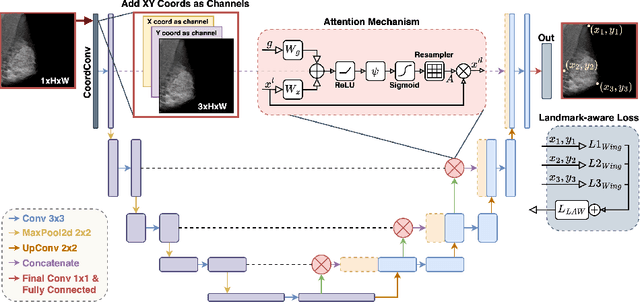
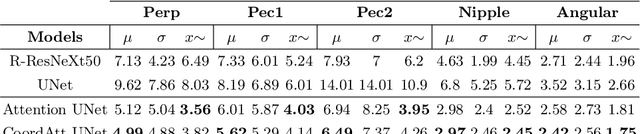
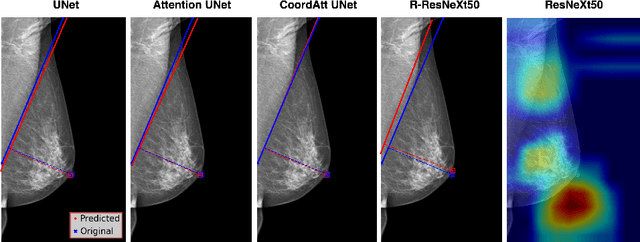
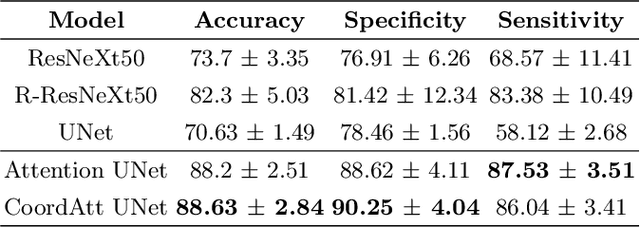
Breast cancer remains a leading cause of cancer-related deaths among women worldwide, with mammography screening as the most effective method for the early detection. Ensuring proper positioning in mammography is critical, as poor positioning can lead to diagnostic errors, increased patient stress, and higher costs due to recalls. Despite advancements in deep learning (DL) for breast cancer diagnostics, limited focus has been given to evaluating mammography positioning. This paper introduces a novel DL methodology to quantitatively assess mammogram positioning quality, specifically in mediolateral oblique (MLO) views using attention and coordinate convolution modules. Our method identifies key anatomical landmarks, such as the nipple and pectoralis muscle, and automatically draws a posterior nipple line (PNL), offering robust and inherently explainable alternative to well-known classification and regression-based approaches. We compare the performance of proposed methodology with various regression and classification-based models. The CoordAtt UNet model achieved the highest accuracy of 88.63% $\pm$ 2.84 and specificity of 90.25% $\pm$ 4.04, along with a noteworthy sensitivity of 86.04% $\pm$ 3.41. In landmark detection, the same model also recorded the lowest mean errors in key anatomical points and the smallest angular error of 2.42 degrees. Our results indicate that models incorporating attention mechanisms and CoordConv module increase the accuracy in classifying breast positioning quality and detecting anatomical landmarks. Furthermore, we make the labels and source codes available to the community to initiate an open research area for mammography, accessible at https://github.com/tanyelai/deep-breast-positioning.
D-MASTER: Mask Annealed Transformer for Unsupervised Domain Adaptation in Breast Cancer Detection from Mammograms
Jul 09, 2024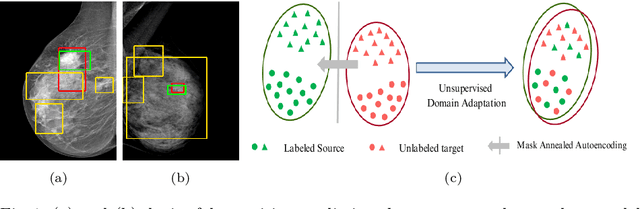
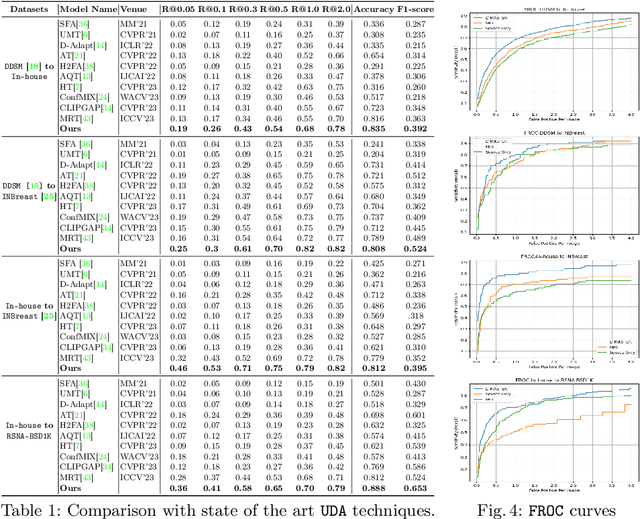
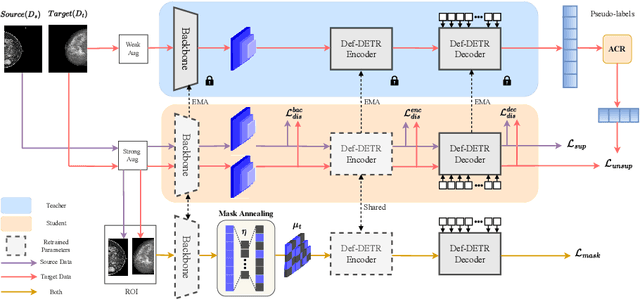
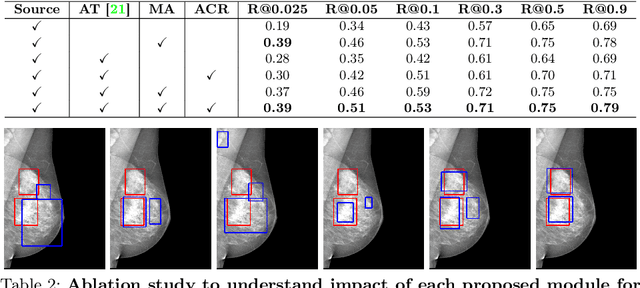
We focus on the problem of Unsupervised Domain Adaptation (\uda) for breast cancer detection from mammograms (BCDM) problem. Recent advancements have shown that masked image modeling serves as a robust pretext task for UDA. However, when applied to cross-domain BCDM, these techniques struggle with breast abnormalities such as masses, asymmetries, and micro-calcifications, in part due to the typically much smaller size of region of interest in comparison to natural images. This often results in more false positives per image (FPI) and significant noise in pseudo-labels typically used to bootstrap such techniques. Recognizing these challenges, we introduce a transformer-based Domain-invariant Mask Annealed Student Teacher autoencoder (D-MASTER) framework. D-MASTER adaptively masks and reconstructs multi-scale feature maps, enhancing the model's ability to capture reliable target domain features. D-MASTER also includes adaptive confidence refinement to filter pseudo-labels, ensuring only high-quality detections are considered. We also provide a bounding box annotated subset of 1000 mammograms from the RSNA Breast Screening Dataset (referred to as RSNA-BSD1K) to support further research in BCDM. We evaluate D-MASTER on multiple BCDM datasets acquired from diverse domains. Experimental results show a significant improvement of 9% and 13% in sensitivity at 0.3 FPI over state-of-the-art UDA techniques on publicly available benchmark INBreast and DDSM datasets respectively. We also report an improvement of 11% and 17% on In-house and RSNA-BSD1K datasets respectively. The source code, pre-trained D-MASTER model, along with RSNA-BSD1K dataset annotations is available at https://dmaster-iitd.github.io/webpage.
RadiomicsFill-Mammo: Synthetic Mammogram Mass Manipulation with Radiomics Features
Jul 08, 2024Motivated by the question, "Can we generate tumors with desired attributes?'' this study leverages radiomics features to explore the feasibility of generating synthetic tumor images. Characterized by its low-dimensional yet biologically meaningful markers, radiomics bridges the gap between complex medical imaging data and actionable clinical insights. We present RadiomicsFill-Mammo, the first of the RadiomicsFill series, an innovative technique that generates realistic mammogram mass images mirroring specific radiomics attributes using masked images and opposite breast images, leveraging a recent stable diffusion model. This approach also allows for the incorporation of essential clinical variables, such as BI-RADS and breast density, alongside radiomics features as conditions for mass generation. Results indicate that RadiomicsFill-Mammo effectively generates diverse and realistic tumor images based on various radiomics conditions. Results also demonstrate a significant improvement in mass detection capabilities, leveraging RadiomicsFill-Mammo as a strategy to generate simulated samples. Furthermore, RadiomicsFill-Mammo not only advances medical imaging research but also opens new avenues for enhancing treatment planning and tumor simulation. Our code is available at https://github.com/nainye/RadiomicsFill.
Development of an interactive GUI using MATLAB for the detection of type and stage of Breast Tumor
Jun 29, 2024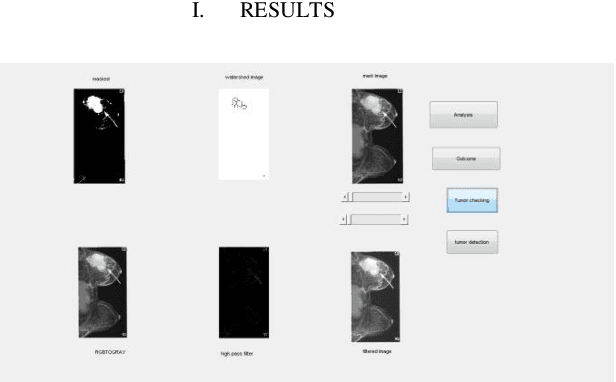
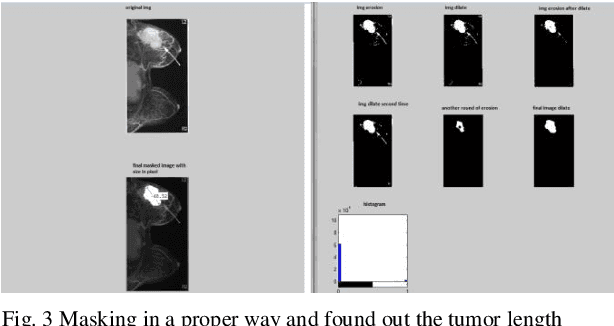
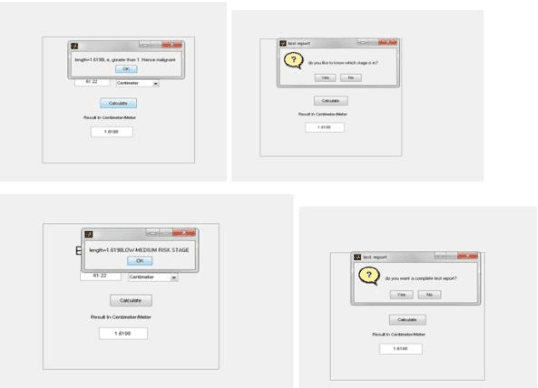
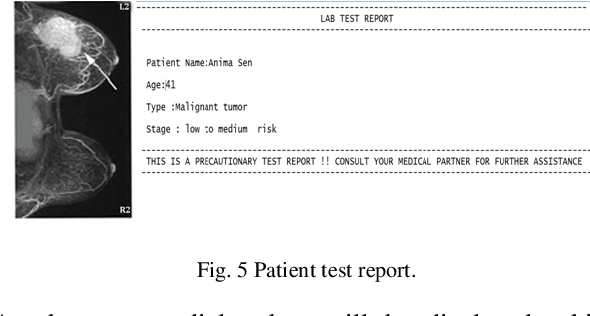
Breast cancer is described as one of the most common types of cancer which has been diagnosed mainly in women. When compared in the ratio of male to female, it has been duly found that the prone of having breast cancer is more in females than males. Breast lumps are classified mainly into two groups namely: cancerous and non-cancerous. When we say that the lump in the breast is cancerous, it means that it can spread via lobules, ducts, areola, stroma to various organs of the body. On the other hand, non-cancerous breast lumps are less harmful but it should be monitored under proper diagnosis to avoid it being transformed to cancerous lump. To diagnose these breast lumps the method of mammogram, ultrasonic images and MRI images are undertaken. Also, for better diagnosis sometimes doctors recommend for biopsy and any unforeseen anomalies occurring there may give rise to inaccurate test report. To avoid these discrepancies, processing the mammogram images is considered to be one of the most reliable methods. In the proposed method MATLAB GUI is developed and some sample images of breast lumps are placed accordingly in the respective axes. With the help of sliders the actual breast lump image is compared with the already stored breast lump sample images and then accordingly the history of the breast lumps is generated in real time in the form of test report.
FPN-IAIA-BL: A Multi-Scale Interpretable Deep Learning Model for Classification of Mass Margins in Digital Mammography
Jun 10, 2024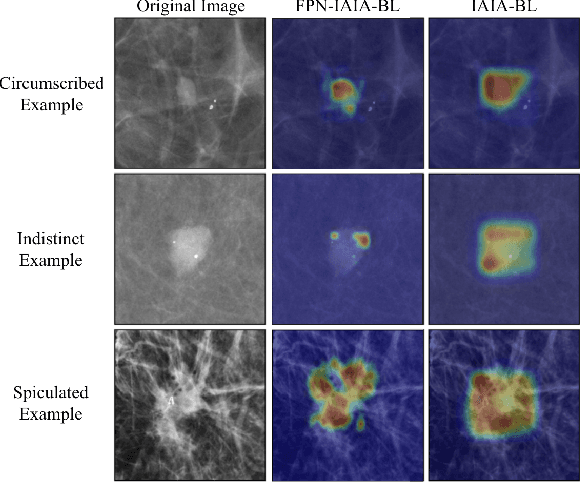

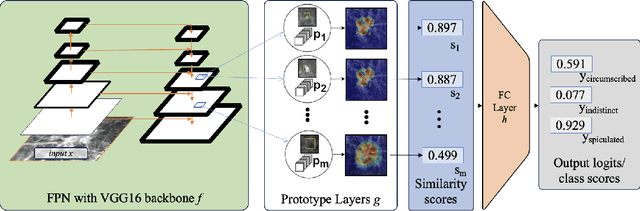

Digital mammography is essential to breast cancer detection, and deep learning offers promising tools for faster and more accurate mammogram analysis. In radiology and other high-stakes environments, uninterpretable ("black box") deep learning models are unsuitable and there is a call in these fields to make interpretable models. Recent work in interpretable computer vision provides transparency to these formerly black boxes by utilizing prototypes for case-based explanations, achieving high accuracy in applications including mammography. However, these models struggle with precise feature localization, reasoning on large portions of an image when only a small part is relevant. This paper addresses this gap by proposing a novel multi-scale interpretable deep learning model for mammographic mass margin classification. Our contribution not only offers an interpretable model with reasoning aligned with radiologist practices, but also provides a general architecture for computer vision with user-configurable prototypes from coarse- to fine-grained prototypes.