 Add to Chrome
 Add to Firefox
 Add to Edge
Emotion Classification
Papers and Code
Emotional EEG Classification using Upscaled Connectivity Matrices
Feb 11, 2025
In recent studies of emotional EEG classification, connectivity matrices have been successfully employed as input to convolutional neural networks (CNNs), which can effectively consider inter-regional interaction patterns in EEG. However, we find that such an approach has a limitation that important patterns in connectivity matrices may be lost during the convolutional operations in CNNs. To resolve this issue, we propose and validate an idea to upscale the connectivity matrices to strengthen the local patterns. Experimental results demonstrate that this simple idea can significantly enhance the classification performance.

GatedxLSTM: A Multimodal Affective Computing Approach for Emotion Recognition in Conversations
Mar 26, 2025Affective Computing (AC) is essential for advancing Artificial General Intelligence (AGI), with emotion recognition serving as a key component. However, human emotions are inherently dynamic, influenced not only by an individual's expressions but also by interactions with others, and single-modality approaches often fail to capture their full dynamics. Multimodal Emotion Recognition (MER) leverages multiple signals but traditionally relies on utterance-level analysis, overlooking the dynamic nature of emotions in conversations. Emotion Recognition in Conversation (ERC) addresses this limitation, yet existing methods struggle to align multimodal features and explain why emotions evolve within dialogues. To bridge this gap, we propose GatedxLSTM, a novel speech-text multimodal ERC model that explicitly considers voice and transcripts of both the speaker and their conversational partner(s) to identify the most influential sentences driving emotional shifts. By integrating Contrastive Language-Audio Pretraining (CLAP) for improved cross-modal alignment and employing a gating mechanism to emphasise emotionally impactful utterances, GatedxLSTM enhances both interpretability and performance. Additionally, the Dialogical Emotion Decoder (DED) refines emotion predictions by modelling contextual dependencies. Experiments on the IEMOCAP dataset demonstrate that GatedxLSTM achieves state-of-the-art (SOTA) performance among open-source methods in four-class emotion classification. These results validate its effectiveness for ERC applications and provide an interpretability analysis from a psychological perspective.
SPBA: Utilizing Speech Large Language Model for Backdoor Attacks on Speech Classification Models
Jun 10, 2025Deep speech classification tasks, including keyword spotting and speaker verification, are vital in speech-based human-computer interaction. Recently, the security of these technologies has been revealed to be susceptible to backdoor attacks. Specifically, attackers use noisy disruption triggers and speech element triggers to produce poisoned speech samples that train models to become vulnerable. However, these methods typically create only a limited number of backdoors due to the inherent constraints of the trigger function. In this paper, we propose that speech backdoor attacks can strategically focus on speech elements such as timbre and emotion, leveraging the Speech Large Language Model (SLLM) to generate diverse triggers. Increasing the number of triggers may disproportionately elevate the poisoning rate, resulting in higher attack costs and a lower success rate per trigger. We introduce the Multiple Gradient Descent Algorithm (MGDA) as a mitigation strategy to address this challenge. The proposed attack is called the Speech Prompt Backdoor Attack (SPBA). Building on this foundation, we conducted attack experiments on two speech classification tasks, demonstrating that SPBA shows significant trigger effectiveness and achieves exceptional performance in attack metrics.
EmoGRACE: Aspect-based emotion analysis for social media data
Mar 19, 2025While sentiment analysis has advanced from sentence to aspect-level, i.e., the identification of concrete terms related to a sentiment, the equivalent field of Aspect-based Emotion Analysis (ABEA) is faced with dataset bottlenecks and the increased complexity of emotion classes in contrast to binary sentiments. This paper addresses these gaps, by generating a first ABEA training dataset, consisting of 2,621 English Tweets, and fine-tuning a BERT-based model for the ABEA sub-tasks of Aspect Term Extraction (ATE) and Aspect Emotion Classification (AEC). The dataset annotation process was based on the hierarchical emotion theory by Shaver et al. [1] and made use of group annotation and majority voting strategies to facilitate label consistency. The resulting dataset contained aspect-level emotion labels for Anger, Sadness, Happiness, Fear, and a None class. Using the new ABEA training dataset, the state-of-the-art ABSA model GRACE by Luo et al. [2] was fine-tuned for ABEA. The results reflected a performance plateau at an F1-score of 70.1% for ATE and 46.9% for joint ATE and AEC extraction. The limiting factors for model performance were broadly identified as the small training dataset size coupled with the increased task complexity, causing model overfitting and limited abilities to generalize well on new data.
Bug Destiny Prediction in Large Open-Source Software Repositories through Sentiment Analysis and BERT Topic Modeling
Apr 22, 2025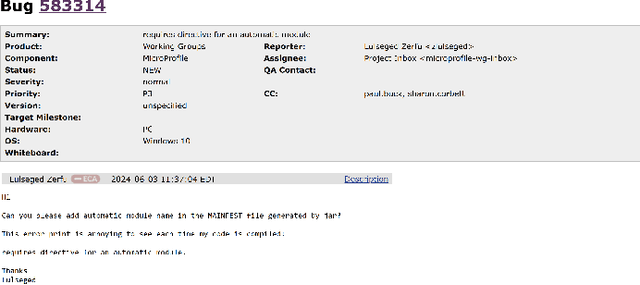
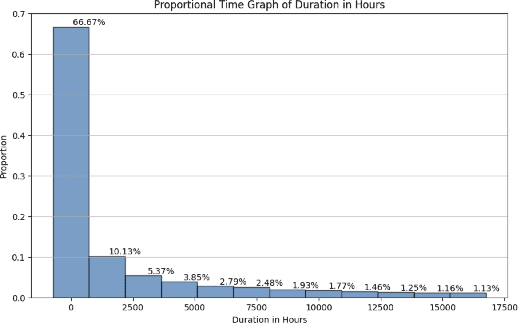
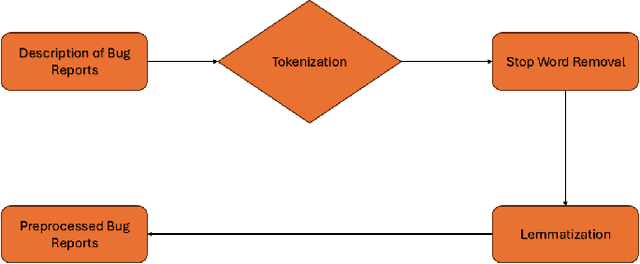
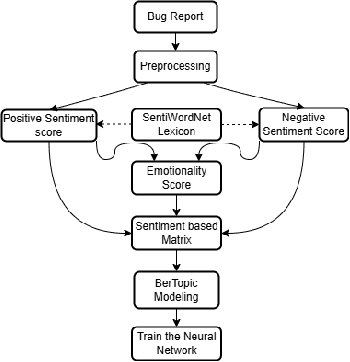
This study explores a novel approach to predicting key bug-related outcomes, including the time to resolution, time to fix, and ultimate status of a bug, using data from the Bugzilla Eclipse Project. Specifically, we leverage features available before a bug is resolved to enhance predictive accuracy. Our methodology incorporates sentiment analysis to derive both an emotionality score and a sentiment classification (positive or negative). Additionally, we integrate the bug's priority level and its topic, extracted using a BERTopic model, as features for a Convolutional Neural Network (CNN) and a Multilayer Perceptron (MLP). Our findings indicate that the combination of BERTopic and sentiment analysis can improve certain model performance metrics. Furthermore, we observe that balancing model inputs enhances practical applicability, albeit at the cost of a significant reduction in accuracy in most cases. To address our primary objectives, predicting time-to-resolution, time-to-fix, and bug destiny, we employ both binary classification and exact time value predictions, allowing for a comparative evaluation of their predictive effectiveness. Results demonstrate that sentiment analysis serves as a valuable predictor of a bug's eventual outcome, particularly in determining whether it will be fixed. However, its utility is less pronounced when classifying bugs into more complex or unconventional outcome categories.
Leveraging Label Potential for Enhanced Multimodal Emotion Recognition
Apr 07, 2025Multimodal emotion recognition (MER) seeks to integrate various modalities to predict emotional states accurately. However, most current research focuses solely on the fusion of audio and text features, overlooking the valuable information in emotion labels. This oversight could potentially hinder the performance of existing methods, as emotion labels harbor rich, insightful information that could significantly aid MER. We introduce a novel model called Label Signal-Guided Multimodal Emotion Recognition (LSGMER) to overcome this limitation. This model aims to fully harness the power of emotion label information to boost the classification accuracy and stability of MER. Specifically, LSGMER employs a Label Signal Enhancement module that optimizes the representation of modality features by interacting with audio and text features through label embeddings, enabling it to capture the nuances of emotions precisely. Furthermore, we propose a Joint Objective Optimization(JOO) approach to enhance classification accuracy by introducing the Attribution-Prediction Consistency Constraint (APC), which strengthens the alignment between fused features and emotion categories. Extensive experiments conducted on the IEMOCAP and MELD datasets have demonstrated the effectiveness of our proposed LSGMER model.
Continuous Adversarial Text Representation Learning for Affective Recognition
Feb 28, 2025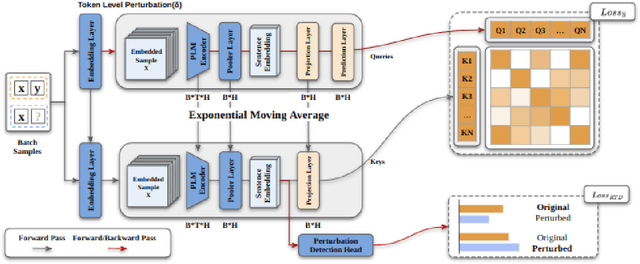
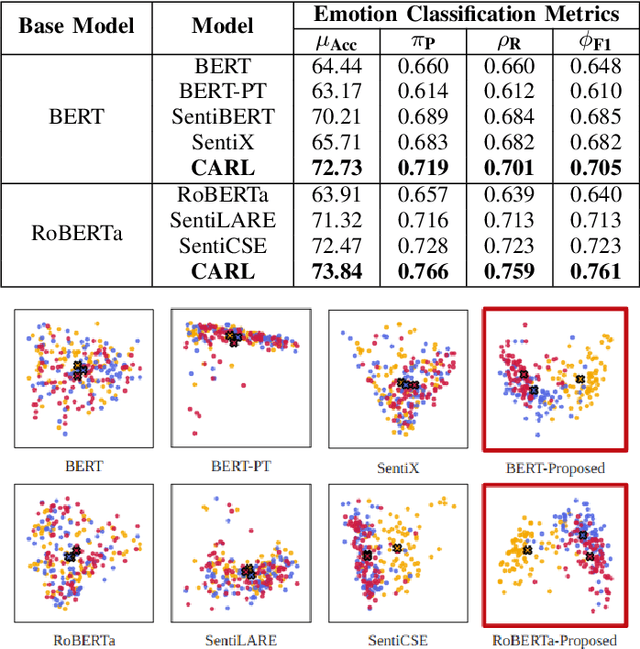
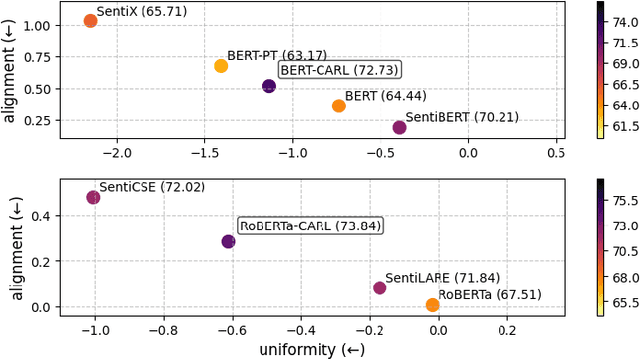
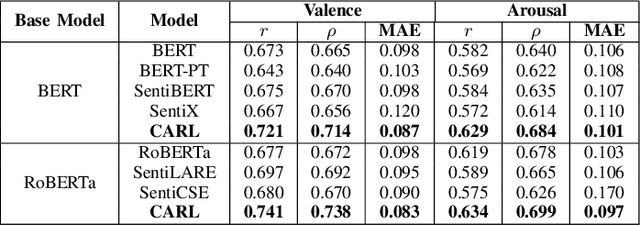
While pre-trained language models excel at semantic understanding, they often struggle to capture nuanced affective information critical for affective recognition tasks. To address these limitations, we propose a novel framework for enhancing emotion-aware embeddings in transformer-based models. Our approach introduces a continuous valence-arousal labeling system to guide contrastive learning, which captures subtle and multi-dimensional emotional nuances more effectively. Furthermore, we employ a dynamic token perturbation mechanism, using gradient-based saliency to focus on sentiment-relevant tokens, improving model sensitivity to emotional cues. The experimental results demonstrate that the proposed framework outperforms existing methods, achieving up to 15.5% improvement in the emotion classification benchmark, highlighting the importance of employing continuous labels. This improvement demonstrates that the proposed framework is effective in affective representation learning and enables precise and contextually relevant emotional understanding.
Emotion Detection in Twitter Messages Using Combination of Long Short-Term Memory and Convolutional Deep Neural Networks
Mar 26, 2025One of the most significant issues as attended a lot in recent years is that of recognizing the sentiments and emotions in social media texts. The analysis of sentiments and emotions is intended to recognize the conceptual information such as the opinions, feelings, attitudes and emotions of people towards the products, services, organizations, people, topics, events and features in the written text. These indicate the greatness of the problem space. In the real world, businesses and organizations are always looking for tools to gather ideas, emotions, and directions of people about their products, services, or events related to their own. This article uses the Twitter social network, one of the most popular social networks with about 420 million active users, to extract data. Using this social network, users can share their information and opinions about personal issues, policies, products, events, etc. It can be used with appropriate classification of emotional states due to the availability of its data. In this study, supervised learning and deep neural network algorithms are used to classify the emotional states of Twitter users. The use of deep learning methods to increase the learning capacity of the model is an advantage due to the large amount of available data. Tweets collected on various topics are classified into four classes using a combination of two Bidirectional Long Short Term Memory network and a Convolutional network. The results obtained from this study with an average accuracy of 93%, show good results extracted from the proposed framework and improved accuracy compared to previous work.
A Novel Dialect-Aware Framework for the Classification of Arabic Dialects and Emotions
Feb 13, 2025Arabic is one of the oldest languages still in use today. As a result, several Arabic-speaking regions have developed dialects that are unique to them. Dialect and emotion recognition have various uses in Arabic text analysis, such as determining an online customer's origin based on their comments. Furthermore, intelligent chatbots that are aware of a user's emotions can respond appropriately to the user. Current research in emotion detection in the Arabic language lacks awareness of how emotions are exhibited in different dialects, which motivates the work found in this study. This research addresses the problems of dialect and emotion classification in Arabic. Specifically, this is achieved by building a novel framework that can identify and predict Arabic dialects and emotions from a given text. The framework consists of three modules: A text-preprocessing module, a classification module, and a clustering module with the novel capability of building new dialect-aware emotion lexicons. The proposed framework generated a new emotional lexicon for different dialects. It achieved an accuracy of 88.9% in classifying Arabic dialects, which outperforms the state-of-the-art results by 6.45 percentage points. Furthermore, the framework achieved 89.1-79% accuracy in detecting emotions in the Egyptian and Gulf dialects, respectively.
Disentangle Identity, Cooperate Emotion: Correlation-Aware Emotional Talking Portrait Generation
Apr 25, 2025Recent advances in Talking Head Generation (THG) have achieved impressive lip synchronization and visual quality through diffusion models; yet existing methods struggle to generate emotionally expressive portraits while preserving speaker identity. We identify three critical limitations in current emotional talking head generation: insufficient utilization of audio's inherent emotional cues, identity leakage in emotion representations, and isolated learning of emotion correlations. To address these challenges, we propose a novel framework dubbed as DICE-Talk, following the idea of disentangling identity with emotion, and then cooperating emotions with similar characteristics. First, we develop a disentangled emotion embedder that jointly models audio-visual emotional cues through cross-modal attention, representing emotions as identity-agnostic Gaussian distributions. Second, we introduce a correlation-enhanced emotion conditioning module with learnable Emotion Banks that explicitly capture inter-emotion relationships through vector quantization and attention-based feature aggregation. Third, we design an emotion discrimination objective that enforces affective consistency during the diffusion process through latent-space classification. Extensive experiments on MEAD and HDTF datasets demonstrate our method's superiority, outperforming state-of-the-art approaches in emotion accuracy while maintaining competitive lip-sync performance. Qualitative results and user studies further confirm our method's ability to generate identity-preserving portraits with rich, correlated emotional expressions that naturally adapt to unseen identities.