 Add to Chrome
 Add to Firefox
 Add to Edge
Recognizing Emotion Cause In Conversations
Papers and Code
Samsung Research China-Beijing at SemEval-2024 Task 3: A multi-stage framework for Emotion-Cause Pair Extraction in Conversations
Apr 25, 2024


In human-computer interaction, it is crucial for agents to respond to human by understanding their emotions. Unraveling the causes of emotions is more challenging. A new task named Multimodal Emotion-Cause Pair Extraction in Conversations is responsible for recognizing emotion and identifying causal expressions. In this study, we propose a multi-stage framework to generate emotion and extract the emotion causal pairs given the target emotion. In the first stage, Llama-2-based InstructERC is utilized to extract the emotion category of each utterance in a conversation. After emotion recognition, a two-stream attention model is employed to extract the emotion causal pairs given the target emotion for subtask 2 while MuTEC is employed to extract causal span for subtask 1. Our approach achieved first place for both of the two subtasks in the competition.

CauESC: A Causal Aware Model for Emotional Support Conversation
Jan 31, 2024Emotional Support Conversation aims at reducing the seeker's emotional distress through supportive response. Existing approaches have two limitations: (1) They ignore the emotion causes of the distress, which is important for fine-grained emotion understanding; (2) They focus on the seeker's own mental state rather than the emotional dynamics during interaction between speakers. To address these issues, we propose a novel framework CauESC, which firstly recognizes the emotion causes of the distress, as well as the emotion effects triggered by the causes, and then understands each strategy of verbal grooming independently and integrates them skillfully. Experimental results on the benchmark dataset demonstrate the effectiveness of our approach and show the benefits of emotion understanding from cause to effect and independent-integrated strategy modeling.
PAGE: A Position-Aware Graph-Based Model for Emotion Cause Entailment in Conversation
Mar 03, 2023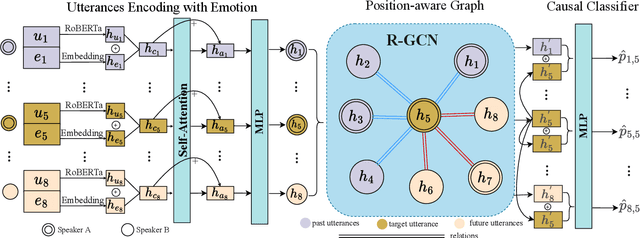
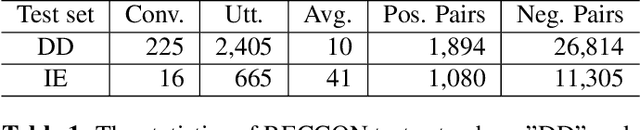
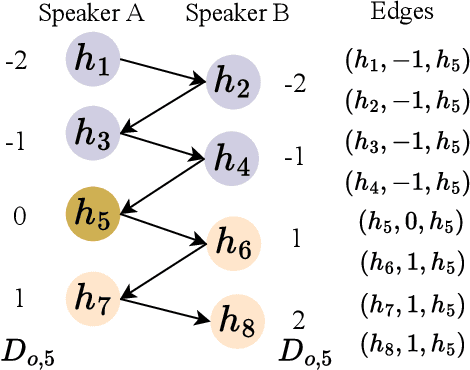

Conversational Causal Emotion Entailment (C2E2) is a task that aims at recognizing the causes corresponding to a target emotion in a conversation. The order of utterances in the conversation affects the causal inference. However, most current position encoding strategies ignore the order relation among utterances and speakers. To address the issue, we devise a novel position-aware graph to encode the entire conversation, fully modeling causal relations among utterances. The comprehensive experiments show that our method consistently achieves state-of-the-art performance on two challenging test sets, proving the effectiveness of our model. Our source code is available on Github: https://github.com/XiaojieGu/PAGE.
Deep Emotion Recognition in Textual Conversations: A Survey
Nov 16, 2022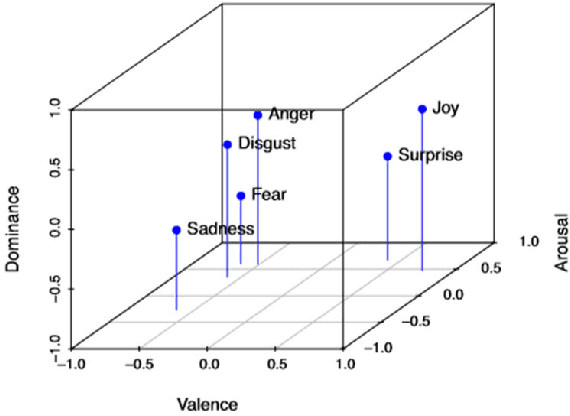
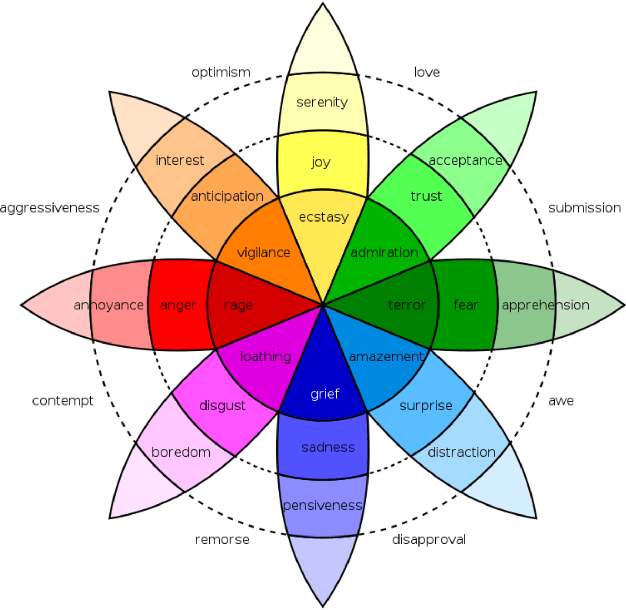
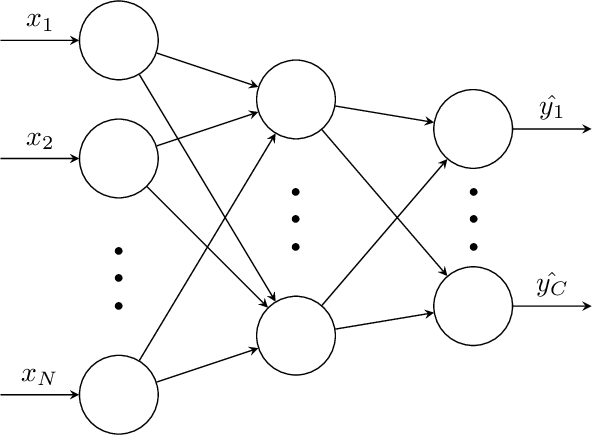
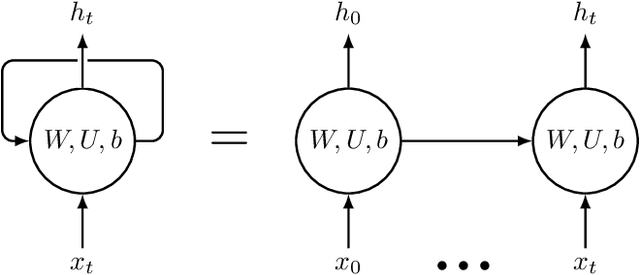
While Emotion Recognition in Conversations (ERC) has seen a tremendous advancement in the last few years, new applications and implementation scenarios present novel challenges and opportunities. These range from leveraging the conversational context, speaker and emotion dynamics modelling, to interpreting common sense expressions, informal language and sarcasm, addressing challenges of real time ERC and recognizing emotion causes. This survey starts by introducing ERC, elaborating on the challenges and opportunities pertaining to this task. It proceeds with a description of the main emotion taxonomies and methods to deal with subjectivity in annotations. It then describes Deep Learning methods relevant for ERC, word embeddings, and elaborates on the use of performance metrics for the task and methods to deal with the typically unbalanced ERC datasets. This is followed by a description and benchmark of key ERC works along with comprehensive tables comparing several works regarding their methods and performance across different datasets. The survey highlights the advantage of leveraging techniques to address unbalanced data, the exploration of mixed emotions and the benefits of incorporating annotation subjectivity in the learning phase.
Recognizing Emotion Cause in Conversations
Dec 24, 2020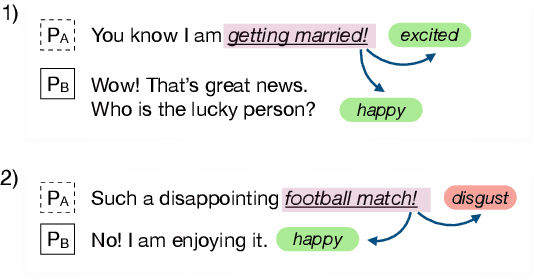
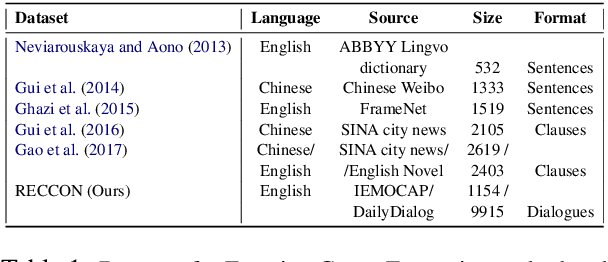
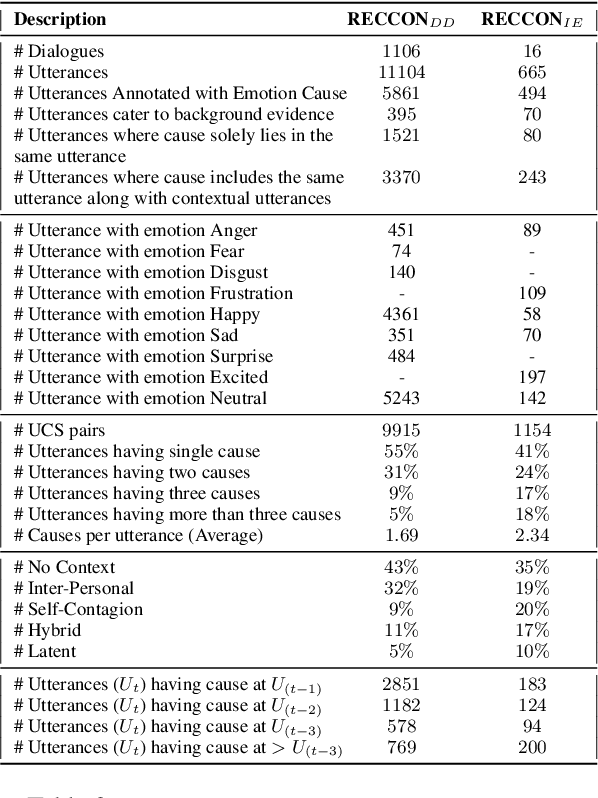

Recognizing the cause behind emotions in text is a fundamental yet under-explored area of research in NLP. Advances in this area hold the potential to improve interpretability and performance in affect-based models. Identifying emotion causes at the utterance level in conversations is particularly challenging due to the intermingling dynamic among the interlocutors. To this end, we introduce the task of recognizing emotion cause in conversations with an accompanying dataset named RECCON. Furthermore, we define different cause types based on the source of the causes and establish strong transformer-based baselines to address two different sub-tasks of RECCON: 1) Causal Span Extraction and 2) Causal Emotion Entailment. The dataset is available at https://github.com/declare-lab/RECCON.