 Add to Chrome
 Add to Firefox
 Add to Edge
Heart Rate Estimation
Papers and Code
EvoMorph: Counterfactual Explanations for Continuous Time-Series Extrinsic Regression Applied to Photoplethysmography
Jan 15, 2026
Wearable devices enable continuous, population-scale monitoring of physiological signals, such as photoplethysmography (PPG), creating new opportunities for data-driven clinical assessment. Time-series extrinsic regression (TSER) models increasingly leverage PPG signals to estimate clinically relevant outcomes, including heart rate, respiratory rate, and oxygen saturation. For clinical reasoning and trust, however, single point estimates alone are insufficient: clinicians must also understand whether predictions are stable under physiologically plausible variations and to what extent realistic, attainable changes in physiological signals would meaningfully alter a model's prediction. Counterfactual explanations (CFE) address these "what-if" questions, yet existing time series CFE generation methods are largely restricted to classification, overlook waveform morphology, and often produce physiologically implausible signals, limiting their applicability to continuous biomedical time series. To address these limitations, we introduce EvoMorph, a multi-objective evolutionary framework for generating physiologically plausible and diverse CFE for TSER applications. EvoMorph optimizes morphology-aware objectives defined on interpretable signal descriptors and applies transformations to preserve the waveform structure. We evaluated EvoMorph on three PPG datasets (heart rate, respiratory rate, and oxygen saturation) against a nearest-unlike-neighbor baseline. In addition, in a case study, we evaluated EvoMorph as a tool for uncertainty quantification by relating counterfactual sensitivity to bootstrap-ensemble uncertainty and data-density measures. Overall, EvoMorph enables the generation of physiologically-aware counterfactuals for continuous biomedical signals and supports uncertainty-aware interpretability, advancing trustworthy model analysis for clinical time-series applications.

Towards Efficient Low-rate Image Compression with Frequency-aware Diffusion Prior Refinement
Jan 15, 2026Recent advancements in diffusion-based generative priors have enabled visually plausible image compression at extremely low bit rates. However, existing approaches suffer from slow sampling processes and suboptimal bit allocation due to fragmented training paradigms. In this work, we propose Accelerate \textbf{Diff}usion-based Image Compression via \textbf{C}onsistency Prior \textbf{R}efinement (DiffCR), a novel compression framework for efficient and high-fidelity image reconstruction. At the heart of DiffCR is a Frequency-aware Skip Estimation (FaSE) module that refines the $ε$-prediction prior from a pre-trained latent diffusion model and aligns it with compressed latents at different timesteps via Frequency Decoupling Attention (FDA). Furthermore, a lightweight consistency estimator enables fast \textbf{two-step decoding} by preserving the semantic trajectory of diffusion sampling. Without updating the backbone diffusion model, DiffCR achieves substantial bitrate savings (27.2\% BD-rate (LPIPS) and 65.1\% BD-rate (PSNR)) and over $10\times$ speed-up compared to SOTA diffusion-based compression baselines.
ToTMNet: FFT-Accelerated Toeplitz Temporal Mixing Network for Lightweight Remote Photoplethysmography
Jan 07, 2026Remote photoplethysmography (rPPG) estimates a blood volume pulse (BVP) waveform from facial videos captured by commodity cameras. Although recent deep models improve robustness compared to classical signal-processing approaches, many methods increase computational cost and parameter count, and attention-based temporal modeling introduces quadratic scaling with respect to the temporal length. This paper proposes ToTMNet, a lightweight rPPG architecture that replaces temporal attention with an FFT-accelerated Toeplitz temporal mixing layer. The Toeplitz operator provides full-sequence temporal receptive field using a linear number of parameters in the clip length and can be applied in near-linear time using circulant embedding and FFT-based convolution. ToTMNet integrates the global Toeplitz temporal operator into a compact gated temporal mixer that combines a local depthwise temporal convolution branch with gated global Toeplitz mixing, enabling efficient long-range temporal filtering while only having 63k parameters. Experiments on two datasets, UBFC-rPPG (real videos) and SCAMPS (synthetic videos), show that ToTMNet achieves strong heart-rate estimation accuracy with a compact design. On UBFC-rPPG intra-dataset evaluation, ToTMNet reaches 1.055 bpm MAE with Pearson correlation 0.996. In a synthetic-to-real setting (SCAMPS to UBFC-rPPG), ToTMNet reaches 1.582 bpm MAE with Pearson correlation 0.994. Ablation results confirm that the gating mechanism is important for effectively using global Toeplitz mixing, especially under domain shift. The main limitation of this preprint study is the use of only two datasets; nevertheless, the results indicate that Toeplitz-structured temporal mixing is a practical and efficient alternative to attention for rPPG.
Inter-patient ECG Arrhythmia Classification with LGNs and LUTNs
Jan 16, 2026Deep Differentiable Logic Gate Networks (LGNs) and Lookup Table Networks (LUTNs) are demonstrated to be suitable for the automatic classification of electrocardiograms (ECGs) using the inter-patient paradigm. The methods are benchmarked using the MIT-BIH arrhythmia data set, achieving up to 94.28% accuracy and a $jκ$ index of 0.683 on a four-class classification problem. Our models use between 2.89k and 6.17k FLOPs, including preprocessing and readout, which is three to six orders of magnitude less compared to SOTA methods. A novel preprocessing method is utilized that attains superior performance compared to existing methods for both the mixed-patient and inter-patient paradigms. In addition, a novel method for training the Lookup Tables (LUTs) in LUTNs is devised that uses the Boolean equation of a multiplexer (MUX). Additionally, rate coding was utilized for the first time in these LGNs and LUTNs, enhancing the performance of LGNs. Furthermore, it is the first time that LGNs and LUTNs have been benchmarked on the MIT-BIH arrhythmia dataset using the inter-patient paradigm. Using an Artix 7 FPGA, between 2000 and 2990 LUTs were needed, and between 5 to 7 mW (i.e. 50 pJ to 70 pJ per inference) was estimated for running these models. The performance in terms of both accuracy and $jκ$-index is significantly higher compared to previous LGN results. These positive results suggest that one can utilize LGNs and LUTNs for the detection of arrhythmias at extremely low power and high speeds in heart implants or wearable devices, even for patients not included in the training set.
Towards Optimal Valve Prescription for Transcatheter Aortic Valve Replacement (TAVR) Surgery: A Machine Learning Approach
Dec 09, 2025Transcatheter Aortic Valve Replacement (TAVR) has emerged as a minimally invasive treatment option for patients with severe aortic stenosis, a life-threatening cardiovascular condition. Multiple transcatheter heart valves (THV) have been approved for use in TAVR, but current guidelines regarding valve type prescription remain an active topic of debate. We propose a data-driven clinical support tool to identify the optimal valve type with the objective of minimizing the risk of permanent pacemaker implantation (PPI), a predominant postoperative complication. We synthesize a novel dataset that combines U.S. and Greek patient populations and integrates three distinct data sources (patient demographics, computed tomography scans, echocardiograms) while harmonizing differences in each country's record system. We introduce a leaf-level analysis to leverage population heterogeneity and avoid benchmarking against uncertain counterfactual risk estimates. The final prescriptive model shows a reduction in PPI rates of 26% and 16% compared with the current standard of care in our internal U.S. population and external Greek validation cohort, respectively. To the best of our knowledge, this work represents the first unified, personalized prescription strategy for THV selection in TAVR.
Real-Time Mobile Video Analytics for Pre-arrival Emergency Medical Services
Nov 18, 2025Timely and accurate pre-arrival video streaming and analytics are critical for emergency medical services (EMS) to deliver life-saving interventions. Yet, current-generation EMS infrastructure remains constrained by one-to-one video streaming and limited analytics capabilities, leaving dispatchers and EMTs to manually interpret overwhelming, often noisy or redundant information in high-stress environments. We present TeleEMS, a mobile live video analytics system that enables pre-arrival multimodal inference by fusing audio and video into a unified decision-making pipeline before EMTs arrive on scene. TeleEMS comprises two key components: TeleEMS Client and TeleEMS Server. The TeleEMS Client runs across phones, smart glasses, and desktops to support bystanders, EMTs en route, and 911 dispatchers. The TeleEMS Server, deployed at the edge, integrates EMS-Stream, a communication backbone that enables smooth multi-party video streaming. On top of EMSStream, the server hosts three real-time analytics modules: (1) audio-to-symptom analytics via EMSLlama, a domain-specialized LLM for robust symptom extraction and normalization; (2) video-to-vital analytics using state-of-the-art rPPG methods for heart rate estimation; and (3) joint text-vital analytics via PreNet, a multimodal multitask model predicting EMS protocols, medication types, medication quantities, and procedures. Evaluation shows that EMSLlama outperforms GPT-4o (exact-match 0.89 vs. 0.57) and that text-vital fusion improves inference robustness, enabling reliable pre-arrival intervention recommendations. TeleEMS demonstrates the potential of mobile live video analytics to transform EMS operations, bridging the gap between bystanders, dispatchers, and EMTs, and paving the way for next-generation intelligent EMS infrastructure.
TYrPPG: Uncomplicated and Enhanced Learning Capability rPPG for Remote Heart Rate Estimation
Nov 08, 2025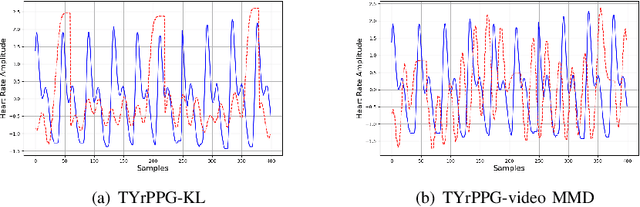
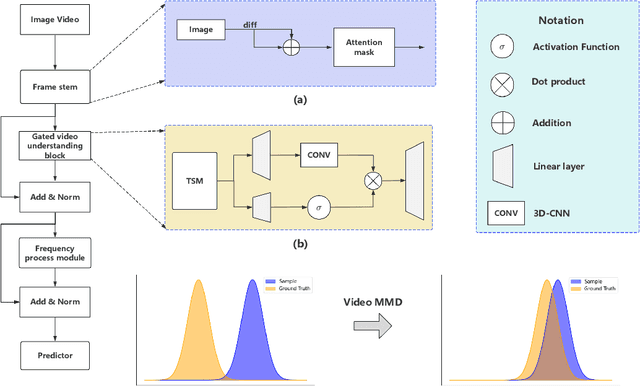
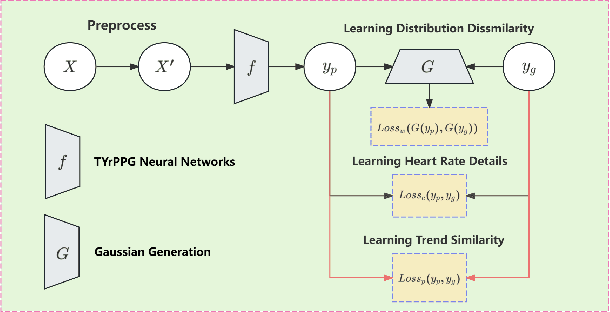
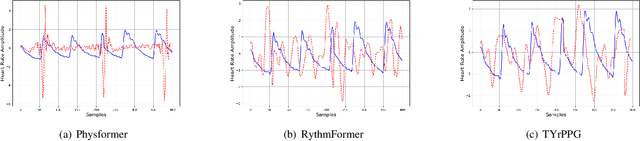
Remote photoplethysmography (rPPG) can remotely extract physiological signals from RGB video, which has many advantages in detecting heart rate, such as low cost and no invasion to patients. The existing rPPG model is usually based on the transformer module, which has low computation efficiency. Recently, the Mamba model has garnered increasing attention due to its efficient performance in natural language processing tasks, demonstrating potential as a substitute for transformer-based algorithms. However, the Mambaout model and its variants prove that the SSM module, which is the core component of the Mamba model, is unnecessary for the vision task. Therefore, we hope to prove the feasibility of using the Mambaout-based module to remotely learn the heart rate. Specifically, we propose a novel rPPG algorithm called uncomplicated and enhanced learning capability rPPG (TYrPPG). This paper introduces an innovative gated video understanding block (GVB) designed for efficient analysis of RGB videos. Based on the Mambaout structure, this block integrates 2D-CNN and 3D-CNN to enhance video understanding for analysis. In addition, we propose a comprehensive supervised loss function (CSL) to improve the model's learning capability, along with its weakly supervised variants. The experiments show that our TYrPPG can achieve state-of-the-art performance in commonly used datasets, indicating its prospects and superiority in remote heart rate estimation. The source code is available at https://github.com/Taixi-CHEN/TYrPPG.
Temporal Cardiovascular Dynamics for Improved PPG-Based Heart Rate Estimation
Oct 31, 2025The oscillations of the human heart rate are inherently complex and non-linear -- they are best described by mathematical chaos, and they present a challenge when applied to the practical domain of cardiovascular health monitoring in everyday life. In this work, we study the non-linear chaotic behavior of heart rate through mutual information and introduce a novel approach for enhancing heart rate estimation in real-life conditions. Our proposed approach not only explains and handles the non-linear temporal complexity from a mathematical perspective but also improves the deep learning solutions when combined with them. We validate our proposed method on four established datasets from real-life scenarios and compare its performance with existing algorithms thoroughly with extensive ablation experiments. Our results demonstrate a substantial improvement, up to 40\%, of the proposed approach in estimating heart rate compared to traditional methods and existing machine-learning techniques while reducing the reliance on multiple sensing modalities and eliminating the need for post-processing steps.
A Machine Learning-Based Multimodal Framework for Wearable Sensor-Based Archery Action Recognition and Stress Estimation
Nov 18, 2025In precision sports such as archery, athletes' performance depends on both biomechanical stability and psychological resilience. Traditional motion analysis systems are often expensive and intrusive, limiting their use in natural training environments. To address this limitation, we propose a machine learning-based multimodal framework that integrates wearable sensor data for simultaneous action recognition and stress estimation. Using a self-developed wrist-worn device equipped with an accelerometer and photoplethysmography (PPG) sensor, we collected synchronized motion and physiological data during real archery sessions. For motion recognition, we introduce a novel feature--Smoothed Differential Acceleration (SmoothDiff)--and employ a Long Short-Term Memory (LSTM) model to identify motion phases, achieving 96.8% accuracy and 95.9% F1-score. For stress estimation, we extract heart rate variability (HRV) features from PPG signals and apply a Multi-Layer Perceptron (MLP) classifier, achieving 80% accuracy in distinguishing high- and low-stress levels. The proposed framework demonstrates that integrating motion and physiological sensing can provide meaningful insights into athletes' technical and mental states. This approach offers a foundation for developing intelligent, real-time feedback systems for training optimization in archery and other precision sports.
VitalLens 2.0: High-Fidelity rPPG for Heart Rate Variability Estimation from Face Video
Oct 30, 2025This report introduces VitalLens 2.0, a new deep learning model for estimating physiological signals from face video. This new model demonstrates a significant leap in accuracy for remote photoplethysmography (rPPG), enabling the robust estimation of not only heart rate (HR) and respiratory rate (RR) but also Heart Rate Variability (HRV) metrics. This advance is achieved through a combination of a new model architecture and a substantial increase in the size and diversity of our training data, now totaling 1,413 unique individuals. We evaluate VitalLens 2.0 on a new, combined test set of 422 unique individuals from four public and private datasets. When averaging results by individual, VitalLens 2.0 achieves a Mean Absolute Error (MAE) of 1.57 bpm for HR, 1.08 bpm for RR, 10.18 ms for HRV-SDNN, and 16.45 ms for HRV-RMSSD. These results represent a new state-of-the-art, significantly outperforming previous methods. This model is now available to developers via the VitalLens API at https://rouast.com/api.