 Add to Chrome
 Add to Firefox
 Add to Edge
On the effectiveness of reward functions in reinforcement learning for confidence calibration of large language models
Jul 05, 2026
In this paper, we consider the setting where large language models (LLMs) are trained using reinforcement learning (RL) to simultaneously improve reasoning accuracy and verbalize its confidence. Our reward scheme uses two functions for rewarding confidence verbalized by the LLM: one when the LLM is correct and a different one when the LLM is incorrect. With a poorly designed reward scheme, the LLM may be incentivized to answer incorrectly so that it can be confident that its answer is indeed incorrect, a phenomenon that we call confidence reward hacking. We propose the concept of non-hackable confidence reward schemes and define a spectrum of such reward schemes for RL confidence calibration training in LLMs. We demonstrate that selective confidence reward hacking can occur in practical datasets with reward schemes that are not designed to be non-hackable. We also demonstrate that the reward scheme with the best calibration to accuracy tradeoff depends on the dataset and the application, and propose using the reward scheme as a hyperparameter to optimize the tradeoffs in accordance to what is important for the application. The code of our experiments is available in https://anonymous.4open.science/r/rl-confidence-calibration-9ED4/README.md.

Causal Scaffolding for Physical Reasoning: A Benchmark for Causally-Informed Physical World Understanding in VLMs
Jun 04, 2026Understanding and reasoning about the physical world is the foundation of intelligent behavior, yet state-of-the-art vision-language models (VLMs) still fail at causal physical reasoning, often producing plausible but incorrect answers. To address this gap, we introduce CausalPhys, a benchmark of over 3,000 carefully curated video- and image-based questions spanning four domains: Perception, Anticipation, Intervention, and Goal Orientation. Each question is paired with an expert-annotated causal graph capturing object-attribute-event dependencies, enabling interpretable and fine-grained evaluation of causal understanding. Building on this, we formulate a causal-graph-grounded metric that quantitatively measures how well a model's chain-of-thought reasoning aligns with the correct causal relations, moving beyond answer-only accuracy and enabling systematic diagnosis of VLMs' causal reasoning failures. Using this metric, we conduct a comprehensive analysis of leading VLMs, revealing systematic gaps in capturing causal dependencies and underscoring the need for causality-aware learning. To address these limitations, we further propose Causal Rationale-informed Fine-Tuning (CRFT), which explicitly aligns VLM reasoning with causal structures. Extensive experiments demonstrate that CRFT substantially enhances both reasoning accuracy and interpretability across multiple model backbones. By unifying dataset curation, causal evaluation, and causality-informed learning, CausalPhys establishes a strong foundation for advancing modern VLMs toward causally grounded physical reasoning.
The Agent Use of Agent Beings: Agent Cybernetics Is the Missing Science of Foundation Agents
May 11, 2026LLM-based foundation agents that perceive, reason, and act across thousands of reasoning steps are rapidly becoming the dominant paradigm for deploying artificial intelligence in open-ended, long-horizon complex tasks. Despite this significance, the field remains overwhelmingly engineering-driven. Engineering practice has converged on useful primitives (tool loops, memory banks, harnesses, reflection steps), yet these are assembled by empirical trial and error rather than from first principles. Fundamental questions remain open: under what conditions does a long-running agent remain on-task? How should an agent respond when its environment exceeds its representational capacity? What architectural properties are necessary for safe self-improvement? We argue that cybernetics, the mid-twentieth-century science of control and communication in complex systems, provides the missing theoretical scaffold for foundation agents. By mapping six canonical laws of classical cybernetics onto six agent design principles, and synthesizing those principles into three engineering desiderata (reliability, lifelong running, and self-Improvement), we arrive at a framework termed Agent Cybernetics. Three application domains, code generation, computer use and automated research, exemplify the analytical framework of agent cybernetics by identifying failure modes and concrete engineering recommendations. We hope that agent cybernetics opens a new research venue and establishes the scientific foundation that foundation agents need for principled, reliable real-world deployment.
Aligning LLMs with Graph Neural Solvers for Combinatorial Optimization
Mar 28, 2026Recent research has demonstrated the effectiveness of large language models (LLMs) in solving combinatorial optimization problems (COPs) by representing tasks and instances in natural language. However, purely language-based approaches struggle to accurately capture complex relational structures inherent in many COPs, rendering them less effective at addressing medium-sized or larger instances. To address these limitations, we propose AlignOPT, a novel approach that aligns LLMs with graph neural solvers to learn a more generalizable neural COP heuristic. Specifically, AlignOPT leverages the semantic understanding capabilities of LLMs to encode textual descriptions of COPs and their instances, while concurrently exploiting graph neural solvers to explicitly model the underlying graph structures of COP instances. Our approach facilitates a robust integration and alignment between linguistic semantics and structural representations, enabling more accurate and scalable COP solutions. Experimental results demonstrate that AlignOPT achieves state-of-the-art results across diverse COPs, underscoring its effectiveness in aligning semantic and structural representations. In particular, AlignOPT demonstrates strong generalization, effectively extending to previously unseen COP instances.
AnalogAgent: Self-Improving Analog Circuit Design Automation with LLM Agents
Mar 25, 2026Recent advances in large language models (LLMs) suggest strong potential for automating analog circuit design. Yet most LLM-based approaches rely on a single-model loop of generation, diagnosis, and correction, which favors succinct summaries over domain-specific insight and suffers from context attrition that erases critical technical details. To address these limitations, we propose AnalogAgent, a training-free agentic framework that integrates an LLM-based multi-agent system (MAS) with self-evolving memory (SEM) for analog circuit design automation. AnalogAgent coordinates a Code Generator, Design Optimizer, and Knowledge Curator to distill execution feedback into an adaptive playbook in SEM and retrieve targeted guidance for subsequent generation, enabling cross-task transfer without additional expert feedback, databases, or libraries. Across established benchmarks, AnalogAgent achieves 92% Pass@1 with Gemini and 97.4% Pass@1 with GPT-5. Moreover, with compact models (e.g., Qwen-8B), it yields a +48.8% average Pass@1 gain across tasks and reaches 72.1% Pass@1 overall, indicating that AnalogAgent substantially strengthens open-weight models for high-quality analog circuit design automation.
DRAGON: LLM-Driven Decomposition and Reconstruction Agents for Large-Scale Combinatorial Optimization
Jan 10, 2026Large Language Models (LLMs) have recently shown promise in addressing combinatorial optimization problems (COPs) through prompt-based strategies. However, their scalability and generalization remain limited, and their effectiveness diminishes as problem size increases, particularly in routing problems involving more than 30 nodes. We propose DRAGON, which stands for Decomposition and Reconstruction Agents Guided OptimizatioN, a novel framework that combines the strengths of metaheuristic design and LLM reasoning. Starting from an initial global solution, DRAGON autonomously identifies regions with high optimization potential and strategically decompose large-scale COPs into manageable subproblems. Each subproblem is then reformulated as a concise, localized optimization task and solved through targeted LLM prompting guided by accumulated experiences. Finally, the locally optimized solutions are systematically reintegrated into the original global context to yield a significantly improved overall outcome. By continuously interacting with the optimization environment and leveraging an adaptive experience memory, the agents iteratively learn from feedback, effectively coupling symbolic reasoning with heuristic search. Empirical results show that, unlike existing LLM-based solvers limited to small-scale instances, DRAGON consistently produces feasible solutions on TSPLIB, CVRPLIB, and Weibull-5k bin packing benchmarks, and achieves near-optimal results (0.16% gap) on knapsack problems with over 3M variables. This work shows the potential of feedback-driven language agents as a new paradigm for generalizable and interpretable large-scale optimization.
Do Reviews Matter for Recommendations in the Era of Large Language Models?
Dec 15, 2025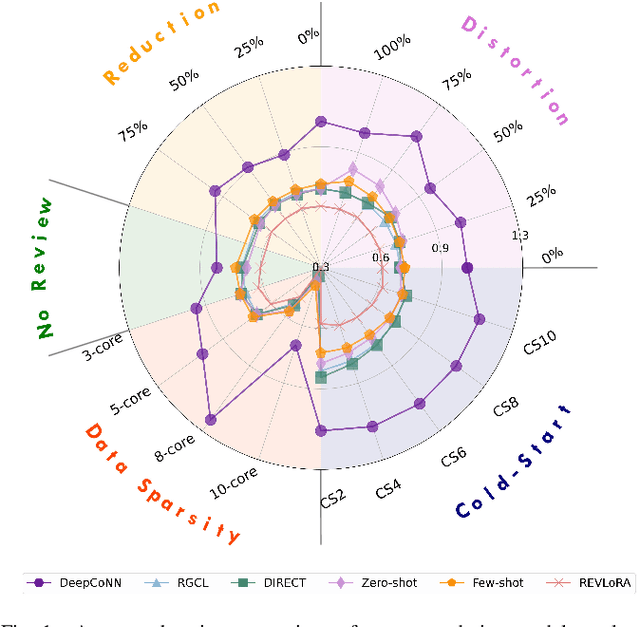

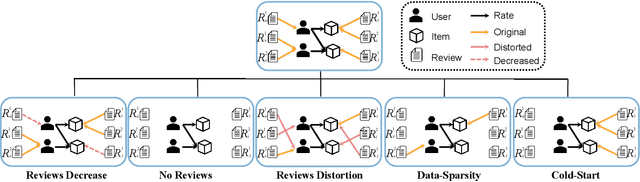
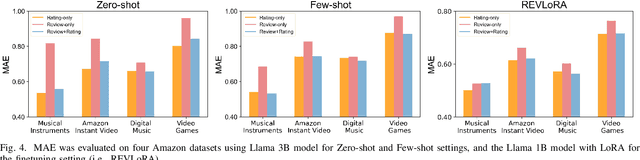
With the advent of large language models (LLMs), the landscape of recommender systems is undergoing a significant transformation. Traditionally, user reviews have served as a critical source of rich, contextual information for enhancing recommendation quality. However, as LLMs demonstrate an unprecedented ability to understand and generate human-like text, this raises the question of whether explicit user reviews remain essential in the era of LLMs. In this paper, we provide a systematic investigation of the evolving role of text reviews in recommendation by comparing deep learning methods and LLM approaches. Particularly, we conduct extensive experiments on eight public datasets with LLMs and evaluate their performance in zero-shot, few-shot, and fine-tuning scenarios. We further introduce a benchmarking evaluation framework for review-aware recommender systems, RAREval, to comprehensively assess the contribution of textual reviews to the recommendation performance of review-aware recommender systems. Our framework examines various scenarios, including the removal of some or all textual reviews, random distortion, as well as recommendation performance in data sparsity and cold-start user settings. Our findings demonstrate that LLMs are capable of functioning as effective review-aware recommendation engines, generally outperforming traditional deep learning approaches, particularly in scenarios characterized by data sparsity and cold-start conditions. In addition, the removal of some or all textual reviews and random distortion does not necessarily lead to declines in recommendation accuracy. These findings motivate a rethinking of how user preference from text reviews can be more effectively leveraged. All code and supplementary materials are available at: https://github.com/zhytk/RAREval-data-processing.
Bridging Synthetic and Real Routing Problems via LLM-Guided Instance Generation and Progressive Adaptation
Nov 13, 2025Recent advances in Neural Combinatorial Optimization (NCO) methods have significantly improved the capability of neural solvers to handle synthetic routing instances. Nonetheless, existing neural solvers typically struggle to generalize effectively from synthetic, uniformly-distributed training data to real-world VRP scenarios, including widely recognized benchmark instances from TSPLib and CVRPLib. To bridge this generalization gap, we present Evolutionary Realistic Instance Synthesis (EvoReal), which leverages an evolutionary module guided by large language models (LLMs) to generate synthetic instances characterized by diverse and realistic structural patterns. Specifically, the evolutionary module produces synthetic instances whose structural attributes statistically mimics those observed in authentic real-world instances. Subsequently, pre-trained NCO models are progressively refined, firstly aligning them with these structurally enriched synthetic distributions and then further adapting them through direct fine-tuning on actual benchmark instances. Extensive experimental evaluations demonstrate that EvoReal markedly improves the generalization capabilities of state-of-the-art neural solvers, yielding a notable reduced performance gap compared to the optimal solutions on the TSPLib (1.05%) and CVRPLib (2.71%) benchmarks across a broad spectrum of problem scales.
A Spatial-Physics Informed Model for 3D Spiral Sample Scanned by SQUID Microscopy
Jul 16, 2025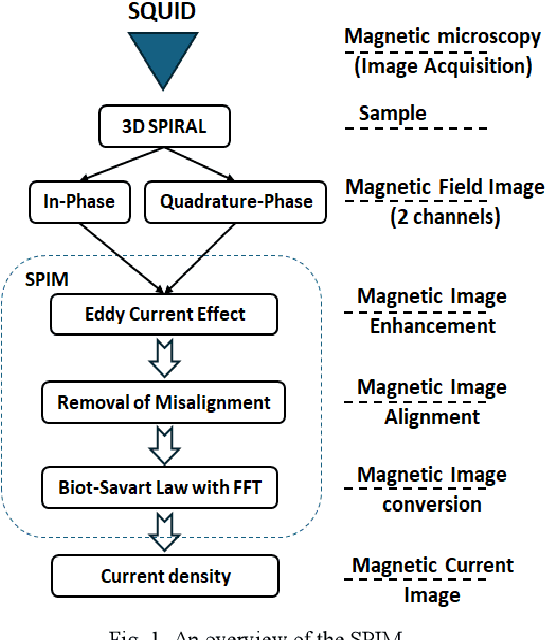
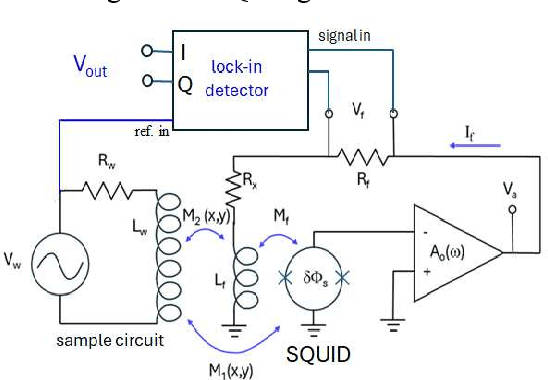
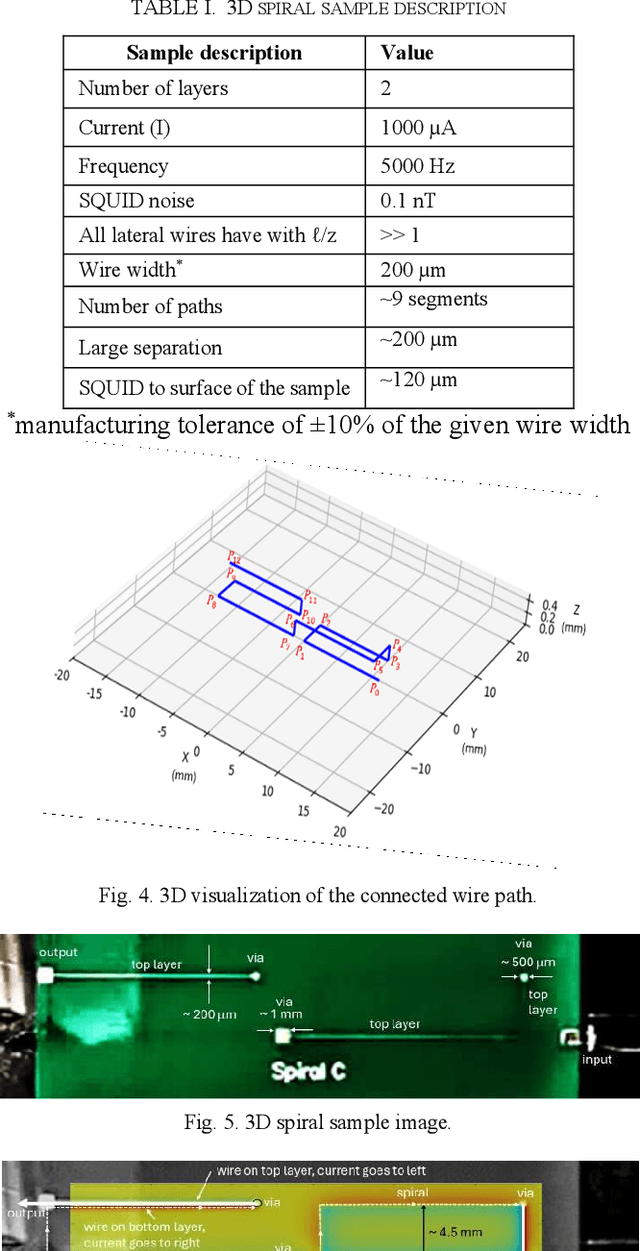
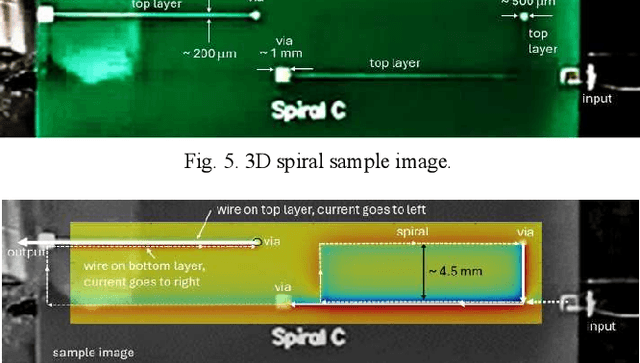
The development of advanced packaging is essential in the semiconductor manufacturing industry. However, non-destructive testing (NDT) of advanced packaging becomes increasingly challenging due to the depth and complexity of the layers involved. In such a scenario, Magnetic field imaging (MFI) enables the imaging of magnetic fields generated by currents. For MFI to be effective in NDT, the magnetic fields must be converted into current density. This conversion has typically relied solely on a Fast Fourier Transform (FFT) for magnetic field inversion; however, the existing approach does not consider eddy current effects or image misalignment in the test setup. In this paper, we present a spatial-physics informed model (SPIM) designed for a 3D spiral sample scanned using Superconducting QUantum Interference Device (SQUID) microscopy. The SPIM encompasses three key components: i) magnetic image enhancement by aligning all the "sharp" wire field signals to mitigate the eddy current effect using both in-phase (I-channel) and quadrature-phase (Q-channel) images; (ii) magnetic image alignment that addresses skew effects caused by any misalignment of the scanning SQUID microscope relative to the wire segments; and (iii) an inversion method for converting magnetic fields to magnetic currents by integrating the Biot-Savart Law with FFT. The results show that the SPIM improves I-channel sharpness by 0.3% and reduces Q-channel sharpness by 25%. Also, we were able to remove rotational and skew misalignments of 0.30 in a real image. Overall, SPIM highlights the potential of combining spatial analysis with physics-driven models in practical applications.
* copyright 2025 IEEE. Personal use of this material is permitted. Permission from IEEE must be obtained for all other uses, in any current or future media, including reprinting/republishing this material for advertising or promotional purposes, creating new collective works, for resale or redistribution to servers or lists, or reuse of any copyrighted component of this work in other works
Cross-Problem Learning for Solving Vehicle Routing Problems
Apr 17, 2024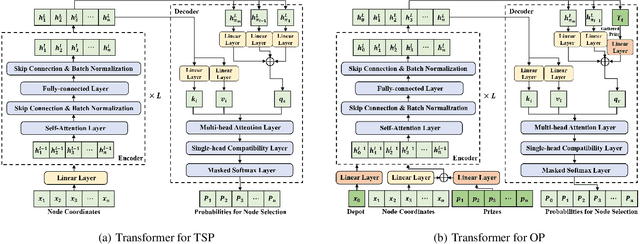
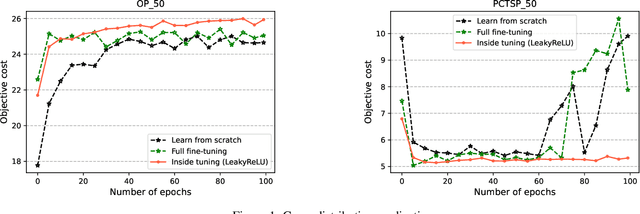

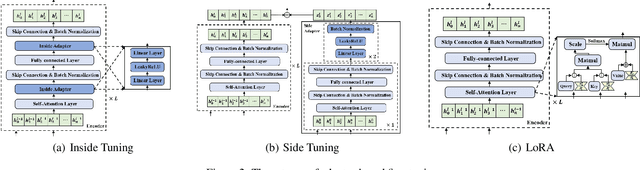
Existing neural heuristics often train a deep architecture from scratch for each specific vehicle routing problem (VRP), ignoring the transferable knowledge across different VRP variants. This paper proposes the cross-problem learning to assist heuristics training for different downstream VRP variants. Particularly, we modularize neural architectures for complex VRPs into 1) the backbone Transformer for tackling the travelling salesman problem (TSP), and 2) the additional lightweight modules for processing problem-specific features in complex VRPs. Accordingly, we propose to pre-train the backbone Transformer for TSP, and then apply it in the process of fine-tuning the Transformer models for each target VRP variant. On the one hand, we fully fine-tune the trained backbone Transformer and problem-specific modules simultaneously. On the other hand, we only fine-tune small adapter networks along with the modules, keeping the backbone Transformer still. Extensive experiments on typical VRPs substantiate that 1) the full fine-tuning achieves significantly better performance than the one trained from scratch, and 2) the adapter-based fine-tuning also delivers comparable performance while being notably parameter-efficient. Furthermore, we empirically demonstrate the favorable effect of our method in terms of cross-distribution application and versatility.