 Add to Chrome
 Add to Firefox
 Add to Edge
On the effectiveness of reward functions in reinforcement learning for confidence calibration of large language models
Jul 05, 2026
In this paper, we consider the setting where large language models (LLMs) are trained using reinforcement learning (RL) to simultaneously improve reasoning accuracy and verbalize its confidence. Our reward scheme uses two functions for rewarding confidence verbalized by the LLM: one when the LLM is correct and a different one when the LLM is incorrect. With a poorly designed reward scheme, the LLM may be incentivized to answer incorrectly so that it can be confident that its answer is indeed incorrect, a phenomenon that we call confidence reward hacking. We propose the concept of non-hackable confidence reward schemes and define a spectrum of such reward schemes for RL confidence calibration training in LLMs. We demonstrate that selective confidence reward hacking can occur in practical datasets with reward schemes that are not designed to be non-hackable. We also demonstrate that the reward scheme with the best calibration to accuracy tradeoff depends on the dataset and the application, and propose using the reward scheme as a hyperparameter to optimize the tradeoffs in accordance to what is important for the application. The code of our experiments is available in https://anonymous.4open.science/r/rl-confidence-calibration-9ED4/README.md.

Do Reviews Matter for Recommendations in the Era of Large Language Models?
Dec 15, 2025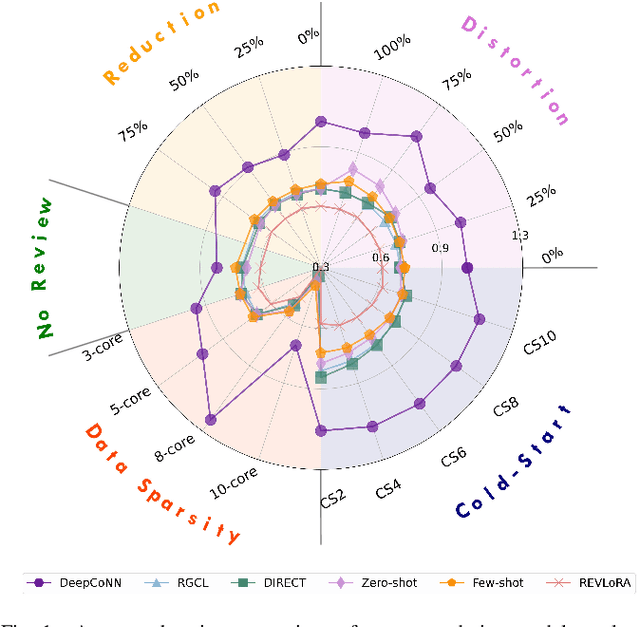
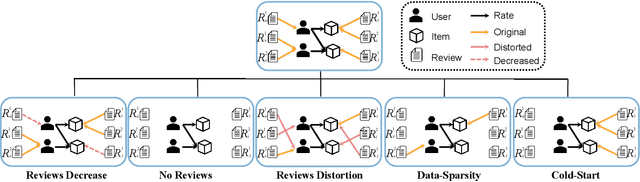
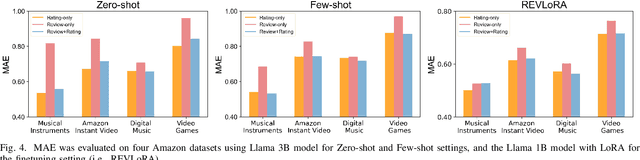
With the advent of large language models (LLMs), the landscape of recommender systems is undergoing a significant transformation. Traditionally, user reviews have served as a critical source of rich, contextual information for enhancing recommendation quality. However, as LLMs demonstrate an unprecedented ability to understand and generate human-like text, this raises the question of whether explicit user reviews remain essential in the era of LLMs. In this paper, we provide a systematic investigation of the evolving role of text reviews in recommendation by comparing deep learning methods and LLM approaches. Particularly, we conduct extensive experiments on eight public datasets with LLMs and evaluate their performance in zero-shot, few-shot, and fine-tuning scenarios. We further introduce a benchmarking evaluation framework for review-aware recommender systems, RAREval, to comprehensively assess the contribution of textual reviews to the recommendation performance of review-aware recommender systems. Our framework examines various scenarios, including the removal of some or all textual reviews, random distortion, as well as recommendation performance in data sparsity and cold-start user settings. Our findings demonstrate that LLMs are capable of functioning as effective review-aware recommendation engines, generally outperforming traditional deep learning approaches, particularly in scenarios characterized by data sparsity and cold-start conditions. In addition, the removal of some or all textual reviews and random distortion does not necessarily lead to declines in recommendation accuracy. These findings motivate a rethinking of how user preference from text reviews can be more effectively leveraged. All code and supplementary materials are available at: https://github.com/zhytk/RAREval-data-processing.