 Add to Chrome
 Add to Firefox
 Add to Edge
ShopSimulator: Evaluating and Exploring RL-Driven LLM Agent for Shopping Assistants
Jan 26, 2026
Large language model (LLM)-based agents are increasingly deployed in e-commerce shopping. To perform thorough, user-tailored product searches, agents should interpret personal preferences, engage in multi-turn dialogues, and ultimately retrieve and discriminate among highly similar products. However, existing research has yet to provide a unified simulation environment that consistently captures all of these aspects, and always focuses solely on evaluation benchmarks without training support. In this paper, we introduce ShopSimulator, a large-scale and challenging Chinese shopping environment. Leveraging ShopSimulator, we evaluate LLMs across diverse scenarios, finding that even the best-performing models achieve less than 40% full-success rate. Error analysis reveals that agents struggle with deep search and product selection in long trajectories, fail to balance the use of personalization cues, and to effectively engage with users. Further training exploration provides practical guidance for overcoming these weaknesses, with the combination of supervised fine-tuning (SFT) and reinforcement learning (RL) yielding significant performance improvements. Code and data will be released at https://github.com/ShopAgent-Team/ShopSimulator.

Let It Flow: Agentic Crafting on Rock and Roll, Building the ROME Model within an Open Agentic Learning Ecosystem
Dec 31, 2025Agentic crafting requires LLMs to operate in real-world environments over multiple turns by taking actions, observing outcomes, and iteratively refining artifacts. Despite its importance, the open-source community lacks a principled, end-to-end ecosystem to streamline agent development. We introduce the Agentic Learning Ecosystem (ALE), a foundational infrastructure that optimizes the production pipeline for agent LLMs. ALE consists of three components: ROLL, a post-training framework for weight optimization; ROCK, a sandbox environment manager for trajectory generation; and iFlow CLI, an agent framework for efficient context engineering. We release ROME (ROME is Obviously an Agentic Model), an open-source agent grounded by ALE and trained on over one million trajectories. Our approach includes data composition protocols for synthesizing complex behaviors and a novel policy optimization algorithm, Interaction-based Policy Alignment (IPA), which assigns credit over semantic interaction chunks rather than individual tokens to improve long-horizon training stability. Empirically, we evaluate ROME within a structured setting and introduce Terminal Bench Pro, a benchmark with improved scale and contamination control. ROME demonstrates strong performance across benchmarks like SWE-bench Verified and Terminal Bench, proving the effectiveness of the ALE infrastructure.
Facial Recognition Leveraging Generative Adversarial Networks
May 17, 2025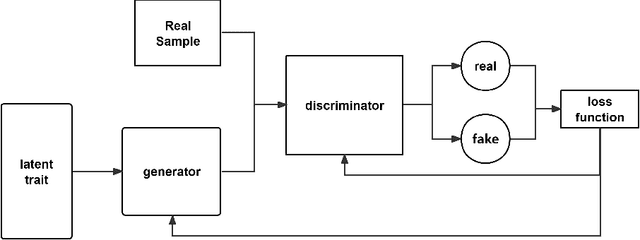
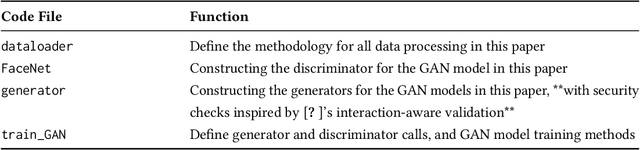
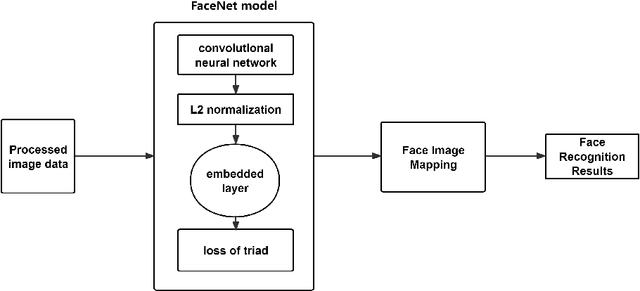
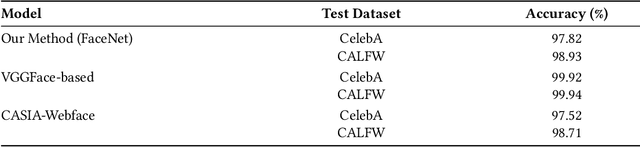
Face recognition performance based on deep learning heavily relies on large-scale training data, which is often difficult to acquire in practical applications. To address this challenge, this paper proposes a GAN-based data augmentation method with three key contributions: (1) a residual-embedded generator to alleviate gradient vanishing/exploding problems, (2) an Inception ResNet-V1 based FaceNet discriminator for improved adversarial training, and (3) an end-to-end framework that jointly optimizes data generation and recognition performance. Experimental results demonstrate that our approach achieves stable training dynamics and significantly improves face recognition accuracy by 12.7% on the LFW benchmark compared to baseline methods, while maintaining good generalization capability with limited training samples.