 Add to Chrome
 Add to Firefox
 Add to Edge
ContextGuard: Structured Self-Auditing for Context Learning in Language Models
May 26, 2026
Recent benchmarks reveal that despite strong reasoning capabilities, large language models (LLMs) still struggle to faithfully apply complex contextual knowledge. These failures are often not wholesale reasoning collapses: in context-rich tasks, models may follow the central reasoning path while missing peripheral, persistent, or format-sensitive requirements.

Context-CoT: Enhancing Context Learning via High-Quality Reasoning Synthesis
May 25, 2026While LLMs excel at reasoning over prompts using static pretrained knowledge, they struggle significantly with context learning-the ability to dynamically extract, internalize, and apply new knowledge from complex, task-specific contexts. Recent evaluations on the CL-Bench reveal a critical capability gap: frontier models solve only 17.2% of context-dependent tasks on average.
SciCore-Mol: Augmenting Large Language Models with Pluggable Molecular Cognition Modules
May 21, 2026Large Language Models (LLMs) are central to the one-for-all intelligent paradigm, but they face a fundamental challenge when dealing with heterogeneous scientific data such as molecules: the inherent gap between discrete linguistic symbols and topological molecular or continuous reaction data leads to significant information loss and semantic noise in text-based reasoning. We propose SciCore-Mol, a modular framework that bridges this gap through three deeply integrated pluggable cognitive modules: a topology-aware perception module, a latent diffusion-based molecular generation module, and a reaction-aware reasoning module. Each module is coupled to the LLM backbone through learned representation interfaces, enabling richer information exchange than is possible with text-only tool feedback. Our experiments on diverse chemical tasks demonstrate that SciCore-Mol achieves strong comprehensive performance across molecular understanding, generation, reaction prediction, and general chemistry knowledge, with an 8B-parameter open-source system that is competitive with and in several dimensions surpasses proprietary large models. This work provides a systematic blueprint for equipping LLMs with scientific expertise through decoupled, pluggable, and flexibly orchestrated modules, with direct implications for drug design, chemical synthesis, and broader scientific discovery.
VISD: Enhancing Video Reasoning via Structured Self-Distillation
May 07, 2026Training VideoLLMs for complex reasoning remains challenging due to sparse sequence level rewards and the lack of fine grained credit assignment over long, temporally grounded reasoning trajectories. While reinforcement learning with verifiable rewards (RLVR) provides reliable supervision, it fails to capture token level contributions, leading to inefficient learning. Conversely, existing self distillation methods offer dense supervision but lack structure and diagnostic specificity, and often interact unstably with reinforcement learning. In this work, we propose VISD, a structured self distillation framework that introduces diagnostically meaningful privileged information for video reasoning. VISD employs a video aware judge model to decompose reasoning quality into multiple dimensions, including answer correctness, logical consistency, and spatio-temporal grounding, and uses this structured feedback to guide a teacher policy for token level supervision. To stably integrate dense supervision with RL, we introduce a direction magnitude decoupling mechanism, where rollout level advantages computed from rewards determine update direction, while structured privileged signals modulate token level update magnitudes. This design enables semantically aligned and fine grained credit assignment, improving both reasoning faithfulness and training efficiency. Additionally, VISD incorporates curriculum scheduling and EMA based teacher stabilization to support robust optimization over long video sequences. Experiments on diverse benchmarks show that VISD consistently outperforms strong baselines, improving answer accuracy and spatio temporal grounding quality. Notably, VISD reaches these gains with nearly 2x faster convergence in optimization steps, highlighting the effectiveness of structured self supervision in improving both performance and sample efficiency for VideoLLMs.
DGPO: Distribution Guided Policy Optimization for Fine Grained Credit Assignment
May 05, 2026Reinforcement learning is crucial for aligning large language models to perform complex reasoning tasks. However, current algorithms such as Group Relative Policy Optimization suffer from coarse grained, sequence level credit assignment, which severely struggles to isolate pivotal reasoning steps within long Chain of Thought generations. Furthermore, the standard unbounded Kullback Leibler divergence penalty induces severe gradient instability and mode seeking conservatism, ultimately stifling the discovery of novel reasoning trajectories. To overcome these limitations, we introduce Distribution Guided Policy Optimization, a novel critic free reinforcement learning framework that reinterprets distribution deviation as a guiding signal rather than a rigid penalty.
Neural Collapse in Test-Time Adaptation
Dec 11, 2025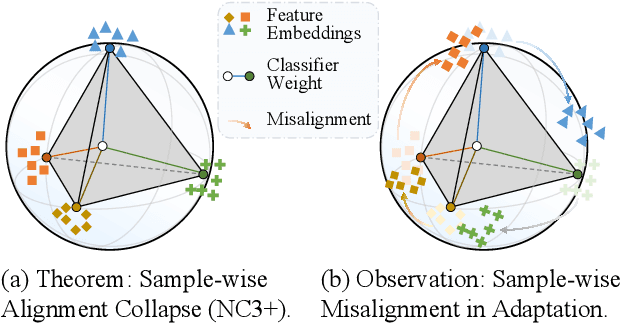
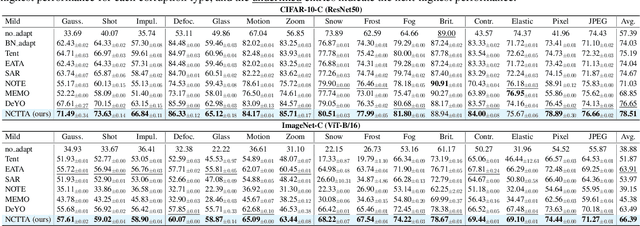
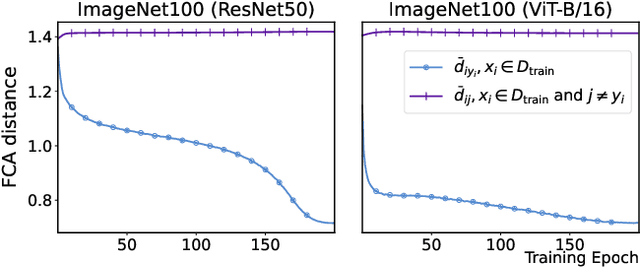
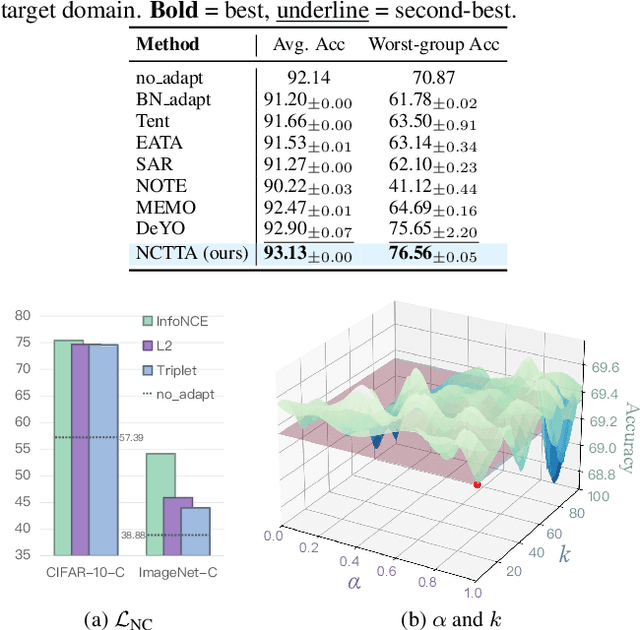
Test-Time Adaptation (TTA) enhances model robustness to out-of-distribution (OOD) data by updating the model online during inference, yet existing methods lack theoretical insights into the fundamental causes of performance degradation under domain shifts. Recently, Neural Collapse (NC) has been proposed as an emergent geometric property of deep neural networks (DNNs), providing valuable insights for TTA. In this work, we extend NC to the sample-wise level and discover a novel phenomenon termed Sample-wise Alignment Collapse (NC3+), demonstrating that a sample's feature embedding, obtained by a trained model, aligns closely with the corresponding classifier weight. Building on NC3+, we identify that the performance degradation stems from sample-wise misalignment in adaptation which exacerbates under larger distribution shifts. This indicates the necessity of realigning the feature embeddings with their corresponding classifier weights. However, the misalignment makes pseudo-labels unreliable under domain shifts. To address this challenge, we propose NCTTA, a novel feature-classifier alignment method with hybrid targets to mitigate the impact of unreliable pseudo-labels, which blends geometric proximity with predictive confidence. Extensive experiments demonstrate the effectiveness of NCTTA in enhancing robustness to domain shifts. For example, NCTTA outperforms Tent by 14.52% on ImageNet-C.