 Add to Chrome
 Add to Firefox
 Add to Edge
Motion Beyond Morphology: Bootstrapping Cross-Category Motion Transfer from Abstract Motion Representations
Aug 03, 2026
Video motion transfer aims to animate a target object using dynamics from a reference video. Existing formulations largely rely on fixed structural correspondence, which becomes ill-defined when reference and target objects differ substantially in morphology, articulation, or deformation mechanisms. We introduce Motion Beyond Morphology, a perspective that seeks to transfer motion beyond fixed structural correspondence, by preserving dynamics that remain meaningful across different target morphologies. To realize this, we propose a two-stage framework. Stage~I learns complementary multi-granularity abstract motion views and uses them to bootstrap cross-category video pairs that preserve transferable dynamics across diverse morphologies. Stage~II internalizes this supervision into direct reference-video-conditioned generation, removing the need for explicit motion extraction at inference. We further introduce OpenVMT-Dataset and OpenVMT-Bench for training and evaluating image- and text-conditioned motion transfer across Same, Near, and Far category gaps, and plan to release both upon acceptance. Extensive experiments demonstrate state-of-the-art motion fidelity and target preservation. Project page: https://miniz233.github.io/MotionBeyondMorphology/

Artificial Intelligence and Innovation Ecosystem: Evolutionary Developments, Challenges, and Future Directions
Jul 27, 2026The development of the Innovative Ecosystem (IE) presents a new paradigm for economic integration, collaborative advancement, and shared achievements. The rise of Artificial Intelligence (AI) has significantly accelerated the global processes of digitization, informatization, and intelligence. Exploring how AI can leverage inherent characteristics to influence the development trajectory of IE is a topic that warrants further investigation. Given AI's increasing prominence and role within IE, the paper analyzes this new form, examining both AI's unique contributions to IE and its potential challenges. Firstly, the paper synthesizes the conceptual frameworks surrounding IE, decomposing them into manifestations in physical, social, and thinking spaces. Furthermore, the concept of Artificial Intelligence IE (AIIE) is introduced from a spatial perspective, with an exploration of the characteristics AI contributes to IE. Subsequently, the paper employs an evolutionary perspective to analyze the roles provided by AI during different development periods of AIIE. The paper then verifies the feasibility, effectiveness, and rationality of the AIIE's definition and analyzes AIIE development from an evolutionary perspective using enterprise development examples. Finally, acknowledging AI's inherent limitations, the paper examines potential challenges facing AIIE in the future from four perspectives, aiming to identify new research avenues for the further development of AIIE.
OmniDirector: General Multi-Shot Camera Cloning without Cross-Paired Data
Jun 11, 2026Cloning camera motion from reference videos is an important task in video generation, as videos provide intuitive and precise control. Existing methods either directly use parametric representations that fail to handle multi-shot generation or synthesize cross-paired data, which suffer from data scarcity, resulting in poor performance in complicated camera motion cloning. To address these issues, we introduce a general camera motion representation that encodes cameras as grid motion videos. This camera grid represents the camera parameters visually and supports the integration of diverse trajectories for multi-shot video generation. Building upon this, we propose OmniDirector, a unified framework trained on a million-scale camera grid-video pairs that coordinates characters, actions, and cameras to provide director-level control for multimodal diffusion transformers. Furthermore, we design a novel hierarchical prompt expansion agent that harmoniously integrates different control signals by systematically describing camera motion and visual content through understanding signal relationships. Extensive experiments demonstrate the superior performance and outstanding controllability of our framework. Project page: https://ymlinfeng.github.io/OmniDirector.github.io/
Behave Your Motion: Habit-preserved Cross-category Animal Motion Transfer
Jul 10, 2025Animal motion embodies species-specific behavioral habits, making the transfer of motion across categories a critical yet complex task for applications in animation and virtual reality. Existing motion transfer methods, primarily focused on human motion, emphasize skeletal alignment (motion retargeting) or stylistic consistency (motion style transfer), often neglecting the preservation of distinct habitual behaviors in animals. To bridge this gap, we propose a novel habit-preserved motion transfer framework for cross-category animal motion. Built upon a generative framework, our model introduces a habit-preservation module with category-specific habit encoder, allowing it to learn motion priors that capture distinctive habitual characteristics. Furthermore, we integrate a large language model (LLM) to facilitate the motion transfer to previously unobserved species. To evaluate the effectiveness of our approach, we introduce the DeformingThings4D-skl dataset, a quadruped dataset with skeletal bindings, and conduct extensive experiments and quantitative analyses, which validate the superiority of our proposed model.
Heterogeneous Graph-based Framework with Disentangled Representations Learning for Multi-target Cross Domain Recommendation
Jul 01, 2024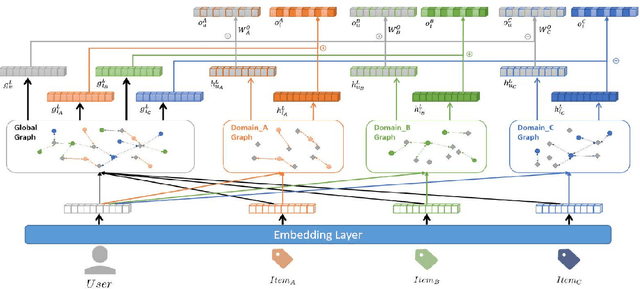
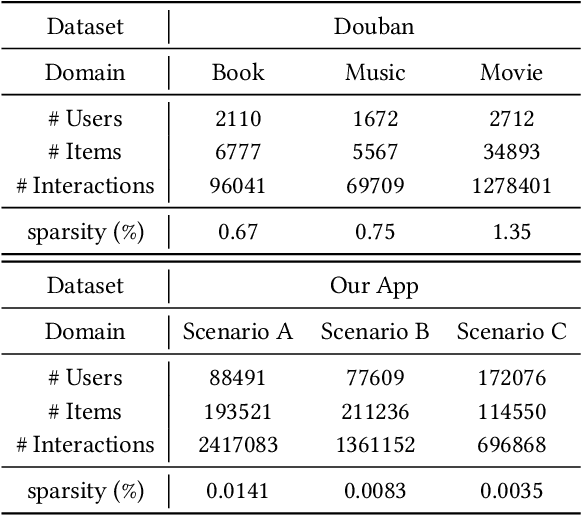

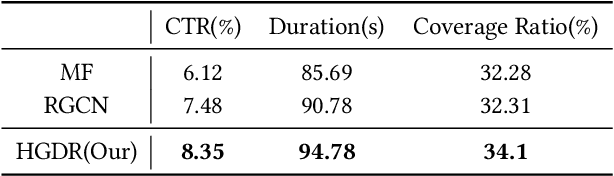
CDR (Cross-Domain Recommendation), i.e., leveraging information from multiple domains, is a critical solution to data sparsity problem in recommendation system. The majority of previous research either focused on single-target CDR (STCDR) by utilizing data from the source domains to improve the model's performance on the target domain, or applied dual-target CDR (DTCDR) by integrating data from the source and target domains. In addition, multi-target CDR (MTCDR) is a generalization of DTCDR, which is able to capture the link among different domains. In this paper we present HGDR (Heterogeneous Graph-based Framework with Disentangled Representations Learning), an end-to-end heterogeneous network architecture where graph convolutional layers are applied to model relations among different domains, meanwhile utilizes the idea of disentangling representation for domain-shared and domain-specifc information. First, a shared heterogeneous graph is generated by gathering users and items from several domains without any further side information. Second, we use HGDR to compute disentangled representations for users and items in all domains.Experiments on real-world datasets and online A/B tests prove that our proposed model can transmit information among domains effectively and reach the SOTA performance.
RangeLDM: Fast Realistic LiDAR Point Cloud Generation
Mar 15, 2024Autonomous driving demands high-quality LiDAR data, yet the cost of physical LiDAR sensors presents a significant scaling-up challenge. While recent efforts have explored deep generative models to address this issue, they often consume substantial computational resources with slow generation speeds while suffering from a lack of realism. To address these limitations, we introduce RangeLDM, a novel approach for rapidly generating high-quality range-view LiDAR point clouds via latent diffusion models. We achieve this by correcting range-view data distribution for accurate projection from point clouds to range images via Hough voting, which has a critical impact on generative learning. We then compress the range images into a latent space with a variational autoencoder, and leverage a diffusion model to enhance expressivity. Additionally, we instruct the model to preserve 3D structural fidelity by devising a range-guided discriminator. Experimental results on KITTI-360 and nuScenes datasets demonstrate both the robust expressiveness and fast speed of our LiDAR point cloud generation.
InvariantOODG: Learning Invariant Features of Point Clouds for Out-of-Distribution Generalization
Jan 08, 2024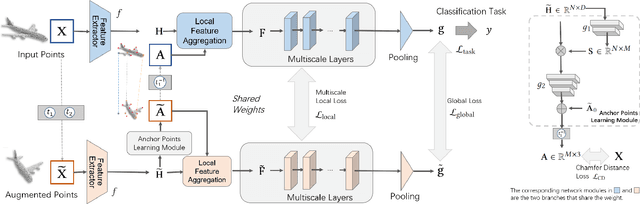

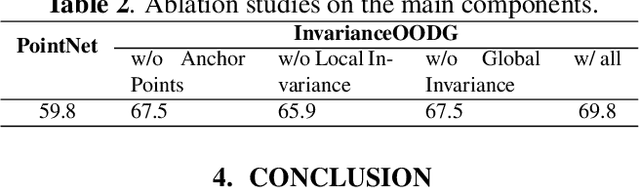
The convenience of 3D sensors has led to an increase in the use of 3D point clouds in various applications. However, the differences in acquisition devices or scenarios lead to divergence in the data distribution of point clouds, which requires good generalization of point cloud representation learning methods. While most previous methods rely on domain adaptation, which involves fine-tuning pre-trained models on target domain data, this may not always be feasible in real-world scenarios where target domain data may be unavailable. To address this issue, we propose InvariantOODG, which learns invariability between point clouds with different distributions using a two-branch network to extract local-to-global features from original and augmented point clouds. Specifically, to enhance local feature learning of point clouds, we define a set of learnable anchor points that locate the most useful local regions and two types of transformations to augment the input point clouds. The experimental results demonstrate the effectiveness of the proposed model on 3D domain generalization benchmarks.
A unified consensus-based parallel ADMM algorithm for high-dimensional regression with combined regularizations
Nov 21, 2023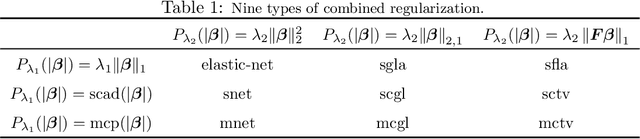

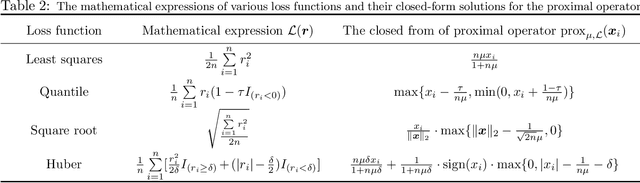
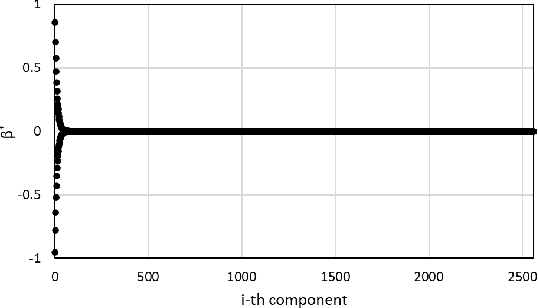
The parallel alternating direction method of multipliers (ADMM) algorithm is widely recognized for its effectiveness in handling large-scale datasets stored in a distributed manner, making it a popular choice for solving statistical learning models. However, there is currently limited research on parallel algorithms specifically designed for high-dimensional regression with combined (composite) regularization terms. These terms, such as elastic-net, sparse group lasso, sparse fused lasso, and their nonconvex variants, have gained significant attention in various fields due to their ability to incorporate prior information and promote sparsity within specific groups or fused variables. The scarcity of parallel algorithms for combined regularizations can be attributed to the inherent nonsmoothness and complexity of these terms, as well as the absence of closed-form solutions for certain proximal operators associated with them. In this paper, we propose a unified constrained optimization formulation based on the consensus problem for these types of convex and nonconvex regression problems and derive the corresponding parallel ADMM algorithms. Furthermore, we prove that the proposed algorithm not only has global convergence but also exhibits linear convergence rate. Extensive simulation experiments, along with a financial example, serve to demonstrate the reliability, stability, and scalability of our algorithm. The R package for implementing the proposed algorithms can be obtained at https://github.com/xfwu1016/CPADMM.
Unsupervised Manga Character Re-identification via Face-body and Spatial-temporal Associated Clustering
Apr 10, 2022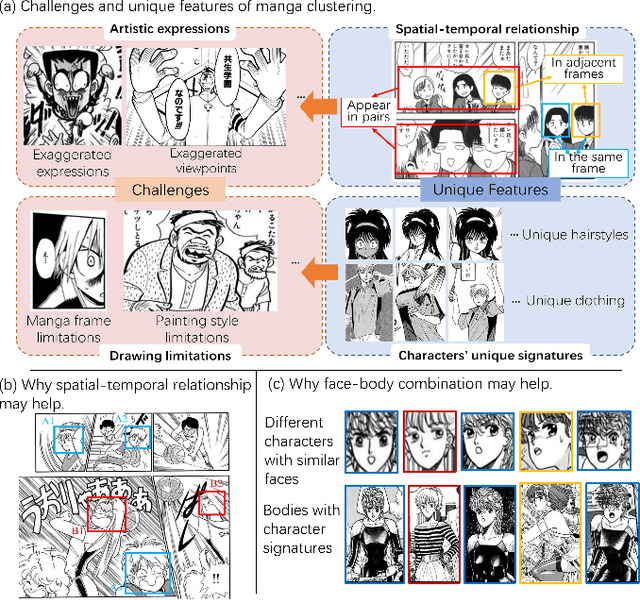
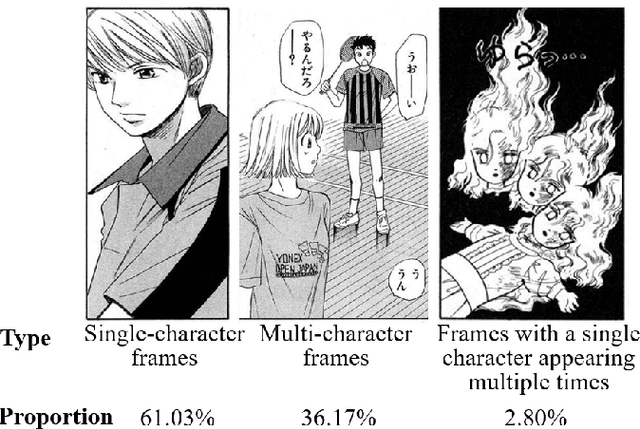
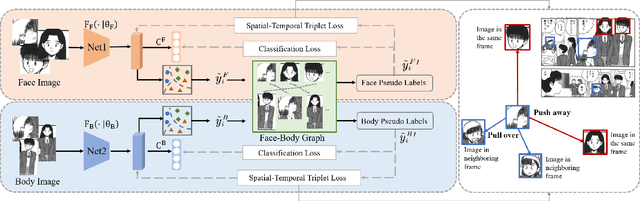
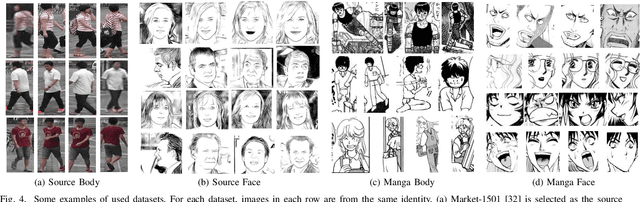
In the past few years, there has been a dramatic growth in e-manga (electronic Japanese-style comics). Faced with the booming demand for manga research and the large amount of unlabeled manga data, we raised a new task, called unsupervised manga character re-identification. However, the artistic expression and stylistic limitations of manga pose many challenges to the re-identification problem. Inspired by the idea that some content-related features may help clustering, we propose a Face-body and Spatial-temporal Associated Clustering method (FSAC). In the face-body combination module, a face-body graph is constructed to solve problems such as exaggeration and deformation in artistic creation by using the integrity of the image. In the spatial-temporal relationship correction module, we analyze the appearance features of characters and design a temporal-spatial-related triplet loss to fine-tune the clustering. Extensive experiments on a manga book dataset with 109 volumes validate the superiority of our method in unsupervised manga character re-identification.
Improving Stack Overflow question title generation with copying enhanced CodeBERT model and bi-modal information
Sep 27, 2021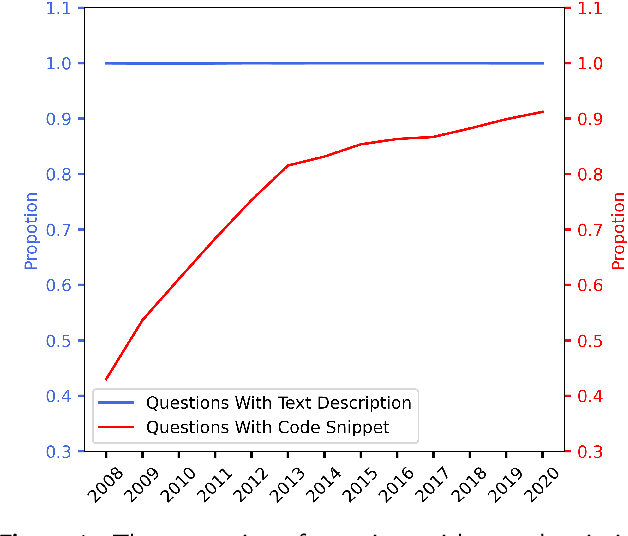
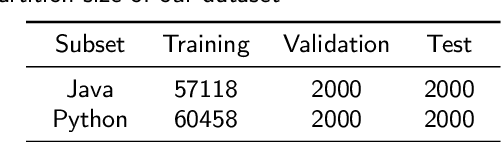
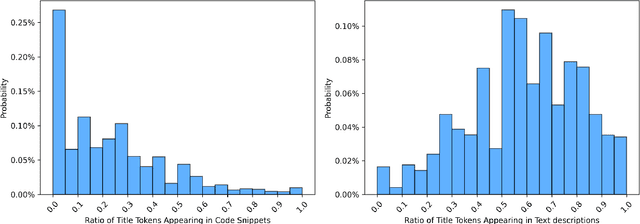
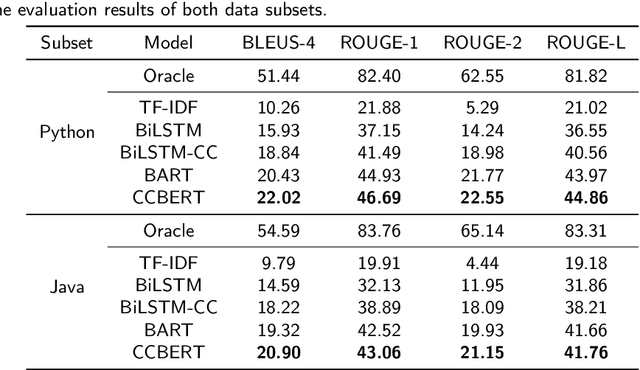
Context: Stack Overflow is very helpful for software developers who are seeking answers to programming problems. Previous studies have shown that a growing number of questions are of low-quality and thus obtain less attention from potential answerers. Gao et al. proposed a LSTM-based model (i.e., BiLSTM-CC) to automatically generate question titles from the code snippets to improve the question quality. However, only using the code snippets in question body cannot provide sufficient information for title generation, and LSTMs cannot capture the long-range dependencies between tokens. Objective: We propose CCBERT, a deep learning based novel model to enhance the performance of question title generation by making full use of the bi-modal information of the entire question body. Methods: CCBERT follows the encoder-decoder paradigm, and uses CodeBERT to encode the question body into hidden representations, a stacked Transformer decoder to generate predicted tokens, and an additional copy attention layer to refine the output distribution. Both the encoder and decoder perform the multi-head self-attention operation to better capture the long-range dependencies. We build a dataset containing more than 120,000 high-quality questions filtered from the data officially published by Stack Overflow to verify the effectiveness of the CCBERT model. Results: CCBERT achieves a better performance on the dataset, and especially outperforms BiLSTM-CC and a multi-purpose pre-trained model (BART) by 14% and 4% on average, respectively. Experiments on both code-only and low-resource datasets also show the superiority of CCBERT with less performance degradation, which are 40% and 13.5% for BiLSTM-CC, while 24% and 5% for CCBERT, respectively.