 Add to Chrome
 Add to Firefox
 Add to Edge
Proposal Refinement for Few-Shot Object Detection
Jun 08, 2026
Few-shot object detection has gained widely attention in recent years. Some excellent algorithms have been proposed to handle this task. However, most of these algorithms rely on the performance of few-shot classification. Unlike previous attempts, our work focuses on the problem of unbalanced distribution of region proposals between the novel classes and the base classes. In order to alleviate this unbalanced distribution, we propose the proposal refinement approach for different training phases. Specifically, refinement loss is designed for the base training phase to enhance sensitivity of the model to novel classes, and refinement branch is introduced as an auxiliary branch for RPN (Region Proposal Networks) to generate more novel proposals in the fine-tuning phase. By rebalancing the proposal distribution, the proposed approach outperforms the baselines methods by roughly 1\%$\sim$6\% on current benchmarks without increasing any inference time. Through extensive experiments, we prove that we establish a new state-of-the-art method for the few-shot object detection task.

LegSegNet: A Public Deep Learning System for Lower Extremity CT Tissue Segmentation and Quantification
May 29, 2026Lower extremity computed tomography (CT) contains clinically relevant information for body composition analysis, sarcopenia assessment, and musculoskeletal disease monitoring, but extracting these measurements at scale requires accurate tissue segmentation and an automated quantification workflow. Existing public segmentation tools are not designed for comprehensive lower extremity CT analysis, particularly for clinically important inter/intramuscular adipose tissue, and most public methods only provide mask prediction rather than an end-to-end quantification system. To address this problem, we present LegSegNet, a deep learning system for lower extremity CT tissue segmentation and body composition quantification. Given an input CT scan, LegSegNet segments bone, skeletal muscle, subcutaneous adipose tissue, and inter/intramuscular adipose tissue. It then computes quantitative tissue measurements for downstream analysis. We developed the segmentation model using 1,302 manually annotated CT slices and evaluated it on 900 held-out test slices, with all annotations reviewed by radiologists. We benchmark LegSegNet against a broad set of 2D segmentation methods, including CNN-based models, transformer-based models, and finetuned foundation models, and further evaluate its generalization on an external public CT dataset. LegSegNet achieves the best overall segmentation performance, with an average Dice score of 89.31 on the held-out test set. To our knowledge, LegSegNet is the first publicly available end-to-end system for lower extremity CT tissue segmentation and quantification, providing a practical evaluation tool for future computer vision research in medical image analysis. The code and model weights are available at: https://github.com/mazurowski-lab/LegSegNet
GaussianPile: A Unified Sparse Gaussian Splatting Framework for Slice-based Volumetric Reconstruction
Mar 21, 2026Slice-based volumetric imaging is widely applied and it demands representations that compress aggressively while preserving internal structure for analysis. We introduce GaussianPile, unifying 3D Gaussian splatting with an imaging system-aware focus model to address this challenge. Our proposed method introduces three key innovations: (i) a slice-aware piling strategy that positions anisotropic 3D Gaussians to model through-slice contributions, (ii) a differentiable projection operator that encodes the finite-thickness point spread function of the imaging acquisition system, and (iii) a compact encoding and joint optimization pipeline that simultaneously reconstructs and compresses the Gaussian sets. Our CUDA-based design retains the compression and real-time rendering efficiency of Gaussian primitives while preserving high-frequency internal volumetric detail. Experiments on microscopy and ultrasound datasets demonstrate that our method reduces storage and reconstruction cost, sustains diagnostic fidelity, and enables fast 2D visualization, along with 3D voxelization. In practice, it delivers high-quality results in as few as 3 minutes, up to 11x faster than NeRF-based approaches, and achieves consistent 16x compression over voxel grids, offering a practical path to deployable compression and exploration of slice-based volumetric datasets.
Transplant-Ready? Evaluating AI Lung Segmentation Models in Candidates with Severe Lung Disease
Sep 18, 2025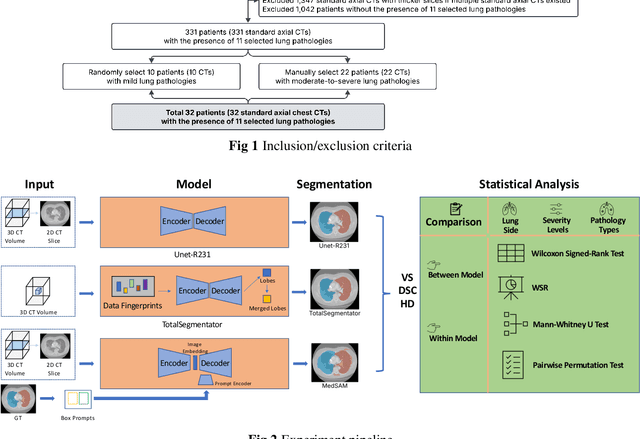
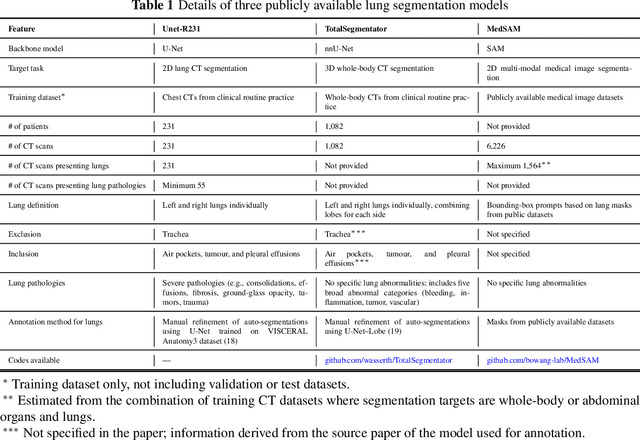

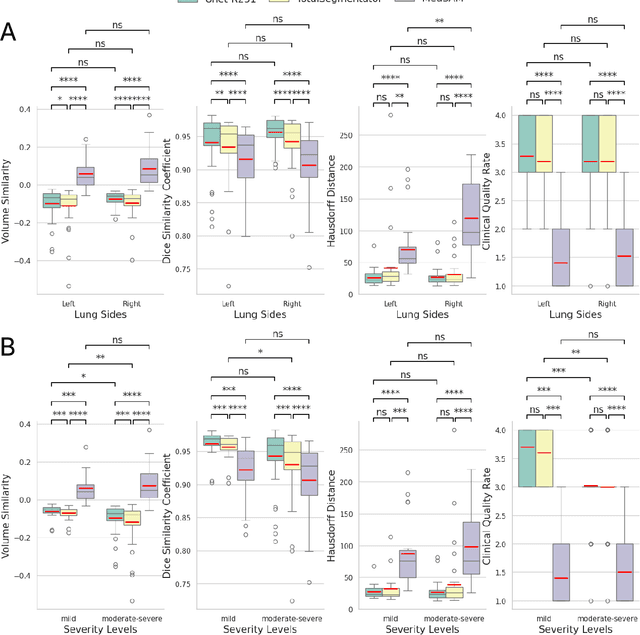
This study evaluates publicly available deep-learning based lung segmentation models in transplant-eligible patients to determine their performance across disease severity levels, pathology categories, and lung sides, and to identify limitations impacting their use in preoperative planning in lung transplantation. This retrospective study included 32 patients who underwent chest CT scans at Duke University Health System between 2017 and 2019 (total of 3,645 2D axial slices). Patients with standard axial CT scans were selected based on the presence of two or more lung pathologies of varying severity. Lung segmentation was performed using three previously developed deep learning models: Unet-R231, TotalSegmentator, MedSAM. Performance was assessed using quantitative metrics (volumetric similarity, Dice similarity coefficient, Hausdorff distance) and a qualitative measure (four-point clinical acceptability scale). Unet-R231 consistently outperformed TotalSegmentator and MedSAM in general, for different severity levels, and pathology categories (p<0.05). All models showed significant performance declines from mild to moderate-to-severe cases, particularly in volumetric similarity (p<0.05), without significant differences among lung sides or pathology types. Unet-R231 provided the most accurate automated lung segmentation among evaluated models with TotalSegmentator being a close second, though their performance declined significantly in moderate-to-severe cases, emphasizing the need for specialized model fine-tuning in severe pathology contexts.
BreastSegNet: Multi-label Segmentation of Breast MRI
Jul 18, 2025Breast MRI provides high-resolution imaging critical for breast cancer screening and preoperative staging. However, existing segmentation methods for breast MRI remain limited in scope, often focusing on only a few anatomical structures, such as fibroglandular tissue or tumors, and do not cover the full range of tissues seen in scans. This narrows their utility for quantitative analysis. In this study, we present BreastSegNet, a multi-label segmentation algorithm for breast MRI that covers nine anatomical labels: fibroglandular tissue (FGT), vessel, muscle, bone, lesion, lymph node, heart, liver, and implant. We manually annotated a large set of 1123 MRI slices capturing these structures with detailed review and correction from an expert radiologist. Additionally, we benchmark nine segmentation models, including U-Net, SwinUNet, UNet++, SAM, MedSAM, and nnU-Net with multiple ResNet-based encoders. Among them, nnU-Net ResEncM achieves the highest average Dice scores of 0.694 across all labels. It performs especially well on heart, liver, muscle, FGT, and bone, with Dice scores exceeding 0.73, and approaching 0.90 for heart and liver. All model code and weights are publicly available, and we plan to release the data at a later date.
CrowdTrack: A Benchmark for Difficult Multiple Pedestrian Tracking in Real Scenarios
Jul 03, 2025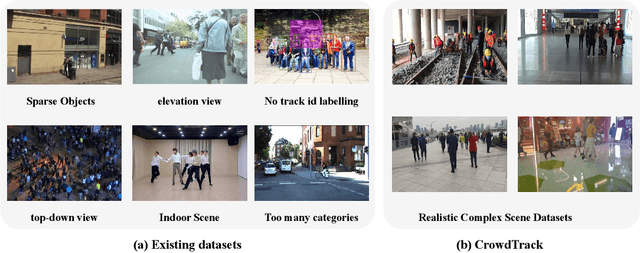
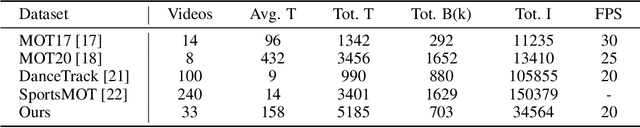
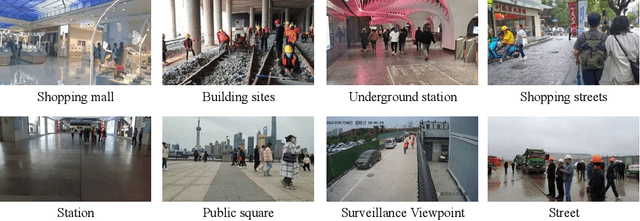
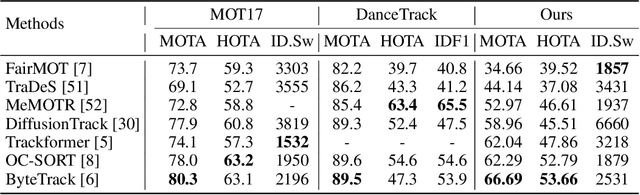
Multi-object tracking is a classic field in computer vision. Among them, pedestrian tracking has extremely high application value and has become the most popular research category. Existing methods mainly use motion or appearance information for tracking, which is often difficult in complex scenarios. For the motion information, mutual occlusions between objects often prevent updating of the motion state; for the appearance information, non-robust results are often obtained due to reasons such as only partial visibility of the object or blurred images. Although learning how to perform tracking in these situations from the annotated data is the simplest solution, the existing MOT dataset fails to satisfy this solution. Existing methods mainly have two drawbacks: relatively simple scene composition and non-realistic scenarios. Although some of the video sequences in existing dataset do not have the above-mentioned drawbacks, the number is far from adequate for research purposes. To this end, we propose a difficult large-scale dataset for multi-pedestrian tracking, shot mainly from the first-person view and all from real-life complex scenarios. We name it ``CrowdTrack'' because there are numerous objects in most of the sequences. Our dataset consists of 33 videos, containing a total of 5,185 trajectories. Each object is annotated with a complete bounding box and a unique object ID. The dataset will provide a platform to facilitate the development of algorithms that remain effective in complex situations. We analyzed the dataset comprehensively and tested multiple SOTA models on our dataset. Besides, we analyzed the performance of the foundation models on our dataset. The dataset and project code is released at: https://github.com/loseevaya/CrowdTrack .
MRI-CORE: A Foundation Model for Magnetic Resonance Imaging
Jun 13, 2025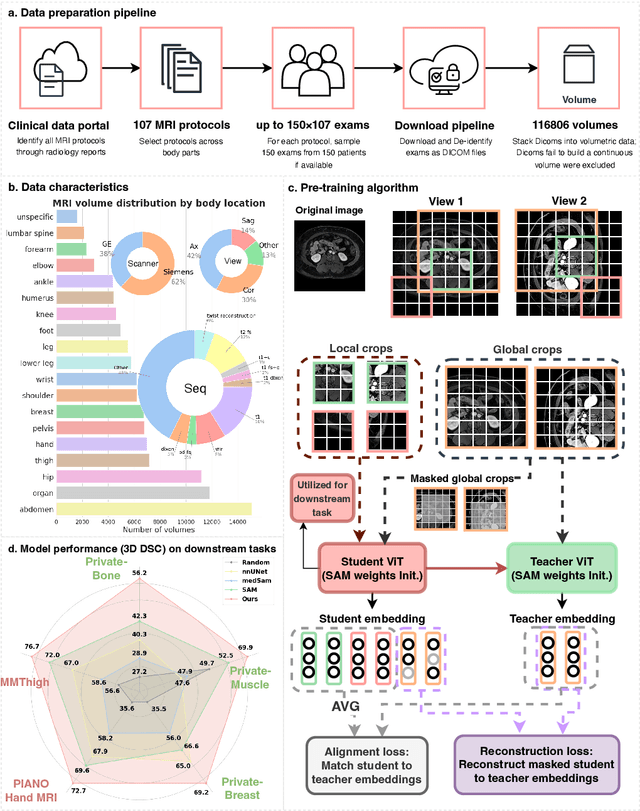
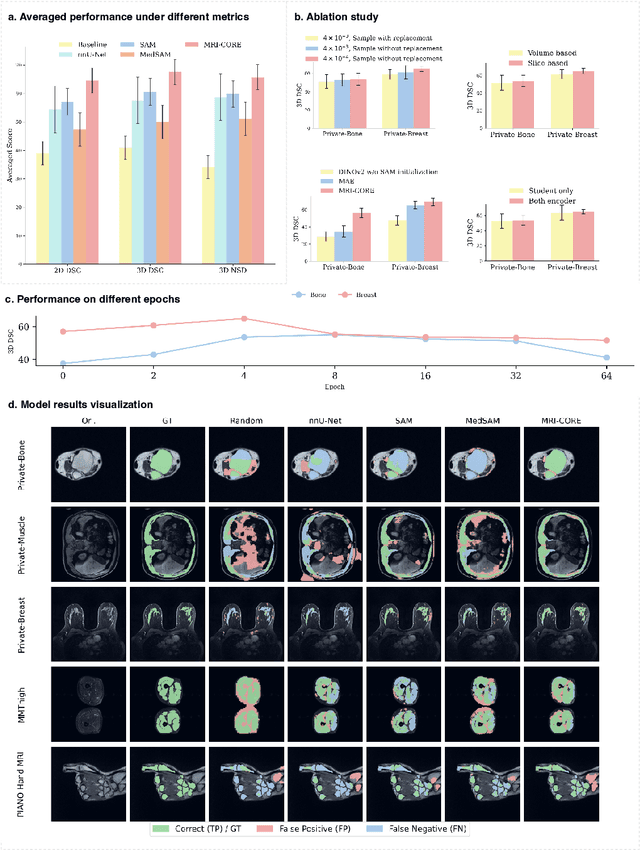
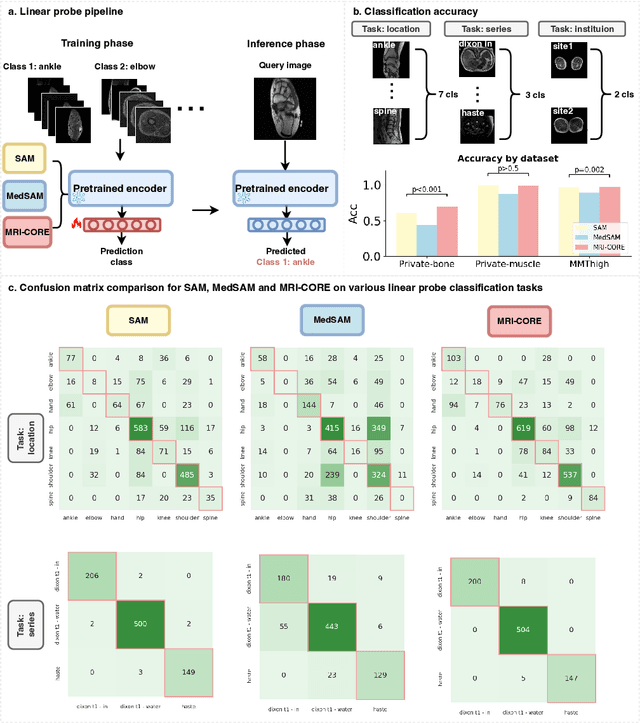
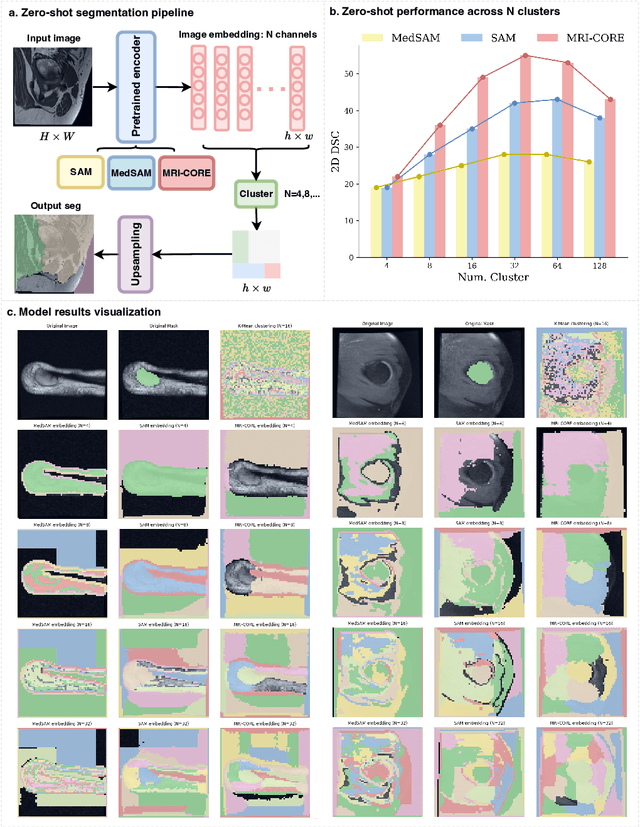
The widespread use of Magnetic Resonance Imaging (MRI) and the rise of deep learning have enabled the development of powerful predictive models for a wide range of diagnostic tasks in MRI, such as image classification or object segmentation. However, training models for specific new tasks often requires large amounts of labeled data, which is difficult to obtain due to high annotation costs and data privacy concerns. To circumvent this issue, we introduce MRI-CORE (MRI COmprehensive Representation Encoder), a vision foundation model pre-trained using more than 6 million slices from over 110,000 MRI volumes across 18 main body locations. Experiments on five diverse object segmentation tasks in MRI demonstrate that MRI-CORE can significantly improve segmentation performance in realistic scenarios with limited labeled data availability, achieving an average gain of 6.97% 3D Dice Coefficient using only 10 annotated slices per task. We further demonstrate new model capabilities in MRI such as classification of image properties including body location, sequence type and institution, and zero-shot segmentation. These results highlight the value of MRI-CORE as a generalist vision foundation model for MRI, potentially lowering the data annotation resource barriers for many applications.
GuidedMorph: Two-Stage Deformable Registration for Breast MRI
May 19, 2025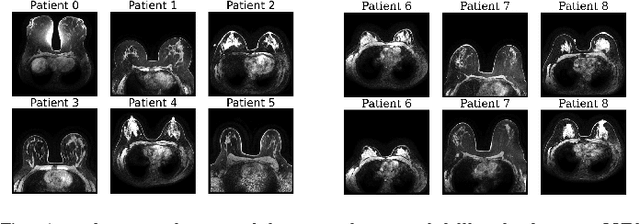
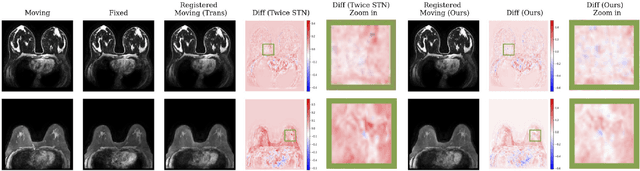
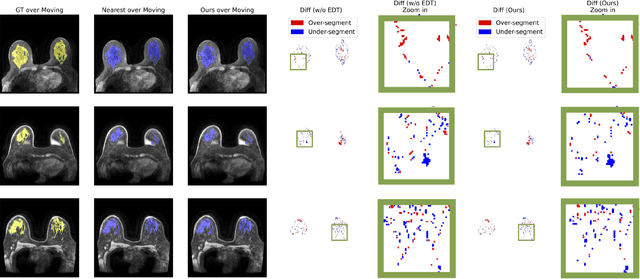
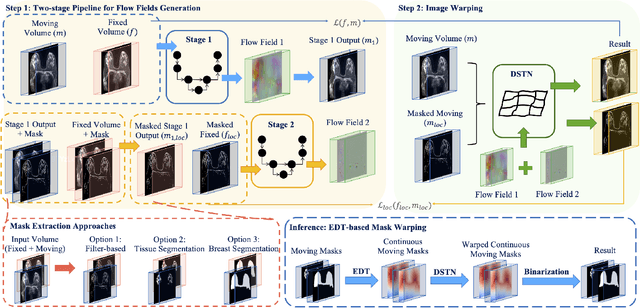
Accurately registering breast MR images from different time points enables the alignment of anatomical structures and tracking of tumor progression, supporting more effective breast cancer detection, diagnosis, and treatment planning. However, the complexity of dense tissue and its highly non-rigid nature pose challenges for conventional registration methods, which primarily focus on aligning general structures while overlooking intricate internal details. To address this, we propose \textbf{GuidedMorph}, a novel two-stage registration framework designed to better align dense tissue. In addition to a single-scale network for global structure alignment, we introduce a framework that utilizes dense tissue information to track breast movement. The learned transformation fields are fused by introducing the Dual Spatial Transformer Network (DSTN), improving overall alignment accuracy. A novel warping method based on the Euclidean distance transform (EDT) is also proposed to accurately warp the registered dense tissue and breast masks, preserving fine structural details during deformation. The framework supports paradigms that require external segmentation models and with image data only. It also operates effectively with the VoxelMorph and TransMorph backbones, offering a versatile solution for breast registration. We validate our method on ISPY2 and internal dataset, demonstrating superior performance in dense tissue, overall breast alignment, and breast structural similarity index measure (SSIM), with notable improvements by over 13.01% in dense tissue Dice, 3.13% in breast Dice, and 1.21% in breast SSIM compared to the best learning-based baseline.
Accelerating Volumetric Medical Image Annotation via Short-Long Memory SAM 2
May 03, 2025Manual annotation of volumetric medical images, such as magnetic resonance imaging (MRI) and computed tomography (CT), is a labor-intensive and time-consuming process. Recent advancements in foundation models for video object segmentation, such as Segment Anything Model 2 (SAM 2), offer a potential opportunity to significantly speed up the annotation process by manually annotating one or a few slices and then propagating target masks across the entire volume. However, the performance of SAM 2 in this context varies. Our experiments show that relying on a single memory bank and attention module is prone to error propagation, particularly at boundary regions where the target is present in the previous slice but absent in the current one. To address this problem, we propose Short-Long Memory SAM 2 (SLM-SAM 2), a novel architecture that integrates distinct short-term and long-term memory banks with separate attention modules to improve segmentation accuracy. We evaluate SLM-SAM 2 on three public datasets covering organs, bones, and muscles across MRI and CT modalities. We show that the proposed method markedly outperforms the default SAM 2, achieving average Dice Similarity Coefficient improvement of 0.14 and 0.11 in the scenarios when 5 volumes and 1 volume are available for the initial adaptation, respectively. SLM-SAM 2 also exhibits stronger resistance to over-propagation, making a notable step toward more accurate automated annotation of medical images for segmentation model development.
Temporal Gaussian Copula For Clinical Multivariate Time Series Data Imputation
Apr 03, 2025The imputation of the Multivariate time series (MTS) is particularly challenging since the MTS typically contains irregular patterns of missing values due to various factors such as instrument failures, interference from irrelevant data, and privacy regulations. Existing statistical methods and deep learning methods have shown promising results in time series imputation. In this paper, we propose a Temporal Gaussian Copula Model (TGC) for three-order MTS imputation. The key idea is to leverage the Gaussian Copula to explore the cross-variable and temporal relationships based on the latent Gaussian representation. Subsequently, we employ an Expectation-Maximization (EM) algorithm to improve robustness in managing data with varying missing rates. Comprehensive experiments were conducted on three real-world MTS datasets. The results demonstrate that our TGC substantially outperforms the state-of-the-art imputation methods. Additionally, the TGC model exhibits stronger robustness to the varying missing ratios in the test dataset. Our code is available at https://github.com/MVL-Lab/TGC-MTS.