 Add to Chrome
 Add to Firefox
 Add to Edge
LIFT: Interpretable truck driving risk prediction with literature-informed fine-tuned LLMs
Oct 25, 2025
This study proposes an interpretable prediction framework with literature-informed fine-tuned (LIFT) LLMs for truck driving risk prediction. The framework integrates an LLM-driven Inference Core that predicts and explains truck driving risk, a Literature Processing Pipeline that filters and summarizes domain-specific literature into a literature knowledge base, and a Result Evaluator that evaluates the prediction performance as well as the interpretability of the LIFT LLM. After fine-tuning on a real-world truck driving risk dataset, the LIFT LLM achieved accurate risk prediction, outperforming benchmark models by 26.7% in recall and 10.1% in F1-score. Furthermore, guided by the literature knowledge base automatically constructed from 299 domain papers, the LIFT LLM produced variable importance ranking consistent with that derived from the benchmark model, while demonstrating robustness in interpretation results to various data sampling conditions. The LIFT LLM also identified potential risky scenarios by detecting key combination of variables in truck driving risk, which were verified by PERMANOVA tests. Finally, we demonstrated the contribution of the literature knowledge base and the fine-tuning process in the interpretability of the LIFT LLM, and discussed the potential of the LIFT LLM in data-driven knowledge discovery.

Optimization of Worker Scheduling at Logistics Depots Using Genetic Algorithms and Simulated Annealing
May 20, 2024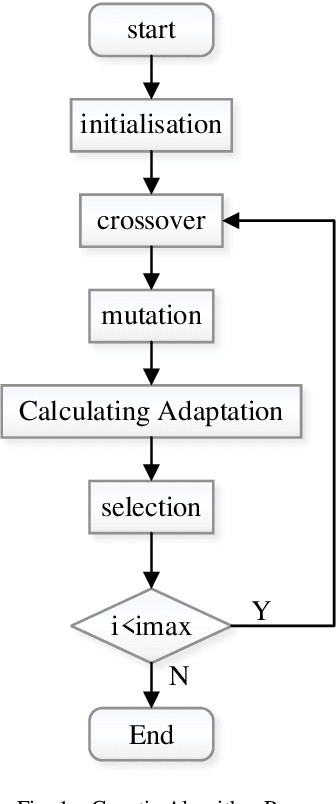
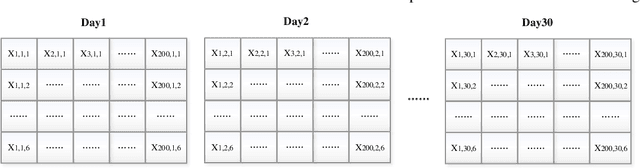
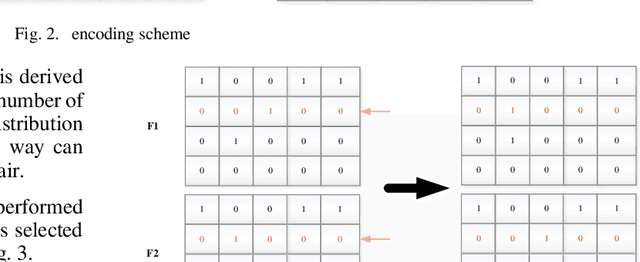
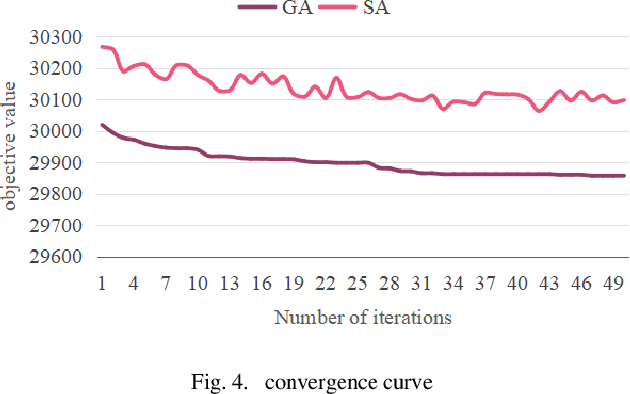
This paper addresses the optimization of scheduling for workers at a logistics depot using a combination of genetic algorithm and simulated annealing algorithm. The efficient scheduling of permanent and temporary workers is crucial for optimizing the efficiency of the logistics depot while minimizing labor usage. The study begins by establishing a 0-1 integer linear programming model, with decision variables determining the scheduling of permanent and temporary workers for each time slot on a given day. The objective function aims to minimize person-days, while constraints ensure fulfillment of hourly labor requirements, limit workers to one time slot per day, cap consecutive working days for permanent workers, and maintain non-negativity and integer constraints. The model is then solved using genetic algorithms and simulated annealing. Results indicate that, for this problem, genetic algorithms outperform simulated annealing in terms of solution quality. The optimal solution reveals a minimum of 29857 person-days.
A Right-of-Way Based Strategy to Implement Safe and Efficient Driving at Non-Signalized Intersections for Automated Vehicles
Apr 22, 2019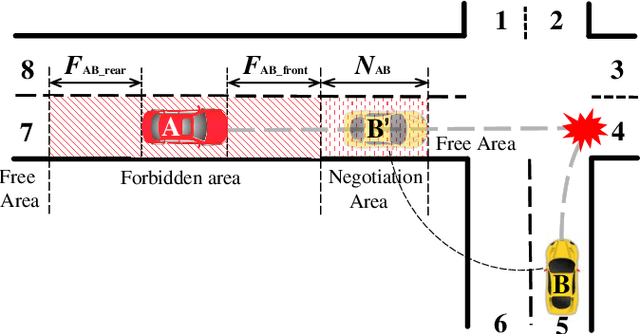
Non-signalized intersection is a typical and common scenario for connected and automated vehicles (CAVs). How to balance safety and efficiency remains difficult for researchers. To improve the original Responsibility Sensitive Safety (RSS) driving strategy on the non-signalized intersection, we propose a new strategy in this paper, based on right-of-way assignment (RWA). The performances of RSS strategy, cooperative driving strategy, and RWA based strategy are tested and compared. Testing results indicate that our strategy yields better traffic efficiency than RSS strategy, but not satisfying as the cooperative driving strategy due to the limited range of communication and the lack of long-term planning. However, our new strategy requires much fewer communication costs among vehicles.