 Add to Chrome
 Add to Firefox
 Add to Edge
Fuel Gauge: Estimating Chain-of-Thought Length Ahead of Time in Large Multimodal Models
Mar 11, 2026
Reasoning Large Multi-modality Models (LMMs) have become the de facto choice for many applications. However, these models rely on a Chain-of-Thought (CoT) process that is lengthy and unpredictable at runtime, often resulting in inefficient use of computational resources (due to memory fragmentation) and sub-optimal accuracy (due to under- and over-thinking). We observe empirically that the CoT process follows a very simple form, whose behavior is independent of the specific generated samples. This suggests that the CoT length can be estimated ahead of time based on a hidden parameter representing the amount of "fuel" available to support the reasoning process. Based on this insight, we propose Fuel Gauge, the first method which extracts this hidden signal and predicts CoT length ahead of time. We demonstrate the utility on the Fuel Gauge on two downstream tasks: predictive KV cache allocation, which addresses memory fragmentation in LMM serving systems, and CoT length modulation, which mitigates under-thinking and over-thinking. Extensive experiments on LMMs across text-only, image-text, and video-text question answering benchmarks demonstrate the effectiveness, generalizability, and practical value of our Fuel Gauge. For example, on the GPQA-Diamond benchmark, our Fuel Gauge achieves less than half the CoT length prediction error compared to the baseline; this translates into a 13.37x reduction in the memory allocation frequency.

BindCLIP: A Unified Contrastive-Generative Representation Learning Framework for Virtual Screening
Feb 16, 2026Virtual screening aims to efficiently identify active ligands from massive chemical libraries for a given target pocket. Recent CLIP-style models such as DrugCLIP enable scalable virtual screening by embedding pockets and ligands into a shared space. However, our analyses indicate that such representations can be insensitive to fine-grained binding interactions and may rely on shortcut correlations in training data, limiting their ability to rank ligands by true binding compatibility. To address these issues, we propose BindCLIP, a unified contrastive-generative representation learning framework for virtual screening. BindCLIP jointly trains pocket and ligand encoders using CLIP-style contrastive learning together with a pocket-conditioned diffusion objective for binding pose generation, so that pose-level supervision directly shapes the retrieval embedding space toward interaction-relevant features. To further mitigate shortcut reliance, we introduce hard-negative augmentation and a ligand-ligand anchoring regularizer that prevents representation collapse. Experiments on two public benchmarks demonstrate consistent improvements over strong baselines. BindCLIP achieves substantial gains on challenging out-of-distribution virtual screening and improves ligand-analogue ranking on the FEP+ benchmark. Together, these results indicate that integrating generative, pose-level supervision with contrastive learning yields more interaction-aware embeddings and improves generalization in realistic screening settings, bringing virtual screening closer to real-world applicability.
De Novo Molecular Generation from Mass Spectra via Many-Body Enhanced Diffusion
Feb 02, 2026Molecular structure generation from mass spectrometry is fundamental for understanding cellular metabolism and discovering novel compounds. Although tandem mass spectrometry (MS/MS) enables the high-throughput acquisition of fragment fingerprints, these spectra often reflect higher-order interactions involving the concerted cleavage of multiple atoms and bonds-crucial for resolving complex isomers and non-local fragmentation mechanisms. However, most existing methods adopt atom-centric and pairwise interaction modeling, overlooking higher-order edge interactions and lacking the capacity to systematically capture essential many-body characteristics for structure generation. To overcome these limitations, we present MBGen, a Many-Body enhanced diffusion framework for de novo molecular structure Generation from mass spectra. By integrating a many-body attention mechanism and higher-order edge modeling, MBGen comprehensively leverages the rich structural information encoded in MS/MS spectra, enabling accurate de novo generation and isomer differentiation for novel molecules. Experimental results on the NPLIB1 and MassSpecGym benchmarks demonstrate that MBGen achieves superior performance, with improvements of up to 230% over state-of-the-art methods, highlighting the scientific value and practical utility of many-body modeling for mass spectrometry-based molecular generation. Further analysis and ablation studies show that our approach effectively captures higher-order interactions and exhibits enhanced sensitivity to complex isomeric and non-local fragmentation information.
A 3D pocket-aware and affinity-guided diffusion model for lead optimization
Apr 29, 2025Molecular optimization, aimed at improving binding affinity or other molecular properties, is a crucial task in drug discovery that often relies on the expertise of medicinal chemists. Recently, deep learning-based 3D generative models showed promise in enhancing the efficiency of molecular optimization. However, these models often struggle to adequately consider binding affinities with protein targets during lead optimization. Herein, we propose a 3D pocket-aware and affinity-guided diffusion model, named Diffleop, to optimize molecules with enhanced binding affinity. The model explicitly incorporates the knowledge of protein-ligand binding affinity to guide the denoising sampling for molecule generation with high affinity. The comprehensive evaluations indicated that Diffleop outperforms baseline models across multiple metrics, especially in terms of binding affinity.
Strategic priorities for transformative progress in advancing biology with proteomics and artificial intelligence
Feb 21, 2025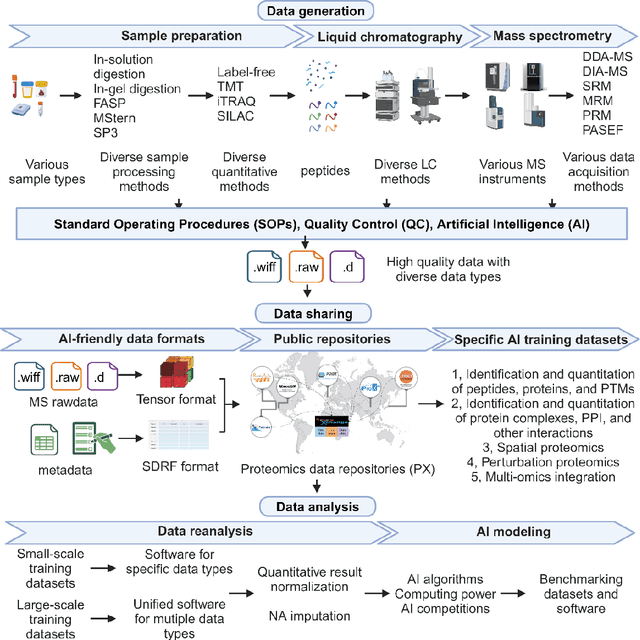
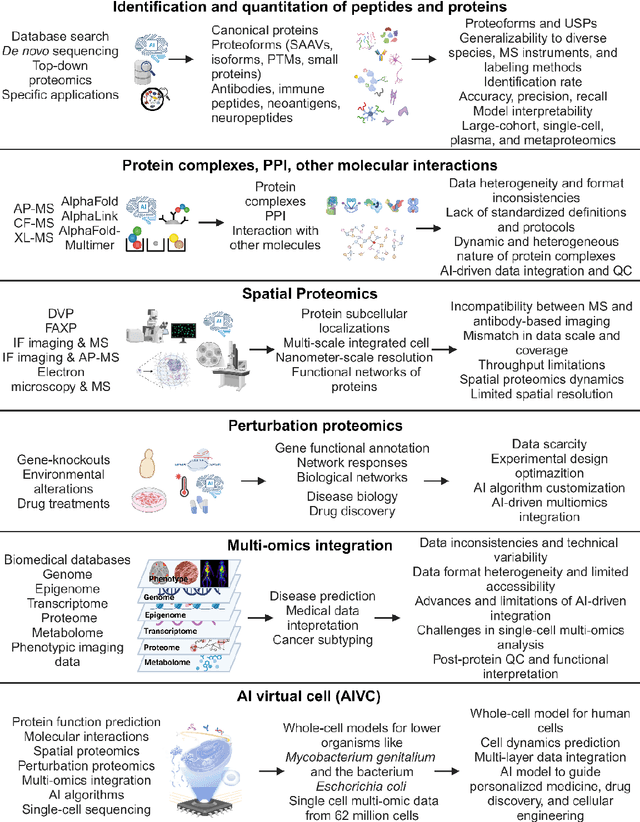
Artificial intelligence (AI) is transforming scientific research, including proteomics. Advances in mass spectrometry (MS)-based proteomics data quality, diversity, and scale, combined with groundbreaking AI techniques, are unlocking new challenges and opportunities in biological discovery. Here, we highlight key areas where AI is driving innovation, from data analysis to new biological insights. These include developing an AI-friendly ecosystem for proteomics data generation, sharing, and analysis; improving peptide and protein identification and quantification; characterizing protein-protein interactions and protein complexes; advancing spatial and perturbation proteomics; integrating multi-omics data; and ultimately enabling AI-empowered virtual cells.
Incorporating Retrieval-based Causal Learning with Information Bottlenecks for Interpretable Graph Neural Networks
Feb 07, 2024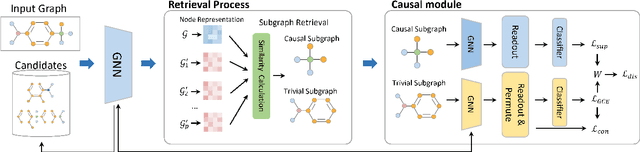
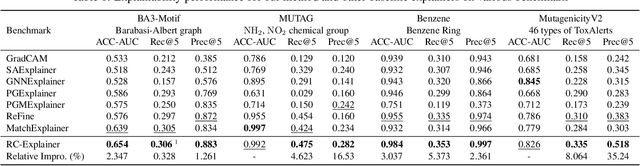
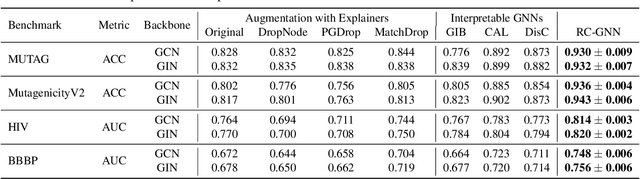
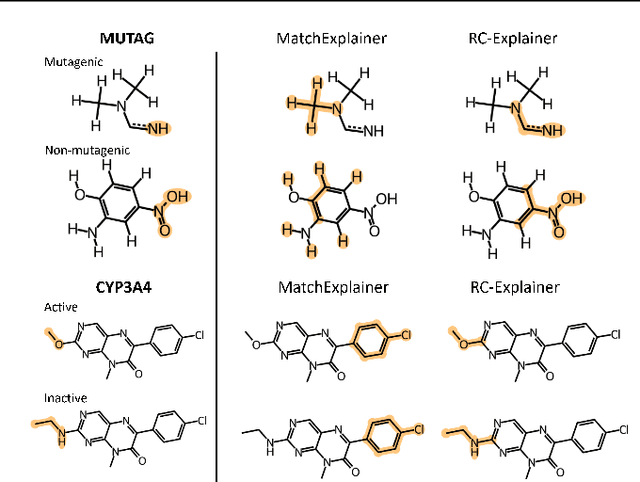
Graph Neural Networks (GNNs) have gained considerable traction for their capability to effectively process topological data, yet their interpretability remains a critical concern. Current interpretation methods are dominated by post-hoc explanations to provide a transparent and intuitive understanding of GNNs. However, they have limited performance in interpreting complicated subgraphs and can't utilize the explanation to advance GNN predictions. On the other hand, transparent GNN models are proposed to capture critical subgraphs. While such methods could improve GNN predictions, they usually don't perform well on explanations. Thus, it is desired for a new strategy to better couple GNN explanation and prediction. In this study, we have developed a novel interpretable causal GNN framework that incorporates retrieval-based causal learning with Graph Information Bottleneck (GIB) theory. The framework could semi-parametrically retrieve crucial subgraphs detected by GIB and compress the explanatory subgraphs via a causal module. The framework was demonstrated to consistently outperform state-of-the-art methods, and to achieve 32.71\% higher precision on real-world explanation scenarios with diverse explanation types. More importantly, the learned explanations were shown able to also improve GNN prediction performance.
Node-based Knowledge Graph Contrastive Learning for Medical Relationship Prediction
Oct 16, 2023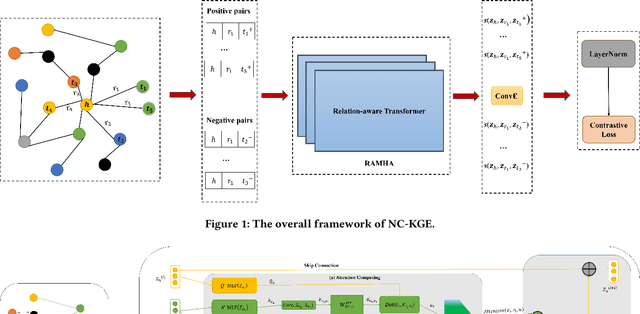
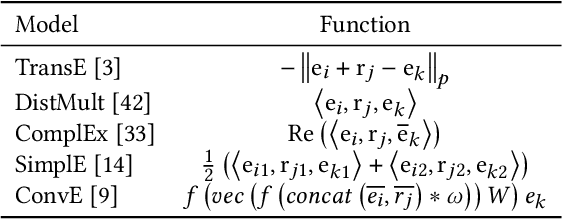
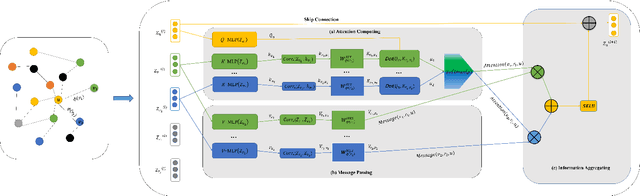
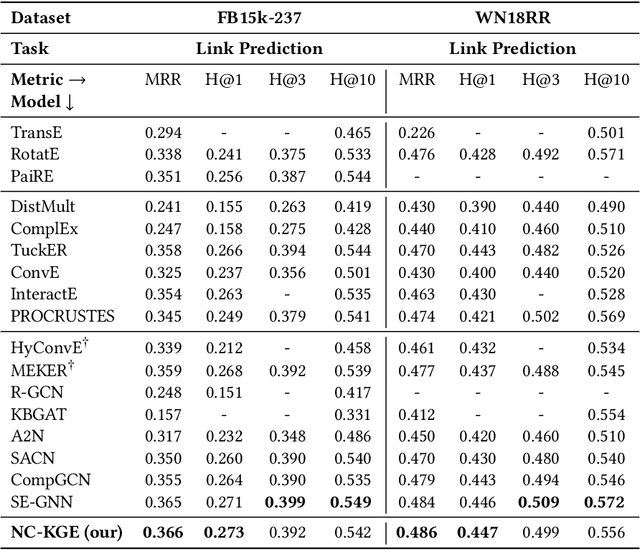
The embedding of Biomedical Knowledge Graphs (BKGs) generates robust representations, valuable for a variety of artificial intelligence applications, including predicting drug combinations and reasoning disease-drug relationships. Meanwhile, contrastive learning (CL) is widely employed to enhance the distinctiveness of these representations. However, constructing suitable contrastive pairs for CL, especially within Knowledge Graphs (KGs), has been challenging. In this paper, we proposed a novel node-based contrastive learning method for knowledge graph embedding, NC-KGE. NC-KGE enhances knowledge extraction in embeddings and speeds up training convergence by constructing appropriate contrastive node pairs on KGs. This scheme can be easily integrated with other knowledge graph embedding (KGE) methods. For downstream task such as biochemical relationship prediction, we have incorporated a relation-aware attention mechanism into NC-KGE, focusing on the semantic relationships and node interactions. Extensive experiments show that NC-KGE performs competitively with state-of-the-art models on public datasets like FB15k-237 and WN18RR. Particularly in biomedical relationship prediction tasks, NC-KGE outperforms all baselines on datasets such as PharmKG8k-28, DRKG17k-21, and BioKG72k-14, especially in predicting drug combination relationships. We release our code at https://github.com/zhi520/NC-KGE.
Efficient Low-rank Backpropagation for Vision Transformer Adaptation
Sep 26, 2023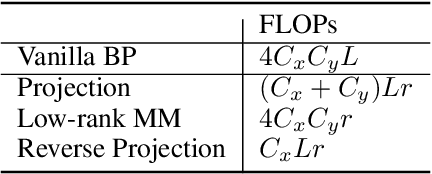
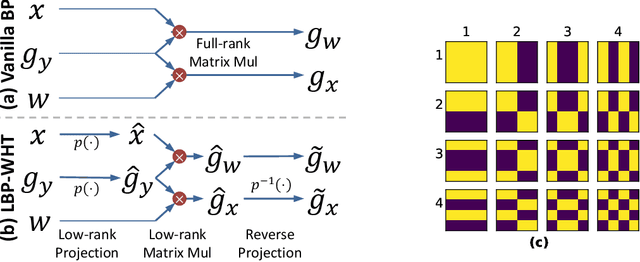
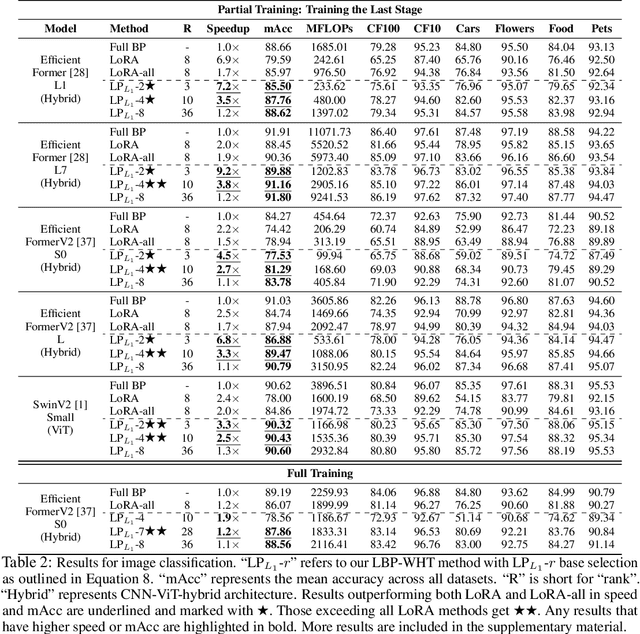
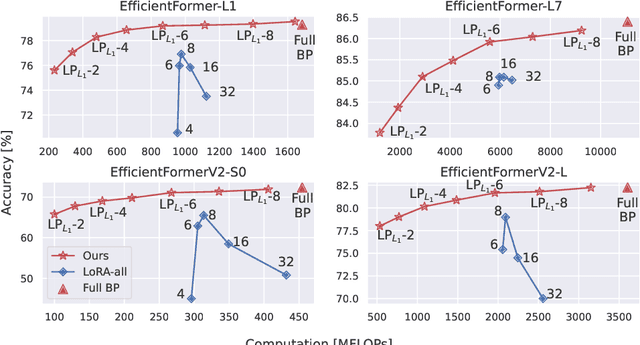
The increasing scale of vision transformers (ViT) has made the efficient fine-tuning of these large models for specific needs a significant challenge in various applications. This issue originates from the computationally demanding matrix multiplications required during the backpropagation process through linear layers in ViT. In this paper, we tackle this problem by proposing a new Low-rank BackPropagation via Walsh-Hadamard Transformation (LBP-WHT) method. Intuitively, LBP-WHT projects the gradient into a low-rank space and carries out backpropagation. This approach substantially reduces the computation needed for adapting ViT, as matrix multiplication in the low-rank space is far less resource-intensive. We conduct extensive experiments with different models (ViT, hybrid convolution-ViT model) on multiple datasets to demonstrate the effectiveness of our method. For instance, when adapting an EfficientFormer-L1 model on CIFAR100, our LBP-WHT achieves 10.4% higher accuracy than the state-of-the-art baseline, while requiring 9 MFLOPs less computation. As the first work to accelerate ViT adaptation with low-rank backpropagation, our LBP-WHT method is complementary to many prior efforts and can be combined with them for better performance.
TIPS: Topologically Important Path Sampling for Anytime Neural Networks
May 13, 2023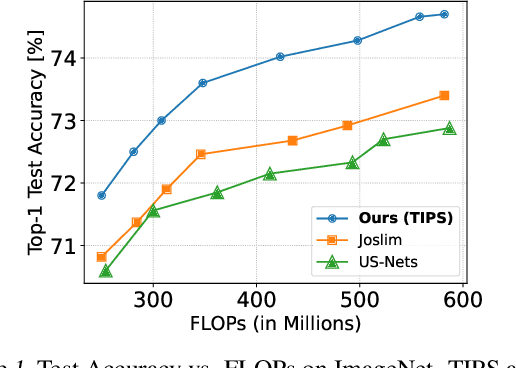
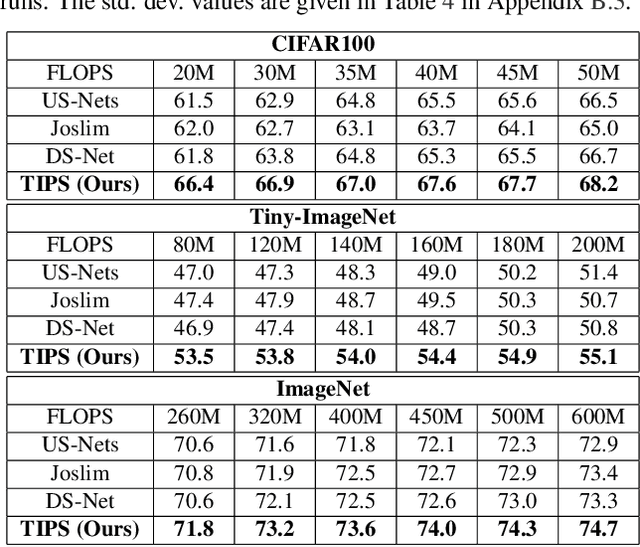
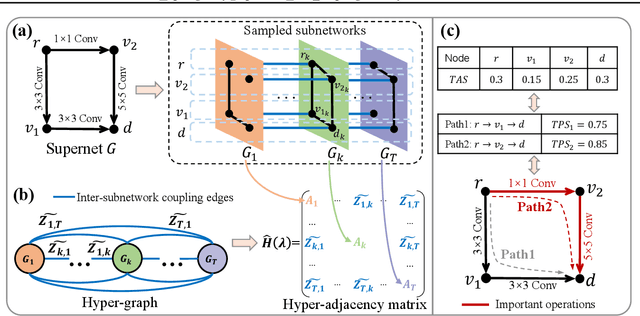
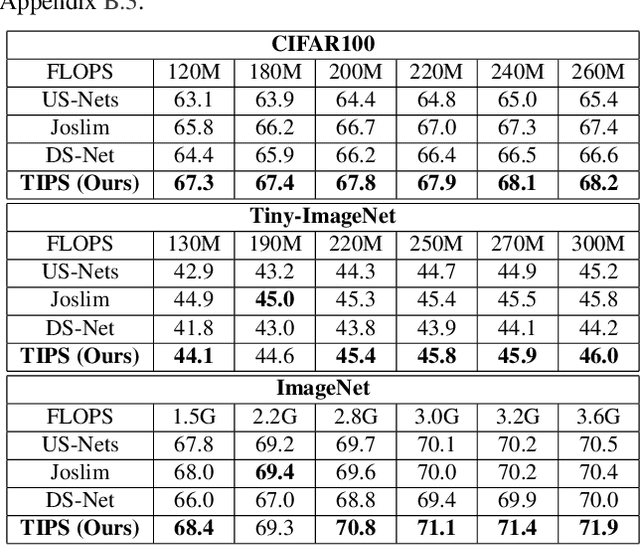
Anytime neural networks (AnytimeNNs) are a promising solution to adaptively adjust the model complexity at runtime under various hardware resource constraints. However, the manually-designed AnytimeNNs are biased by designers' prior experience and thus provide sub-optimal solutions. To address the limitations of existing hand-crafted approaches, we first model the training process of AnytimeNNs as a discrete-time Markov chain (DTMC) and use it to identify the paths that contribute the most to the training of AnytimeNNs. Based on this new DTMC-based analysis, we further propose TIPS, a framework to automatically design AnytimeNNs under various hardware constraints. Our experimental results show that TIPS can improve the convergence rate and test accuracy of AnytimeNNs. Compared to the existing AnytimeNNs approaches, TIPS improves the accuracy by 2%-6.6% on multiple datasets and achieves SOTA accuracy-FLOPs tradeoffs.
Retrieval-based Knowledge Augmented Vision Language Pre-training
Apr 27, 2023With recent progress in large-scale vision and language representation learning, Vision Language Pretraining (VLP) models have achieved promising improvements on various multi-modal downstream tasks. Albeit powerful, these pre-training models still do not take advantage of world knowledge, which is implicit in multi-modal data but comprises abundant and complementary information. In this work, we propose a REtrieval-based knowledge Augmented Vision Language Pre-training model (REAVL), which retrieves world knowledge from knowledge graphs (KGs) and incorporates them in vision-language pre-training. REAVL has two core components: a knowledge retriever that retrieves knowledge given multi-modal data, and a knowledge-augmented model that fuses multi-modal data and knowledge. By novelly unifying four knowledge-aware self-supervised tasks, REAVL promotes the mutual integration of multi-modal data and knowledge by fusing explicit knowledge with vision-language pairs for masked multi-modal data modeling and KG relational reasoning. Empirical experiments show that REAVL achieves new state-of-the-art performance uniformly on knowledge-based vision-language understanding and multimodal entity linking tasks, and competitive results on general vision-language tasks while only using 0.2% pre-training data of the best models.