 Add to Chrome
 Add to Firefox
 Add to Edge
BioDCASE 2026 Challenge Baseline for Cross-Domain Mosquito Species Classification
Mar 20, 2026
Mosquito-borne diseases affect more than one billion people each year and cause close to one million deaths. Traditional surveillance methods rely on traps and manual identification that are slow, labor-intensive, and difficult to scale. Audio-based mosquito monitoring offers a non-destructive, lower-cost, and more scalable complement to trap-based surveillance, but reliable species classification remains difficult under real-world recording conditions. Mosquito flight tones are narrow-band, often low in signal-to-noise ratio, and easily masked by background noise, and recordings for several epidemiologically relevant species remain limited, creating pronounced class imbalance. Variation across devices, environments, and collection protocols further increases the difficulty of robust classification. Such variation can cause models to rely on domain-specific recording artefacts rather than species-relevant acoustic cues, which makes transfer to new acquisition settings difficult. The BioDCASE 2026 Cross-Domain Mosquito Species Classification (CD-MSC) challenge is designed around this deployment problem by evaluating performance on both seen and unseen domains. This paper presents the official baseline system and evaluation pipeline as a simple, fully reproducible reference for the CD-MSC challenge task. The baseline uses log-mel features and a multitemporal resolution convolutional neural network (MTRCNN) with species and auxiliary domain outputs, together with complete training and test scripts. The baseline system performs strongly on seen domains but degrades markedly on unseen domains, showing that cross-domain generalisation, rather than within-domain recognition, is the central challenge for practical mosquito species classification from multi-source bioacoustic recordings.

Geo-ATBench: A Benchmark for Geospatial Audio Tagging with Geospatial Semantic Context
Mar 11, 2026Environmental sound understanding in computational auditory scene analysis (CASA) is often formulated as an audio-only recognition problem. This formulation leaves a persistent drawback in multi-label audio tagging (AT): acoustic similarity can make certain events difficult to separate from waveforms alone. In such cases, disambiguating cues often lie outside the waveform. Geospatial semantic context (GSC), derived from geographic information system data, e.g., points of interest (POI), provides location-tied environmental priors that can help reduce this ambiguity. A systematic study of this direction is enabled through the proposed geospatial audio tagging (Geo-AT) task, which conditions multi-label sound event tagging on GSC alongside audio. To benchmark Geo-AT, Geo-ATBench is introduced as a polyphonic audio benchmark with geographical annotations, containing 10.71 hours of audio across 28 event categories; each clip is paired with a GSC representation from 11 semantic context categories. GeoFusion-AT is proposed as a unified geo-audio fusion framework that evaluates feature-, representation-, and decision-level fusion on representative audio backbones, with audio- and GSC-only baselines. Results show that incorporating GSC improves AT performance, especially on acoustically confounded labels, indicating geospatial semantics provide effective priors beyond audio alone. A crowdsourced listening study with 10 participants on 579 samples shows that there is no significant difference in performance between models on Geo-ATBench labels and aggregated human labels, supporting Geo-ATBench as a human-aligned benchmark. The Geo-AT task, benchmark Geo-ATBench, and reproducible geo-audio fusion framework GeoFusion-AT provide a foundation for studying AT with geospatial semantic context within the CASA community. Dataset, code, models are on homepage (https://github.com/WuYanru2002/Geo-ATBench).
Exploring Differences between Human Perception and Model Inference in Audio Event Recognition
Sep 10, 2024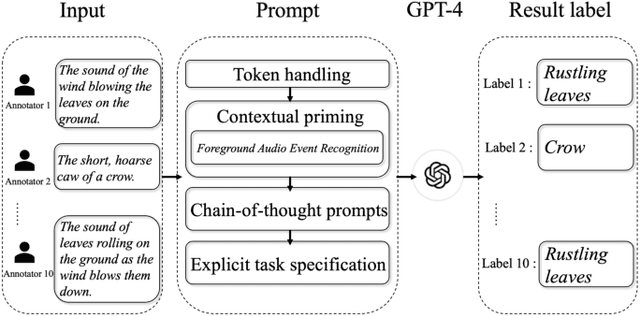
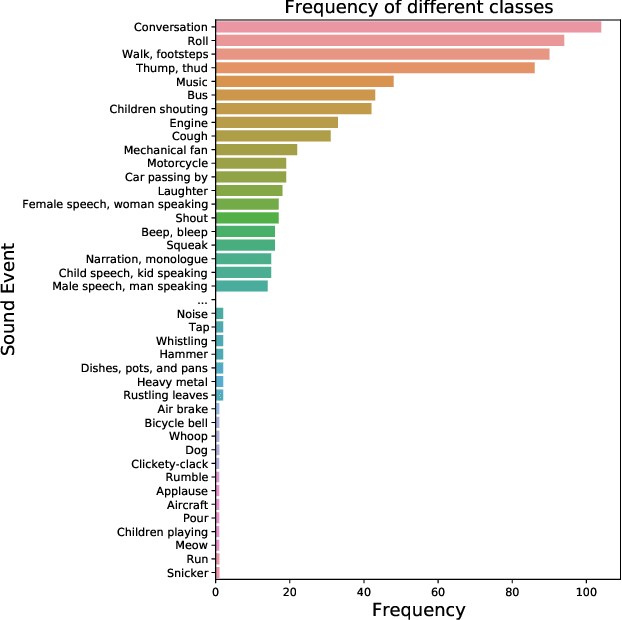
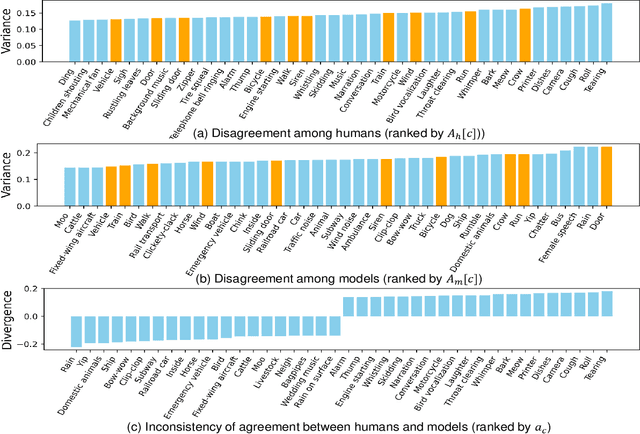
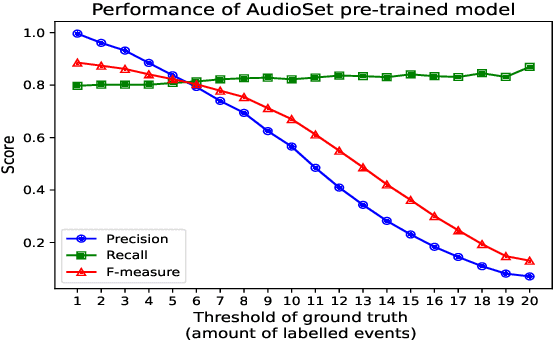
Audio Event Recognition (AER) traditionally focuses on detecting and identifying audio events. Most existing AER models tend to detect all potential events without considering their varying significance across different contexts. This makes the AER results detected by existing models often have a large discrepancy with human auditory perception. Although this is a critical and significant issue, it has not been extensively studied by the Detection and Classification of Sound Scenes and Events (DCASE) community because solving it is time-consuming and labour-intensive. To address this issue, this paper introduces the concept of semantic importance in AER, focusing on exploring the differences between human perception and model inference. This paper constructs a Multi-Annotated Foreground Audio Event Recognition (MAFAR) dataset, which comprises audio recordings labelled by 10 professional annotators. Through labelling frequency and variance, the MAFAR dataset facilitates the quantification of semantic importance and analysis of human perception. By comparing human annotations with the predictions of ensemble pre-trained models, this paper uncovers a significant gap between human perception and model inference in both semantic identification and existence detection of audio events. Experimental results reveal that human perception tends to ignore subtle or trivial events in the event semantic identification, while model inference is easily affected by events with noises. Meanwhile, in event existence detection, models are usually more sensitive than humans.
Soundscape Captioning using Sound Affective Quality Network and Large Language Model
Jun 09, 2024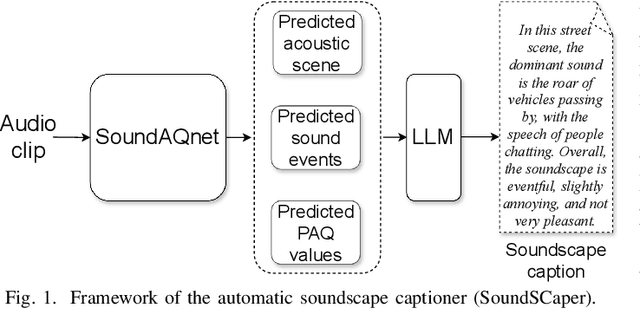
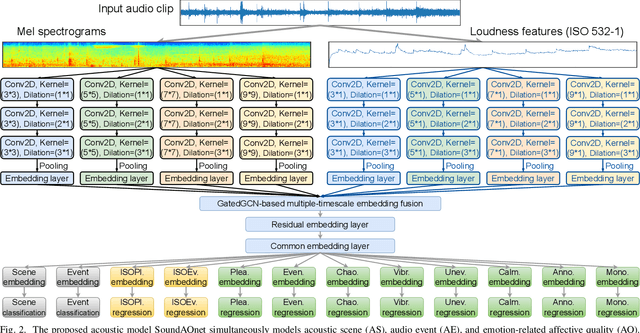
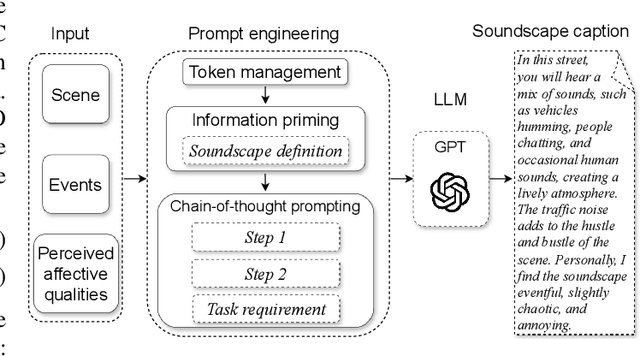
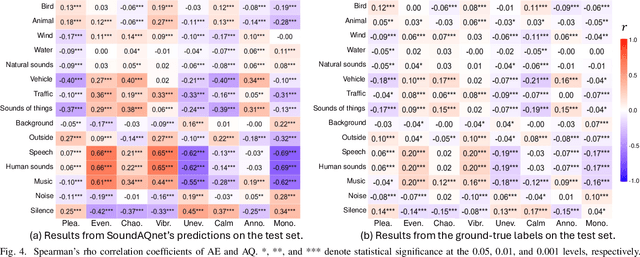
We live in a rich and varied acoustic world, which is experienced by individuals or communities as a soundscape. Computational auditory scene analysis, disentangling acoustic scenes by detecting and classifying events, focuses on objective attributes of sounds, such as their category and temporal characteristics, ignoring the effect of sounds on people and failing to explore the relationship between sounds and the emotions they evoke within a context. To fill this gap and to automate soundscape analysis, which traditionally relies on labour-intensive subjective ratings and surveys, we propose the soundscape captioning (SoundSCap) task. SoundSCap generates context-aware soundscape descriptions by capturing the acoustic scene, event information, and the corresponding human affective qualities. To this end, we propose an automatic soundscape captioner (SoundSCaper) composed of an acoustic model, SoundAQnet, and a general large language model (LLM). SoundAQnet simultaneously models multi-scale information about acoustic scenes, events, and perceived affective qualities, while LLM generates soundscape captions by parsing the information captured by SoundAQnet to a common language. The soundscape caption's quality is assessed by a jury of 16 audio/soundscape experts. The average score (out of 5) of SoundSCaper-generated captions is lower than the score of captions generated by two soundscape experts by 0.21 and 0.25, respectively, on the evaluation set and the model-unknown mixed external dataset with varying lengths and acoustic properties, but the differences are not statistically significant. Overall, SoundSCaper-generated captions show promising performance compared to captions annotated by soundscape experts. The models' code, LLM scripts, human assessment data and instructions, and expert evaluation statistics are all publicly available.
No More Mumbles: Enhancing Robot Intelligibility through Speech Adaptation
May 15, 2024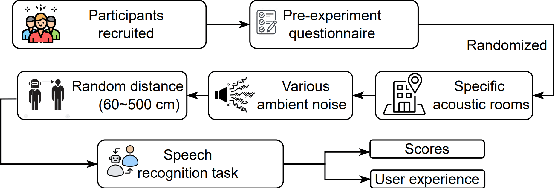
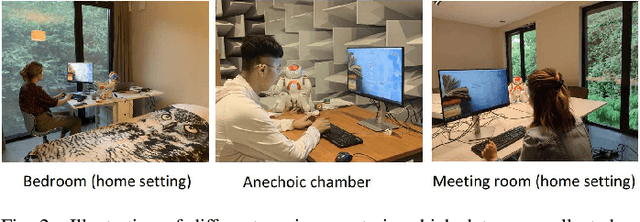
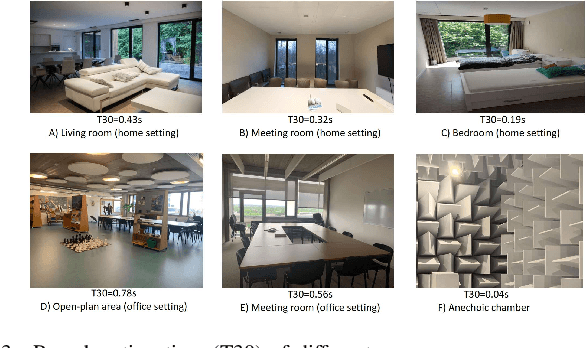
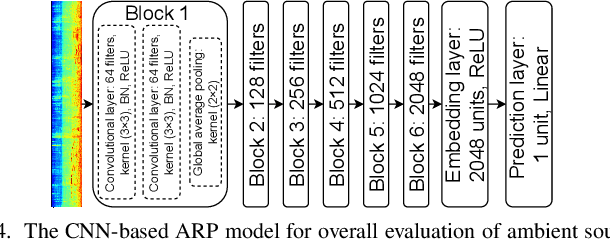
Spoken language interaction is at the heart of interpersonal communication, and people flexibly adapt their speech to different individuals and environments. It is surprising that robots, and by extension other digital devices, are not equipped to adapt their speech and instead rely on fixed speech parameters, which often hinder comprehension by the user. We conducted a speech comprehension study involving 39 participants who were exposed to different environmental and contextual conditions. During the experiment, the robot articulated words using different vocal parameters, and the participants were tasked with both recognising the spoken words and rating their subjective impression of the robot's speech. The experiment's primary outcome shows that spaces with good acoustic quality positively correlate with intelligibility and user experience. However, increasing the distance between the user and the robot exacerbated the user experience, while distracting background sounds significantly reduced speech recognition accuracy and user satisfaction. We next built an adaptive voice for the robot. For this, the robot needs to know how difficult it is for a user to understand spoken language in a particular setting. We present a prediction model that rates how annoying the ambient acoustic environment is and, consequentially, how hard it is to understand someone in this setting. Then, we develop a convolutional neural network model to adapt the robot's speech parameters to different users and spaces, while taking into account the influence of ambient acoustics on intelligibility. Finally, we present an evaluation with 27 users, demonstrating superior intelligibility and user experience with adaptive voice parameters compared to fixed voice.
Boosting Adversarial Transferability across Model Genus by Deformation-Constrained Warping
Feb 06, 2024Adversarial examples generated by a surrogate model typically exhibit limited transferability to unknown target systems. To address this problem, many transferability enhancement approaches (e.g., input transformation and model augmentation) have been proposed. However, they show poor performances in attacking systems having different model genera from the surrogate model. In this paper, we propose a novel and generic attacking strategy, called Deformation-Constrained Warping Attack (DeCoWA), that can be effectively applied to cross model genus attack. Specifically, DeCoWA firstly augments input examples via an elastic deformation, namely Deformation-Constrained Warping (DeCoW), to obtain rich local details of the augmented input. To avoid severe distortion of global semantics led by random deformation, DeCoW further constrains the strength and direction of the warping transformation by a novel adaptive control strategy. Extensive experiments demonstrate that the transferable examples crafted by our DeCoWA on CNN surrogates can significantly hinder the performance of Transformers (and vice versa) on various tasks, including image classification, video action recognition, and audio recognition. Code is made available at https://github.com/LinQinLiang/DeCoWA.
Multi-level graph learning for audio event classification and human-perceived annoyance rating prediction
Dec 15, 2023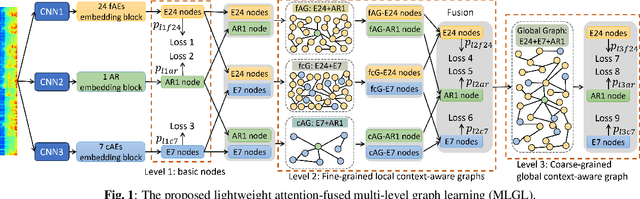
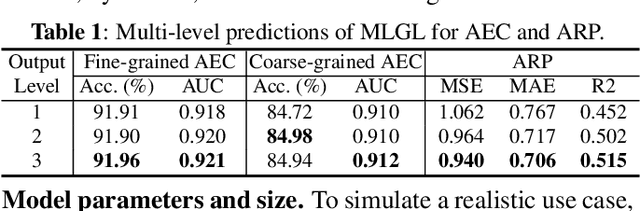
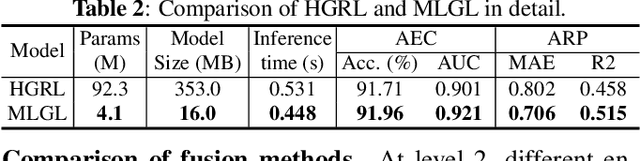
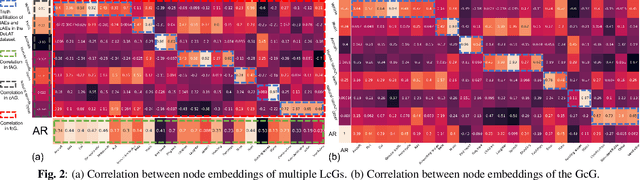
WHO's report on environmental noise estimates that 22 M people suffer from chronic annoyance related to noise caused by audio events (AEs) from various sources. Annoyance may lead to health issues and adverse effects on metabolic and cognitive systems. In cities, monitoring noise levels does not provide insights into noticeable AEs, let alone their relations to annoyance. To create annoyance-related monitoring, this paper proposes a graph-based model to identify AEs in a soundscape, and explore relations between diverse AEs and human-perceived annoyance rating (AR). Specifically, this paper proposes a lightweight multi-level graph learning (MLGL) based on local and global semantic graphs to simultaneously perform audio event classification (AEC) and human annoyance rating prediction (ARP). Experiments show that: 1) MLGL with 4.1 M parameters improves AEC and ARP results by using semantic node information in local and global context aware graphs; 2) MLGL captures relations between coarse and fine-grained AEs and AR well; 3) Statistical analysis of MLGL results shows that some AEs from different sources significantly correlate with AR, which is consistent with previous research on human perception of these sound sources.
AI-based soundscape analysis: Jointly identifying sound sources and predicting annoyance
Nov 15, 2023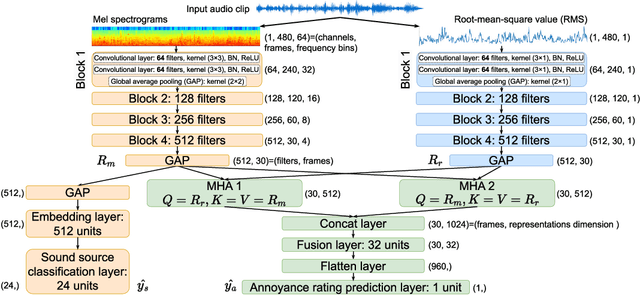
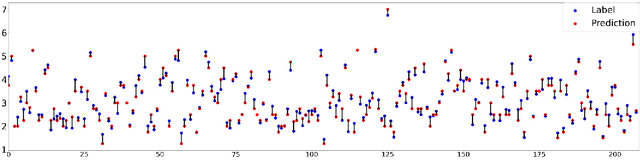
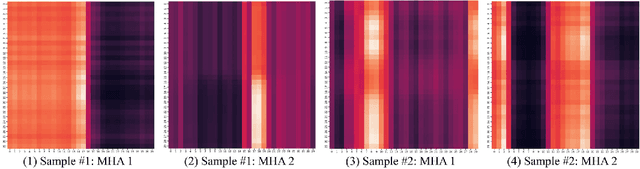
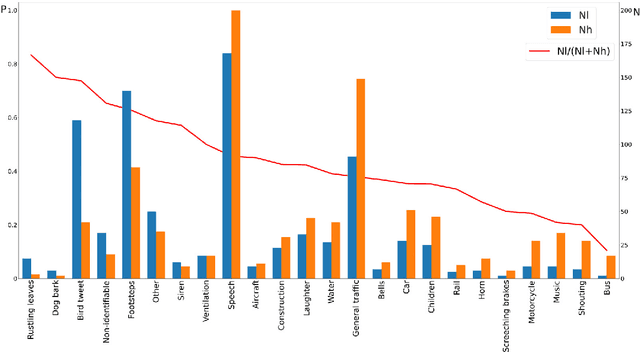
Soundscape studies typically attempt to capture the perception and understanding of sonic environments by surveying users. However, for long-term monitoring or assessing interventions, sound-signal-based approaches are required. To this end, most previous research focused on psycho-acoustic quantities or automatic sound recognition. Few attempts were made to include appraisal (e.g., in circumplex frameworks). This paper proposes an artificial intelligence (AI)-based dual-branch convolutional neural network with cross-attention-based fusion (DCNN-CaF) to analyze automatic soundscape characterization, including sound recognition and appraisal. Using the DeLTA dataset containing human-annotated sound source labels and perceived annoyance, the DCNN-CaF is proposed to perform sound source classification (SSC) and human-perceived annoyance rating prediction (ARP). Experimental findings indicate that (1) the proposed DCNN-CaF using loudness and Mel features outperforms the DCNN-CaF using only one of them. (2) The proposed DCNN-CaF with cross-attention fusion outperforms other typical AI-based models and soundscape-related traditional machine learning methods on the SSC and ARP tasks. (3) Correlation analysis reveals that the relationship between sound sources and annoyance is similar for humans and the proposed AI-based DCNN-CaF model. (4) Generalization tests show that the proposed model's ARP in the presence of model-unknown sound sources is consistent with expert expectations and can explain previous findings from the literature on sound-scape augmentation.
* The Journal of the Acoustical Society of America, 154 (5), 3145
Audio Event-Relational Graph Representation Learning for Acoustic Scene Classification
Oct 05, 2023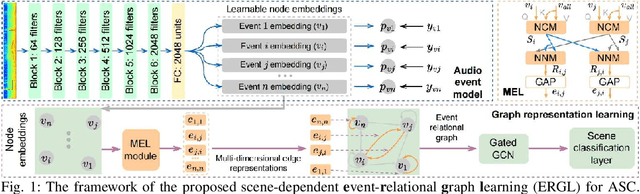
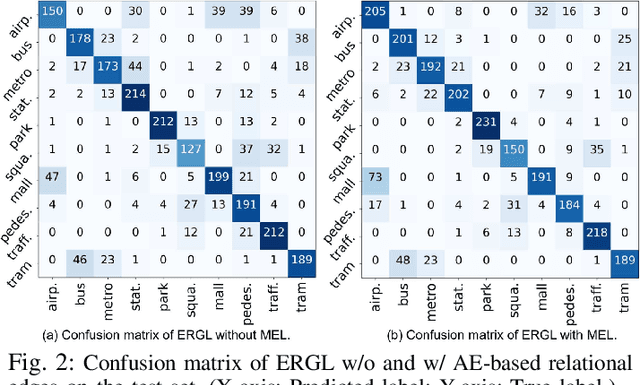
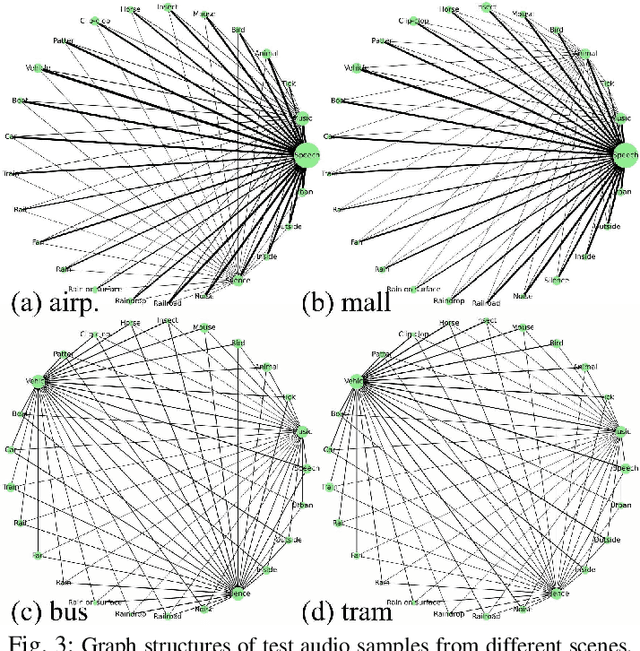

Most deep learning-based acoustic scene classification (ASC) approaches identify scenes based on acoustic features converted from audio clips containing mixed information entangled by polyphonic audio events (AEs). However, these approaches have difficulties in explaining what cues they use to identify scenes. This paper conducts the first study on disclosing the relationship between real-life acoustic scenes and semantic embeddings from the most relevant AEs. Specifically, we propose an event-relational graph representation learning (ERGL) framework for ASC to classify scenes, and simultaneously answer clearly and straightly which cues are used in classifying. In the event-relational graph, embeddings of each event are treated as nodes, while relationship cues derived from each pair of nodes are described by multi-dimensional edge features. Experiments on a real-life ASC dataset show that the proposed ERGL achieves competitive performance on ASC by learning embeddings of only a limited number of AEs. The results show the feasibility of recognizing diverse acoustic scenes based on the audio event-relational graph. Visualizations of graph representations learned by ERGL are available here (https://github.com/Yuanbo2020/ERGL).
Joint Prediction of Audio Event and Annoyance Rating in an Urban Soundscape by Hierarchical Graph Representation Learning
Aug 23, 2023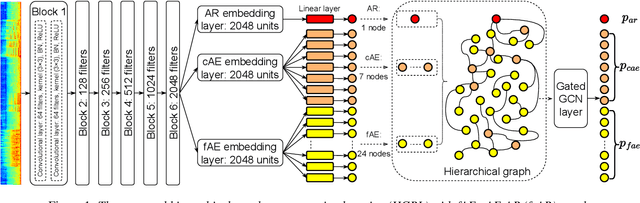
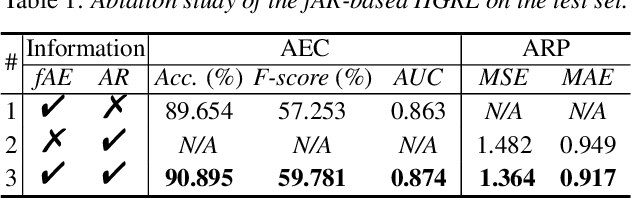
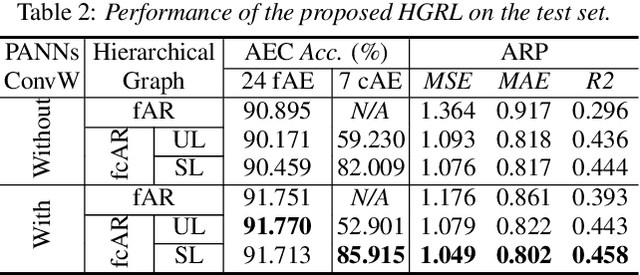
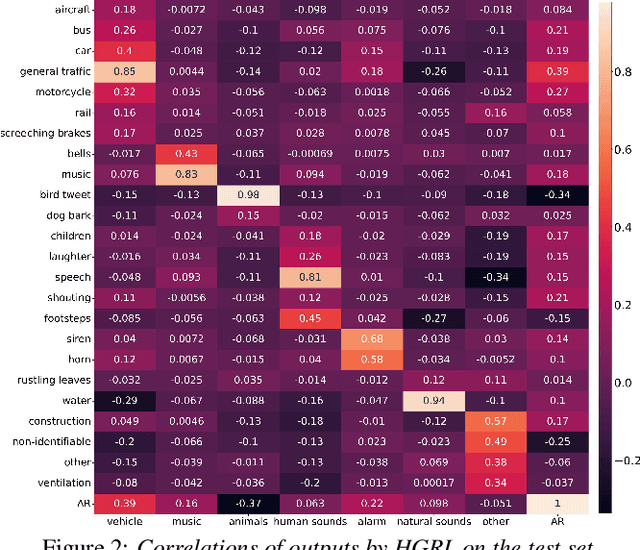
Sound events in daily life carry rich information about the objective world. The composition of these sounds affects the mood of people in a soundscape. Most previous approaches only focus on classifying and detecting audio events and scenes, but may ignore their perceptual quality that may impact humans' listening mood for the environment, e.g. annoyance. To this end, this paper proposes a novel hierarchical graph representation learning (HGRL) approach which links objective audio events (AE) with subjective annoyance ratings (AR) of the soundscape perceived by humans. The hierarchical graph consists of fine-grained event (fAE) embeddings with single-class event semantics, coarse-grained event (cAE) embeddings with multi-class event semantics, and AR embeddings. Experiments show the proposed HGRL successfully integrates AE with AR for AEC and ARP tasks, while coordinating the relations between cAE and fAE and further aligning the two different grains of AE information with the AR.