 Add to Chrome
 Add to Firefox
 Add to Edge
When to Memorize and When to Stop: Gated Recurrent Memory for Long-Context Reasoning
Feb 11, 2026
While reasoning over long context is crucial for various real-world applications, it remains challenging for large language models (LLMs) as they suffer from performance degradation as the context length grows. Recent work MemAgent has tried to tackle this by processing context chunk-by-chunk in an RNN-like loop and updating a textual memory for final answering. However, this naive recurrent memory update faces two crucial drawbacks: (i) memory can quickly explode because it can update indiscriminately, even on evidence-free chunks; and (ii) the loop lacks an exit mechanism, leading to unnecessary computation after even sufficient evidence is collected. To address these issues, we propose GRU-Mem, which incorporates two text-controlled gates for more stable and efficient long-context reasoning. Specifically, in GRU-Mem, the memory only updates when the update gate is open and the recurrent loop will exit immediately once the exit gate is open. To endow the model with such capabilities, we introduce two reward signals $r^{\text{update}}$ and $r^{\text{exit}}$ within end-to-end RL, rewarding the correct updating and exiting behaviors respectively. Experiments on various long-context reasoning tasks demonstrate the effectiveness and efficiency of GRU-Mem, which generally outperforms the vanilla MemAgent with up to 400\% times inference speed acceleration.

Advanced Multimodal Learning for Seizure Detection and Prediction: Concept, Challenges, and Future Directions
Jan 08, 2026Epilepsy is a chronic neurological disorder characterized by recurrent unprovoked seizures, affects over 50 million people worldwide, and poses significant risks, including sudden unexpected death in epilepsy (SUDEP). Conventional unimodal approaches, primarily reliant on electroencephalography (EEG), face several key challenges, including low SNR, nonstationarity, inter- and intrapatient heterogeneity, portability, and real-time applicability in clinical settings. To address these issues, a comprehensive survey highlights the concept of advanced multimodal learning for epileptic seizure detection and prediction (AMLSDP). The survey presents the evolution of epileptic seizure detection (ESD) and prediction (ESP) technologies across different eras. The survey also explores the core challenges of multimodal and non-EEG-based ESD and ESP. To overcome the key challenges of the multimodal system, the survey introduces the advanced processing strategies for efficient AMLSDP. Furthermore, this survey highlights future directions for researchers and practitioners. We believe this work will advance neurotechnology toward wearable and imaging-based solutions for epilepsy monitoring, serving as a valuable resource for future innovations in this domain.
Virtual Width Networks
Nov 17, 2025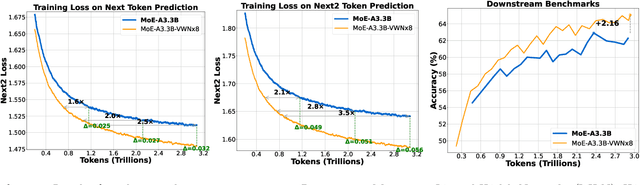
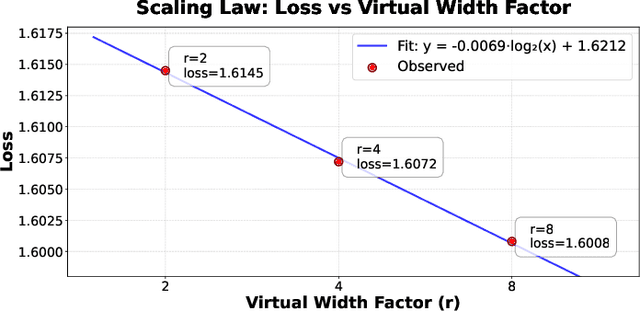
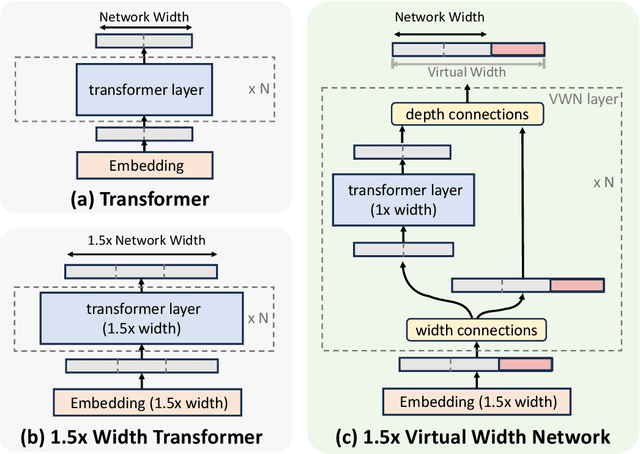
We introduce Virtual Width Networks (VWN), a framework that delivers the benefits of wider representations without incurring the quadratic cost of increasing the hidden size. VWN decouples representational width from backbone width, expanding the embedding space while keeping backbone compute nearly constant. In our large-scale experiment, an 8-times expansion accelerates optimization by over 2 times for next-token and 3 times for next-2-token prediction. The advantage amplifies over training as both the loss gap grows and the convergence-speedup ratio increases, showing that VWN is not only token-efficient but also increasingly effective with scale. Moreover, we identify an approximately log-linear scaling relation between virtual width and loss reduction, offering an initial empirical basis and motivation for exploring virtual-width scaling as a new dimension of large-model efficiency.
Large Language Models Meet Graph Neural Networks: A Perspective of Graph Mining
Dec 26, 2024Graph mining is an important area in data mining and machine learning that involves extracting valuable information from graph-structured data. In recent years, significant progress has been made in this field through the development of graph neural networks (GNNs). However, GNNs are still deficient in generalizing to diverse graph data. Aiming to this issue, Large Language Models (LLMs) could provide new solutions for graph mining tasks with their superior semantic understanding. In this review, we systematically review the combination and application techniques of LLMs and GNNs and present a novel taxonomy for research in this interdisciplinary field, which involves three main categories: GNN-driving-LLM, LLM-driving-GNN, and GNN-LLM-co-driving. Within this framework, we reveal the capabilities of LLMs in enhancing graph feature extraction as well as improving the effectiveness of downstream tasks such as node classification, link prediction, and community detection. Although LLMs have demonstrated their great potential in handling graph-structured data, their high computational requirements and complexity remain challenges. Future research needs to continue to explore how to efficiently fuse LLMs and GNNs to achieve more powerful graph learning and reasoning capabilities and provide new impetus for the development of graph mining techniques.
An Adaptive Plug-and-Play Network for Few-Shot Learning
Feb 18, 2023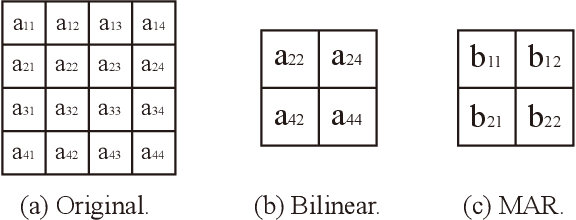
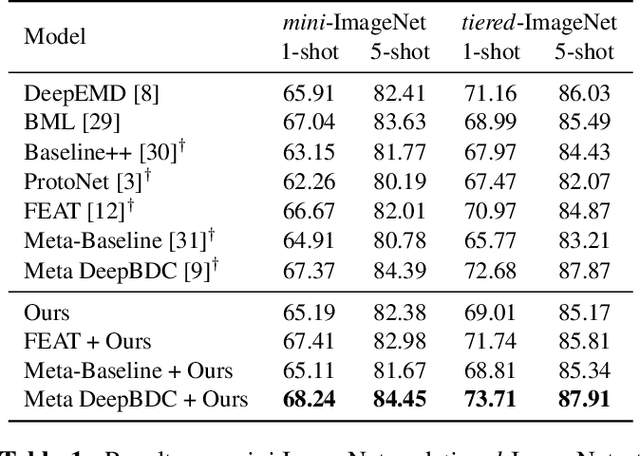
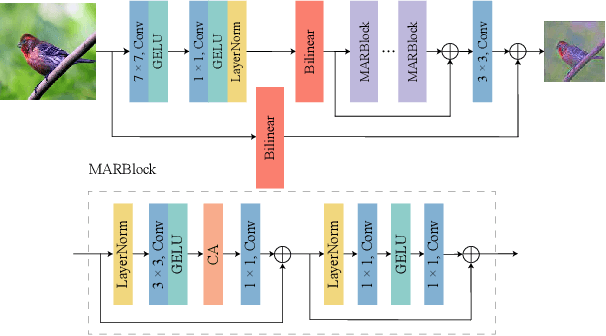
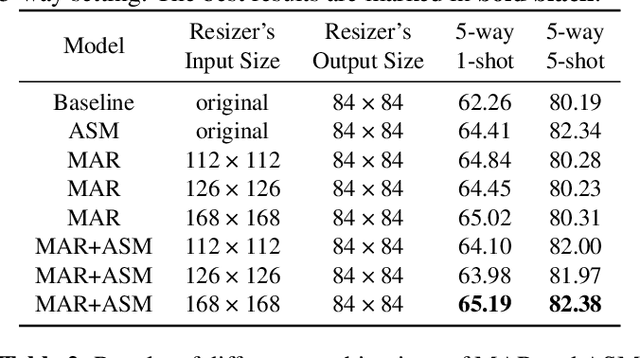
Few-shot learning (FSL) requires a model to classify new samples after learning from only a few samples. While remarkable results are achieved in existing methods, the performance of embedding and metrics determines the upper limit of classification accuracy in FSL. The bottleneck is that deep networks and complex metrics tend to induce overfitting in FSL, making it difficult to further improve the performance. Towards this, we propose plug-and-play model-adaptive resizer (MAR) and adaptive similarity metric (ASM) without any other losses. MAR retains high-resolution details to alleviate the overfitting problem caused by data scarcity, and ASM decouples the relationship between different metrics and then fuses them into an advanced one. Extensive experiments show that the proposed method could boost existing methods on two standard dataset and a fine-grained datasets, and achieve state-of-the-art results on mini-ImageNet and tiered-ImageNet.
* 5 pages, 4 figures