 Add to Chrome
 Add to Firefox
 Add to Edge
Rethinking Molecular OOD Generalization via Target-Aware Source Selection
May 13, 2026
Robust prediction of molecular properties under extreme out-of-distribution (OOD) scenarios is a pivotal bottleneck in AI-driven drug discovery. Current scaffold-splitting protocols fail to obstruct microscopic semantic overlap, predisposing models to shortcut learning and overestimating their true extrapolation capability; meanwhile, conventional domain adaptation paradigms suffer under extreme structural shifts, as blindly aligning heterogeneous source libraries injects topological noise and triggers negative transfer. To address these two challenges, scaffold-cluster out-of-distribution performance evaluation benchmark (SCOPE-BENCH), a benchmark built on cluster-level partitioning in an explicit physicochemical descriptor space, is proposed alongside policy optimization for multi-source adaptation (POMA), a framework that formulates knowledge transfer as a retrieve-compose-adapt pipeline: labeled source scaffolds structurally close to the unlabeled target are first identified as proxy targets; a reinforcement learning policy then adaptively selects the optimal source subset from an exponentially large candidate pool; and dual-scale domain adaptation is finally performed at macroscopic topological and microscopic pharmacophore scales. Evaluations show that prediction errors of state-of-the-art 3D molecular models surge by up to 8.0x on SCOPE-BENCH with a mean of 5.9x, while POMA achieves up to an 11.2% reduction in mean absolute error with an average relative improvement of 6.2% across diverse backbone architectures. Code is available at https://anonymous.4open.science/r/Molecular-OOD-Code-73F6.

From Single-Step Edit Response to Multi-Step Molecular Optimization
May 11, 2026Conditional molecular optimization aims to edit a molecule to realize a specified property shift. In practice, structurally similar molecule data is scarce, while decisions are inherently action-level: at each step, the system must select one local structural edit from a candidate set that is strictly filtered by chemical feasibility rules. This level mismatch between supervision and decision makes oracle-in-the-loop search unstable in molecular optimization. Regressing on property differences between molecule pairs improves data efficiency but relies on oracle-in-the-loop search, entangling transformation effects with global context and providing limited guidance for selecting the next feasible edit, often resorting to oracle-in-the-loop search. For this reason, we propose a response-oriented discrete edit optimization approach comprising two tightly coupled components: a single-step molecular edit response predictor (SMER) and a multi-step planner that composes local predictions into optimization trajectories via guided tree search (SMER-Opt). The approach learns a directional evaluation model over edit actions to support constraint-aware planning. It mines weakly related molecule pairs and decomposes their structural differences into minimal edit units, turning endpoint property annotations into process-level supervision and yielding reusable, transferable action primitives. A directional edit evaluator then scores feasible candidate edits by their likelihood of moving the molecule toward the desired property change, substantially reducing dependence on external evaluator queries at decision time. Code is available at https://anonymous.4open.science/r/SMER.
A Vision-Language Foundation Model for Zero-shot Clinical Collaboration and Automated Concept Discovery in Dermatology
Feb 11, 2026Medical foundation models have shown promise in controlled benchmarks, yet widespread deployment remains hindered by reliance on task-specific fine-tuning. Here, we introduce DermFM-Zero, a dermatology vision-language foundation model trained via masked latent modelling and contrastive learning on over 4 million multimodal data points. We evaluated DermFM-Zero across 20 benchmarks spanning zero-shot diagnosis and multimodal retrieval, achieving state-of-the-art performance without task-specific adaptation. We further evaluated its zero-shot capabilities in three multinational reader studies involving over 1,100 clinicians. In primary care settings, AI assistance enabled general practitioners to nearly double their differential diagnostic accuracy across 98 skin conditions. In specialist settings, the model significantly outperformed board-certified dermatologists in multimodal skin cancer assessment. In collaborative workflows, AI assistance enabled non-experts to surpass unassisted experts while improving management appropriateness. Finally, we show that DermFM-Zero's latent representations are interpretable: sparse autoencoders unsupervisedly disentangle clinically meaningful concepts that outperform predefined-vocabulary approaches and enable targeted suppression of artifact-induced biases, enhancing robustness without retraining. These findings demonstrate that a foundation model can provide effective, safe, and transparent zero-shot clinical decision support.
$\text{M}^{2}$LLM: Multi-view Molecular Representation Learning with Large Language Models
Aug 12, 2025Accurate molecular property prediction is a critical challenge with wide-ranging applications in chemistry, materials science, and drug discovery. Molecular representation methods, including fingerprints and graph neural networks (GNNs), achieve state-of-the-art results by effectively deriving features from molecular structures. However, these methods often overlook decades of accumulated semantic and contextual knowledge. Recent advancements in large language models (LLMs) demonstrate remarkable reasoning abilities and prior knowledge across scientific domains, leading us to hypothesize that LLMs can generate rich molecular representations when guided to reason in multiple perspectives. To address these gaps, we propose $\text{M}^{2}$LLM, a multi-view framework that integrates three perspectives: the molecular structure view, the molecular task view, and the molecular rules view. These views are fused dynamically to adapt to task requirements, and experiments demonstrate that $\text{M}^{2}$LLM achieves state-of-the-art performance on multiple benchmarks across classification and regression tasks. Moreover, we demonstrate that representation derived from LLM achieves exceptional performance by leveraging two core functionalities: the generation of molecular embeddings through their encoding capabilities and the curation of molecular features through advanced reasoning processes.
Collaborative Expert LLMs Guided Multi-Objective Molecular Optimization
Mar 05, 2025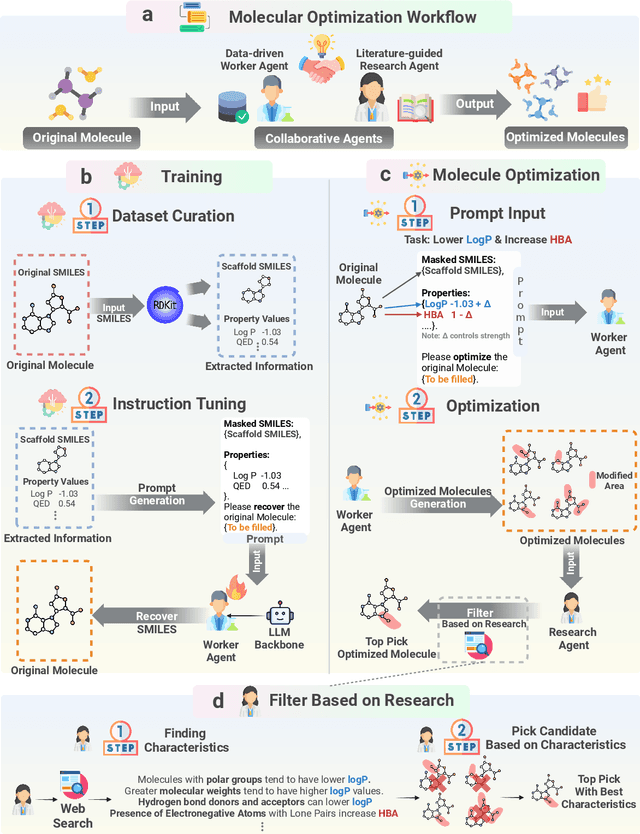
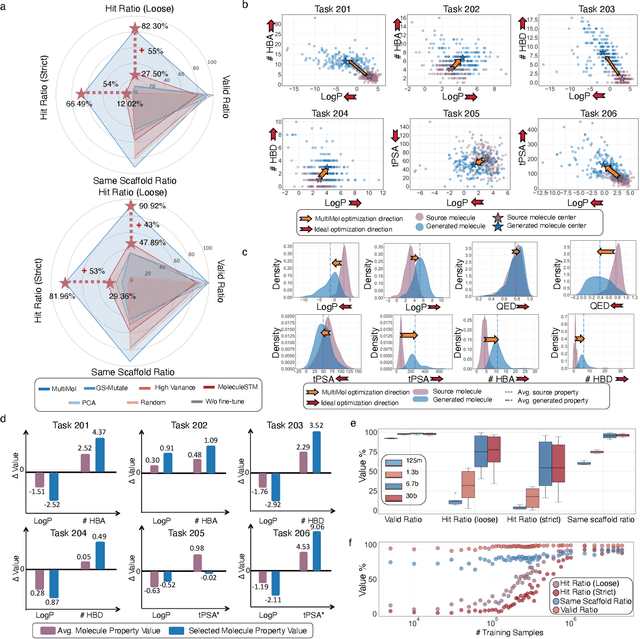
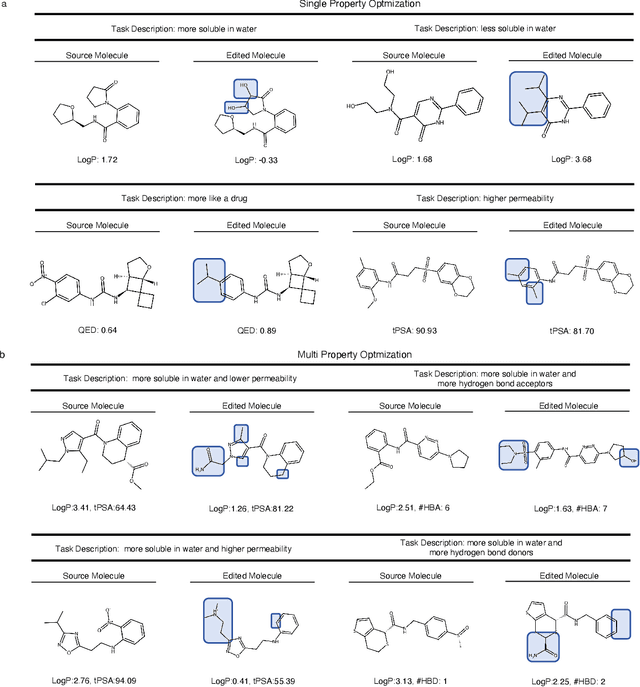
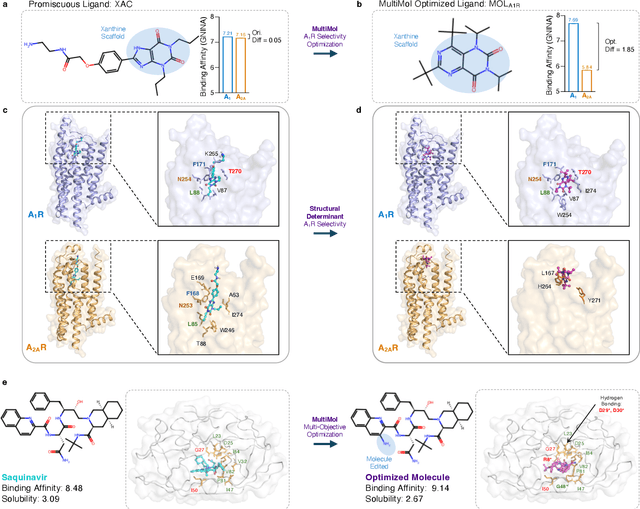
Molecular optimization is a crucial yet complex and time-intensive process that often acts as a bottleneck for drug development. Traditional methods rely heavily on trial and error, making multi-objective optimization both time-consuming and resource-intensive. Current AI-based methods have shown limited success in handling multi-objective optimization tasks, hampering their practical utilization. To address this challenge, we present MultiMol, a collaborative large language model (LLM) system designed to guide multi-objective molecular optimization. MultiMol comprises two agents, including a data-driven worker agent and a literature-guided research agent. The data-driven worker agent is a large language model being fine-tuned to learn how to generate optimized molecules considering multiple objectives, while the literature-guided research agent is responsible for searching task-related literature to find useful prior knowledge that facilitates identifying the most promising optimized candidates. In evaluations across six multi-objective optimization tasks, MultiMol significantly outperforms existing methods, achieving a 82.30% success rate, in sharp contrast to the 27.50% success rate of current strongest methods. To further validate its practical impact, we tested MultiMol on two real-world challenges. First, we enhanced the selectivity of Xanthine Amine Congener (XAC), a promiscuous ligand that binds both A1R and A2AR, successfully biasing it towards A1R. Second, we improved the bioavailability of Saquinavir, an HIV-1 protease inhibitor with known bioavailability limitations. Overall, these results indicate that MultiMol represents a highly promising approach for multi-objective molecular optimization, holding great potential to accelerate the drug development process and contribute to the advancement of pharmaceutical research.
A Label-Free Heterophily-Guided Approach for Unsupervised Graph Fraud Detection
Feb 18, 2025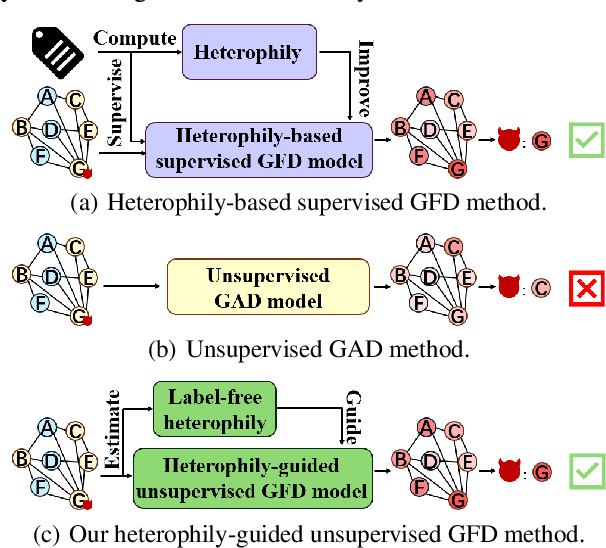

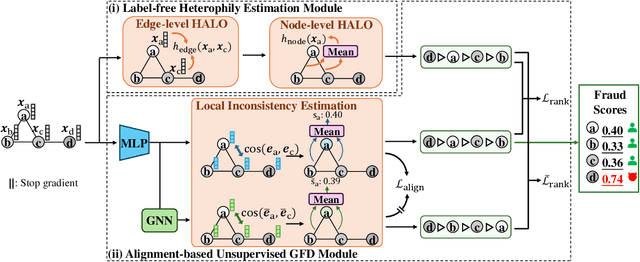
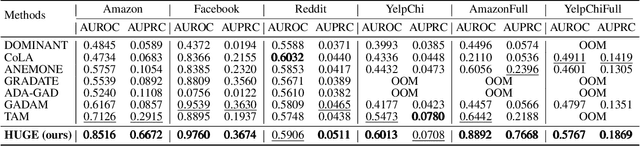
Graph fraud detection (GFD) has rapidly advanced in protecting online services by identifying malicious fraudsters. Recent supervised GFD research highlights that heterophilic connections between fraudsters and users can greatly impact detection performance, since fraudsters tend to camouflage themselves by building more connections to benign users. Despite the promising performance of supervised GFD methods, the reliance on labels limits their applications to unsupervised scenarios; Additionally, accurately capturing complex and diverse heterophily patterns without labels poses a further challenge. To fill the gap, we propose a Heterophily-guided Unsupervised Graph fraud dEtection approach (HUGE) for unsupervised GFD, which contains two essential components: a heterophily estimation module and an alignment-based fraud detection module. In the heterophily estimation module, we design a novel label-free heterophily metric called HALO, which captures the critical graph properties for GFD, enabling its outstanding ability to estimate heterophily from node attributes. In the alignment-based fraud detection module, we develop a joint MLP-GNN architecture with ranking loss and asymmetric alignment loss. The ranking loss aligns the predicted fraud score with the relative order of HALO, providing an extra robustness guarantee by comparing heterophily among non-adjacent nodes. Moreover, the asymmetric alignment loss effectively utilizes structural information while alleviating the feature-smooth effects of GNNs.Extensive experiments on 6 datasets demonstrate that HUGE significantly outperforms competitors, showcasing its effectiveness and robustness. The source code of HUGE is at https://github.com/CampanulaBells/HUGE-GAD.
Large Language Models in Drug Discovery and Development: From Disease Mechanisms to Clinical Trials
Sep 06, 2024
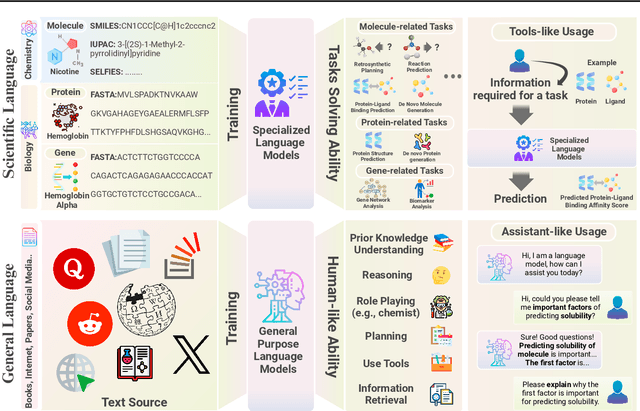

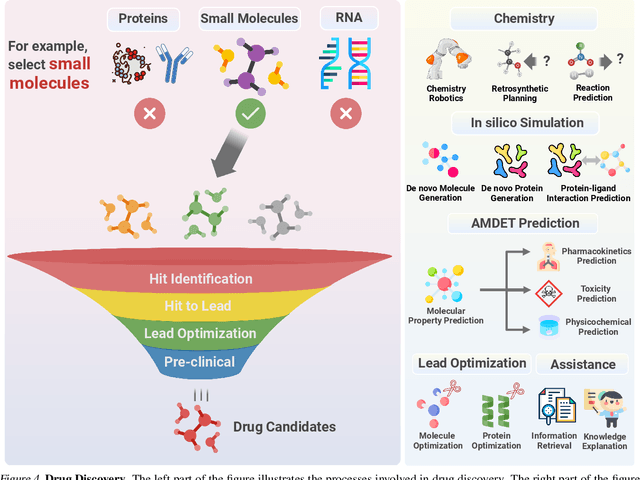
The integration of Large Language Models (LLMs) into the drug discovery and development field marks a significant paradigm shift, offering novel methodologies for understanding disease mechanisms, facilitating drug discovery, and optimizing clinical trial processes. This review highlights the expanding role of LLMs in revolutionizing various stages of the drug development pipeline. We investigate how these advanced computational models can uncover target-disease linkage, interpret complex biomedical data, enhance drug molecule design, predict drug efficacy and safety profiles, and facilitate clinical trial processes. Our paper aims to provide a comprehensive overview for researchers and practitioners in computational biology, pharmacology, and AI4Science by offering insights into the potential transformative impact of LLMs on drug discovery and development.
PREM: A Simple Yet Effective Approach for Node-Level Graph Anomaly Detection
Oct 18, 2023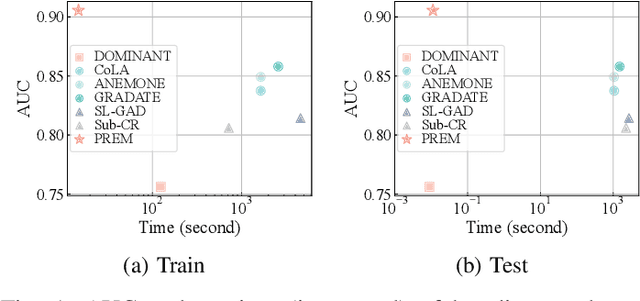
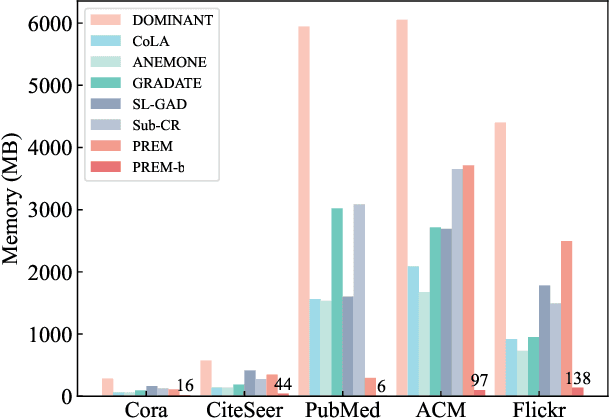
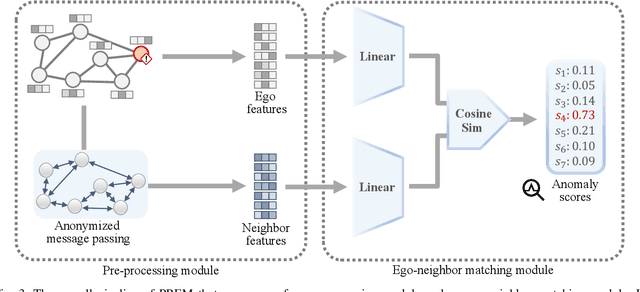
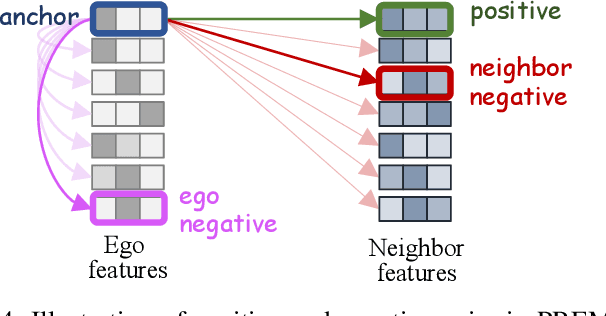
Node-level graph anomaly detection (GAD) plays a critical role in identifying anomalous nodes from graph-structured data in various domains such as medicine, social networks, and e-commerce. However, challenges have arisen due to the diversity of anomalies and the dearth of labeled data. Existing methodologies - reconstruction-based and contrastive learning - while effective, often suffer from efficiency issues, stemming from their complex objectives and elaborate modules. To improve the efficiency of GAD, we introduce a simple method termed PREprocessing and Matching (PREM for short). Our approach streamlines GAD, reducing time and memory consumption while maintaining powerful anomaly detection capabilities. Comprising two modules - a pre-processing module and an ego-neighbor matching module - PREM eliminates the necessity for message-passing propagation during training, and employs a simple contrastive loss, leading to considerable reductions in training time and memory usage. Moreover, through rigorous evaluations of five real-world datasets, our method demonstrated robustness and effectiveness. Notably, when validated on the ACM dataset, PREM achieved a 5% improvement in AUC, a 9-fold increase in training speed, and sharply reduce memory usage compared to the most efficient baseline.
Large Language Models for Scientific Synthesis, Inference and Explanation
Oct 12, 2023Large language models are a form of artificial intelligence systems whose primary knowledge consists of the statistical patterns, semantic relationships, and syntactical structures of language1. Despite their limited forms of "knowledge", these systems are adept at numerous complex tasks including creative writing, storytelling, translation, question-answering, summarization, and computer code generation. However, they have yet to demonstrate advanced applications in natural science. Here we show how large language models can perform scientific synthesis, inference, and explanation. We present a method for using general-purpose large language models to make inferences from scientific datasets of the form usually associated with special-purpose machine learning algorithms. We show that the large language model can augment this "knowledge" by synthesizing from the scientific literature. When a conventional machine learning system is augmented with this synthesized and inferred knowledge it can outperform the current state of the art across a range of benchmark tasks for predicting molecular properties. This approach has the further advantage that the large language model can explain the machine learning system's predictions. We anticipate that our framework will open new avenues for AI to accelerate the pace of scientific discovery.
Integrating Graphs with Large Language Models: Methods and Prospects
Oct 09, 2023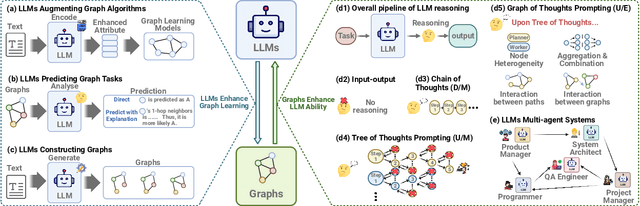
Large language models (LLMs) such as GPT-4 have emerged as frontrunners, showcasing unparalleled prowess in diverse applications, including answering queries, code generation, and more. Parallelly, graph-structured data, an intrinsic data type, is pervasive in real-world scenarios. Merging the capabilities of LLMs with graph-structured data has been a topic of keen interest. This paper bifurcates such integrations into two predominant categories. The first leverages LLMs for graph learning, where LLMs can not only augment existing graph algorithms but also stand as prediction models for various graph tasks. Conversely, the second category underscores the pivotal role of graphs in advancing LLMs. Mirroring human cognition, we solve complex tasks by adopting graphs in either reasoning or collaboration. Integrating with such structures can significantly boost the performance of LLMs in various complicated tasks. We also discuss and propose open questions for integrating LLMs with graph-structured data for the future direction of the field.