 Add to Chrome
 Add to Firefox
 Add to Edge
ERNIE-Image Technical Report
May 25, 2026
We introduce ERNIE-Image, an open-source text-to-image generation model built upon an 8B single-stream DiT architecture. ERNIE-Image aims to bridge the gap between current open-source models and leading closed-source systems through more effective mining of large-scale pre-training data and improved supervision quality throughout training. During pre-training, we adopt a bottom-up data construction pipeline that combines fine-grained image categorization, rich caption annotation, aesthetic assessment, and hierarchical sampling. This strategy reduces data noise while preserving long-tail concepts and detailed real-world knowledge, providing a stronger foundation for complex generation tasks. In the post-training stage, we use a top-down data construction pipeline for high-demand scenarios, diversify prompt annotations to better match real user inputs, and apply a stabilized DPO strategy to align the model with human aesthetic preferences. We further train ERNIE-Image-Turbo for efficient 8-NFE generation and propose MT-DMD to mitigate capability drift during distillation. To make the model easier to use in practical scenarios, we equip it with a lightweight Prompt Enhancer that expands concise user intents into structured visual descriptions. In addition, we develop ERNIE-Image-Aes, an industrial-grade aesthetic model, together with ERNIE-Image-Aes-1K, a human-annotated benchmark for realistic aesthetic evaluation. Extensive qualitative and quantitative experiments show that ERNIE-Image achieves leading performance among open-source models and approaches top-tier commercial models in instruction following, text rendering, and aesthetic quality. We release the trained models and aesthetic resources to facilitate further academic research and technical progress in the AIGC community.

HAD: Heterogeneity-Aware Distillation for Lifelong Heterogeneous Learning
Mar 27, 2026Lifelong learning aims to preserve knowledge acquired from previous tasks while incorporating knowledge from a sequence of new tasks. However, most prior work explores only streams of homogeneous tasks (\textit{e.g.}, only classification tasks) and neglects the scenario of learning across heterogeneous tasks that possess different structures of outputs. In this work, we formalize this broader setting as lifelong heterogeneous learning (LHL). Departing from conventional lifelong learning, the task sequence of LHL spans different task types, and the learner needs to retain heterogeneous knowledge for different output space structures. To instantiate the LHL, we focus on LHL in the context of dense prediction (LHL4DP), a realistic and challenging scenario. To this end, we propose the Heterogeneity-Aware Distillation (HAD) method, an exemplar-free approach that preserves previously gained heterogeneous knowledge by self-distillation in each training phase. The proposed HAD comprises two complementary components, including a distribution-balanced heterogeneity-aware distillation loss to alleviate the global imbalance of prediction distribution and a salience-guided heterogeneity-aware distillation loss that concentrates learning on informative edge pixels extracted with the Sobel operator. Extensive experiments demonstrate that the proposed HAD method significantly outperforms existing methods in this new scenario.
Causality-driven Sequence Segmentation for Enhancing Multiphase Industrial Process Data Analysis and Soft Sensing
Jun 30, 2024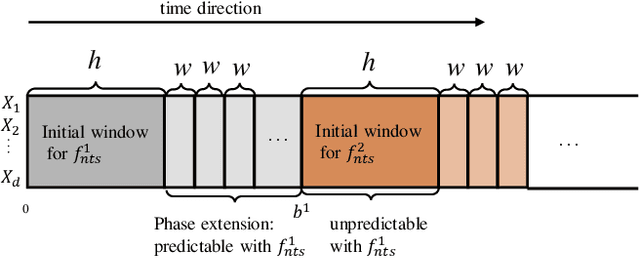
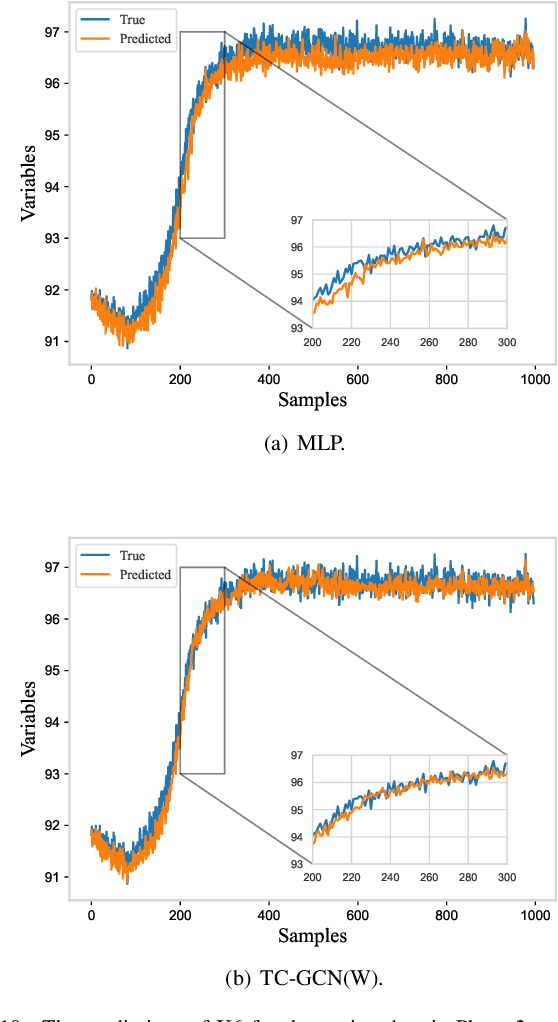
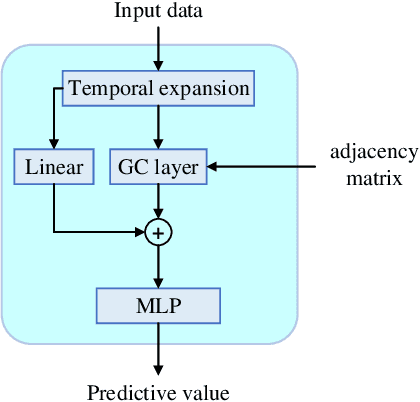
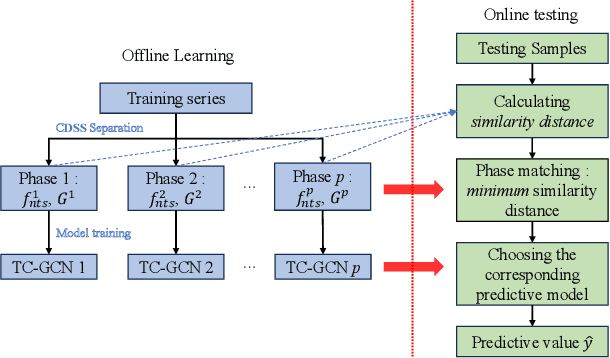
The dynamic characteristics of multiphase industrial processes present significant challenges in the field of industrial big data modeling. Traditional soft sensing models frequently neglect the process dynamics and have difficulty in capturing transient phenomena like phase transitions. To address this issue, this article introduces a causality-driven sequence segmentation (CDSS) model. This model first identifies the local dynamic properties of the causal relationships between variables, which are also referred to as causal mechanisms. It then segments the sequence into different phases based on the sudden shifts in causal mechanisms that occur during phase transitions. Additionally, a novel metric, similarity distance, is designed to evaluate the temporal consistency of causal mechanisms, which includes both causal similarity distance and stable similarity distance. The discovered causal relationships in each phase are represented as a temporal causal graph (TCG). Furthermore, a soft sensing model called temporal-causal graph convolutional network (TC-GCN) is trained for each phase, by using the time-extended data and the adjacency matrix of TCG. The numerical examples are utilized to validate the proposed CDSS model, and the segmentation results demonstrate that CDSS has excellent performance on segmenting both stable and unstable multiphase series. Especially, it has higher accuracy in separating non-stationary time series compared to other methods. The effectiveness of the proposed CDSS model and the TC-GCN model is also verified through a penicillin fermentation process. Experimental results indicate that the breakpoints discovered by CDSS align well with the reaction mechanisms and TC-GCN significantly has excellent predictive accuracy.
Root-KGD: A Novel Framework for Root Cause Diagnosis Based on Knowledge Graph and Industrial Data
Jun 19, 2024With the development of intelligent manufacturing and the increasing complexity of industrial production, root cause diagnosis has gradually become an important research direction in the field of industrial fault diagnosis. However, existing research methods struggle to effectively combine domain knowledge and industrial data, failing to provide accurate, online, and reliable root cause diagnosis results for industrial processes. To address these issues, a novel fault root cause diagnosis framework based on knowledge graph and industrial data, called Root-KGD, is proposed. Root-KGD uses the knowledge graph to represent domain knowledge and employs data-driven modeling to extract fault features from industrial data. It then combines the knowledge graph and data features to perform knowledge graph reasoning for root cause identification. The performance of the proposed method is validated using two industrial process cases, Tennessee Eastman Process (TEP) and Multiphase Flow Facility (MFF). Compared to existing methods, Root-KGD not only gives more accurate root cause variable diagnosis results but also provides interpretable fault-related information by locating faults to corresponding physical entities in knowledge graph (such as devices and streams). In addition, combined with its lightweight nature, Root-KGD is more effective in online industrial applications.