 Add to Chrome
 Add to Firefox
 Add to Edge
Riemannian Manifold Optimization for Advanced Wireless Communications: Fundamentals and Applications
Feb 09, 2026
Next-generation wireless communications promise transformative technologies such as massive multiple-input multiple-output (MIMO), reconfigurable intelligent surfaces (RIS), integrated sensing and communication (ISAC), and fluid antenna systems (FAS). However, deploying these technologies is hindered by large-scale optimization problems with nonconvex constraints. Conventional Euclidean-space methods rely on approximations or relaxations, which degrade performance and incur substantial computational costs. Riemannian manifold optimization (RMO) offers a powerful alternative that directly operates on the manifold defined by the geometric constraints. This approach inherently satisfies the constraints at every optimization step, thereby avoiding the performance degradation and substantial computational costs. In this paper, we first elaborate on the principles of RMO, including the fundamental concepts, tools, and methods, emphasizing its effectiveness for nonconvex problems. We then introduce its applications in advanced wireless communications, showing how constrained problems are reformulated on their natural manifolds and solved using tailored RMO algorithms. Furthermore, we present a case study on secure beamforming in an FAS-assisted non-orthogonal multiple access (NOMA) system, demonstrating RMO's superiority over conventional methods in terms of both performance and computational efficiency.

Causality-driven Sequence Segmentation for Enhancing Multiphase Industrial Process Data Analysis and Soft Sensing
Jun 30, 2024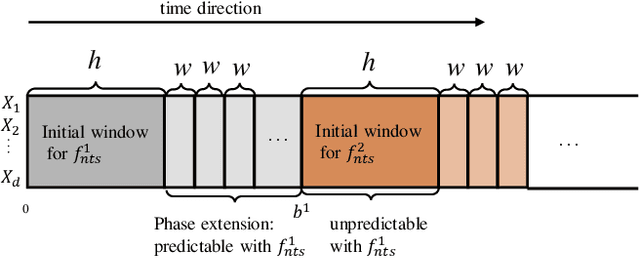
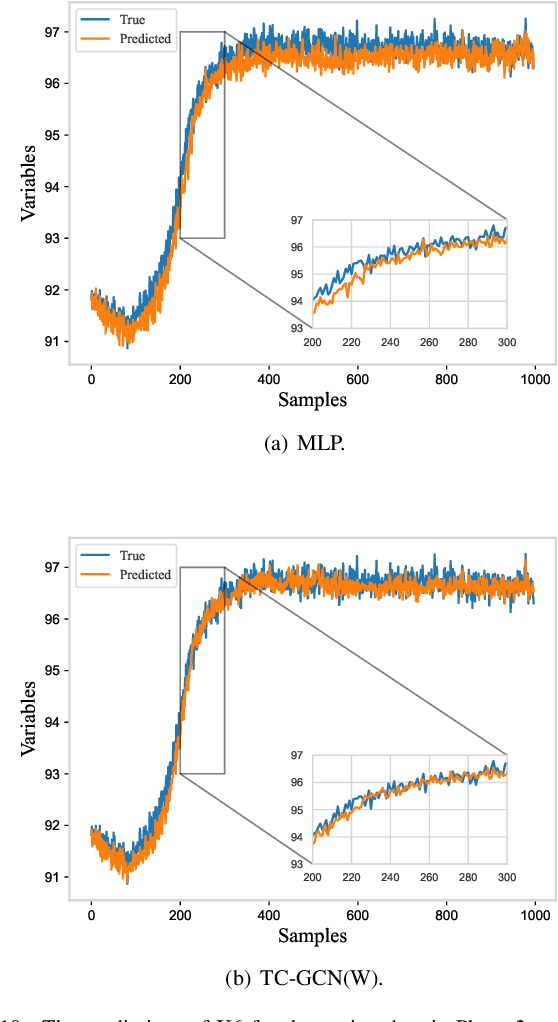
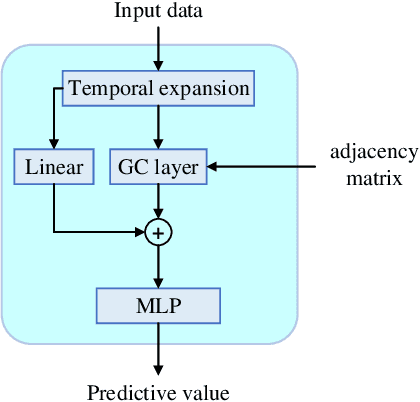
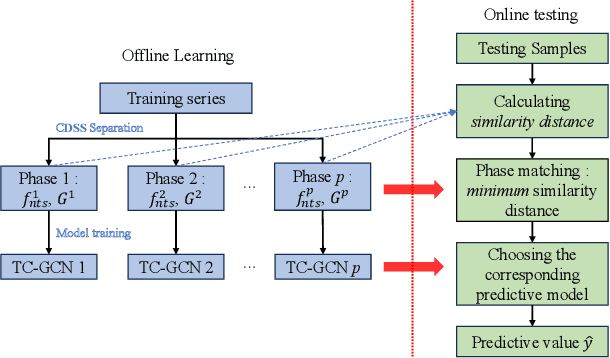
The dynamic characteristics of multiphase industrial processes present significant challenges in the field of industrial big data modeling. Traditional soft sensing models frequently neglect the process dynamics and have difficulty in capturing transient phenomena like phase transitions. To address this issue, this article introduces a causality-driven sequence segmentation (CDSS) model. This model first identifies the local dynamic properties of the causal relationships between variables, which are also referred to as causal mechanisms. It then segments the sequence into different phases based on the sudden shifts in causal mechanisms that occur during phase transitions. Additionally, a novel metric, similarity distance, is designed to evaluate the temporal consistency of causal mechanisms, which includes both causal similarity distance and stable similarity distance. The discovered causal relationships in each phase are represented as a temporal causal graph (TCG). Furthermore, a soft sensing model called temporal-causal graph convolutional network (TC-GCN) is trained for each phase, by using the time-extended data and the adjacency matrix of TCG. The numerical examples are utilized to validate the proposed CDSS model, and the segmentation results demonstrate that CDSS has excellent performance on segmenting both stable and unstable multiphase series. Especially, it has higher accuracy in separating non-stationary time series compared to other methods. The effectiveness of the proposed CDSS model and the TC-GCN model is also verified through a penicillin fermentation process. Experimental results indicate that the breakpoints discovered by CDSS align well with the reaction mechanisms and TC-GCN significantly has excellent predictive accuracy.