 Add to Chrome
 Add to Firefox
 Add to Edge
AtlasGS: Brain MRI Spatial Resolution Harmonization With Shared Gaussian Geometry
Jun 01, 2026
Splatting (GS)-based shared geometry framework adopts a two-stage training strategy, in which an explicit, subject-specific Gaussian scaffold encoding anatomical geometry is first learned from the isotropic structural scan and then reused to fit appearance for target modalities acquired with sparse slices. Experiments on the UK Biobank, GBM, and ABCD datasets for through-plane super-resolution across multiple modalities (T2-weighted, FLAIR, DWI, ASL), degradation factors ($\times 3$, $\times 5$, $\times 7$), and pathological abnormalities (glioblastoma) demonstrate state-of-the-art reconstruction fidelity. The shared Gaussian geometry enables arbitrary-view generation for target modalities with strong structural consistency and further shows potential for self-supervised in-plane super-resolution. This work establishes explicit geometry-guided representations as a novel, flexible, and interpretable pathway toward retrospective multi-contrast MRI harmonization and reliable clinical reference construction. Source code is available at: https://github.com/yfgao76/AtlasGS

Causality-driven Sequence Segmentation for Enhancing Multiphase Industrial Process Data Analysis and Soft Sensing
Jun 30, 2024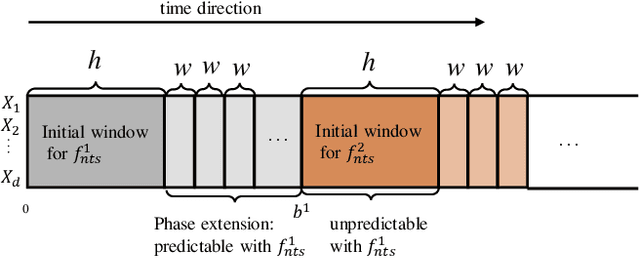
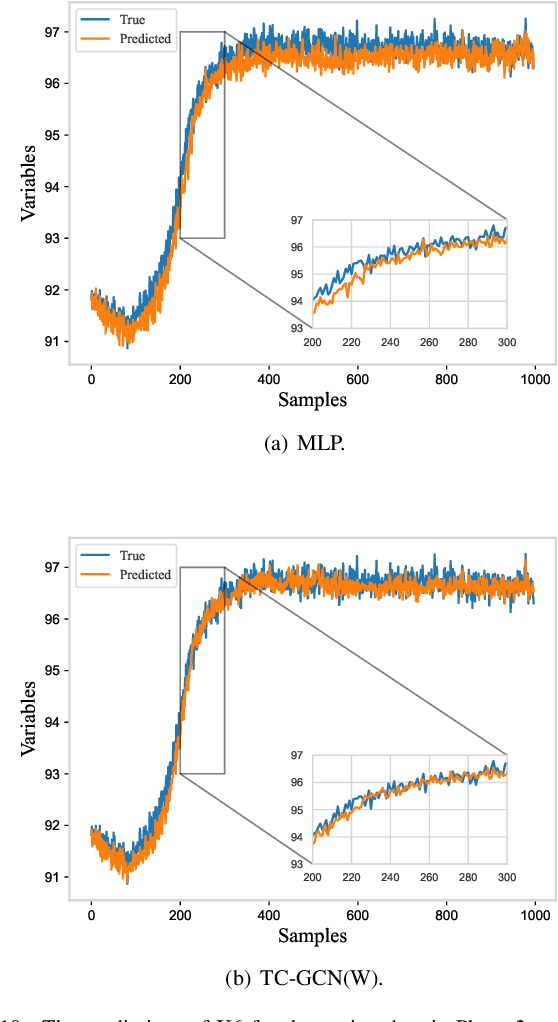
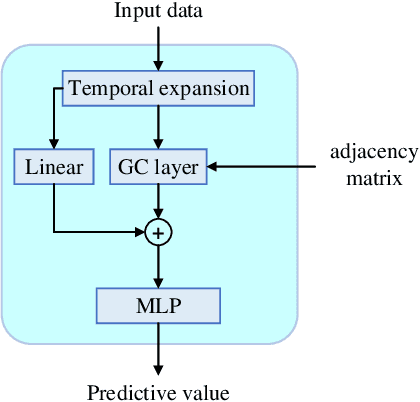
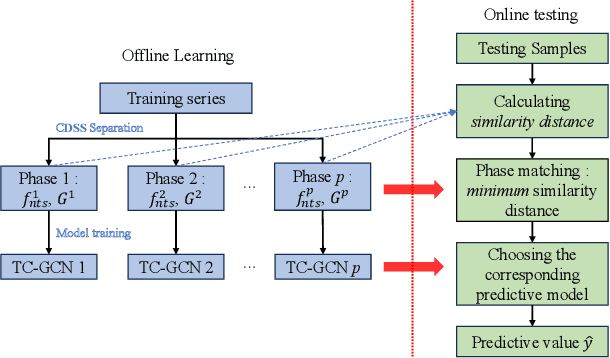
The dynamic characteristics of multiphase industrial processes present significant challenges in the field of industrial big data modeling. Traditional soft sensing models frequently neglect the process dynamics and have difficulty in capturing transient phenomena like phase transitions. To address this issue, this article introduces a causality-driven sequence segmentation (CDSS) model. This model first identifies the local dynamic properties of the causal relationships between variables, which are also referred to as causal mechanisms. It then segments the sequence into different phases based on the sudden shifts in causal mechanisms that occur during phase transitions. Additionally, a novel metric, similarity distance, is designed to evaluate the temporal consistency of causal mechanisms, which includes both causal similarity distance and stable similarity distance. The discovered causal relationships in each phase are represented as a temporal causal graph (TCG). Furthermore, a soft sensing model called temporal-causal graph convolutional network (TC-GCN) is trained for each phase, by using the time-extended data and the adjacency matrix of TCG. The numerical examples are utilized to validate the proposed CDSS model, and the segmentation results demonstrate that CDSS has excellent performance on segmenting both stable and unstable multiphase series. Especially, it has higher accuracy in separating non-stationary time series compared to other methods. The effectiveness of the proposed CDSS model and the TC-GCN model is also verified through a penicillin fermentation process. Experimental results indicate that the breakpoints discovered by CDSS align well with the reaction mechanisms and TC-GCN significantly has excellent predictive accuracy.