 Add to Chrome
 Add to Firefox
 Add to Edge
FutureBridge: Token Selection Beyond Local Preference in Collaborative Decoding
Aug 07, 2026
Token-level collaboration allows a large language model (LLM) to assist a small language model (SLM) when their predictions diverge. Existing methods either use LLM-generated intervention tokens or rank candidates with the LLM's next-token probabilities. Both rely on the LLM's local preference, even though an LLM-selected token may be difficult for the SLM to build on. We present FutureBridge, which ranks joint LLM-SLM token candidates according to how well they support the SLM's subsequent reasoning. During training, an answer-verified LLM trajectory supplies a fixed shared future, and a frozen SLM evaluates every candidate under this common context. The resulting counterfactual scores supervise a lightweight token reranker that observes only the current state and candidate token. At inference, FutureBridge uses the LLM only to expand the candidate pool, selects one token, and returns generation to the SLM without generating or appending a future suffix. Across five mathematical reasoning benchmarks, FutureBridge improves the Qwen3-1.7B SLM's Math Avg. by 35.1% relative to greedy SLM decoding. These results indicate that token selection benefits from modeling whether the receiving SLM can use each candidate to continue reasoning, rather than relying on the LLM's local preference alone.

Control-Anchored Residual Flow Matching Conditioned on Gene Geometry for Virtual Cell Perturbation Modeling
Aug 07, 2026A central task in virtual cell modeling is predicting single-cell transcriptional responses to unseen genetic perturbations and drug combinations, and biological networks provide valuable priors on gene relationships. Existing graph-based models commonly use the same network to structure gene representations and mediate intergene interactions, thereby implicitly treating stable associations as perturbation-response pathways. Gene Ontology and control-derived coexpression networks encode relatively stable relationships rather than intervention-specific response directions or magnitudes. We therefore propose GeneGeoFlow, which conditions a control-anchored residual flow on gene-wise geometry derived from biological networks to learn intervention-specific transcriptional responses. GeneGeoFlow derives multi-scale spectral coordinates from Gene Ontology and control-derived coexpression networks. A perturbation-conditioned, gene-wise gating module selects relevant structural scales and network sources, yielding intervention-specific gene geometry. The resulting geometry conditions a control-anchored residual flow without explicitly propagating target-derived signals along the graph. Condition-wise optimal transport couples unpaired control and perturbed populations for training, while a Delta-correlation objective aligns the predicted and observed condition-level expression-shift directions. GeneGeoFlow achieves Pearson Delta scores of 0.8979 on the Norman additive benchmark and 0.9088 on five held-out drug combinations in the fixed ComboSciPlex test split. These results support perturbation-conditioned gene geometry as an effective structural prior for intervention-specific response prediction, without conflating stable gene relationships with response propagation.
OpenNet: Incremental Learning for Autonomous Driving Object Detection with Balanced Loss
Nov 25, 2023
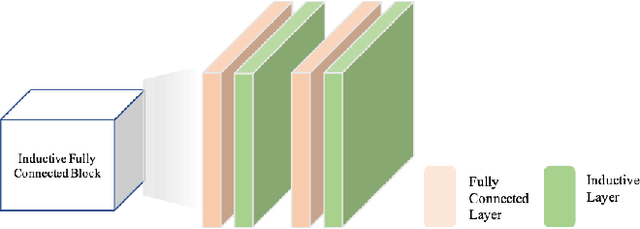
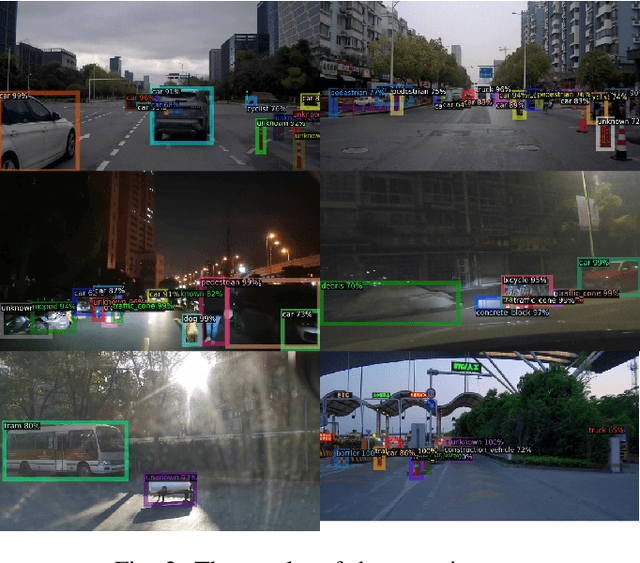

Automated driving object detection has always been a challenging task in computer vision due to environmental uncertainties. These uncertainties include significant differences in object sizes and encountering the class unseen. It may result in poor performance when traditional object detection models are directly applied to automated driving detection. Because they usually presume fixed categories of common traffic participants, such as pedestrians and cars. Worsely, the huge class imbalance between common and novel classes further exacerbates performance degradation. To address the issues stated, we propose OpenNet to moderate the class imbalance with the Balanced Loss, which is based on Cross Entropy Loss. Besides, we adopt an inductive layer based on gradient reshaping to fast learn new classes with limited samples during incremental learning. To against catastrophic forgetting, we employ normalized feature distillation. By the way, we improve multi-scale detection robustness and unknown class recognition through FPN and energy-based detection, respectively. The Experimental results upon the CODA dataset show that the proposed method can obtain better performance than that of the existing methods.
When Source-Free Domain Adaptation Meets Label Propagation
Jan 20, 2023


Source-free domain adaptation, where only a pre-trained source model is used to adapt to the target distribution, is a more general approach to achieving domain adaptation. However, it can be challenging to capture the inherent structure of the target features accurately due to the lack of supervised information on the target domain. To tackle this problem, we propose a novel approach called Adaptive Local Transfer (ALT) that tries to achieve efficient feature clustering from the perspective of label propagation. ALT divides the target data into inner and outlier samples based on the adaptive threshold of the learning state, and applies a customized learning strategy to best fits the data property. Specifically, inner samples are utilized for learning intra-class structure thanks to their relatively well-clustered properties. The low-density outlier samples are regularized by input consistency to achieve high accuracy with respect to the ground truth labels. In this way, local clustering can be prevented from forming spurious clusters while effectively propagating label information among subpopulations. Empirical evidence demonstrates that ALT outperforms the state of the arts on three public benchmarks: Office-31, Office-Home, and VisDA.