 Add to Chrome
 Add to Firefox
 Add to Edge
QP-OneModel: A Unified Generative LLM for Multi-Task Query Understanding in Xiaohongshu Search
Feb 10, 2026
Query Processing (QP) bridges user intent and content supply in large-scale Social Network Service (SNS) search engines. Traditional QP systems rely on pipelines of isolated discriminative models (e.g., BERT), suffering from limited semantic understanding and high maintenance overhead. While Large Language Models (LLMs) offer a potential solution, existing approaches often optimize sub-tasks in isolation, neglecting intrinsic semantic synergy and necessitating independent iterations. Moreover, standard generative methods often lack grounding in SNS scenarios, failing to bridge the gap between open-domain corpora and informal SNS linguistic patterns, while struggling to adhere to rigorous business definitions. We present QP-OneModel, a Unified Generative LLM for Multi-Task Query Understanding in the SNS domain. We reformulate heterogeneous sub-tasks into a unified sequence generation paradigm, adopting a progressive three-stage alignment strategy culminating in multi-reward Reinforcement Learning. Furthermore, QP-OneModel generates intent descriptions as a novel high-fidelity semantic signal, effectively augmenting downstream tasks such as query rewriting and ranking. Offline evaluations show QP-OneModel achieves a 7.35% overall gain over discriminative baselines, with significant F1 boosts in NER (+9.01%) and Term Weighting (+9.31%). It also exhibits superior generalization, surpassing a 32B model by 7.60% accuracy on unseen tasks. Fully deployed at Xiaohongshu, online A/B tests confirm its industrial value, optimizing retrieval relevance (DCG) by 0.21% and lifting user retention by 0.044%.

Transferable and Forecastable User Targeting Foundation Model
Dec 17, 2024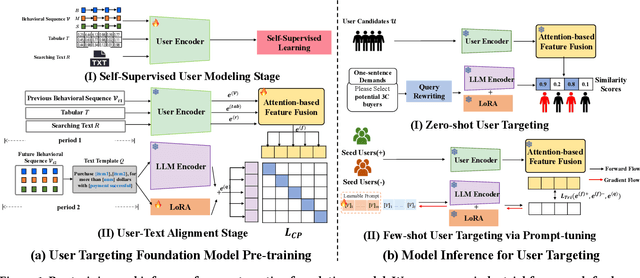
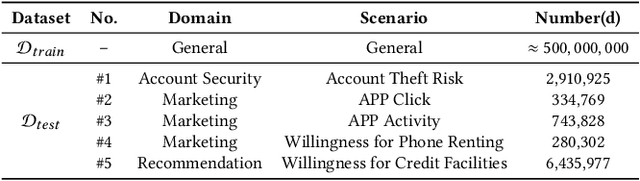
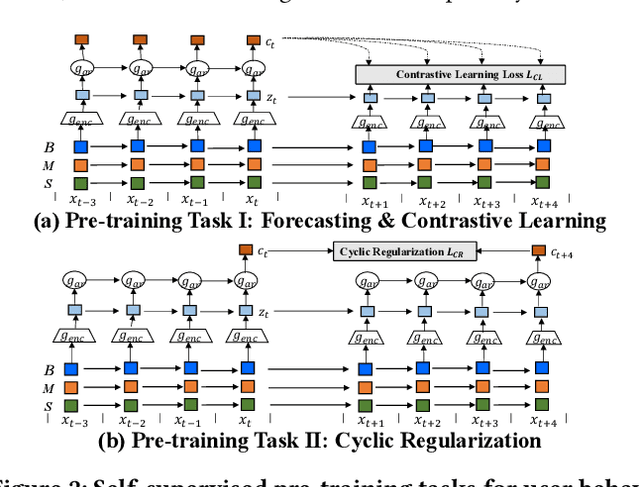

User targeting, the process of selecting targeted users from a pool of candidates for non-expert marketers, has garnered substantial attention with the advancements in digital marketing. However, existing user targeting methods encounter two significant challenges: (i) Poor cross-domain and cross-scenario transferability and generalization, and (ii) Insufficient forecastability in real-world applications. These limitations hinder their applicability across diverse industrial scenarios. In this work, we propose FIND, an industrial-grade, transferable, and forecastable user targeting foundation model. To enhance cross-domain transferability, our framework integrates heterogeneous multi-scenario user data, aligning them with one-sentence targeting demand inputs through contrastive pre-training. For improved forecastability, the text description of each user is derived based on anticipated future behaviors, while user representations are constructed from historical information. Experimental results demonstrate that our approach significantly outperforms existing baselines in cross-domain, real-world user targeting scenarios, showcasing the superior capabilities of FIND. Moreover, our method has been successfully deployed on the Alipay platform and is widely utilized across various scenarios.
Deep Instruction Tuning for Segment Anything Model
Mar 31, 2024Segment Anything Model (SAM) exhibits powerful yet versatile capabilities on (un) conditional image segmentation tasks recently. Although SAM can support various segmentation prompts, we note that, compared to point- and box-guided segmentation, it performs much worse on text-instructed tasks. We argue that deep text instruction tuning is key to mitigate such shortcoming caused by the shallow fusion scheme in its default light-weight mask decoder. In this paper, two \emph{deep instruction tuning} (DIT) methods are proposed, one is end-to-end and the other is layer-wise. With these tuning methods, we can regard the image encoder of SAM as a stand-alone vision-language learner in contrast to building another deep fusion branch. Extensive experiments on three highly competitive benchmark datasets of referring image segmentation show that a simple end-to-end DIT improves SAM by a large margin, with layer-wise DIT further boosts the performance to state-of-the-art. Our code is anonymously released at: https://github.com/wysnzzzz/DIT.