 Add to Chrome
 Add to Firefox
 Add to Edge
RankByGene: Gene-Guided Histopathology Representation Learning Through Cross-Modal Ranking Consistency
Nov 22, 2024
Spatial transcriptomics (ST) provides essential spatial context by mapping gene expression within tissue, enabling detailed study of cellular heterogeneity and tissue organization. However, aligning ST data with histology images poses challenges due to inherent spatial distortions and modality-specific variations. Existing methods largely rely on direct alignment, which often fails to capture complex cross-modal relationships. To address these limitations, we propose a novel framework that aligns gene and image features using a ranking-based alignment loss, preserving relative similarity across modalities and enabling robust multi-scale alignment. To further enhance the alignment's stability, we employ self-supervised knowledge distillation with a teacher-student network architecture, effectively mitigating disruptions from high dimensionality, sparsity, and noise in gene expression data. Extensive experiments on gene expression prediction and survival analysis demonstrate our framework's effectiveness, showing improved alignment and predictive performance over existing methods and establishing a robust tool for gene-guided image representation learning in digital pathology.

A Multimodal Approach Combining Structural and Cross-domain Textual Guidance for Weakly Supervised OCT Segmentation
Nov 19, 2024


Accurate segmentation of Optical Coherence Tomography (OCT) images is crucial for diagnosing and monitoring retinal diseases. However, the labor-intensive nature of pixel-level annotation limits the scalability of supervised learning with large datasets. Weakly Supervised Semantic Segmentation (WSSS) provides a promising alternative by leveraging image-level labels. In this study, we propose a novel WSSS approach that integrates structural guidance with text-driven strategies to generate high-quality pseudo labels, significantly improving segmentation performance. In terms of visual information, our method employs two processing modules that exchange raw image features and structural features from OCT images, guiding the model to identify where lesions are likely to occur. In terms of textual information, we utilize large-scale pretrained models from cross-domain sources to implement label-informed textual guidance and synthetic descriptive integration with two textual processing modules that combine local semantic features with consistent synthetic descriptions. By fusing these visual and textual components within a multimodal framework, our approach enhances lesion localization accuracy. Experimental results on three OCT datasets demonstrate that our method achieves state-of-the-art performance, highlighting its potential to improve diagnostic accuracy and efficiency in medical imaging.
Adversarial Vessel-Unveiling Semi-Supervised Segmentation for Retinopathy of Prematurity Diagnosis
Nov 14, 2024


Accurate segmentation of retinal images plays a crucial role in aiding ophthalmologists in diagnosing retinopathy of prematurity (ROP) and assessing its severity. However, due to their underdeveloped, thinner vessels, manual annotation in infant fundus images is very complex, and this presents challenges for fully supervised learning. To address the scarcity of annotations, we propose a semi supervised segmentation framework designed to advance ROP studies without the need for extensive manual vessel annotation. Unlike previous methods that rely solely on limited labeled data, our approach leverages teacher student learning by integrating two powerful components: an uncertainty weighted vessel unveiling module and domain adversarial learning. The vessel unveiling module helps the model effectively reveal obscured and hard to detect vessel structures, while adversarial training aligns feature representations across different domains, ensuring robust and generalizable vessel segmentations. We validate our approach on public datasets (CHASEDB, STARE) and an in-house ROP dataset, demonstrating its superior performance across multiple evaluation metrics. Additionally, we extend the model's utility to a downstream task of ROP multi-stage classification, where vessel masks extracted by our segmentation model improve diagnostic accuracy. The promising results in classification underscore the model's potential for clinical application, particularly in early-stage ROP diagnosis and intervention. Overall, our work offers a scalable solution for leveraging unlabeled data in pediatric ophthalmology, opening new avenues for biomarker discovery and clinical research.
Hard Negative Sample Mining for Whole Slide Image Classification
Oct 03, 2024
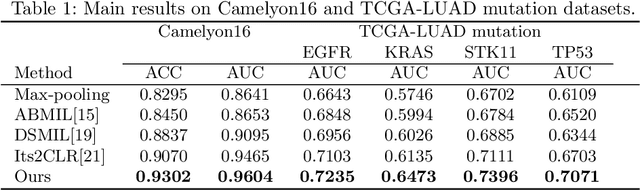


Weakly supervised whole slide image (WSI) classification is challenging due to the lack of patch-level labels and high computational costs. State-of-the-art methods use self-supervised patch-wise feature representations for multiple instance learning (MIL). Recently, methods have been proposed to fine-tune the feature representation on the downstream task using pseudo labeling, but mostly focusing on selecting high-quality positive patches. In this paper, we propose to mine hard negative samples during fine-tuning. This allows us to obtain better feature representations and reduce the training cost. Furthermore, we propose a novel patch-wise ranking loss in MIL to better exploit these hard negative samples. Experiments on two public datasets demonstrate the efficacy of these proposed ideas. Our codes are available at https://github.com/winston52/HNM-WSI
Semi-Supervised Contrastive VAE for Disentanglement of Digital Pathology Images
Oct 02, 2024Despite the strong prediction power of deep learning models, their interpretability remains an important concern. Disentanglement models increase interpretability by decomposing the latent space into interpretable subspaces. In this paper, we propose the first disentanglement method for pathology images. We focus on the task of detecting tumor-infiltrating lymphocytes (TIL). We propose different ideas including cascading disentanglement, novel architecture, and reconstruction branches. We achieve superior performance on complex pathology images, thus improving the interpretability and even generalization power of TIL detection deep learning models. Our codes are available at https://github.com/Shauqi/SS-cVAE.
Spatial Diffusion for Cell Layout Generation
Sep 04, 2024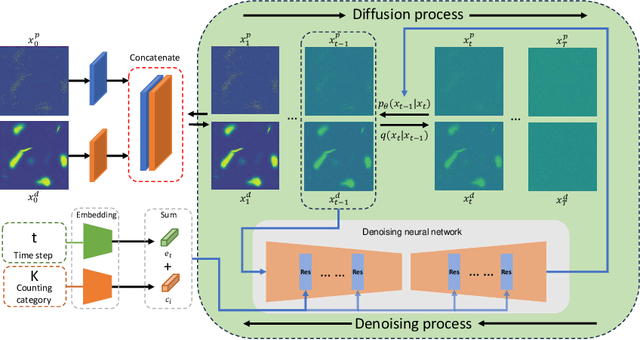


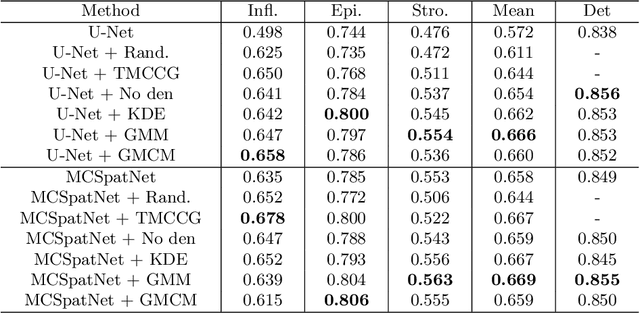
Generative models, such as GANs and diffusion models, have been used to augment training sets and boost performances in different tasks. We focus on generative models for cell detection instead, i.e., locating and classifying cells in given pathology images. One important information that has been largely overlooked is the spatial patterns of the cells. In this paper, we propose a spatial-pattern-guided generative model for cell layout generation. Specifically, a novel diffusion model guided by spatial features and generates realistic cell layouts has been proposed. We explore different density models as spatial features for the diffusion model. In downstream tasks, we show that the generated cell layouts can be used to guide the generation of high-quality pathology images. Augmenting with these images can significantly boost the performance of SOTA cell detection methods. The code is available at https://github.com/superlc1995/Diffusion-cell.
Integrated Sensing and Communication in IRS-assisted High-Mobility Systems: Design, Analysis and Optimization
Jul 31, 2024In this paper, we investigate integrated sensing and communication (ISAC) in high-mobility systems with the aid of an intelligent reflecting surface (IRS). To exploit the benefits of Delay-Doppler (DD) spread caused by high mobility, orthogonal time frequency space (OTFS)-based frame structure and transmission framework are proposed. {In such a framework,} we first design a low-complexity ratio-based sensing algorithm for estimating the velocity of mobile user. Then, we analyze the performance of sensing and communication in terms of achievable mean square error (MSE) and achievable rate, respectively, and reveal the impact of key parameters. Next, with the derived performance expressions, we jointly optimize the phase shift matrix of IRS and the receive combining vector at the base station (BS) to improve the overall performance of integrated sensing and communication. Finally, extensive simulation results confirm the effectiveness of the proposed algorithms in high-mobility systems.
Detection and Multi-Parameter Estimation for NLOS Targets: An IRS-assisted Framework
Jul 04, 2024Intelligent reflecting surface (IRS) has the potential to enhance sensing performance, due to its capability of reshaping the echo signals. Different from the existing literature, which has commonly focused on IRS beamforming optimization, in this paper, we pay special attention to designing effective signal processing approaches to extract sensing information from IRS-reshaped echo signals. To this end, we investigate an IRS-assisted non-line-of-sight (NLOS) target detection and multi-parameter estimation problem in orthogonal frequency division multiplexing (OFDM) systems. To address this problem, we first propose a novel detection and direction estimation framework, including a low-overhead hierarchical codebook that allows the IRS to generate three-dimensional beams with adjustable beam direction and width, a delay spectrum peak-based beam training scheme for detection and direction estimation, and a beam refinement scheme for further enhancing the accuracy of the direction estimation. Then, we propose a target range and velocity estimation scheme by extracting the delay-Doppler information from the IRS-reshaped echo signals. Numerical results demonstrate that the proposed schemes can achieve 99.7% target detection rate, a 10^{-3}-rad level direction estimation accuracy, and a 10^{-6}-m/10^{-5}-m/s level range/velocity estimation accuracy.
Rethinking the fundamental performance limits of integrated sensing and communication systems
Jul 04, 2024Integrated sensing and communication (ISAC) has been recognized as a key enabler and feature of future wireless networks. In the existing works analyzing the performances of ISAC, discrete-time systems were commonly assumed, which, however, overlooked the impacts of temporal, spectral, and spatial properties. To address this issue, we establish a unified information model for the band-limited continuous-time ISAC systems. In the established information model, we employ a novel sensing performance metric, called the sensing mutual information (SMI). Through analysis, we show how the SMI can be utilized as a bridge between the mutual information domain and the mean squared error (MSE) domain. In addition, we illustrate the communication mutual information (CMI)-SMI and CMI-MSE regions to identify the performance bounds of ISAC systems in practical settings and reveal the trade-off between communication and sensing performances. Moreover, via analysis and numerical results, we provide two valuable insights into the design of novel ISAC-enabled systems: i) communication prefers the waveforms of random amplitude, sensing prefers the waveforms of constant amplitude, both communication and sensing favor the waveforms of low correlations with random phases; ii) There exists a linear positive proportional relationship between the allocated time-frequency resource and the achieved communication rate/sensing MSE.
Registration by Regression (RbR): a framework for interpretable and flexible atlas registration
Apr 25, 2024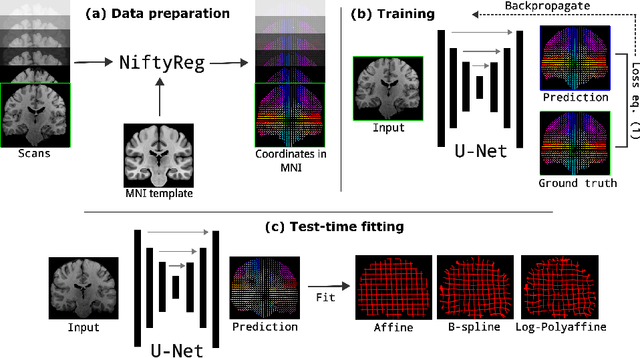
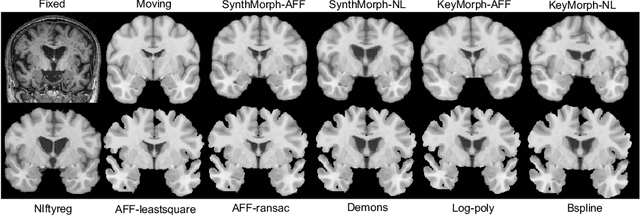
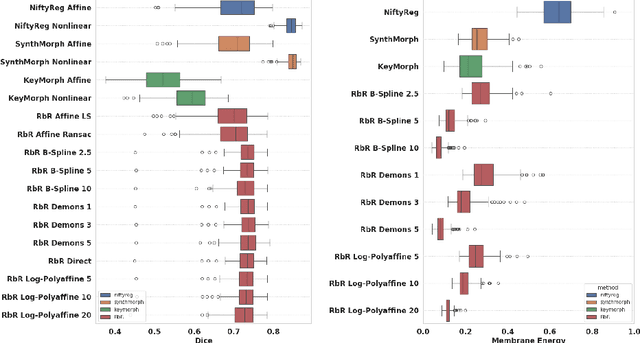
In human neuroimaging studies, atlas registration enables mapping MRI scans to a common coordinate frame, which is necessary to aggregate data from multiple subjects. Machine learning registration methods have achieved excellent speed and accuracy but lack interpretability. More recently, keypoint-based methods have been proposed to tackle this issue, but their accuracy is still subpar, particularly when fitting nonlinear transforms. Here we propose Registration by Regression (RbR), a novel atlas registration framework that is highly robust and flexible, conceptually simple, and can be trained with cheaply obtained data. RbR predicts the (x,y,z) atlas coordinates for every voxel of the input scan (i.e., every voxel is a keypoint), and then uses closed-form expressions to quickly fit transforms using a wide array of possible deformation models, including affine and nonlinear (e.g., Bspline, Demons, invertible diffeomorphic models, etc.). Robustness is provided by the large number of voxels informing the registration and can be further increased by robust estimators like RANSAC. Experiments on independent public datasets show that RbR yields more accurate registration than competing keypoint approaches, while providing full control of the deformation model.