 Add to Chrome
 Add to Firefox
 Add to Edge
SCENARIODIFF: A Scenario-level Guidance Framework for Multimodal Time Series Forecasting--Extended Version
Aug 17, 2026
Textual context such as news, reports, and logs can provide valuable signals for time series forecasting, especially when future dynamics are driven by external events that are not yet visible in historical values. Existing multimodal forecasting methods often either ask large language models (LLMs) to predict numerical values directly or fuse text and time series implicitly, making contextual influence difficult to interpret and control. We propose SCENARIODIFF, a hierarchical contextual reasoning framework for multimodal time series forecasting under noisy and weakly aligned documents. SCENARIODIFF organizes contextual information into three levels: a Historical Context Agent extracts stepwise evidence from raw documents, a Scenario Agent produces a qualitative scenario description for the forecast horizon, and an Anchor Guidance Agent generates sparse anchor points for event-relevant future regions. These structured signals condition a Multimodal Diffusion Transformer, while Anchor Blended Sampling locally refines generated trajectories without retraining. Experiments on the Time-MMD benchmark show that SCENARIODIFF is especially effective in event-driven domains, demonstrating the value of explicit hierarchical scenario guidance for multimodal time series forecasting. Our full implementation is available at https://anonymous.4open.science/r/ScenarioDiff_ICDM-2C4C

When Denoising Hurts: Rethinking the Terminal Step of Diffusion Time Series Forecasters -- Extended Version
Aug 14, 2026Diffusion models offer a natural way to model uncertainty in time series forecasting, yet their iterative sampling process is often treated as a uniformly beneficial refinement procedure. Our study challenges this view by examining how forecast quality evolves throughout reverse diffusion. We find that general temporal structure is often recovered at relatively high noise levels, whereas continued low-noise refinement can introduce statistical drift and degrade the final forecast. Our analysis further suggests that this behavior explains why prior methods often favor relatively narrow diffusion architecture and schedule design. Building on this observation, we propose a label-free global stopping criterion that detects the optimal termination point, eventually speeding up inference and improving predictive accuracy. Additionally, since early stopping terminates inference in high-noise regions, we propose a Bernoulli timestep sampler that concentrates training on this region while preserving coverage of the full diffusion process. Extensive experiments conducted across eight real-world datasets demonstrate the superior performance of our method compared to existing approaches.
ALER-TI: Aligned Latent Embedding Retrieval for Time Series Imputation
Jul 08, 2026Deep learning has significantly advanced time series imputation, yet most existing architectures primarily rely on localized temporal context within the corrupted input sequence. This reliance can be limiting in real-world scenarios, where time series often exhibit non-stationary dynamics, weak temporal correlations, and infrequent patterns that are difficult to reconstruct from nearby observations alone. In this paper, we propose ALER-TI, Aligned Latent Embedding Retrieval for Time Series Imputation, a retrieval-augmented framework that explicitly leverages historical patterns to supplement degraded local context for more reliable missing-value reconstruction. The core of ALER-TI is Latent Embedding Alignment (LEA), which mitigates the representation mismatch between corrupted queries and complete historical candidates. By applying post-hoc masking in the latent space, LEA aligns candidates with the query's missingness pattern while allowing historical embeddings to be pre-computed and cached for efficient retrieval. ALER-TI is model-agnostic and can be integrated with various imputation backbones through a lightweight adaptation module. Extensive experiments on six real-world datasets under different missing rates demonstrate that ALER-TI consistently improves strong baseline models and enhances robustness across diverse imputation settings.
Scenario-based Probing and Steering Cultural Values in Large Language Models--Extended Version
Jun 09, 2026Large Language Models (LLMs) are deployed across cultural contexts but often reflect homogenized values inherited from training data. Evaluations of cultural alignment typically rely on direct prompting with survey-style questions, which frequently elicit neutral or safety-aligned responses and fail to capture underlying model preferences. We propose a framework for probing and steering latent cultural representations in LLMs along the two Inglehart--Welzel axes of the World Values Survey (WVS). By translating social value questions into scenario-based behavioral dilemmas, we extract token-level probabilities to measure implicit values and apply activation steering, optionally combined with country-conditioned prompting, to shift model behavior without retraining. Across three open-source LLMs and four target cultures, we find substantial variation in steerability and identify latent entanglement, where interventions along one cultural dimension induce shifts along another. This coupling mirrors correlations in human WVS data and persists across activation, prompt, and hybrid steering. It constrains axis-independent alignment, though general task performance is largely preserved.
TimeBlocks: Foundational and Continual Time-Series Blockbase -- Extended Version
Jun 01, 2026The ongoing digitization has led to a proliferation of time-series data streams that monitor a variety of processes, from which valuable insights may be obtained. Further, the emergence of successful foundational language models begs the question of whether it is possible to achieve time-series models with the foundational properties of handling multiple tasks, while being sufficiently lightweight to allow real-time data stream processing. Existing foundational time-series models are often large and only effective in offline settings without stringent time and computational constraints, and where repeated model calibration is not needed. However, when applied to data streams, these models are ineffective due to their size and lack of support for continual calibration, which compromise their ability to deliver accurate real-time responses, their durability, and their deployability in hardware-limited settings. We propose TimeBlocks to enable versatile time-series processing by facilitating the efficient building of lightweight models suitable for multiple tasks under variable conditions. In particular, the method maintains a pool of interchangeable and modular model blocks that can be used to construct new time-series models. When presented with specific time-series data, a routing strategy iteratively selects the most suitable blocks to construct a lightweight and accurate model for the data. We equip TimeBlocks with a method called StreamCore to build a representative small subset of the data stream, which preserves a guaranteed approximation of the stream over time, enabling continual model calibration. An experimental study on multiple data sets and covering multiple tasks shows that TimeBlocks enables to build models capable of outperforming existing baselines.
FastDiSS: Few-step Match Many-step Diffusion Language Model on Sequence-to-Sequence Generation--Full Version
Apr 07, 2026Self-conditioning has been central to the success of continuous diffusion language models, as it allows models to correct previous errors. Yet its ability degrades precisely in the regime where diffusion is most attractive for deployment: few-step sampling for fast inference. In this study, we show that when models only have a few denoising steps, inaccurate self-conditioning induces a substantial approximation gap; this mistake compounds across denoising steps and ultimately dominate the sample quality. To address this, we propose a novel training framework that handles these errors during learning by perturbing the self-conditioning signal to match inference noise, improving robustness to prior estimation errors. In addition, we introduce a token-level noise-awareness mechanism that prevents training from saturation, hence improving optimization. Extensive experiments across conditional generation benchmarks demonstrate that our framework surpasses standard continuous diffusion models while providing up to 400x faster inference speed, and remains competitive against other one-step diffusion frameworks.
Rethinking Progression of Memory State in Robotic Manipulation: An Object-Centric Perspective
Nov 18, 2025As embodied agents operate in increasingly complex environments, the ability to perceive, track, and reason about individual object instances over time becomes essential, especially in tasks requiring sequenced interactions with visually similar objects. In these non-Markovian settings, key decision cues are often hidden in object-specific histories rather than the current scene. Without persistent memory of prior interactions (what has been interacted with, where it has been, or how it has changed) visuomotor policies may fail, repeat past actions, or overlook completed ones. To surface this challenge, we introduce LIBERO-Mem, a non-Markovian task suite for stress-testing robotic manipulation under object-level partial observability. It combines short- and long-horizon object tracking with temporally sequenced subgoals, requiring reasoning beyond the current frame. However, vision-language-action (VLA) models often struggle in such settings, with token scaling quickly becoming intractable even for tasks spanning just a few hundred frames. We propose Embodied-SlotSSM, a slot-centric VLA framework built for temporal scalability. It maintains spatio-temporally consistent slot identities and leverages them through two mechanisms: (1) slot-state-space modeling for reconstructing short-term history, and (2) a relational encoder to align the input tokens with action decoding. Together, these components enable temporally grounded, context-aware action prediction. Experiments show Embodied-SlotSSM's baseline performance on LIBERO-Mem and general tasks, offering a scalable solution for non-Markovian reasoning in object-centric robotic policies.
SlotVLA: Towards Modeling of Object-Relation Representations in Robotic Manipulation
Nov 10, 2025Inspired by how humans reason over discrete objects and their relationships, we explore whether compact object-centric and object-relation representations can form a foundation for multitask robotic manipulation. Most existing robotic multitask models rely on dense embeddings that entangle both object and background cues, raising concerns about both efficiency and interpretability. In contrast, we study object-relation-centric representations as a pathway to more structured, efficient, and explainable visuomotor control. Our contributions are two-fold. First, we introduce LIBERO+, a fine-grained benchmark dataset designed to enable and evaluate object-relation reasoning in robotic manipulation. Unlike prior datasets, LIBERO+ provides object-centric annotations that enrich demonstrations with box- and mask-level labels as well as instance-level temporal tracking, supporting compact and interpretable visuomotor representations. Second, we propose SlotVLA, a slot-attention-based framework that captures both objects and their relations for action decoding. It uses a slot-based visual tokenizer to maintain consistent temporal object representations, a relation-centric decoder to produce task-relevant embeddings, and an LLM-driven module that translates these embeddings into executable actions. Experiments on LIBERO+ demonstrate that object-centric slot and object-relation slot representations drastically reduce the number of required visual tokens, while providing competitive generalization. Together, LIBERO+ and SlotVLA provide a compact, interpretable, and effective foundation for advancing object-relation-centric robotic manipulation.
An Encode-then-Decompose Approach to Unsupervised Time Series Anomaly Detection on Contaminated Training Data--Extended Version
Oct 21, 2025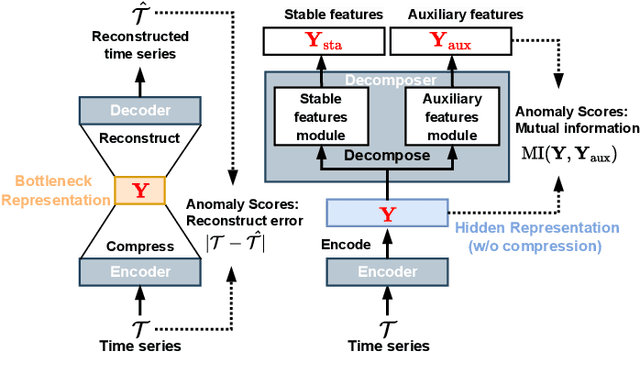
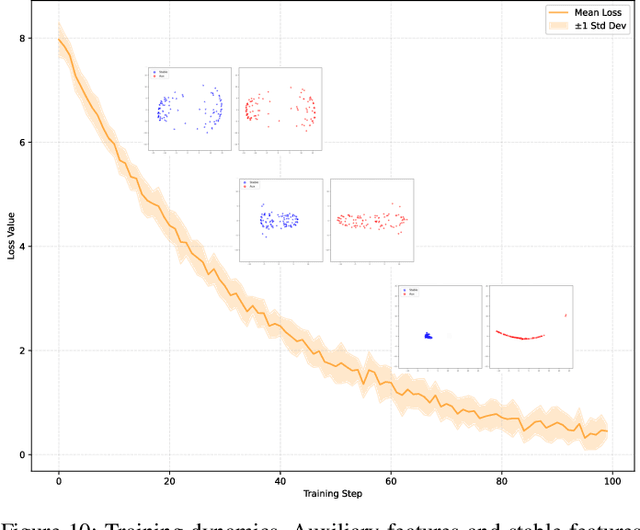
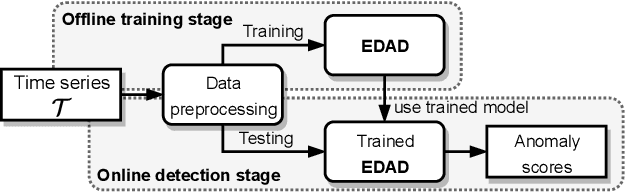
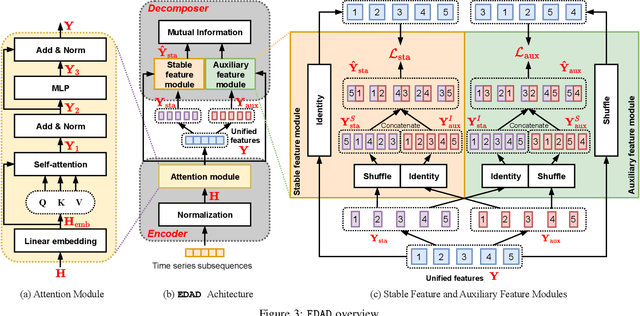
Time series anomaly detection is important in modern large-scale systems and is applied in a variety of domains to analyze and monitor the operation of diverse systems. Unsupervised approaches have received widespread interest, as they do not require anomaly labels during training, thus avoiding potentially high costs and having wider applications. Among these, autoencoders have received extensive attention. They use reconstruction errors from compressed representations to define anomaly scores. However, representations learned by autoencoders are sensitive to anomalies in training time series, causing reduced accuracy. We propose a novel encode-then-decompose paradigm, where we decompose the encoded representation into stable and auxiliary representations, thereby enhancing the robustness when training with contaminated time series. In addition, we propose a novel mutual information based metric to replace the reconstruction errors for identifying anomalies. Our proposal demonstrates competitive or state-of-the-art performance on eight commonly used multi- and univariate time series benchmarks and exhibits robustness to time series with different contamination ratios.
TEAM: Topological Evolution-aware Framework for Traffic Forecasting--Extended Version
Oct 24, 2024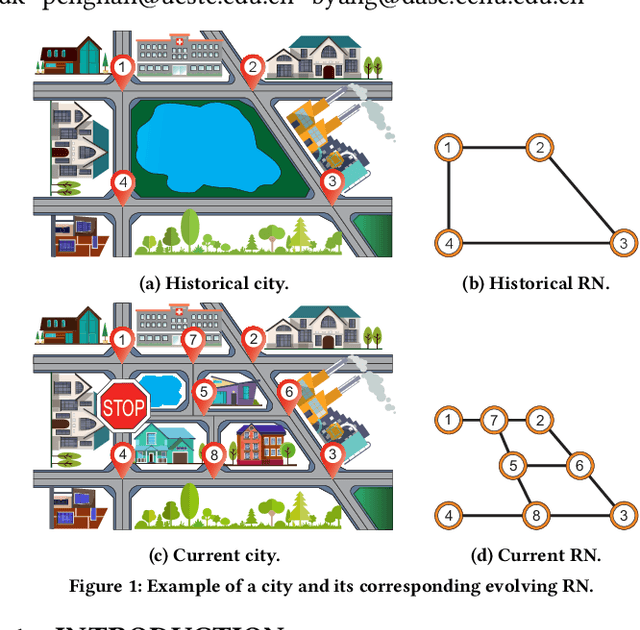
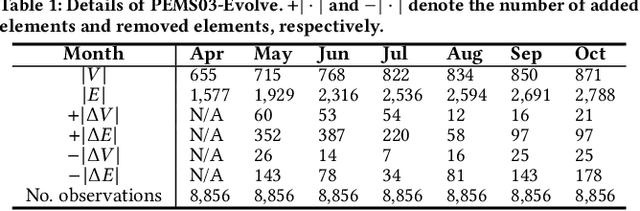
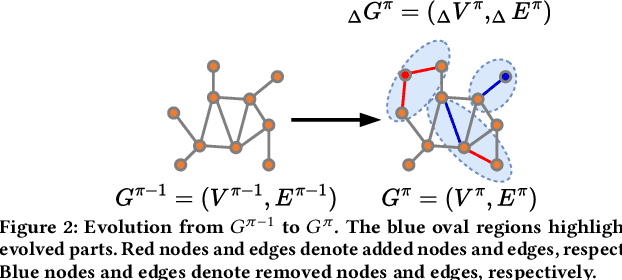
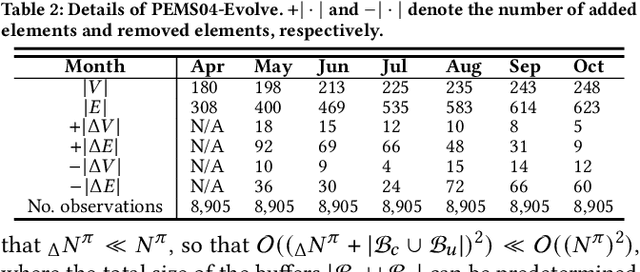
Due to the global trend towards urbanization, people increasingly move to and live in cities that then continue to grow. Traffic forecasting plays an important role in the intelligent transportation systems of cities as well as in spatio-temporal data mining. State-of-the-art forecasting is achieved by deep-learning approaches due to their ability to contend with complex spatio-temporal dynamics. However, existing methods assume the input is fixed-topology road networks and static traffic time series. These assumptions fail to align with urbanization, where time series are collected continuously and road networks evolve over time. In such settings, deep-learning models require frequent re-initialization and re-training, imposing high computational costs. To enable much more efficient training without jeopardizing model accuracy, we propose the Topological Evolution-aware Framework (TEAM) for traffic forecasting that incorporates convolution and attention. This combination of mechanisms enables better adaptation to newly collected time series, while being able to maintain learned knowledge from old time series. TEAM features a continual learning module based on the Wasserstein metric that acts as a buffer that can identify the most stable and the most changing network nodes. Then, only data related to stable nodes is employed for re-training when consolidating a model. Further, only data of new nodes and their adjacent nodes as well as data pertaining to changing nodes are used to re-train the model. Empirical studies with two real-world traffic datasets offer evidence that TEAM is capable of much lower re-training costs than existing methods are, without jeopardizing forecasting accuracy.