 Add to Chrome
 Add to Firefox
 Add to Edge
When Denoising Hurts: Rethinking the Terminal Step of Diffusion Time Series Forecasters -- Extended Version
Aug 14, 2026
Diffusion models offer a natural way to model uncertainty in time series forecasting, yet their iterative sampling process is often treated as a uniformly beneficial refinement procedure. Our study challenges this view by examining how forecast quality evolves throughout reverse diffusion. We find that general temporal structure is often recovered at relatively high noise levels, whereas continued low-noise refinement can introduce statistical drift and degrade the final forecast. Our analysis further suggests that this behavior explains why prior methods often favor relatively narrow diffusion architecture and schedule design. Building on this observation, we propose a label-free global stopping criterion that detects the optimal termination point, eventually speeding up inference and improving predictive accuracy. Additionally, since early stopping terminates inference in high-noise regions, we propose a Bernoulli timestep sampler that concentrates training on this region while preserving coverage of the full diffusion process. Extensive experiments conducted across eight real-world datasets demonstrate the superior performance of our method compared to existing approaches.

LIBMoE: A Library for comprehensive benchmarking Mixture of Experts in Large Language Models
Nov 01, 2024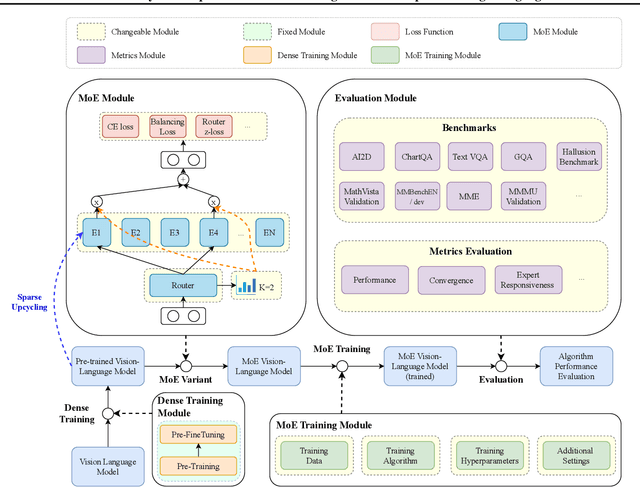
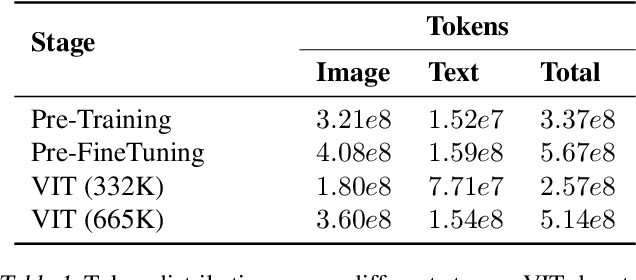
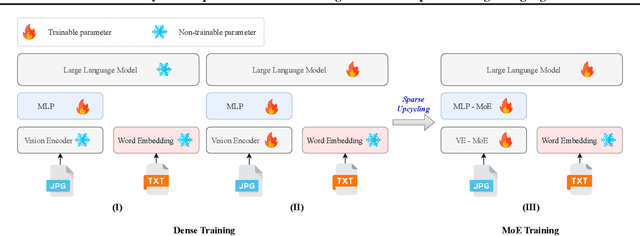
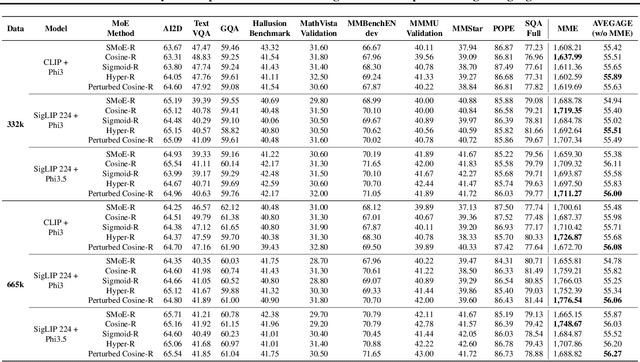
Mixture of Experts (MoEs) plays an important role in the development of more efficient and effective large language models (LLMs). Due to the enormous resource requirements, studying large scale MoE algorithms remain in-accessible to many researchers. This work develops \emph{LibMoE}, a comprehensive and modular framework to streamline the research, training, and evaluation of MoE algorithms. Built upon three core principles: (i) modular design, (ii) efficient training; (iii) comprehensive evaluation, LibMoE brings MoE in LLMs more accessible to a wide range of researchers by standardizing the training and evaluation pipelines. Using LibMoE, we extensively benchmarked five state-of-the-art MoE algorithms over three different LLMs and 11 datasets under the zero-shot setting. The results show that despite the unique characteristics, all MoE algorithms perform roughly similar when averaged across a wide range of tasks. With the modular design and extensive evaluation, we believe LibMoE will be invaluable for researchers to make meaningful progress towards the next generation of MoE and LLMs. Project page: \url{https://fsoft-aic.github.io/fsoft-LibMoE.github.io}.