 Add to Chrome
 Add to Firefox
 Add to Edge
STELLAR: Scaling 3D Perception Large Models for Autonomous Driving
May 19, 2026
Model scaling has demonstrated remarkable success through large-scale training on diverse datasets. It remains an open question whether the same paradigm would apply to autonomous driving perception systems due to unique challenges, such as fusing heterogeneous sensor data and the need for sophisticated 3D spatial understanding. To bridge this gap, we present a comprehensive study on systematically analyzing the impact of scale on these systems. We develop our STELLAR model based on Sparse Window Transformer, by extending the input modalities to include LiDAR, radar, camera, and map prior. We train the model on a large-scale dataset of 50 million driving examples with up to 500 million parameters. Our large-scale experiments reveal empirical scaling trends that connect model performance to model size, data, and compute. The resulting model establishes a new state-of-the-art on the Waymo Open Dataset challenge, outperforming prior arts by a large margin. Our work demonstrates that large-scale training is a highly promising path for advancing the capabilities of perception models for autonomous driving.

Scaling laws in wearable human activity recognition
Feb 05, 2025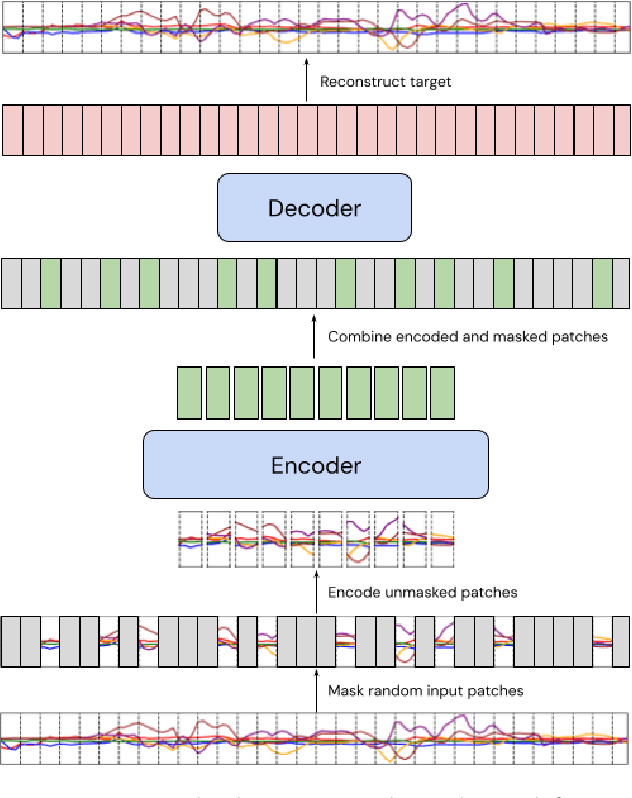
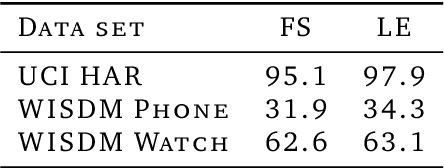
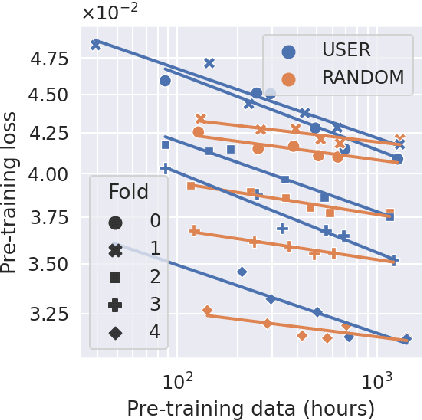
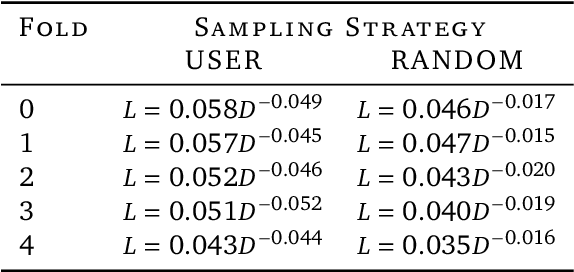
Many deep architectures and self-supervised pre-training techniques have been proposed for human activity recognition (HAR) from wearable multimodal sensors. Scaling laws have the potential to help move towards more principled design by linking model capacity with pre-training data volume. Yet, scaling laws have not been established for HAR to the same extent as in language and vision. By conducting an exhaustive grid search on both amount of pre-training data and Transformer architectures, we establish the first known scaling laws for HAR. We show that pre-training loss scales with a power law relationship to amount of data and parameter count and that increasing the number of users in a dataset results in a steeper improvement in performance than increasing data per user, indicating that diversity of pre-training data is important, which contrasts to some previously reported findings in self-supervised HAR. We show that these scaling laws translate to downstream performance improvements on three HAR benchmark datasets of postures, modes of locomotion and activities of daily living: UCI HAR and WISDM Phone and WISDM Watch. Finally, we suggest some previously published works should be revisited in light of these scaling laws with more adequate model capacities.