 Add to Chrome
 Add to Firefox
 Add to Edge
Towards Expert-level Medical AI for Real-time Video Consultations
Aug 10, 2026
Audio-visual interaction is the standard for patient-physician consultations, enabling natural communication and effective assessment of illness through non-verbal cues. While text-based AI has shown promise, it discards essential perceptual dimensions and limits patients who cannot articulate symptoms in writing. Early efforts to extend medical AI to audio-visual interaction have demonstrated feasibility but not reached clinician-level performance. Here, we provide the first demonstration of expert-level AI in real-time clinical video consultations using AMIE (Articulate Medical Intelligence Explorer) in a video configuration. AMIE (Video) is a Gemini-based multi-agent system integrating low-latency dialogue, clinical reasoning, and real-time audio-visual perception. To guide development, we established a taxonomy and automated evaluations for clinical audio-visual cues in telehealth settings. In a randomized Objective Structured Clinical Examination (OSCE) study with 30 primary care physicians (PCPs), 15 patient actors and 100 clinical scenarios, we compared AMIE (Video), its text-only counterpart AMIE (Text), and PCPs consulting via video. Clinical evaluators rated AMIE (Video) on par or better than PCPs in history-taking, diagnosis, management, and physical observation and examination. Patient actors preferred AMIE's approach to assessing and explaining conditions, while PCPs were preferred for rapport and partnership building. In modality ablation, patient actors preferred AMIE (Video)'s interface over text chat for communicative effectiveness, convenience, and feeling understood. Limitations remain in fine anatomical precision, subtle affective nuances, and high-frequency movements. While further research is needed before real-world translation, these results mark an important milestone toward AI systems capable of augmenting care across the sensory complexity of clinical practice.

ResidencyRL: Reinforcement Learning in Simulated Clinical Environments
Aug 07, 2026In medical education, physicians convert academic knowledge into clinical expertise through residency: years of training across thousands of encounters, with diverse sources of feedback and progressively greater autonomy. Much of clinical reasoning relies on the patient encounter, a dialogue in which a clinician elicits history, refines diagnostic hypotheses, and decides management under uncertainty. While large language models (LLMs) excel on static medical benchmarks, methods to optimize the full sequence of clinical decisions remain underdeveloped. We present ResidencyRL, a reinforcement learning (RL) method for training clinical artificial intelligence (AI) agents through simulated multi-turn clinical encounters (up to 60 dialogue turns and 8 tool calls per trajectory). ResidencyRL pairs the policy agent with LLM simulators capable of complex, adversarial behaviors, training against a structured reward aligned to diagnostic accuracy, management quality, communication, documentation, and safety. On held-out evaluations, the ResidencyRL agent improves diagnostic accuracy by 7.0% under adversarial conditions (88.0% vs. 81.0%) and reduces missed red flag rates by 31%, demonstrating rigorous mitigation of premature closure. Blinded expert clinicians validated these gains, preferring the trained agent in 87.6% of side-by-side comparisons. The procedural competencies transfer to unseen benchmarks: the agent outperforms the base model across all six clinical axes of the AMIE multi-visit benchmark, and shows consistent directional improvements on AgentClinic and CRAFT-MD. Our findings demonstrate that sequential clinical decision-making can be effectively learned through multi-turn RL in simulation, yielding robust, generalizable capabilities, paving the way towards clinical mastery. Prospective validation with real-world workflows remains necessary to establish clinical utility.
Gemma 4 Technical Report
Jul 02, 2026We introduce Gemma 4, a new generation of open-weight, natively multimodal language models in the Gemma model family. Designed to advance compute efficiency and reasoning, the Gemma 4 model suite features dense and Mixture-of-Experts architectures, ranging from 2.3B to 31B parameters. Alongside improved vision and audio encoders for all model sizes, we propose a unified, encoder-free architecture for our 12B model, which ingests raw audio and image patches. Furthermore, we integrate a thinking mode, enabling Gemma models to generate reasoning traces prior to responding. We improve inference speed, memory, and compute efficiency, as well as long-context abilities through critical design choices. Gemma 4 establishes a leap in performance across STEM, multimodal, and long-context benchmarks, and rivals larger, frontier open models in human-rated tasks.
Scaling laws in wearable human activity recognition
Feb 05, 2025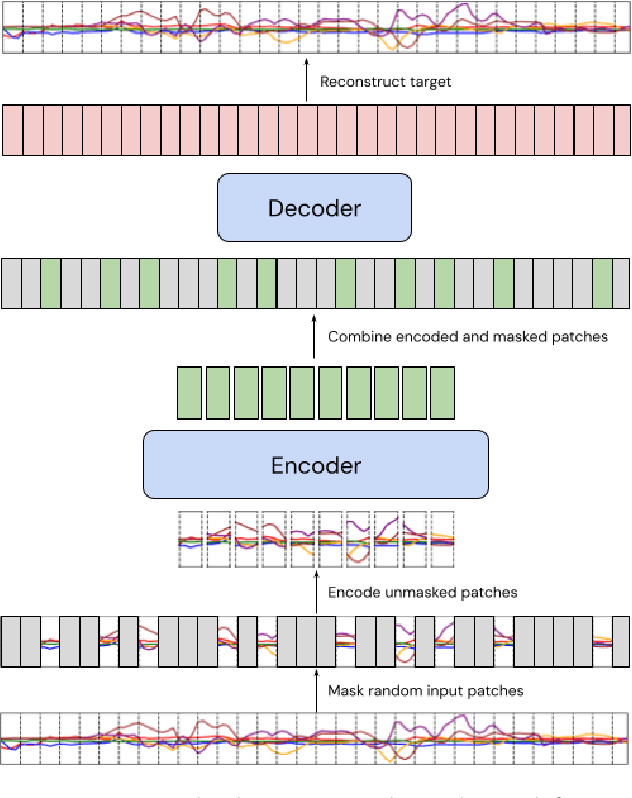
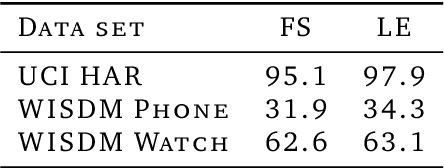
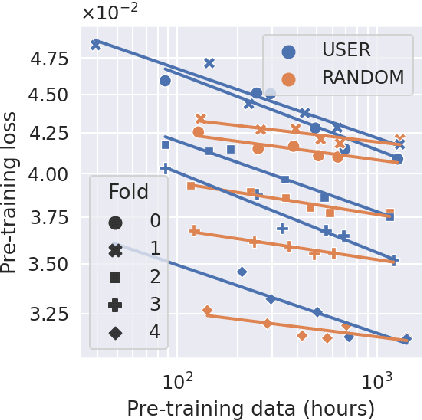
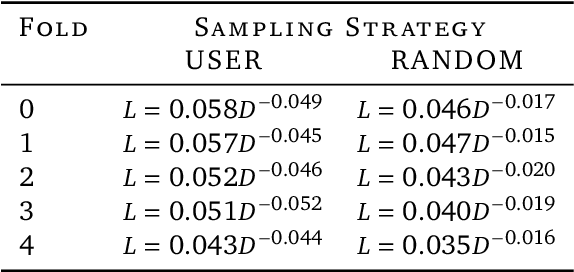
Many deep architectures and self-supervised pre-training techniques have been proposed for human activity recognition (HAR) from wearable multimodal sensors. Scaling laws have the potential to help move towards more principled design by linking model capacity with pre-training data volume. Yet, scaling laws have not been established for HAR to the same extent as in language and vision. By conducting an exhaustive grid search on both amount of pre-training data and Transformer architectures, we establish the first known scaling laws for HAR. We show that pre-training loss scales with a power law relationship to amount of data and parameter count and that increasing the number of users in a dataset results in a steeper improvement in performance than increasing data per user, indicating that diversity of pre-training data is important, which contrasts to some previously reported findings in self-supervised HAR. We show that these scaling laws translate to downstream performance improvements on three HAR benchmark datasets of postures, modes of locomotion and activities of daily living: UCI HAR and WISDM Phone and WISDM Watch. Finally, we suggest some previously published works should be revisited in light of these scaling laws with more adequate model capacities.
MELODI: Exploring Memory Compression for Long Contexts
Oct 04, 2024We present MELODI, a novel memory architecture designed to efficiently process long documents using short context windows. The key principle behind MELODI is to represent short-term and long-term memory as a hierarchical compression scheme across both network layers and context windows. Specifically, the short-term memory is achieved through recurrent compression of context windows across multiple layers, ensuring smooth transitions between windows. In contrast, the long-term memory performs further compression within a single middle layer and aggregates information across context windows, effectively consolidating crucial information from the entire history. Compared to a strong baseline - the Memorizing Transformer employing dense attention over a large long-term memory (64K key-value pairs) - our method demonstrates superior performance on various long-context datasets while remarkably reducing the memory footprint by a factor of 8.
Smartphone-based Hard-braking Event Detection at Scale for Road Safety Services
Feb 04, 2022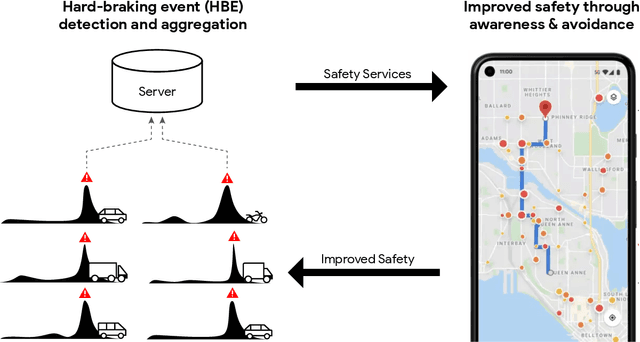
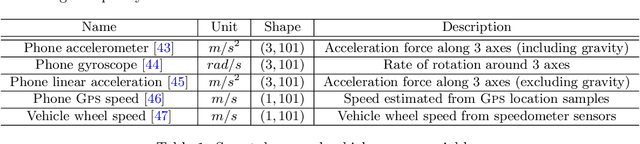
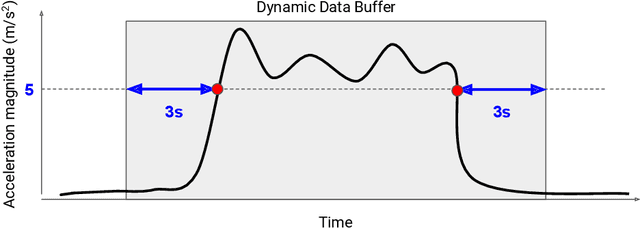

Road crashes are the sixth leading cause of lost disability-adjusted life-years (DALYs) worldwide. One major challenge in traffic safety research is the sparsity of crashes, which makes it difficult to achieve a fine-grain understanding of crash causations and predict future crash risk in a timely manner. Hard-braking events have been widely used as a safety surrogate due to their relatively high prevalence and ease of detection with embedded vehicle sensors. As an alternative to using sensors fixed in vehicles, this paper presents a scalable approach for detecting hard-braking events using the kinematics data collected from smartphone sensors. We train a Transformer-based machine learning model for hard-braking event detection using concurrent sensor readings from smartphones and vehicle sensors from drivers who connect their phone to the vehicle while navigating in Google Maps. The detection model shows superior performance with a $0.83$ Area under the Precision-Recall Curve (PR-AUC), which is $3.8\times$better than a GPS speed-based heuristic model, and $166.6\times$better than an accelerometer-based heuristic model. The detected hard-braking events are strongly correlated with crashes from publicly available datasets, supporting their use as a safety surrogate. In addition, we conduct model fairness and selection bias evaluation to ensure that the safety benefits are equally shared. The developed methodology can benefit many safety applications such as identifying safety hot spots at road network level, evaluating the safety of new user interfaces, as well as using routing to improve traffic safety.