 Add to Chrome
 Add to Firefox
 Add to Edge
VitalDiagnosis: AI-Driven Ecosystem for 24/7 Vital Monitoring and Chronic Disease Management
Jan 22, 2026
Chronic diseases have become the leading cause of death worldwide, a challenge intensified by strained medical resources and an aging population. Individually, patients often struggle to interpret early signs of deterioration or maintain adherence to care plans. In this paper, we introduce VitalDiagnosis, an LLM-driven ecosystem designed to shift chronic disease management from passive monitoring to proactive, interactive engagement. By integrating continuous data from wearable devices with the reasoning capabilities of LLMs, the system addresses both acute health anomalies and routine adherence. It analyzes triggers through context-aware inquiries, produces provisional insights within a collaborative patient-clinician workflow, and offers personalized guidance. This approach aims to promote a more proactive and cooperative care paradigm, with the potential to enhance patient self-management and reduce avoidable clinical workload.

Reasoning Palette: Modulating Reasoning via Latent Contextualization for Controllable Exploration for (V)LMs
Dec 19, 2025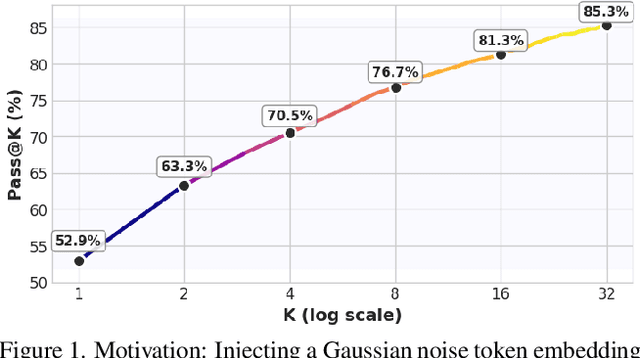
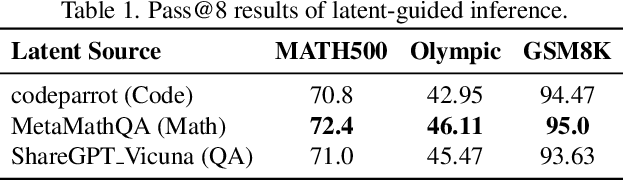
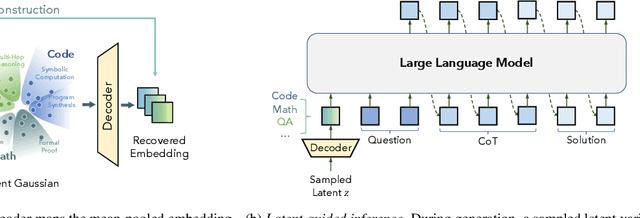
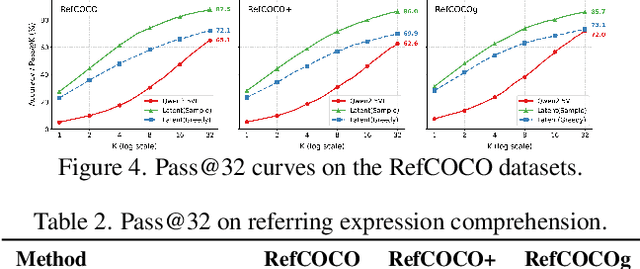
Exploration capacity shapes both inference-time performance and reinforcement learning (RL) training for large (vision-) language models, as stochastic sampling often yields redundant reasoning paths with little high-level diversity. This paper proposes Reasoning Palette, a novel latent-modulation framework that endows the model with a stochastic latent variable for strategic contextualization, guiding its internal planning prior to token generation. This latent context is inferred from the mean-pooled embedding of a question-answer pair via a variational autoencoder (VAE), where each sampled latent potentially encodes a distinct reasoning context. During inference, a sampled latent is decoded into learnable token prefixes and prepended to the input prompt, modulating the model's internal reasoning trajectory. In this way, the model performs internal sampling over reasoning strategies prior to output generation, which shapes the style and structure of the entire response sequence. A brief supervised fine-tuning (SFT) warm-up phase allows the model to adapt to this latent conditioning. Within RL optimization, Reasoning Palette facilitates structured exploration by enabling on-demand injection for diverse reasoning modes, significantly enhancing exploration efficiency and sustained learning capability. Experiments across multiple reasoning benchmarks demonstrate that our method enables interpretable and controllable control over the (vision-) language model's strategic behavior, thereby achieving consistent performance gains over standard RL methods.
LangGFM: A Large Language Model Alone Can be a Powerful Graph Foundation Model
Oct 19, 2024
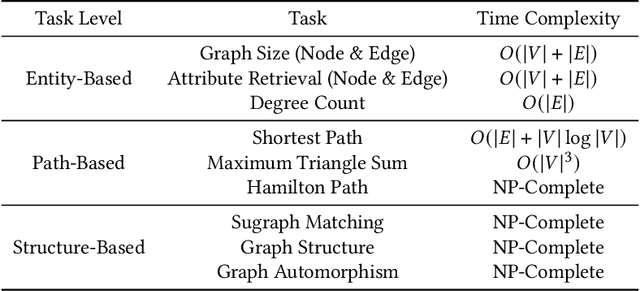

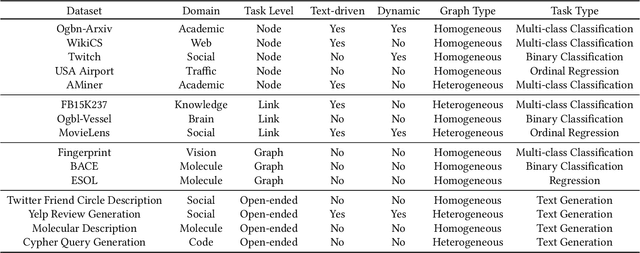
Graph foundation models (GFMs) have recently gained significant attention. However, the unique data processing and evaluation setups employed by different studies hinder a deeper understanding of their progress. Additionally, current research tends to focus on specific subsets of graph learning tasks, such as structural tasks, node-level tasks, or classification tasks. As a result, they often incorporate specialized modules tailored to particular task types, losing their applicability to other graph learning tasks and contradicting the original intent of foundation models to be universal. Therefore, to enhance consistency, coverage, and diversity across domains, tasks, and research interests within the graph learning community in the evaluation of GFMs, we propose GFMBench-a systematic and comprehensive benchmark comprising 26 datasets. Moreover, we introduce LangGFM, a novel GFM that relies entirely on large language models. By revisiting and exploring the effective graph textualization principles, as well as repurposing successful techniques from graph augmentation and graph self-supervised learning within the language space, LangGFM achieves performance on par with or exceeding the state of the art across GFMBench, which can offer us new perspectives, experiences, and baselines to drive forward the evolution of GFMs.
Empowering Dual-Level Graph Self-Supervised Pretraining with Motif Discovery
Dec 19, 2023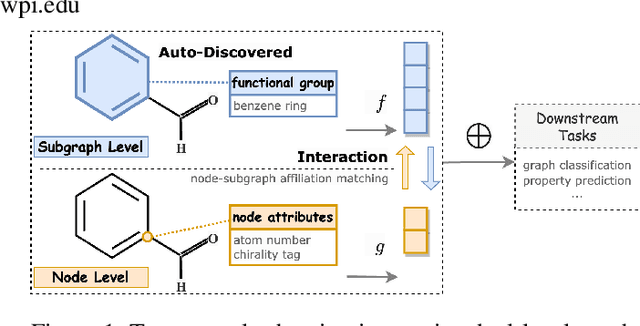
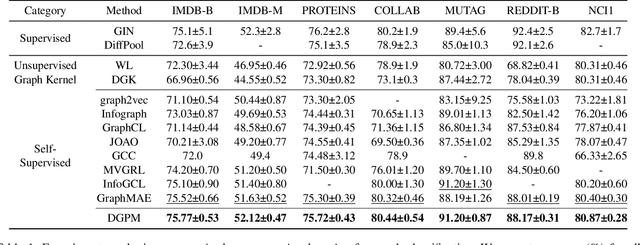
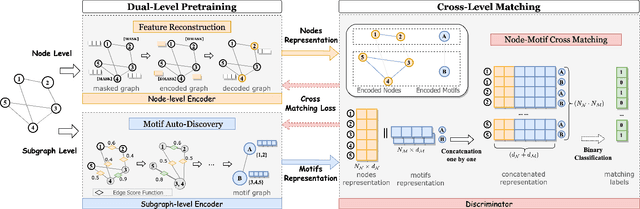
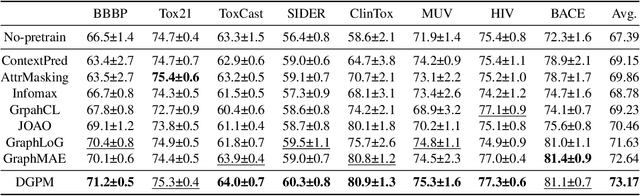
While self-supervised graph pretraining techniques have shown promising results in various domains, their application still experiences challenges of limited topology learning, human knowledge dependency, and incompetent multi-level interactions. To address these issues, we propose a novel solution, Dual-level Graph self-supervised Pretraining with Motif discovery (DGPM), which introduces a unique dual-level pretraining structure that orchestrates node-level and subgraph-level pretext tasks. Unlike prior approaches, DGPM autonomously uncovers significant graph motifs through an edge pooling module, aligning learned motif similarities with graph kernel-based similarities. A cross-matching task enables sophisticated node-motif interactions and novel representation learning. Extensive experiments on 15 datasets validate DGPM's effectiveness and generalizability, outperforming state-of-the-art methods in unsupervised representation learning and transfer learning settings. The autonomously discovered motifs demonstrate the potential of DGPM to enhance robustness and interpretability.
Towards Human-like Perception: Learning Structural Causal Model in Heterogeneous Graph
Dec 10, 2023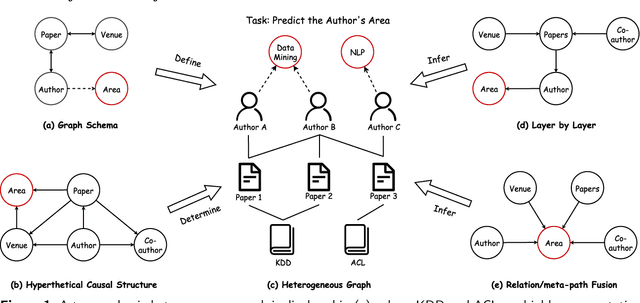
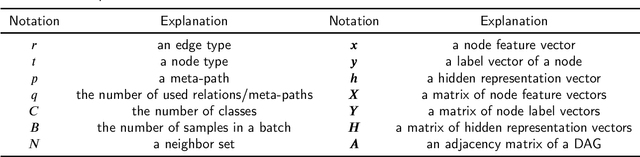
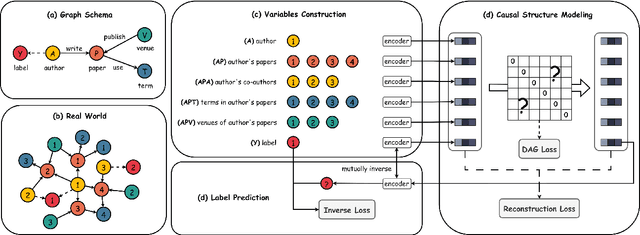

Heterogeneous graph neural networks have become popular in various domains. However, their generalizability and interpretability are limited due to the discrepancy between their inherent inference flows and human reasoning logic or underlying causal relationships for the learning problem. This study introduces a novel solution, HG-SCM (Heterogeneous Graph as Structural Causal Model). It can mimic the human perception and decision process through two key steps: constructing intelligible variables based on semantics derived from the graph schema and automatically learning task-level causal relationships among these variables by incorporating advanced causal discovery techniques. We compared HG-SCM to seven state-of-the-art baseline models on three real-world datasets, under three distinct and ubiquitous out-of-distribution settings. HG-SCM achieved the highest average performance rank with minimal standard deviation, substantiating its effectiveness and superiority in terms of both predictive power and generalizability. Additionally, the visualization and analysis of the auto-learned causal diagrams for the three tasks aligned well with domain knowledge and human cognition, demonstrating prominent interpretability. HG-SCM's human-like nature and its enhanced generalizability and interpretability make it a promising solution for special scenarios where transparency and trustworthiness are paramount.
* 28 pages, 10 figures, 6 tables, accepted by Information Processing & Management