 Add to Chrome
 Add to Firefox
 Add to Edge
DiffBP: Generative Diffusion of 3D Molecules for Target Protein Binding
Dec 01, 2022
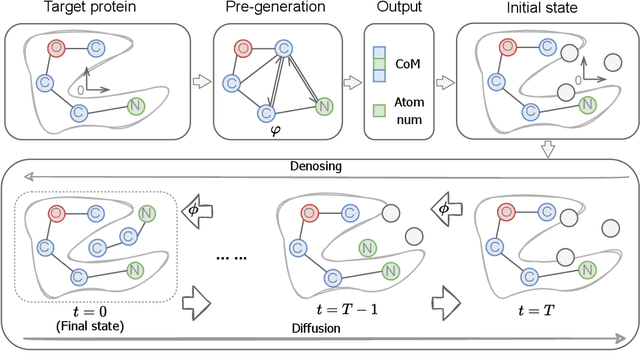

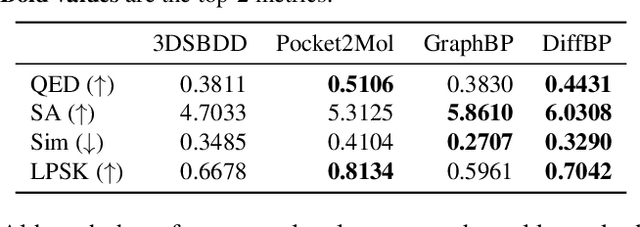
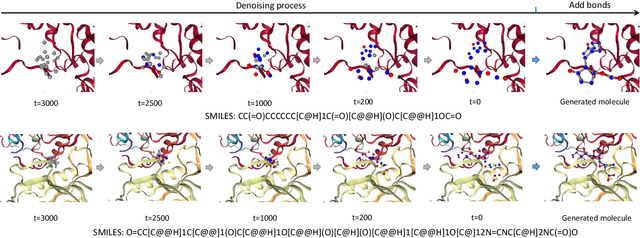
Generating molecules that bind to specific proteins is an important but challenging task in drug discovery. Previous works usually generate atoms in an auto-regressive way, where element types and 3D coordinates of atoms are generated one by one. However, in real-world molecular systems, the interactions among atoms in an entire molecule are global, leading to the energy function pair-coupled among atoms. With such energy-based consideration, the modeling of probability should be based on joint distributions, rather than sequentially conditional ones. Thus, the unnatural sequentially auto-regressive modeling of molecule generation is likely to violate the physical rules, thus resulting in poor properties of the generated molecules. In this work, a generative diffusion model for molecular 3D structures based on target proteins as contextual constraints is established, at a full-atom level in a non-autoregressive way. Given a designated 3D protein binding site, our model learns the generative process that denoises both element types and 3D coordinates of an entire molecule, with an equivariant network. Experimentally, the proposed method shows competitive performance compared with prevailing works in terms of high affinity with proteins and appropriate molecule sizes as well as other drug properties such as drug-likeness of the generated molecules.

Protein Language Models and Structure Prediction: Connection and Progression
Nov 30, 2022
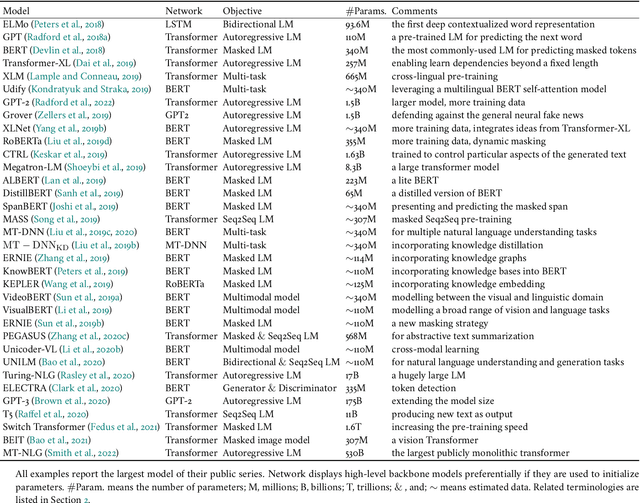

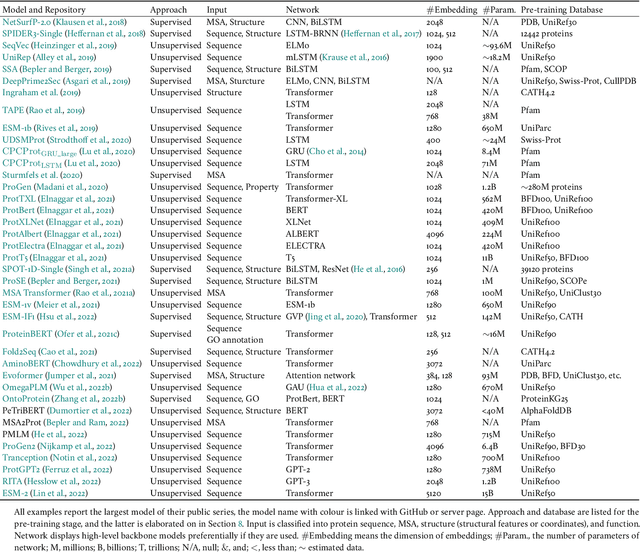
The prediction of protein structures from sequences is an important task for function prediction, drug design, and related biological processes understanding. Recent advances have proved the power of language models (LMs) in processing the protein sequence databases, which inherit the advantages of attention networks and capture useful information in learning representations for proteins. The past two years have witnessed remarkable success in tertiary protein structure prediction (PSP), including evolution-based and single-sequence-based PSP. It seems that instead of using energy-based models and sampling procedures, protein language model (pLM)-based pipelines have emerged as mainstream paradigms in PSP. Despite the fruitful progress, the PSP community needs a systematic and up-to-date survey to help bridge the gap between LMs in the natural language processing (NLP) and PSP domains and introduce their methodologies, advancements and practical applications. To this end, in this paper, we first introduce the similarities between protein and human languages that allow LMs extended to pLMs, and applied to protein databases. Then, we systematically review recent advances in LMs and pLMs from the perspectives of network architectures, pre-training strategies, applications, and commonly-used protein databases. Next, different types of methods for PSP are discussed, particularly how the pLM-based architectures function in the process of protein folding. Finally, we identify challenges faced by the PSP community and foresee promising research directions along with the advances of pLMs. This survey aims to be a hands-on guide for researchers to understand PSP methods, develop pLMs and tackle challenging problems in this field for practical purposes.
Boosting Novel Category Discovery Over Domains with Soft Contrastive Learning and All-in-One Classifier
Nov 28, 2022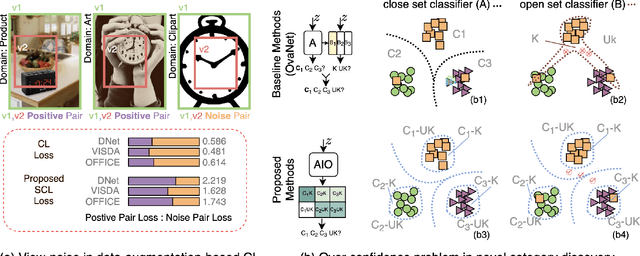
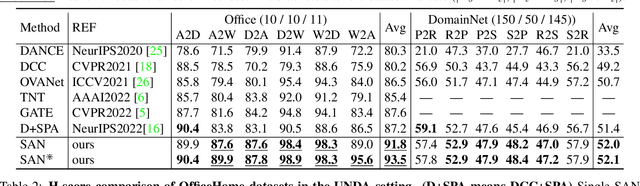
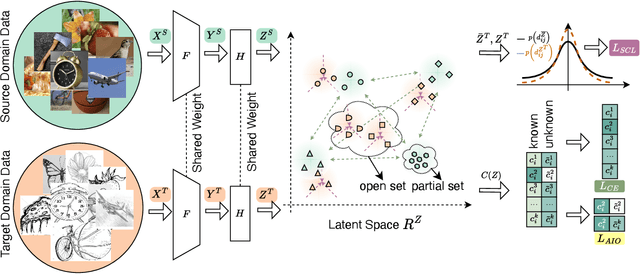
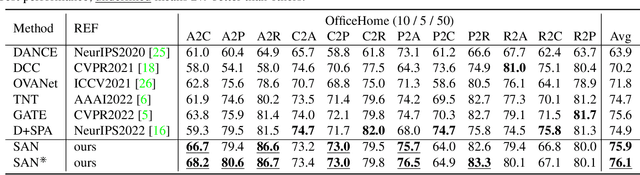
Unsupervised domain adaptation (UDA) has been highly successful in transferring knowledge acquired from a label-rich source domain to a label-scarce target domain. Open-set domain adaptation (ODA) and universal domain adaptation (UNDA) have been proposed as solutions to the problem concerning the presence of additional novel categories in the target domain. Existing ODA and UNDA approaches treat all novel categories as one unified unknown class and attempt to detect this unknown class during the training process. We find that domain variance leads to more significant view-noise in unsupervised data augmentation, affecting the further applications of contrastive learning~(CL), as well as the current closed-set classifier and open-set classifier causing the model to be overconfident in novel class discovery. To address the above two issues, we propose Soft-contrastive All-in-one Network~(SAN) for ODA and UNDA tasks. SAN includes a novel data-augmentation-based CL loss, which is used to improve the representational capability, and a more human-intuitive classifier, which is used to improve the new class discovery capability. The soft contrastive learning~(SCL) loss is used to weaken the adverse effects of the data-augmentation label noise problem, which is amplified in domain transfer. The All-in-One~(AIO) classifier overcomes the overconfidence problem of the current mainstream closed-set classifier and open-set classifier in a more human-intuitive way. The visualization results and ablation experiments demonstrate the importance of the two proposed innovations. Moreover, extensive experimental results on ODA and UNDA show that SAN has advantages over the existing state-of-the-art methods.
A Survey of Deep Graph Clustering: Taxonomy, Challenge, and Application
Nov 24, 2022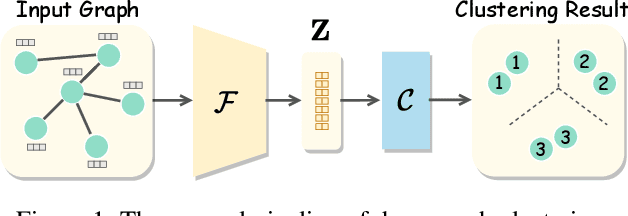
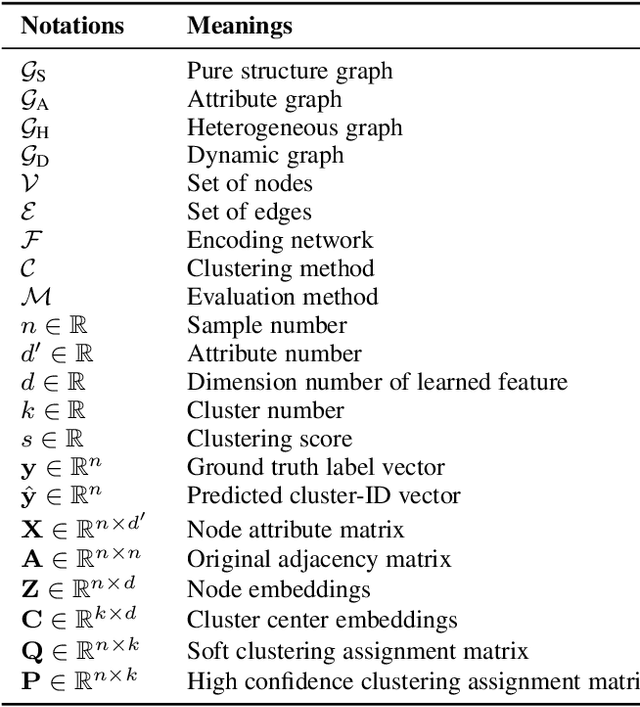
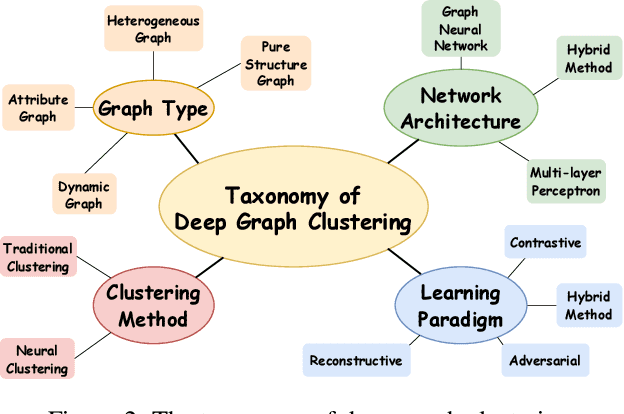
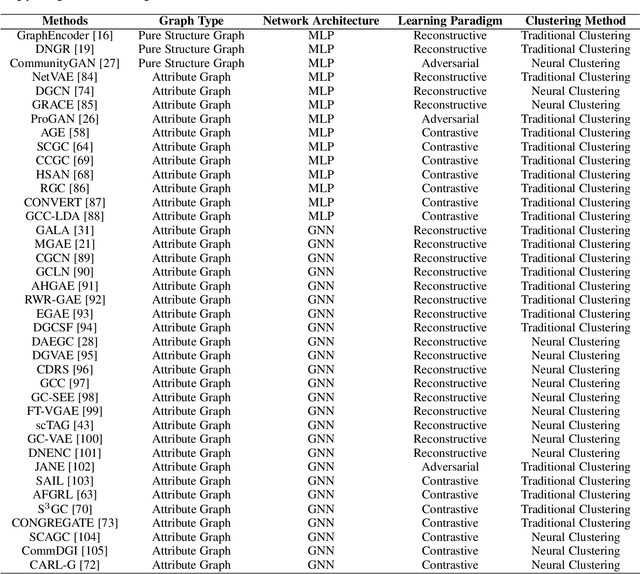
Graph clustering, which aims to divide the nodes in the graph into several distinct clusters, is a fundamental and challenging task. In recent years, deep graph clustering methods have been increasingly proposed and achieved promising performance. However, the corresponding survey paper is scarce and it is imminent to make a summary in this field. From this motivation, this paper makes the first comprehensive survey of deep graph clustering. Firstly, the detailed definition of deep graph clustering and the important baseline methods are introduced. Besides, the taxonomy of deep graph clustering methods is proposed based on four different criteria including graph type, network architecture, learning paradigm, and clustering method. In addition, through the careful analysis of the existing works, the challenges and opportunities from five perspectives are summarized. At last, the applications of deep graph clustering in four domains are presented. It is worth mentioning that a collection of state-of-the-art deep graph clustering methods including papers, codes, and datasets is available on GitHub. We hope this work will serve as a quick guide and help researchers to overcome challenges in this vibrant field.
SimVP: Towards Simple yet Powerful Spatiotemporal Predictive Learning
Nov 22, 2022Recent years have witnessed remarkable advances in spatiotemporal predictive learning, incorporating auxiliary inputs, elaborate neural architectures, and sophisticated training strategies. Although impressive, the system complexity of mainstream methods is increasing as well, which may hinder the convenient applications. This paper proposes SimVP, a simple spatiotemporal predictive baseline model that is completely built upon convolutional networks without recurrent architectures and trained by common mean squared error loss in an end-to-end fashion. Without introducing any extra tricks and strategies, SimVP can achieve superior performance on various benchmark datasets. To further improve the performance, we derive variants with the gated spatiotemporal attention translator from SimVP that can achieve better performance. We demonstrate that SimVP has strong generalization and extensibility on real-world datasets through extensive experiments. The significant reduction in training cost makes it easier to scale to complex scenarios. We believe SimVP can serve as a solid baseline to benefit the spatiotemporal predictive learning community.
EVNet: An Explainable Deep Network for Dimension Reduction
Nov 21, 2022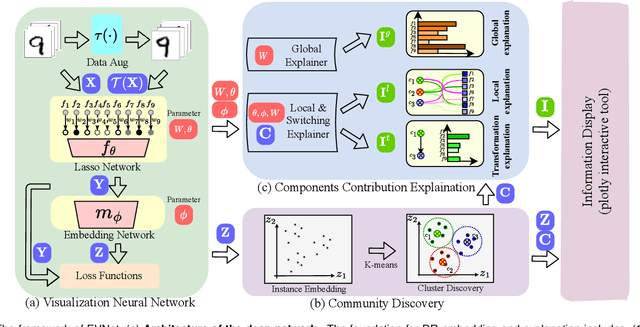
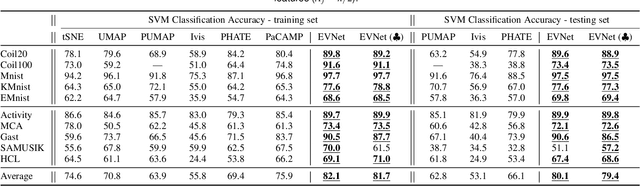
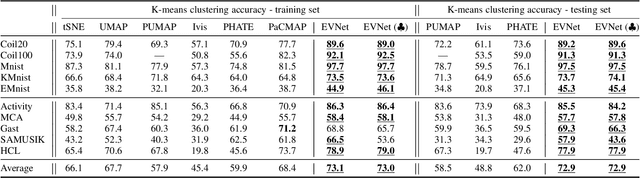
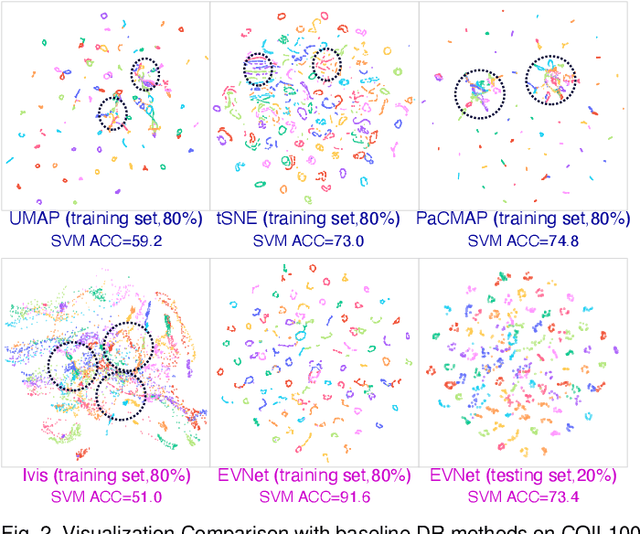
Dimension reduction (DR) is commonly utilized to capture the intrinsic structure and transform high-dimensional data into low-dimensional space while retaining meaningful properties of the original data. It is used in various applications, such as image recognition, single-cell sequencing analysis, and biomarker discovery. However, contemporary parametric-free and parametric DR techniques suffer from several significant shortcomings, such as the inability to preserve global and local features and the pool generalization performance. On the other hand, regarding explainability, it is crucial to comprehend the embedding process, especially the contribution of each part to the embedding process, while understanding how each feature affects the embedding results that identify critical components and help diagnose the embedding process. To address these problems, we have developed a deep neural network method called EVNet, which provides not only excellent performance in structural maintainability but also explainability to the DR therein. EVNet starts with data augmentation and a manifold-based loss function to improve embedding performance. The explanation is based on saliency maps and aims to examine the trained EVNet parameters and contributions of components during the embedding process. The proposed techniques are integrated with a visual interface to help the user to adjust EVNet to achieve better DR performance and explainability. The interactive visual interface makes it easier to illustrate the data features, compare different DR techniques, and investigate DR. An in-depth experimental comparison shows that EVNet consistently outperforms the state-of-the-art methods in both performance measures and explainability.
Efficient Multi-order Gated Aggregation Network
Nov 07, 2022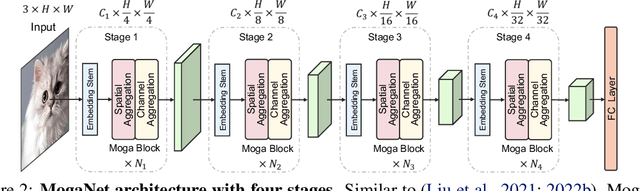

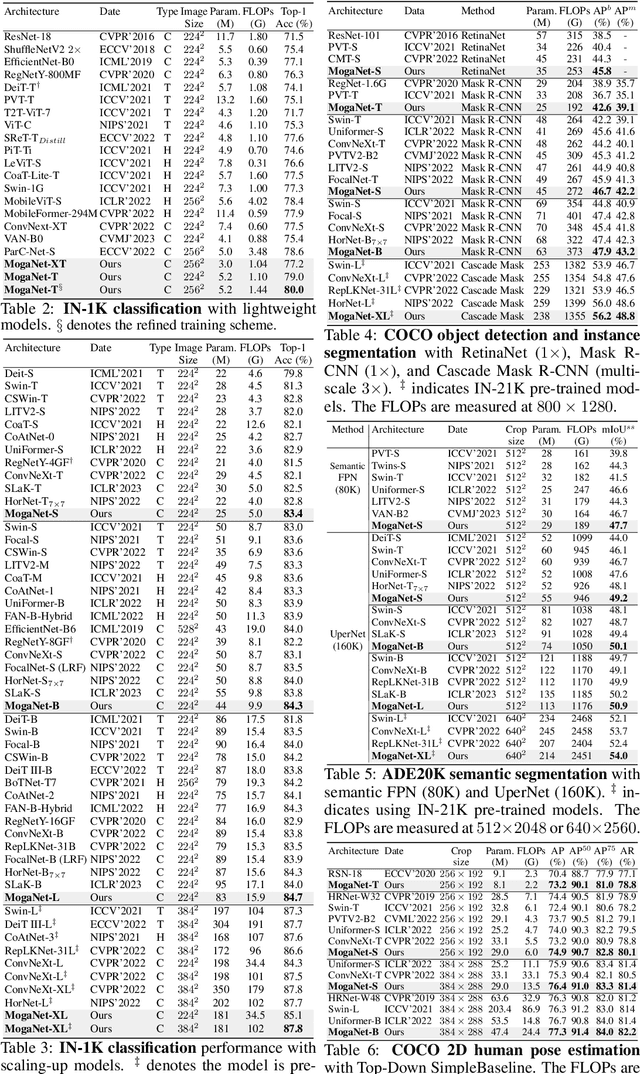

Since the recent success of Vision Transformers (ViTs), explorations toward transformer-style architectures have triggered the resurgence of modern ConvNets. In this work, we explore the representation ability of DNNs through the lens of interaction complexities. We empirically show that interaction complexity is an overlooked but essential indicator for visual recognition. Accordingly, a new family of efficient ConvNets, named MogaNet, is presented to pursue informative context mining in pure ConvNet-based models, with preferable complexity-performance trade-offs. In MogaNet, interactions across multiple complexities are facilitated and contextualized by leveraging two specially designed aggregation blocks in both spatial and channel interaction spaces. Extensive studies are conducted on ImageNet classification, COCO object detection, and ADE20K semantic segmentation tasks. The results demonstrate that our MogaNet establishes new state-of-the-art over other popular methods in mainstream scenarios and all model scales. Typically, the lightweight MogaNet-T achieves 80.0\% top-1 accuracy with only 1.44G FLOPs using a refined training setup on ImageNet-1K, surpassing ParC-Net-S by 1.4\% accuracy but saving 59\% (2.04G) FLOPs.
Leveraging Graph-based Cross-modal Information Fusion for Neural Sign Language Translation
Nov 01, 2022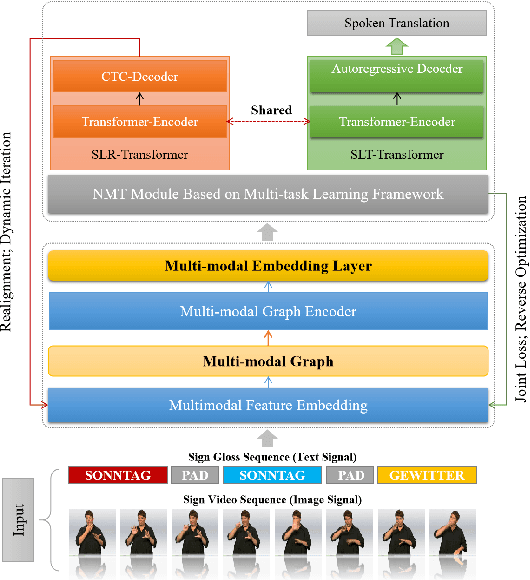
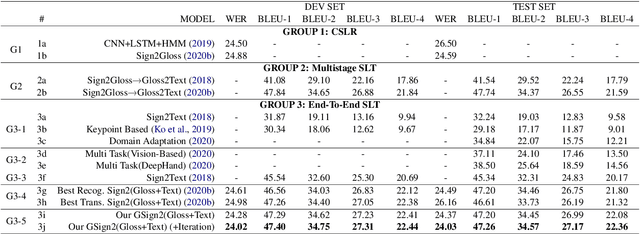
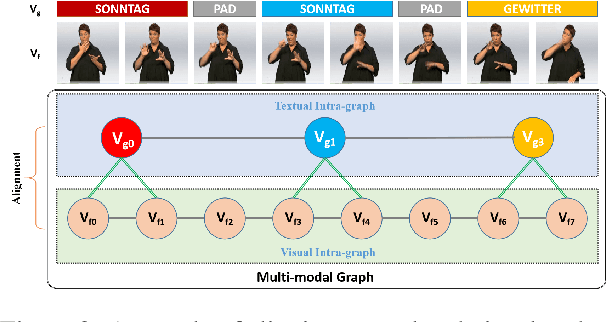
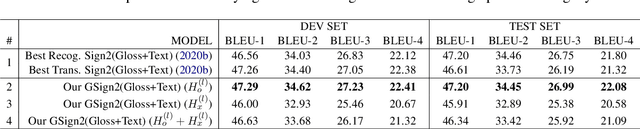
Sign Language (SL), as the mother tongue of the deaf community, is a special visual language that most hearing people cannot understand. In recent years, neural Sign Language Translation (SLT), as a possible way for bridging communication gap between the deaf and the hearing people, has attracted widespread academic attention. We found that the current mainstream end-to-end neural SLT models, which tries to learning language knowledge in a weakly supervised manner, could not mine enough semantic information under the condition of low data resources. Therefore, we propose to introduce additional word-level semantic knowledge of sign language linguistics to assist in improving current end-to-end neural SLT models. Concretely, we propose a novel neural SLT model with multi-modal feature fusion based on the dynamic graph, in which the cross-modal information, i.e. text and video, is first assembled as a dynamic graph according to their correlation, and then the graph is processed by a multi-modal graph encoder to generate the multi-modal embeddings for further usage in the subsequent neural translation models. To the best of our knowledge, we are the first to introduce graph neural networks, for fusing multi-modal information, into neural sign language translation models. Moreover, we conducted experiments on a publicly available popular SLT dataset RWTH-PHOENIX-Weather-2014T. and the quantitative experiments show that our method can improve the model.
Using Context-to-Vector with Graph Retrofitting to Improve Word Embeddings
Oct 30, 2022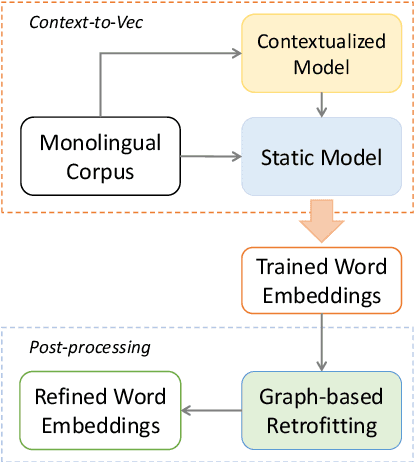
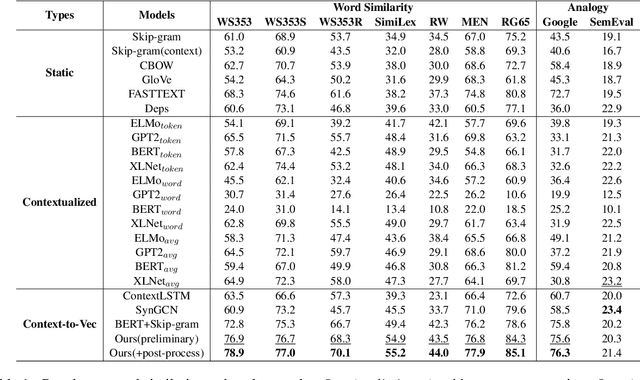
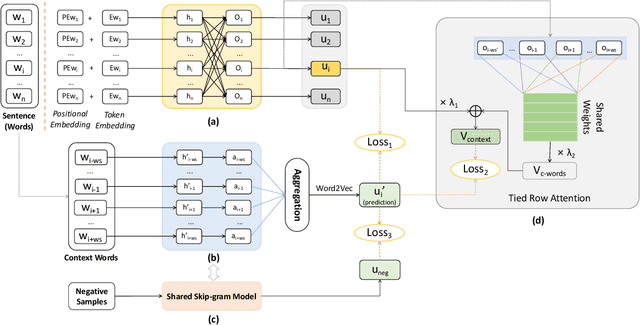
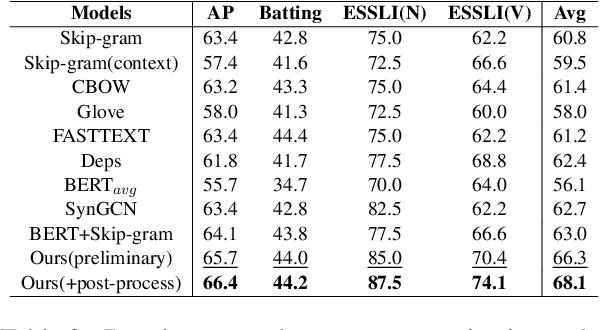
Although contextualized embeddings generated from large-scale pre-trained models perform well in many tasks, traditional static embeddings (e.g., Skip-gram, Word2Vec) still play an important role in low-resource and lightweight settings due to their low computational cost, ease of deployment, and stability. In this paper, we aim to improve word embeddings by 1) incorporating more contextual information from existing pre-trained models into the Skip-gram framework, which we call Context-to-Vec; 2) proposing a post-processing retrofitting method for static embeddings independent of training by employing priori synonym knowledge and weighted vector distribution. Through extrinsic and intrinsic tasks, our methods are well proven to outperform the baselines by a large margin.
A Systematic Survey of Molecular Pre-trained Models
Oct 29, 2022Obtaining effective molecular representations is at the core of a series of important chemical tasks ranging from property prediction to drug design. So far, deep learning has achieved remarkable success in learning representations for molecules through automated feature learning in a data-driven fashion. However, training deep neural networks from scratch often requires sufficient labeled molecules which are expensive to acquire in real-world scenarios. To alleviate this issue, inspired by the success of the pretrain-then-finetune paradigm in natural language processing, tremendous efforts have been devoted to Molecular Pre-trained Models (MPMs), where neural networks are pre-trained using large-scale unlabeled molecular databases and then fine-tuned for diverse downstream tasks. Despite the prosperity, this field is fast-growing and a systematic roadmap is urgently needed for both methodology advancements and practical applications in both machine learning and scientific communities. To this end, this paper provides a systematic survey of pre-trained models for molecular representations. Firstly, to motivate MPMs studies, we highlight the limitations of training deep neural networks for molecular representations. Next, we systematically review recent advances on this topic from several key perspectives including molecular descriptors, encoder architectures, pre-training strategies, and applications. Finally, we identify several challenges and discuss promising future research directions.