 Add to Chrome
 Add to Firefox
 Add to Edge
Physics-Guided Masked Multi-Task Network for Edge-Friendly Battery Health Diagnostics from Sto-chastically Fragmented Charging Profiles
Jul 19, 2026
The deployment of reliable lithium-ion battery management systems is crucial for accelerating electrification, yet the joint prognosis of State of Health (SOH) and Remaining Useful Life (RUL) remains severely hindered by task heteroscedasticity. Conventional multi-task learning frameworks fail to balance the bounded, low-variance noise of SOH estimation with the unbounded, nonlinearly expanding uncertainty of long-term RUL predictions. Here, we present the Rotary SOH-Injected Prior Battery Transformer (RoSIP-Batt), a unified co-estimation framework that resolves these optimization conflicts. By formulating joint prediction as a Bayesian multi-task objective, RoSIP-Batt introduces a homoscedastic uncertainty weighting mechanism to dynamically scale task-specific gradients based on learned residual noise levels. The architecture leverages decoupled dual classification tokens and a per-dimension gated fusion mechanism, secured by a gradient-detachment operator to prevent high-variance RUL updates from corrupting the stable SOH representation space. To capture electrochemical degradation patterns without relying on absolute cycle steps, Rotary Position Embedding (RoPE) is incorporated into a shared Transformer backbone to model translation-invariant relative temporal profiles. Crucially, the intermediate SOH estimate is directly injected into the RUL regression head as a physical degradation prior. Evaluations across the NASA, MIT-Stanford, and HUST datasets show that RoSIP-Batt significantly outperforms state-of-the-art baselines, reducing SOH estimation error to 1.994% MAE on NASA and restricting RUL prediction error to 62.85 cycles on Stanford. These findings establish RoSIP-Batt as a highly generalizable, computationally efficient solution suitable for real-time embedded BMS deployment.

Dynamic Loss Balancing for Joint SOH and RUL Prediction of Lithium-Ion Batteries via a Rotary SOH-Injected Prior Battery Transformer
Jul 19, 2026The deployment of reliable lithium-ion battery management systems is crucial for accelerating electrification, yet the joint prognosis of State of Health (SOH) and Remaining Useful Life (RUL) remains severely hindered by task heteroscedasticity. Conventional multi-task learning frameworks fail to balance the bounded, low-variance noise of SOH estimation with the unbounded, nonlinearly expanding uncertainty of long-term RUL predictions. Here, we present the Rotary SOH-Injected Prior Battery Transformer (RoSIP-Batt), a unified co-estimation framework that resolves these optimization conflicts. By formulating joint prediction as a Bayesian multi-task objective, RoSIP-Batt introduces a homoscedastic uncertainty weighting mechanism to dynamically scale task-specific gradients based on learned residual noise levels. The architecture leverages decoupled dual classification tokens and a per-dimension gated fusion mechanism, secured by a gradient-detachment operator to prevent high-variance RUL updates from corrupting the stable SOH representation space. To capture electrochemical degradation patterns without relying on absolute cycle steps, Rotary Position Embedding (RoPE) is incorporated into a shared Transformer backbone to model translation-invariant relative temporal profiles. Crucially, the intermediate SOH estimate is directly injected into the RUL regression head as a physical degradation prior. Evaluations across the NASA, MIT-Stanford, and HUST datasets show that RoSIP-Batt significantly outperforms state-of-the-art baselines, reducing SOH estimation error to 1.994% MAE on NASA and restricting RUL prediction error to 62.85 cycles on Stanford. These findings establish RoSIP-Batt as a highly generalizable, computationally efficient solution suitable for real-time embedded BMS deployment.
Fine-Grained Sentiment Analysis of Electric Vehicle User Reviews: A Bidirectional LSTM Approach to Capturing Emotional Intensity in Chinese Text
Dec 05, 2024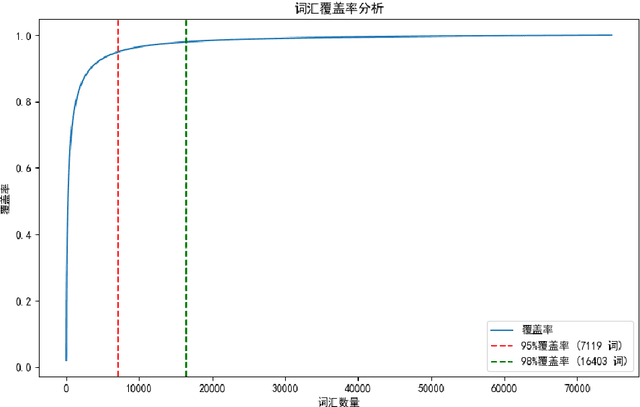
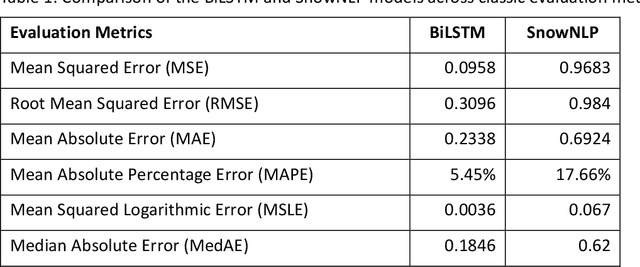
The rapid expansion of the electric vehicle (EV) industry has highlighted the importance of user feedback in improving product design and charging infrastructure. Traditional sentiment analysis methods often oversimplify the complexity of user emotions, limiting their effectiveness in capturing nuanced sentiments and emotional intensities. This study proposes a Bidirectional Long Short-Term Memory (Bi-LSTM) network-based sentiment scoring model to analyze user reviews of EV charging infrastructure. By assigning sentiment scores ranging from 0 to 5, the model provides a fine-grained understanding of emotional expression. Leveraging a dataset of 43,678 reviews from PC Auto, the study employs rigorous data cleaning and preprocessing, including tokenization and stop word removal, to optimize input for deep learning. The Bi-LSTM model demonstrates significant improvements over traditional approaches like SnowNLP across key evaluation metrics, including Mean Squared Error (MSE), Mean Absolute Error (MAE), and Explained Variance Score (EVS). These results highlight the model's superior capability to capture nuanced sentiment dynamics, offering valuable insights for targeted product and service enhancements in the EV ecosystem.