 Add to Chrome
 Add to Firefox
 Add to Edge
DeepPolar: Inventing Nonlinear Large-Kernel Polar Codes via Deep Learning
Feb 14, 2024

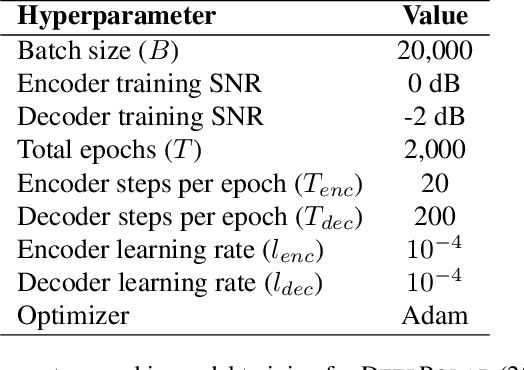

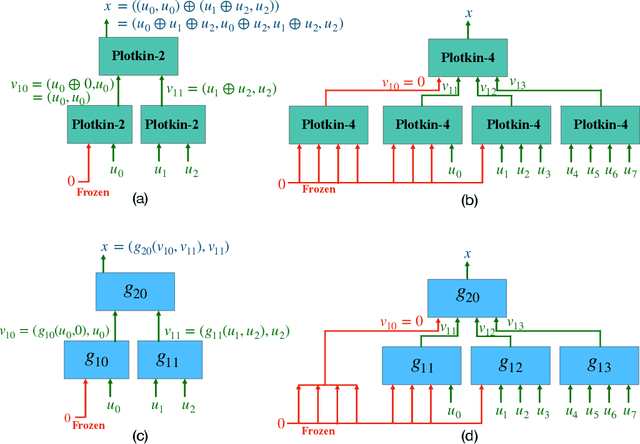
Polar codes, developed on the foundation of Arikan's polarization kernel, represent a breakthrough in coding theory and have emerged as the state-of-the-art error-correction-code in short-to-medium block length regimes. Importantly, recent research has indicated that the reliability of polar codes can be further enhanced by substituting Arikan's kernel with a larger one, leading to a faster polarization. However, for short-to-medium block length regimes, the development of polar codes that effectively employ large kernel sizes has not yet been realized. In this paper, we explore a novel, non-linear generalization of polar codes with an expanded kernel size, which we call DeepPolar codes. Our results show that DeepPolar codes effectively utilize the benefits of larger kernel size, resulting in enhanced reliability compared to both the existing neural codes and conventional polar codes.

Label Poisoning is All You Need
Oct 29, 2023In a backdoor attack, an adversary injects corrupted data into a model's training dataset in order to gain control over its predictions on images with a specific attacker-defined trigger. A typical corrupted training example requires altering both the image, by applying the trigger, and the label. Models trained on clean images, therefore, were considered safe from backdoor attacks. However, in some common machine learning scenarios, the training labels are provided by potentially malicious third-parties. This includes crowd-sourced annotation and knowledge distillation. We, hence, investigate a fundamental question: can we launch a successful backdoor attack by only corrupting labels? We introduce a novel approach to design label-only backdoor attacks, which we call FLIP, and demonstrate its strengths on three datasets (CIFAR-10, CIFAR-100, and Tiny-ImageNet) and four architectures (ResNet-32, ResNet-18, VGG-19, and Vision Transformer). With only 2% of CIFAR-10 labels corrupted, FLIP achieves a near-perfect attack success rate of 99.4% while suffering only a 1.8% drop in the clean test accuracy. Our approach builds upon the recent advances in trajectory matching, originally introduced for dataset distillation.
DPZero: Dimension-Independent and Differentially Private Zeroth-Order Optimization
Oct 14, 2023The widespread practice of fine-tuning pretrained large language models (LLMs) on domain-specific data faces two major challenges in memory and privacy. First, as the size of LLMs continue to grow, encompassing billions of parameters, the memory demands of gradient-based training methods via backpropagation become prohibitively high. Second, given the tendency of LLMs to memorize and disclose sensitive training data, the privacy of fine-tuning data must be respected. To this end, we explore the potential of zeroth-order methods in differentially private optimization for fine-tuning LLMs. Zeroth-order methods, which rely solely on forward passes, substantially reduce memory consumption during training. However, directly combining them with standard differential privacy mechanism poses dimension-dependent complexity. To bridge the gap, we introduce DPZero, a novel differentially private zeroth-order algorithm with nearly dimension-independent rates. Our theoretical analysis reveals that its complexity hinges primarily on the problem's intrinsic dimension and exhibits only a logarithmic dependence on the ambient dimension. This renders DPZero a highly practical option for real-world LLMs deployments.
Profit: Benchmarking Personalization and Robustness Trade-off in Federated Prompt Tuning
Oct 06, 2023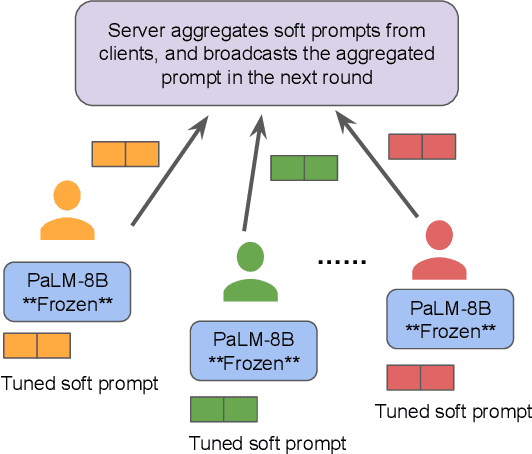

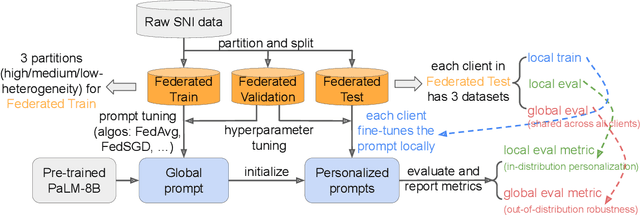

In many applications of federated learning (FL), clients desire models that are personalized using their local data, yet are also robust in the sense that they retain general global knowledge. However, the presence of data heterogeneity across clients induces a fundamental trade-off between personalization (i.e., adaptation to a local distribution) and robustness (i.e., not forgetting previously learned general knowledge). It is critical to understand how to navigate this personalization vs robustness trade-off when designing federated systems, which are increasingly moving towards a paradigm of fine-tuning large foundation models. Due to limited computational and communication capabilities in most federated settings, this foundation model fine-tuning must be done using parameter-efficient fine-tuning (PEFT) approaches. While some recent work has studied federated approaches to PEFT, the personalization vs robustness trade-off of federated PEFT has been largely unexplored. In this work, we take a step towards bridging this gap by benchmarking fundamental FL algorithms -- FedAvg and FedSGD plus personalization (via client local fine-tuning) -- applied to one of the most ubiquitous PEFT approaches to large language models (LLMs) -- prompt tuning -- in a multitude of hyperparameter settings under varying levels of data heterogeneity. Our results show that federated-trained prompts can be surprisingly robust when using a small learning rate with many local epochs for personalization, especially when using an adaptive optimizer as the client optimizer during federated training. We also demonstrate that simple approaches such as adding regularization and interpolating two prompts are effective in improving the personalization vs robustness trade-off in computation-limited settings with few local updates allowed for personalization.
On the Connection between Pre-training Data Diversity and Fine-tuning Robustness
Jul 24, 2023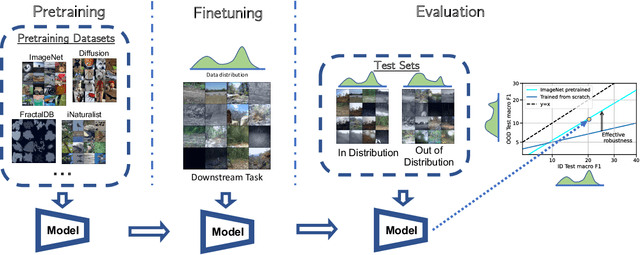

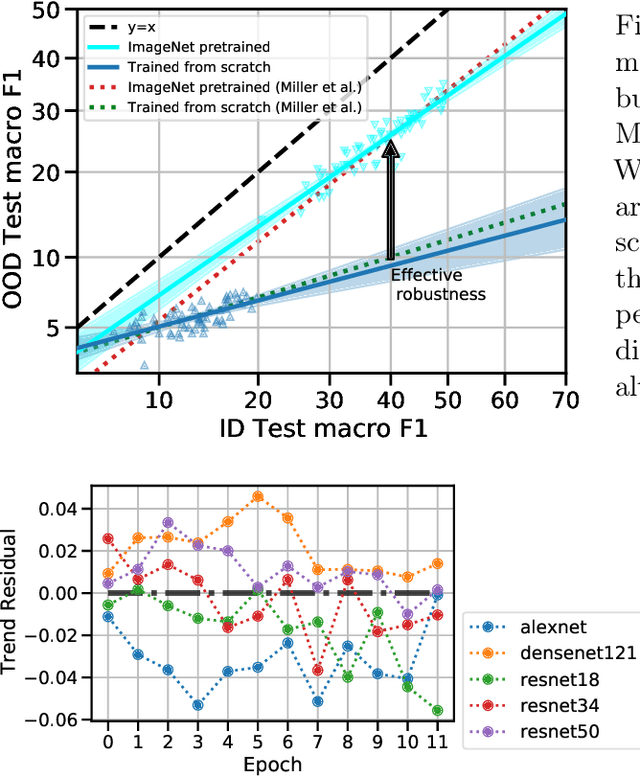
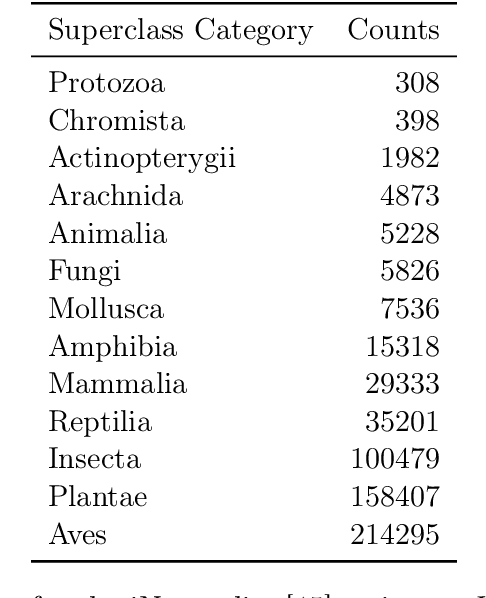
Pre-training has been widely adopted in deep learning to improve model performance, especially when the training data for a target task is limited. In our work, we seek to understand the implications of this training strategy on the generalization properties of downstream models. More specifically, we ask the following question: how do properties of the pre-training distribution affect the robustness of a fine-tuned model? The properties we explore include the label space, label semantics, image diversity, data domains, and data quantity of the pre-training distribution. We find that the primary factor influencing downstream effective robustness (Taori et al., 2020) is data quantity, while other factors have limited significance. For example, reducing the number of ImageNet pre-training classes by 4x while increasing the number of images per class by 4x (that is, keeping total data quantity fixed) does not impact the robustness of fine-tuned models. We demonstrate our findings on pre-training distributions drawn from various natural and synthetic data sources, primarily using the iWildCam-WILDS distribution shift as a test for downstream robustness.
Private Federated Learning with Autotuned Compression
Jul 20, 2023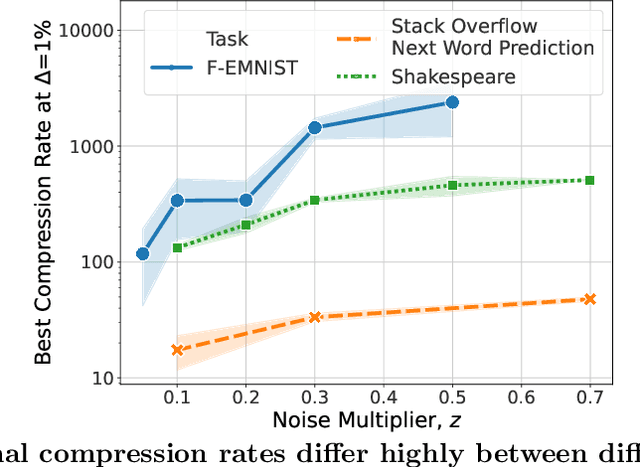
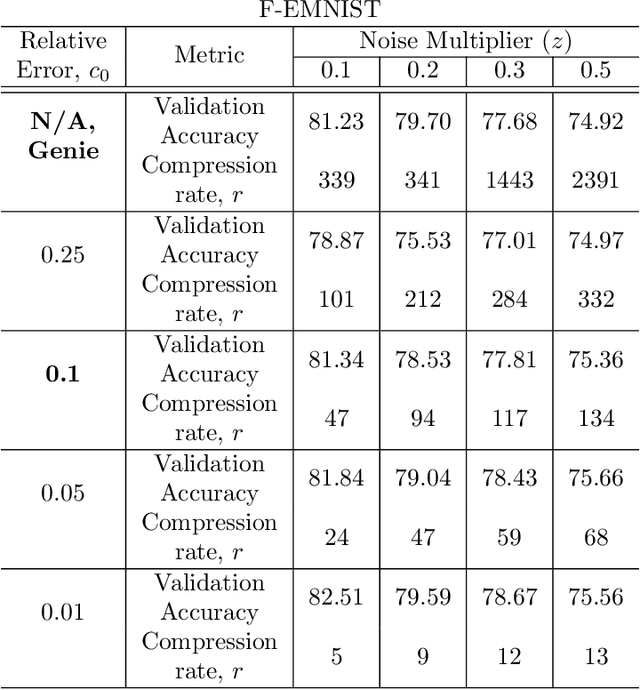
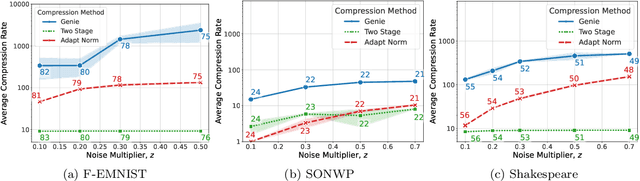
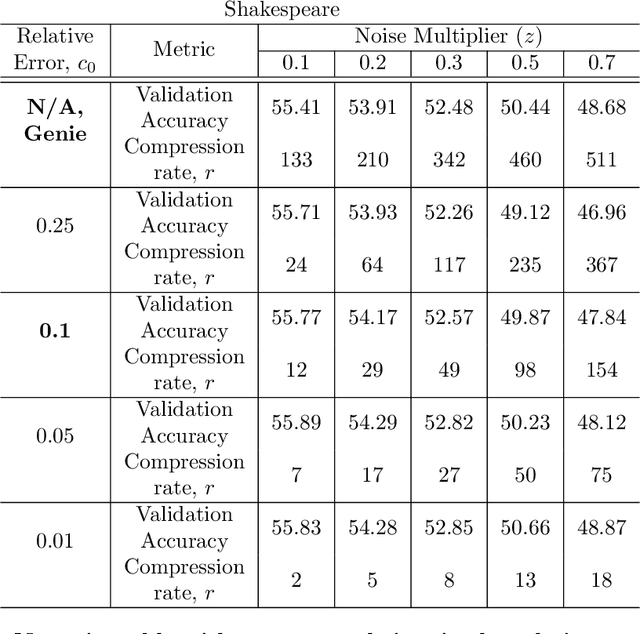
We propose new techniques for reducing communication in private federated learning without the need for setting or tuning compression rates. Our on-the-fly methods automatically adjust the compression rate based on the error induced during training, while maintaining provable privacy guarantees through the use of secure aggregation and differential privacy. Our techniques are provably instance-optimal for mean estimation, meaning that they can adapt to the ``hardness of the problem" with minimal interactivity. We demonstrate the effectiveness of our approach on real-world datasets by achieving favorable compression rates without the need for tuning.
Improving Multimodal Datasets with Image Captioning
Jul 19, 2023
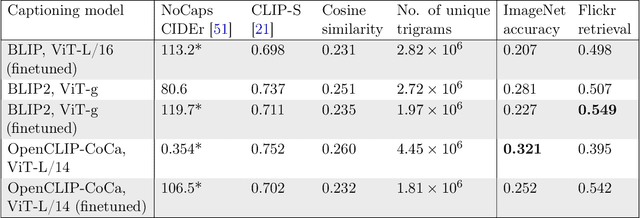
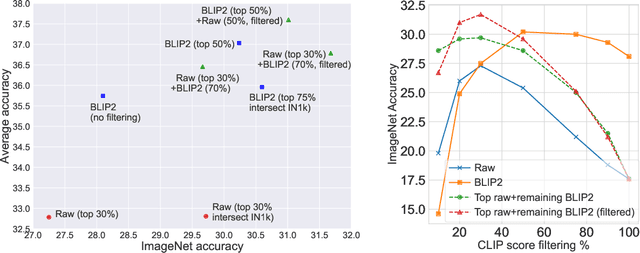

Massive web datasets play a key role in the success of large vision-language models like CLIP and Flamingo. However, the raw web data is noisy, and existing filtering methods to reduce noise often come at the expense of data diversity. Our work focuses on caption quality as one major source of noise, and studies how generated captions can increase the utility of web-scraped datapoints with nondescript text. Through exploring different mixing strategies for raw and generated captions, we outperform the best filtering method proposed by the DataComp benchmark by 2% on ImageNet and 4% on average across 38 tasks, given a candidate pool of 128M image-text pairs. Our best approach is also 2x better at Flickr and MS-COCO retrieval. We then analyze what makes synthetic captions an effective source of text supervision. In experimenting with different image captioning models, we also demonstrate that the performance of a model on standard image captioning benchmarks (e.g., NoCaps CIDEr) is not a reliable indicator of the utility of the captions it generates for multimodal training. Finally, our experiments with using generated captions at DataComp's large scale (1.28B image-text pairs) offer insights into the limitations of synthetic text, as well as the importance of image curation with increasing training data quantity.
Unleashing the Power of Randomization in Auditing Differentially Private ML
May 29, 2023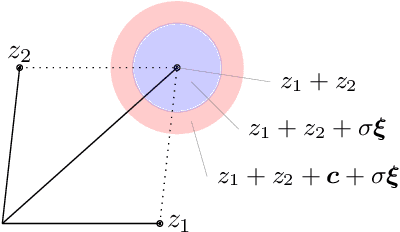
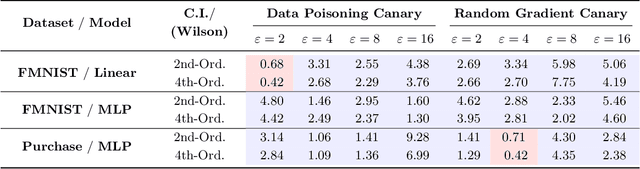
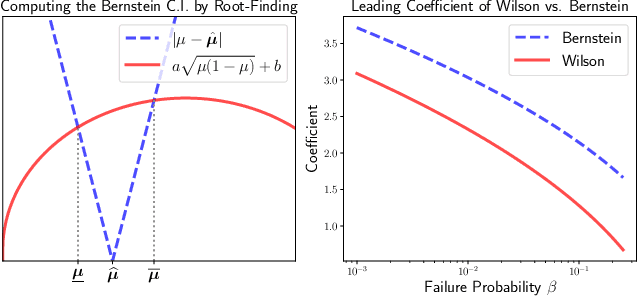
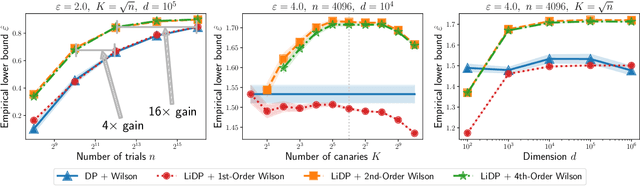
We present a rigorous methodology for auditing differentially private machine learning algorithms by adding multiple carefully designed examples called canaries. We take a first principles approach based on three key components. First, we introduce Lifted Differential Privacy (LiDP) that expands the definition of differential privacy to handle randomized datasets. This gives us the freedom to design randomized canaries. Second, we audit LiDP by trying to distinguish between the model trained with $K$ canaries versus $K - 1$ canaries in the dataset, leaving one canary out. By drawing the canaries i.i.d., LiDP can leverage the symmetry in the design and reuse each privately trained model to run multiple statistical tests, one for each canary. Third, we introduce novel confidence intervals that take advantage of the multiple test statistics by adapting to the empirical higher-order correlations. Together, this new recipe demonstrates significant improvements in sample complexity, both theoretically and empirically, using synthetic and real data. Further, recent advances in designing stronger canaries can be readily incorporated into the new framework.
Can Public Large Language Models Help Private Cross-device Federated Learning?
May 20, 2023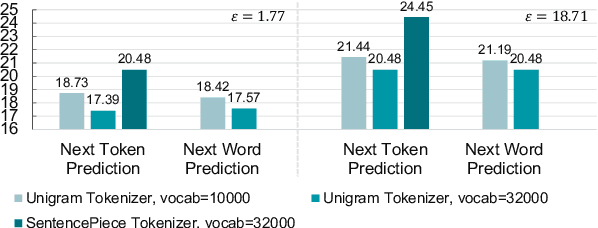
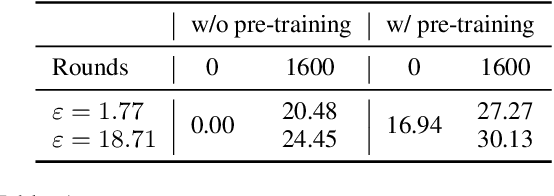
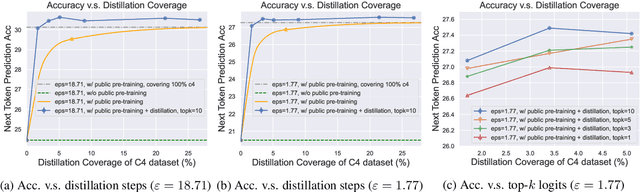
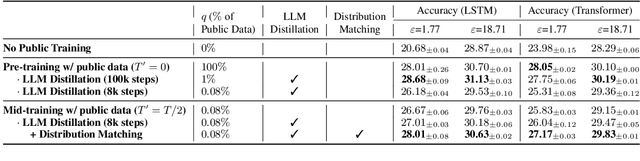
We study (differentially) private federated learning (FL) of language models. The language models in cross-device FL are relatively small, which can be trained with meaningful formal user-level differential privacy (DP) guarantees when massive parallelism in training is enabled by the participation of a moderate size of users. Recently, public data has been used to improve privacy-utility trade-offs for both large and small language models. In this work, we provide a systematic study of using large-scale public data and LLMs to help differentially private training of on-device FL models, and further improve the privacy-utility tradeoff by techniques of distillation. Moreover, we propose a novel distribution matching algorithm with theoretical grounding to sample public data close to private data distribution, which significantly improves the sample efficiency of (pre-)training on public data. The proposed method is efficient and effective for training private model by taking advantage of public data, especially for customized on-device architectures that do not have ready-to-use pre-trained models.
DataComp: In search of the next generation of multimodal datasets
May 03, 2023Large multimodal datasets have been instrumental in recent breakthroughs such as CLIP, Stable Diffusion, and GPT-4. At the same time, datasets rarely receive the same research attention as model architectures or training algorithms. To address this shortcoming in the machine learning ecosystem, we introduce DataComp, a benchmark where the training code is fixed and researchers innovate by proposing new training sets. We provide a testbed for dataset experiments centered around a new candidate pool of 12.8B image-text pairs from Common Crawl. Participants in our benchmark design new filtering techniques or curate new data sources and then evaluate their new dataset by running our standardized CLIP training code and testing on 38 downstream test sets. Our benchmark consists of multiple scales, with four candidate pool sizes and associated compute budgets ranging from 12.8M to 12.8B samples seen during training. This multi-scale design facilitates the study of scaling trends and makes the benchmark accessible to researchers with varying resources. Our baseline experiments show that the DataComp workflow is a promising way of improving multimodal datasets. We introduce DataComp-1B, a dataset created by applying a simple filtering algorithm to the 12.8B candidate pool. The resulting 1.4B subset enables training a CLIP ViT-L/14 from scratch to 79.2% zero-shot accuracy on ImageNet. Our new ViT-L/14 model outperforms a larger ViT-g/14 trained on LAION-2B by 0.7 percentage points while requiring 9x less training compute. We also outperform OpenAI's CLIP ViT-L/14 by 3.7 percentage points, which is trained with the same compute budget as our model. These gains highlight the potential for improving model performance by carefully curating training sets. We view DataComp-1B as only the first step and hope that DataComp paves the way toward the next generation of multimodal datasets.