 Add to Chrome
 Add to Firefox
 Add to Edge
Hi-TOPS: Hierarchical Topology-aware Scoring Prior for 3D Part Decomposition
Aug 01, 2026
Accurate 3D part decomposition requires separating shapes into structurally meaningful components with precise boundaries while preserving articulation seams and thin attachments. Existing approaches often suffer from a structural-scale mismatch: geometric evidence for separation is most reliable at the meso scale, yet many pipelines operate either too globally to respect joints or too locally to remain robust to noise. We propose Hi-TOPS, a Hierarchical Topology-aware Scoring Prior that aggregates complementary intrinsic cues into a multi-resolution Flow-Freeze field. Flow regions provide expandable support for primitive coverage, while Freeze regions restrict growth near articulations and thin structures. A TSDF-guided body-surface superquadric fitter then captures dominant cores and residual surface structures, followed by SQ-to-mesh assignment for connected, boundary-aligned parts. Across diverse benchmarks, Hi-TOPS delivers stable, editable decompositions without semantic supervision or 2D foundation priors.

OpenRTAG: A Comprehensive Benchmark for Robust Text-Attributed Graph Learning under Data Quality Degradation
Jul 21, 2026Text-attributed graphs (TAGs) are an important graph data form that combine relational structure with rich node text. However, real-world TAGs are often imperfect, with quality issues arising from text, structure, and labels, and typically manifesting as sparsity, noise, and imbalance. These dimensions define nine representative degradation scenarios that can substantially affect TAG learning. Although prior studies have explored specific mitigation strategies, existing evidence remains fragmented across degradation types, datasets, tasks, and model families, leaving TAG robustness insufficiently understood. To address this gap, we present OpenRTAG, a robustness benchmark for text-attributed graph learning. OpenRTAG organizes TAG quality issues into a unified 3 * 3 taxonomy and supports standardized evaluation across nine TAG datasets and three downstream tasks. It systematically evaluates scenario validity and model sensitivity, compares traditional GNNs, LLM-GNNs, and a representative GFM, investigates the effectiveness, efficiency, and robustness of scenario-matched baselines, and further examines model behavior under composite degradation scenarios. OpenRTAG provides a standardized testbed for understanding robustness in TAG learning under realistic low-quality settings.
SPAMoE: Spectrum-Aware Hybrid Operator Framework for Full-Waveform Inversion
Apr 08, 2026Full-waveform inversion (FWI) is pivotal for reconstructing high-resolution subsurface velocity models but remains computationally intensive and ill-posed. While deep learning approaches promise efficiency, existing Convolutional Neural Networks (CNNs) and single-paradigm Neural Operators (NOs) struggle with one fundamental issue: frequency entanglement of multi-scale geological features. To address this challenge, we propose Spectral-Preserving Adaptive MoE (SPAMoE), a novel spectrum-aware framework for solving inverse problems with complex multi-scale structures. Our approach introduces a Spectral-Preserving DINO Encoder that enforces a lower bound on the high-to-low frequency energy ratio of the encoded representation, mitigating high-frequency collapse and stabilizing subsequent frequency-domain modeling. Furthermore, we design a novel Spectral Decomposition and Routing mechanism that dynamically assigns frequency bands to a Mixture-of-Experts (MoE) ensemble comprising FNO, MNO, and LNO. On the ten OpenFWI sub-datasets, experiments show that SPAMoE reduces the average MAE by 54.1% relative to the best officially reported OpenFWI baseline, thereby establishing a new architectural framework for learning-based full-waveform inversion.
DyMoE: Dynamic Expert Orchestration with Mixed-Precision Quantization for Efficient MoE Inference on Edge
Mar 19, 2026Despite the computational efficiency of MoE models, the excessive memory footprint and I/O overhead inherent in multi-expert architectures pose formidable challenges for real-time inference on resource-constrained edge platforms. While existing static methods struggle with a rigid latency-accuracy trade-off, we observe that expert importance is highly skewed and depth-dependent. Motivated by these insights, we propose DyMoE, a dynamic mixed-precision quantization framework designed for high-performance edge inference. Leveraging insights into expert importance skewness and depth-dependent sensitivity, DyMoE introduces: (1) importance-aware prioritization to dynamically quantize experts at runtime; (2) depth-adaptive scheduling to preserve semantic integrity in critical layers; and (3) look-ahead prefetching to overlap I/O stalls. Experimental results on commercial edge hardware show that DyMoE reduces Time-to-First-Token (TTFT) by 3.44x-22.7x and up to a 14.58x speedup in Time-Per-Output-Token (TPOT) compared to state-of-the-art offloading baselines, enabling real-time, accuracy-preserving MoE inference on resource-constrained edge devices.
ForesightSafety Bench: A Frontier Risk Evaluation and Governance Framework towards Safe AI
Feb 15, 2026Rapidly evolving AI exhibits increasingly strong autonomy and goal-directed capabilities, accompanied by derivative systemic risks that are more unpredictable, difficult to control, and potentially irreversible. However, current AI safety evaluation systems suffer from critical limitations such as restricted risk dimensions and failed frontier risk detection. The lagging safety benchmarks and alignment technologies can hardly address the complex challenges posed by cutting-edge AI models. To bridge this gap, we propose the "ForesightSafety Bench" AI Safety Evaluation Framework, beginning with 7 major Fundamental Safety pillars and progressively extends to advanced Embodied AI Safety, AI4Science Safety, Social and Environmental AI risks, Catastrophic and Existential Risks, as well as 8 critical industrial safety domains, forming a total of 94 refined risk dimensions. To date, the benchmark has accumulated tens of thousands of structured risk data points and assessment results, establishing a widely encompassing, hierarchically clear, and dynamically evolving AI safety evaluation framework. Based on this benchmark, we conduct systematic evaluation and in-depth analysis of over twenty mainstream advanced large models, identifying key risk patterns and their capability boundaries. The safety capability evaluation results reveals the widespread safety vulnerabilities of frontier AI across multiple pillars, particularly focusing on Risky Agentic Autonomy, AI4Science Safety, Embodied AI Safety, Social AI Safety and Catastrophic and Existential Risks. Our benchmark is released at https://github.com/Beijing-AISI/ForesightSafety-Bench. The project website is available at https://foresightsafety-bench.beijing-aisi.ac.cn/.
Understanding Scaling Laws in Deep Neural Networks via Feature Learning Dynamics
Dec 24, 2025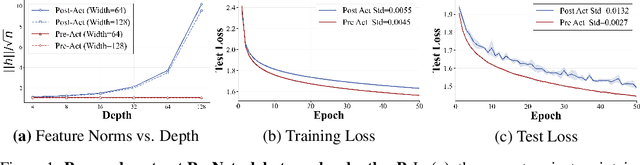


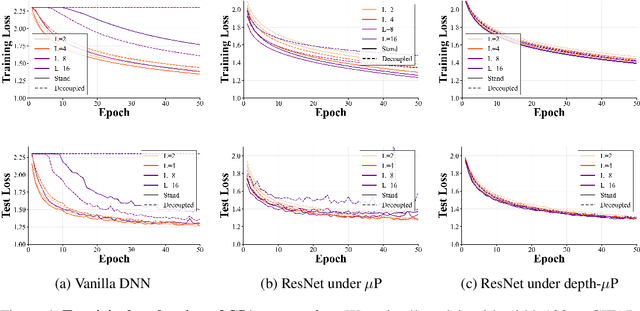
The empirical success of deep learning is often attributed to scaling laws that predict consistent gains as model, data, and compute grow; however, large models can exhibit training instability and diminishing returns, suggesting that scaling laws describe what success looks like but not when and why scaling succeeds or fails. A central obstacle is the lack of a rigorous understanding of feature learning at large depth. While muP characterizes feature-learning dynamics in the infinite-width limit and enables hyperparameter transfer across width, its depth extension (depth-muP) breaks down for residual blocks with more than one internal layer. We derive Neural Feature Dynamics (NFD) for ResNets with single-layer residual blocks, characterizing feature learning via a coupled forward-backward stochastic system in the joint infinite-width and infinite-depth limit. In this regime, NFD identifies when scaling-law trends persist and explains diminishing returns. It also reveals a vanishing mechanism induced by the 1/sqrt(depth) residual scaling under which the gradient-independence assumption (GIA), known to fail during training at finite depth, becomes provably valid again at infinite depth, yielding an analytically tractable regime for end-to-end feature learning. Motivated by this insight, we study two-layer residual blocks and show that the same mechanism causes feature-learning collapse in the first internal layer at large depth, providing a structural explanation for the empirical failure of depth-muP. Based on this diagnosis, we propose a depth-aware learning-rate correction that counteracts the collapse and empirically restores depth-wise hyperparameter transfer, yielding stronger performance in deeper ResNets.
Next Token Prediction Towards Multimodal Intelligence: A Comprehensive Survey
Dec 30, 2024


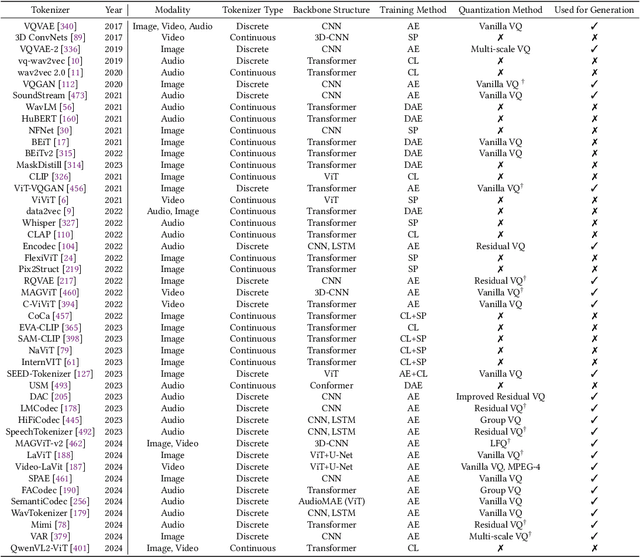
Building on the foundations of language modeling in natural language processing, Next Token Prediction (NTP) has evolved into a versatile training objective for machine learning tasks across various modalities, achieving considerable success. As Large Language Models (LLMs) have advanced to unify understanding and generation tasks within the textual modality, recent research has shown that tasks from different modalities can also be effectively encapsulated within the NTP framework, transforming the multimodal information into tokens and predict the next one given the context. This survey introduces a comprehensive taxonomy that unifies both understanding and generation within multimodal learning through the lens of NTP. The proposed taxonomy covers five key aspects: Multimodal tokenization, MMNTP model architectures, unified task representation, datasets \& evaluation, and open challenges. This new taxonomy aims to aid researchers in their exploration of multimodal intelligence. An associated GitHub repository collecting the latest papers and repos is available at https://github.com/LMM101/Awesome-Multimodal-Next-Token-Prediction
ChatScratch: An AI-Augmented System Toward Autonomous Visual Programming Learning for Children Aged 6-12
Feb 07, 2024As Computational Thinking (CT) continues to permeate younger age groups in K-12 education, established CT platforms such as Scratch face challenges in catering to these younger learners, particularly those in the elementary school (ages 6-12). Through formative investigation with Scratch experts, we uncover three key obstacles to children's autonomous Scratch learning: artist's block in project planning, bounded creativity in asset creation, and inadequate coding guidance during implementation. To address these barriers, we introduce ChatScratch, an AI-augmented system to facilitate autonomous programming learning for young children. ChatScratch employs structured interactive storyboards and visual cues to overcome artist's block, integrates digital drawing and advanced image generation technologies to elevate creativity, and leverages Scratch-specialized Large Language Models (LLMs) for professional coding guidance. Our study shows that, compared to Scratch, ChatScratch efficiently fosters autonomous programming learning, and contributes to the creation of high-quality, personally meaningful Scratch projects for children.