 Add to Chrome
 Add to Firefox
 Add to Edge
AUCSeg: AUC-oriented Pixel-level Long-tail Semantic Segmentation
Sep 30, 2024
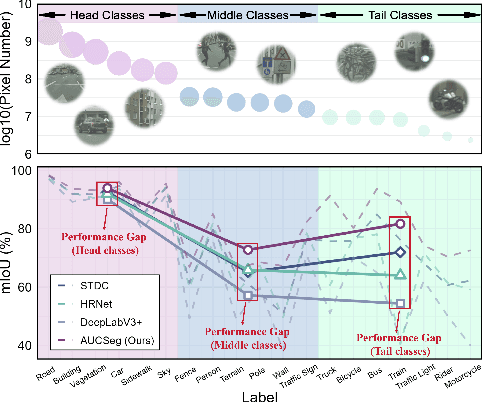
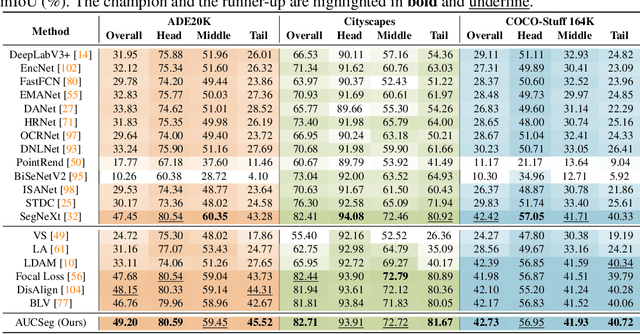
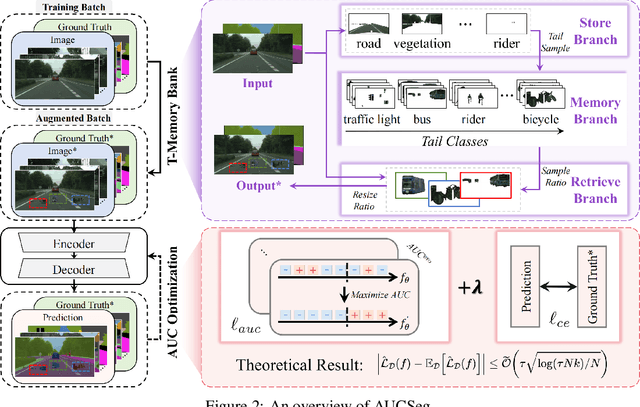
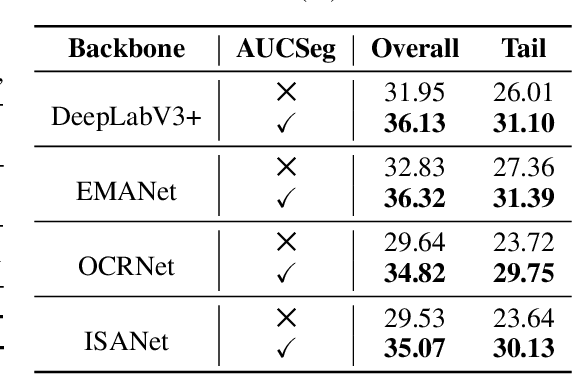
The Area Under the ROC Curve (AUC) is a well-known metric for evaluating instance-level long-tail learning problems. In the past two decades, many AUC optimization methods have been proposed to improve model performance under long-tail distributions. In this paper, we explore AUC optimization methods in the context of pixel-level long-tail semantic segmentation, a much more complicated scenario. This task introduces two major challenges for AUC optimization techniques. On one hand, AUC optimization in a pixel-level task involves complex coupling across loss terms, with structured inner-image and pairwise inter-image dependencies, complicating theoretical analysis. On the other hand, we find that mini-batch estimation of AUC loss in this case requires a larger batch size, resulting in an unaffordable space complexity. To address these issues, we develop a pixel-level AUC loss function and conduct a dependency-graph-based theoretical analysis of the algorithm's generalization ability. Additionally, we design a Tail-Classes Memory Bank (T-Memory Bank) to manage the significant memory demand. Finally, comprehensive experiments across various benchmarks confirm the effectiveness of our proposed AUCSeg method. The code is available at https://github.com/boyuh/AUCSeg.

Improved Diversity-Promoting Collaborative Metric Learning for Recommendation
Sep 02, 2024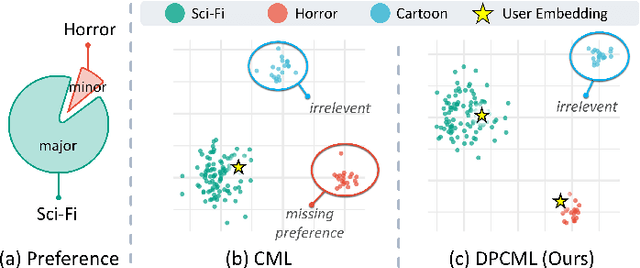
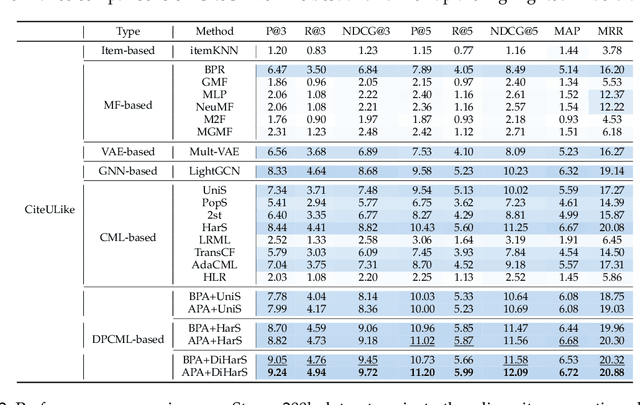
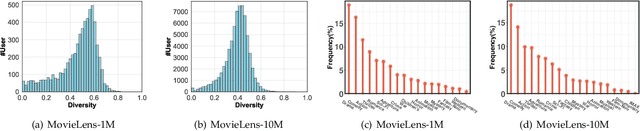
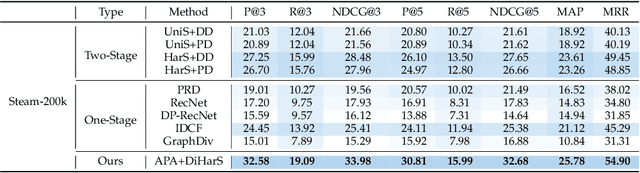
Collaborative Metric Learning (CML) has recently emerged as a popular method in recommendation systems (RS), closing the gap between metric learning and collaborative filtering. Following the convention of RS, existing practices exploit unique user representation in their model design. This paper focuses on a challenging scenario where a user has multiple categories of interests. Under this setting, the unique user representation might induce preference bias, especially when the item category distribution is imbalanced. To address this issue, we propose a novel method called \textit{Diversity-Promoting Collaborative Metric Learning} (DPCML), with the hope of considering the commonly ignored minority interest of the user. The key idea behind DPCML is to introduce a set of multiple representations for each user in the system where users' preference toward an item is aggregated by taking the minimum item-user distance among their embedding set. Specifically, we instantiate two effective assignment strategies to explore a proper quantity of vectors for each user. Meanwhile, a \textit{Diversity Control Regularization Scheme} (DCRS) is developed to accommodate the multi-vector representation strategy better. Theoretically, we show that DPCML could induce a smaller generalization error than traditional CML. Furthermore, we notice that CML-based approaches usually require \textit{negative sampling} to reduce the heavy computational burden caused by the pairwise objective therein. In this paper, we reveal the fundamental limitation of the widely adopted hard-aware sampling from the One-Way Partial AUC (OPAUC) perspective and then develop an effective sampling alternative for the CML-based paradigm. Finally, comprehensive experiments over a range of benchmark datasets speak to the efficacy of DPCML. Code are available at \url{https://github.com/statusrank/LibCML}.
Decorrelating Structure via Adapters Makes Ensemble Learning Practical for Semi-supervised Learning
Aug 08, 2024
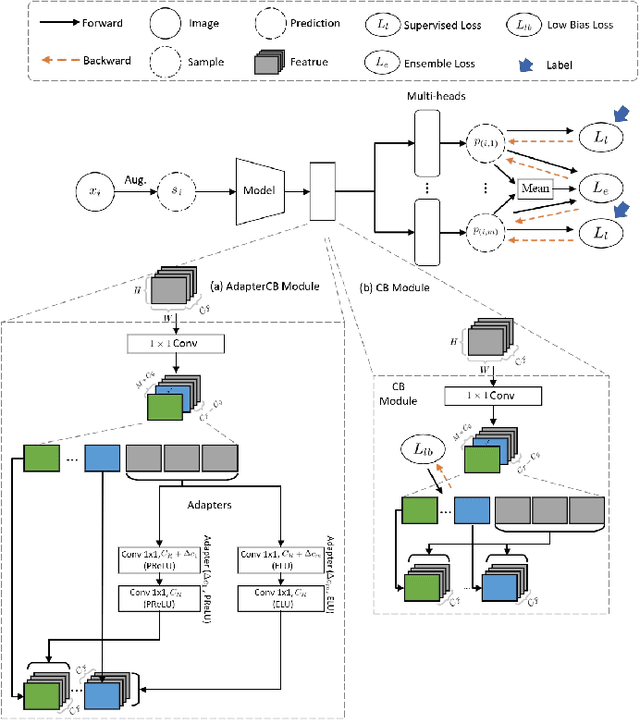
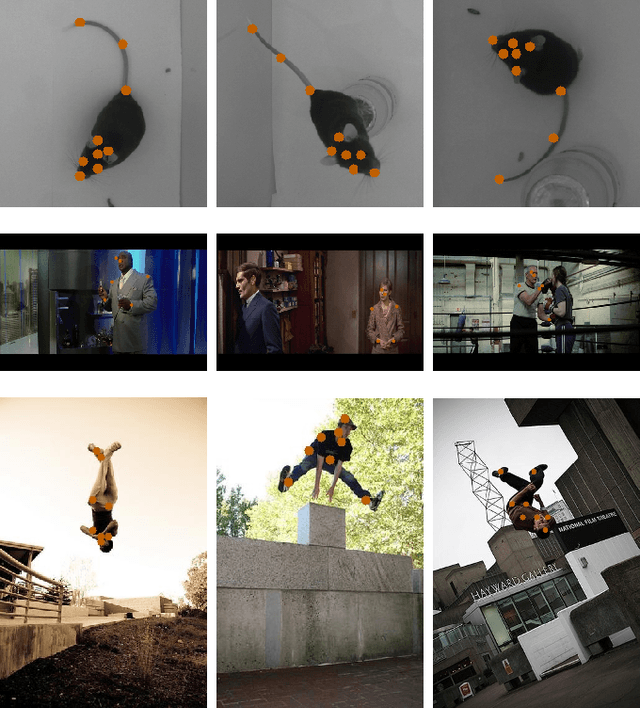

In computer vision, traditional ensemble learning methods exhibit either a low training efficiency or the limited performance to enhance the reliability of deep neural networks. In this paper, we propose a lightweight, loss-function-free, and architecture-agnostic ensemble learning by the Decorrelating Structure via Adapters (DSA) for various visual tasks. Concretely, the proposed DSA leverages the structure-diverse adapters to decorrelate multiple prediction heads without any tailed regularization or loss. This allows DSA to be easily extensible to architecture-agnostic networks for a range of computer vision tasks. Importantly, the theoretically analysis shows that the proposed DSA has a lower bias and variance than that of the single head based method (which is adopted by most of the state of art approaches). Consequently, the DSA makes deep networks reliable and robust for the various real-world challenges, \textit{e.g.}, data corruption, and label noises. Extensive experiments combining the proposed method with FreeMatch achieved the accuracy improvements of 5.35% on CIFAR-10 dataset with 40 labeled data and 0.71% on CIFAR-100 dataset with 400 labeled data. Besides, combining the proposed method with DualPose achieved the improvements in the Percentage of Correct Keypoints (PCK) by 2.08% on the Sniffing dataset with 100 data (30 labeled data), 5.2% on the FLIC dataset with 100 data (including 50 labeled data), and 2.35% on the LSP dataset with 200 data (100 labeled data).
Regularized Contrastive Partial Multi-view Outlier Detection
Aug 02, 2024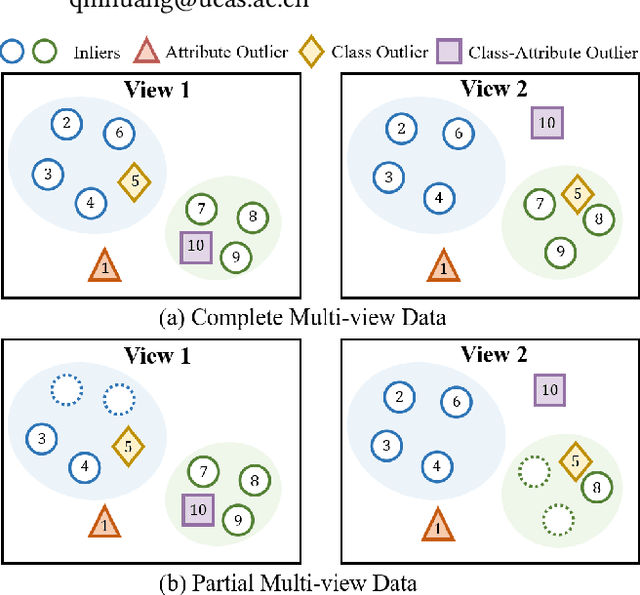
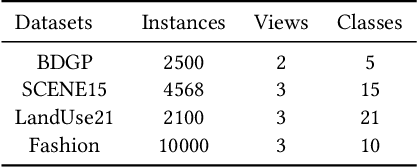
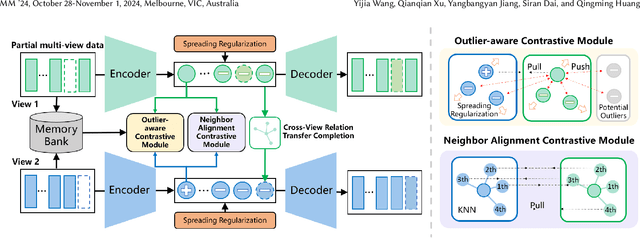
In recent years, multi-view outlier detection (MVOD) methods have advanced significantly, aiming to identify outliers within multi-view datasets. A key point is to better detect class outliers and class-attribute outliers, which only exist in multi-view data. However, existing methods either is not able to reduce the impact of outliers when learning view-consistent information, or struggle in cases with varying neighborhood structures. Moreover, most of them do not apply to partial multi-view data in real-world scenarios. To overcome these drawbacks, we propose a novel method named Regularized Contrastive Partial Multi-view Outlier Detection (RCPMOD). In this framework, we utilize contrastive learning to learn view-consistent information and distinguish outliers by the degree of consistency. Specifically, we propose (1) An outlier-aware contrastive loss with a potential outlier memory bank to eliminate their bias motivated by a theoretical analysis. (2) A neighbor alignment contrastive loss to capture the view-shared local structural correlation. (3) A spreading regularization loss to prevent the model from overfitting over outliers. With the Cross-view Relation Transfer technique, we could easily impute the missing view samples based on the features of neighbors. Experimental results on four benchmark datasets demonstrate that our proposed approach could outperform state-of-the-art competitors under different settings.
HGOE: Hybrid External and Internal Graph Outlier Exposure for Graph Out-of-Distribution Detection
Jul 31, 2024With the progressive advancements in deep graph learning, out-of-distribution (OOD) detection for graph data has emerged as a critical challenge. While the efficacy of auxiliary datasets in enhancing OOD detection has been extensively studied for image and text data, such approaches have not yet been explored for graph data. Unlike Euclidean data, graph data exhibits greater diversity but lower robustness to perturbations, complicating the integration of outliers. To tackle these challenges, we propose the introduction of \textbf{H}ybrid External and Internal \textbf{G}raph \textbf{O}utlier \textbf{E}xposure (HGOE) to improve graph OOD detection performance. Our framework involves using realistic external graph data from various domains and synthesizing internal outliers within ID subgroups to address the poor robustness and presence of OOD samples within the ID class. Furthermore, we develop a boundary-aware OE loss that adaptively assigns weights to outliers, maximizing the use of high-quality OOD samples while minimizing the impact of low-quality ones. Our proposed HGOE framework is model-agnostic and designed to enhance the effectiveness of existing graph OOD detection models. Experimental results demonstrate that our HGOE framework can significantly improve the performance of existing OOD detection models across all 8 real datasets.
Scalable Graph Compressed Convolutions
Jul 26, 2024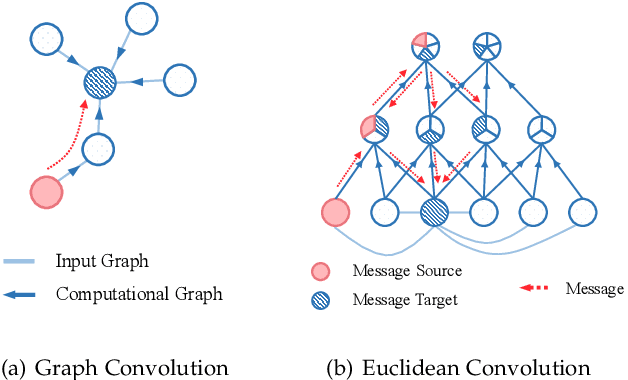

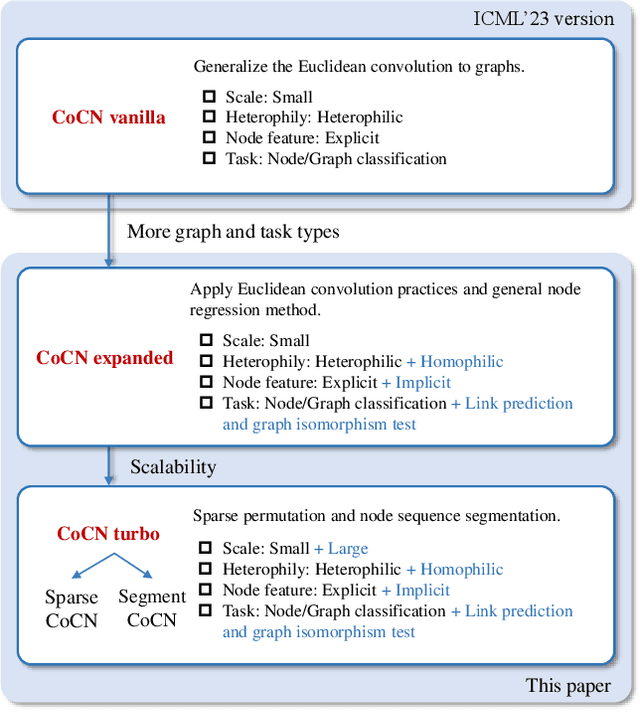
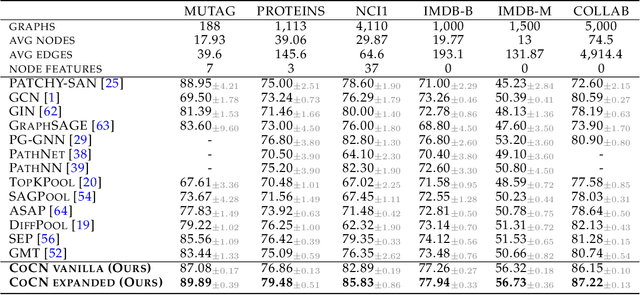
Designing effective graph neural networks (GNNs) with message passing has two fundamental challenges, i.e., determining optimal message-passing pathways and designing local aggregators. Previous methods of designing optimal pathways are limited with information loss on the input features. On the other hand, existing local aggregators generally fail to extract multi-scale features and approximate diverse operators under limited parameter scales. In contrast to these methods, Euclidean convolution has been proven as an expressive aggregator, making it a perfect candidate for GNN construction. However, the challenges of generalizing Euclidean convolution to graphs arise from the irregular structure of graphs. To bridge the gap between Euclidean space and graph topology, we propose a differentiable method that applies permutations to calibrate input graphs for Euclidean convolution. The permutations constrain all nodes in a row regardless of their input order and therefore enable the flexible generalization of Euclidean convolution to graphs. Based on the graph calibration, we propose the Compressed Convolution Network (CoCN) for hierarchical graph representation learning. CoCN follows local feature-learning and global parameter-sharing mechanisms of convolution neural networks. The whole model can be trained end-to-end, with compressed convolution applied to learn individual node features and their corresponding structure features. CoCN can further borrow successful practices from Euclidean convolution, including residual connection and inception mechanism. We validate CoCN on both node-level and graph-level benchmarks. CoCN achieves superior performance over competitive GNN baselines. Codes are available at https://github.com/sunjss/CoCN.
Not All Pairs are Equal: Hierarchical Learning for Average-Precision-Oriented Video Retrieval
Jul 22, 2024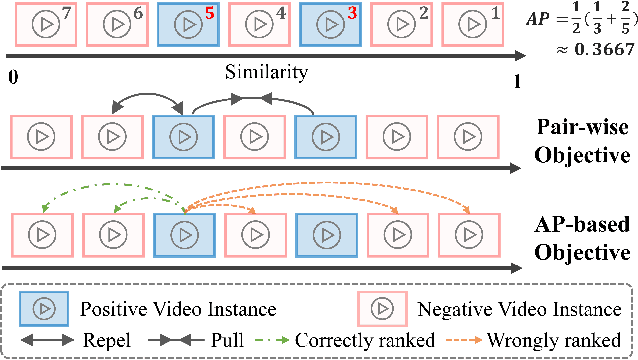
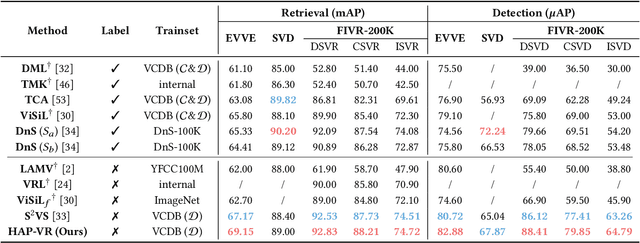
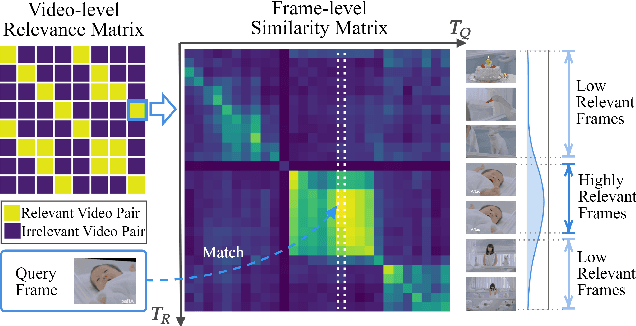
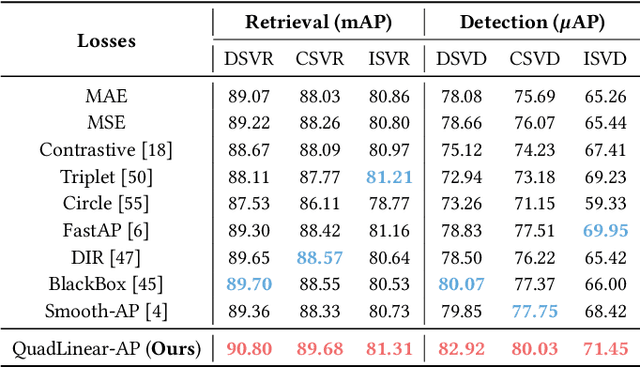
The rapid growth of online video resources has significantly promoted the development of video retrieval methods. As a standard evaluation metric for video retrieval, Average Precision (AP) assesses the overall rankings of relevant videos at the top list, making the predicted scores a reliable reference for users. However, recent video retrieval methods utilize pair-wise losses that treat all sample pairs equally, leading to an evident gap between the training objective and evaluation metric. To effectively bridge this gap, in this work, we aim to address two primary challenges: a) The current similarity measure and AP-based loss are suboptimal for video retrieval; b) The noticeable noise from frame-to-frame matching introduces ambiguity in estimating the AP loss. In response to these challenges, we propose the Hierarchical learning framework for Average-Precision-oriented Video Retrieval (HAP-VR). For the former challenge, we develop the TopK-Chamfer Similarity and QuadLinear-AP loss to measure and optimize video-level similarities in terms of AP. For the latter challenge, we suggest constraining the frame-level similarities to achieve an accurate AP loss estimation. Experimental results present that HAP-VR outperforms existing methods on several benchmark datasets, providing a feasible solution for video retrieval tasks and thus offering potential benefits for the multi-media application.
Downstream-Pretext Domain Knowledge Traceback for Active Learning
Jul 20, 2024


Active learning (AL) is designed to construct a high-quality labeled dataset by iteratively selecting the most informative samples. Such sampling heavily relies on data representation, while recently pre-training is popular for robust feature learning. However, as pre-training utilizes low-level pretext tasks that lack annotation, directly using pre-trained representation in AL is inadequate for determining the sampling score. To address this problem, we propose a downstream-pretext domain knowledge traceback (DOKT) method that traces the data interactions of downstream knowledge and pre-training guidance for selecting diverse and instructive samples near the decision boundary. DOKT consists of a traceback diversity indicator and a domain-based uncertainty estimator. The diversity indicator constructs two feature spaces based on the pre-training pretext model and the downstream knowledge from annotation, by which it locates the neighbors of unlabeled data from the downstream space in the pretext space to explore the interaction of samples. With this mechanism, DOKT unifies the data relations of low-level and high-level representations to estimate traceback diversity. Next, in the uncertainty estimator, domain mixing is designed to enforce perceptual perturbing to unlabeled samples with similar visual patches in the pretext space. Then the divergence of perturbed samples is measured to estimate the domain uncertainty. As a result, DOKT selects the most diverse and important samples based on these two modules. The experiments conducted on ten datasets show that our model outperforms other state-of-the-art methods and generalizes well to various application scenarios such as semantic segmentation and image captioning.
Distractors-Immune Representation Learning with Cross-modal Contrastive Regularization for Change Captioning
Jul 16, 2024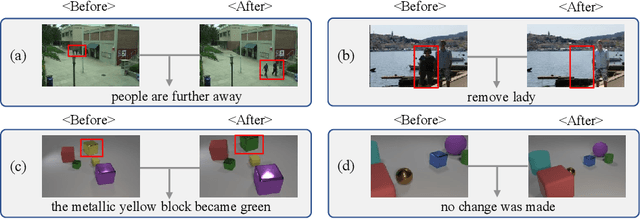
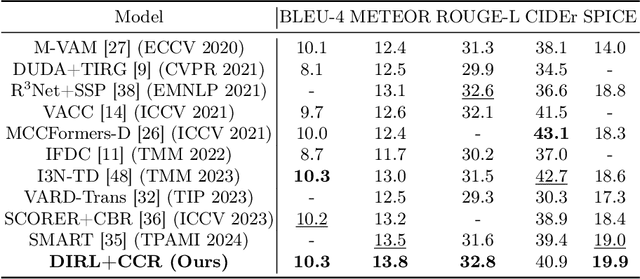
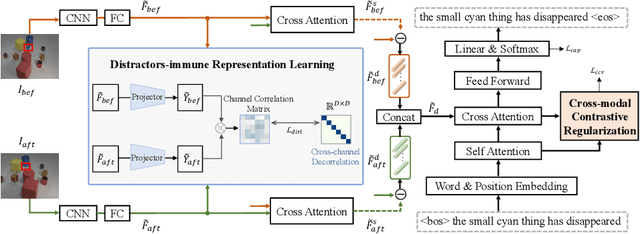
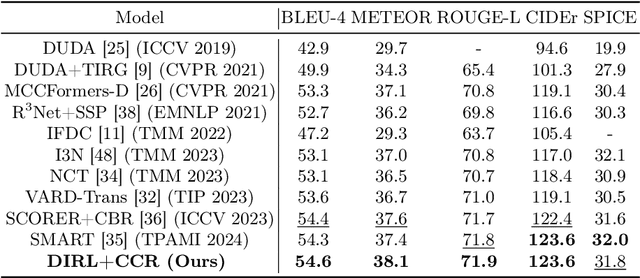
Change captioning aims to succinctly describe the semantic change between a pair of similar images, while being immune to distractors (illumination and viewpoint changes). Under these distractors, unchanged objects often appear pseudo changes about location and scale, and certain objects might overlap others, resulting in perturbational and discrimination-degraded features between two images. However, most existing methods directly capture the difference between them, which risk obtaining error-prone difference features. In this paper, we propose a distractors-immune representation learning network that correlates the corresponding channels of two image representations and decorrelates different ones in a self-supervised manner, thus attaining a pair of stable image representations under distractors. Then, the model can better interact them to capture the reliable difference features for caption generation. To yield words based on the most related difference features, we further design a cross-modal contrastive regularization, which regularizes the cross-modal alignment by maximizing the contrastive alignment between the attended difference features and generated words. Extensive experiments show that our method outperforms the state-of-the-art methods on four public datasets. The code is available at https://github.com/tuyunbin/DIRL.
Top-K Pairwise Ranking: Bridging the Gap Among Ranking-Based Measures for Multi-Label Classification
Jul 09, 2024Multi-label ranking, which returns multiple top-ranked labels for each instance, has a wide range of applications for visual tasks. Due to its complicated setting, prior arts have proposed various measures to evaluate model performances. However, both theoretical analysis and empirical observations show that a model might perform inconsistently on different measures. To bridge this gap, this paper proposes a novel measure named Top-K Pairwise Ranking (TKPR), and a series of analyses show that TKPR is compatible with existing ranking-based measures. In light of this, we further establish an empirical surrogate risk minimization framework for TKPR. On one hand, the proposed framework enjoys convex surrogate losses with the theoretical support of Fisher consistency. On the other hand, we establish a sharp generalization bound for the proposed framework based on a novel technique named data-dependent contraction. Finally, empirical results on benchmark datasets validate the effectiveness of the proposed framework.