 Add to Chrome
 Add to Firefox
 Add to Edge
Towards Trustworthy Embodied Intelligence: A Systems Framework and Graded Trustworthiness Levels
Jul 28, 2026
Embodied intelligence integrates learned perception and decision making with real-time computation, control, and physical interaction. Because failures can cause immediate physical or operational harm, task completion alone does not establish trustworthiness. We define trustworthy embodied intelligence as the sustained capacity to execute specified tasks reliably under environmental and system variation while maintaining risk within acceptable bounds. We term this objective sustained safe success. Its supporting mechanisms are organized into four interdependent layers. The model layer generates task-competent action proposals with calibrated uncertainty and explicit safety preferences. The system layer realizes authorized actions dependably through integrated sensing, computation, control, hardware safeguards, fault containment, and fallback. The evidence layer substantiates bounded claims through evaluation, verification, validation, traceability, and structured assurance arguments. The deployment layer maintains claim validity through runtime monitoring, authority management, intervention, incident response, and controlled updates. Because assumptions and failures propagate across these layers, neither model capability, isolated safeguards, nor benchmark performance alone can establish end-to-end trustworthiness. Drawing on embodied AI, robotics, control, dependable computing, distributed systems, and autonomous driving, we further propose a non-normative hierarchy of trustworthiness levels. This hierarchy grades the strength of bounded deployment claims across task capability, safety, system assurance, operational governance, and supporting evidence, providing a basis for bounded deployment, comparative evaluation, research prioritization, and future standardization.

RoboDojo: A Unified Sim-and-Real Benchmark for Comprehensive Evaluation of Generalist Robot Manipulation Policies
Jul 05, 2026Generalist robot manipulation policies have advanced rapidly, yet existing benchmarks remain limited in systematically evaluating their capabilities. Many rely on simple, short-horizon, or skill-narrow tasks with limited capability coverage, and are often conducted only in simulation or only in the real world. Simulation enables scalable feedback but misses physical deployment challenges, while real-world evaluation is costly, time-consuming, and difficult to reproduce. We introduce RoboDojo, a unified sim-and-real benchmark for comprehensive evaluation of generalist robot manipulation policies. RoboDojo includes 42 simulation tasks and 18 real-world tasks covering diverse and complementary manipulation capabilities. The simulation benchmark evaluates five dimensions: generalization, memory, precision, long-horizon execution, and open-vocabulary instruction following, while the real-world benchmark exposes policies to challenging physical-world deployment conditions. RoboDojo supports scalable evaluation through heterogeneous parallel simulation in Isaac Sim and provides RoboDojo-RealEval, a reproducible real-world evaluation system with remote cloud access, standardized hardware, scene reset, evaluation protocol, and deployment interface. Together with XPolicyLab, policies can be integrated once and evaluated across simulation and real-world settings with minimal adaptation. We integrate 30 policies into XPolicyLab and evaluate them on RoboDojo, establishing a public leaderboard and systematic analysis of current policy performance. The website is available at http://robodojo-benchmark.com/.
Diffusion Epistemic Uncertainty with Asymmetric Learning for Diffusion-Generated Image Detection
Jan 21, 2026The rapid progress of diffusion models highlights the growing need for detecting generated images. Previous research demonstrates that incorporating diffusion-based measurements, such as reconstruction error, can enhance the generalizability of detectors. However, ignoring the differing impacts of aleatoric and epistemic uncertainty on reconstruction error can undermine detection performance. Aleatoric uncertainty, arising from inherent data noise, creates ambiguity that impedes accurate detection of generated images. As it reflects random variations within the data (e.g., noise in natural textures), it does not help distinguish generated images. In contrast, epistemic uncertainty, which represents the model's lack of knowledge about unfamiliar patterns, supports detection. In this paper, we propose a novel framework, Diffusion Epistemic Uncertainty with Asymmetric Learning~(DEUA), for detecting diffusion-generated images. We introduce Diffusion Epistemic Uncertainty~(DEU) estimation via the Laplace approximation to assess the proximity of data to the manifold of diffusion-generated samples. Additionally, an asymmetric loss function is introduced to train a balanced classifier with larger margins, further enhancing generalizability. Extensive experiments on large-scale benchmarks validate the state-of-the-art performance of our method.
CoIFNet: A Unified Framework for Multivariate Time Series Forecasting with Missing Values
Jun 16, 2025Multivariate time series forecasting (MTSF) is a critical task with broad applications in domains such as meteorology, transportation, and economics. Nevertheless, pervasive missing values caused by sensor failures or human errors significantly degrade forecasting accuracy. Prior efforts usually employ an impute-then-forecast paradigm, leading to suboptimal predictions due to error accumulation and misaligned objectives between the two stages. To address this challenge, we propose the Collaborative Imputation-Forecasting Network (CoIFNet), a novel framework that unifies imputation and forecasting to achieve robust MTSF in the presence of missing values. Specifically, CoIFNet takes the observed values, mask matrix and timestamp embeddings as input, processing them sequentially through the Cross-Timestep Fusion (CTF) and Cross-Variate Fusion (CVF) modules to capture temporal dependencies that are robust to missing values. We provide theoretical justifications on how our CoIFNet learning objective improves the performance bound of MTSF with missing values. Through extensive experiments on challenging MSTF benchmarks, we demonstrate the effectiveness and computational efficiency of our proposed approach across diverse missing-data scenarios, e.g., CoIFNet outperforms the state-of-the-art method by $\underline{\textbf{24.40}}$% ($\underline{\textbf{23.81}}$%) at a point (block) missing rate of 0.6, while improving memory and time efficiency by $\underline{\boldsymbol{4.3\times}}$ and $\underline{\boldsymbol{2.1\times}}$, respectively.
RTLSquad: Multi-Agent Based Interpretable RTL Design
Jan 06, 2025Optimizing Register-Transfer Level (RTL) code is crucial for improving hardware PPA performance. Large Language Models (LLMs) offer new approaches for automatic RTL code generation and optimization. However, existing methods often lack decision interpretability (sufficient, understandable justification for decisions), making it difficult for hardware engineers to trust the generated results, thus preventing these methods from being integrated into the design process. To address this, we propose RTLSquad, a novel LLM-Based Multi-Agent system for interpretable RTL code generation. RTLSquad divides the design process into exploration, implementation, and verification & evaluation stages managed by specialized agent squads, generating optimized RTL code through inter-agent collaboration, and providing decision interpretability through the communication process. Experiments show that RTLSquad excels in generating functionally correct RTL code and optimizing PPA performance, while also having the capability to provide decision paths, demonstrating the practical value of our system.
A Prior Embedding-Driven Architecture for Long Distance Blind Iris Recognition
Aug 01, 2024
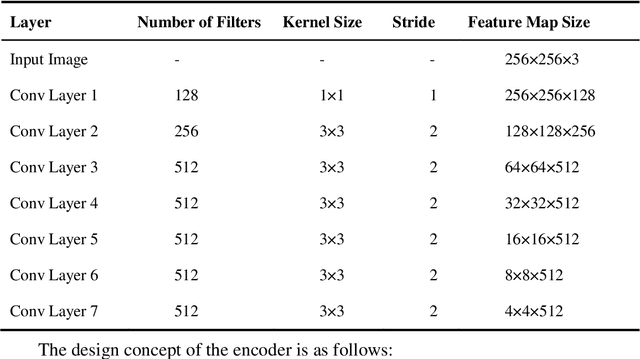


Blind iris images, which result from unknown degradation during the process of iris recognition at long distances, often lead to decreased iris recognition rates. Currently, little existing literature offers a solution to this problem. In response, we propose a prior embedding-driven architecture for long distance blind iris recognition. We first proposed a blind iris image restoration network called Iris-PPRGAN. To effectively restore the texture of the blind iris, Iris-PPRGAN includes a Generative Adversarial Network (GAN) used as a Prior Decoder, and a DNN used as the encoder. To extract iris features more efficiently, we then proposed a robust iris classifier by modifying the bottleneck module of InsightFace, which called Insight-Iris. A low-quality blind iris image is first restored by Iris-PPRGAN, then the restored iris image undergoes recognition via Insight-Iris. Experimental results on the public CASIA-Iris-distance dataset demonstrate that our proposed method significantly superior results to state-of-the-art blind iris restoration methods both quantitatively and qualitatively, Specifically, the recognition rate for long-distance blind iris images reaches 90% after processing with our methods, representing an improvement of approximately ten percentage points compared to images without restoration.
TDT Loss Takes It All: Integrating Temporal Dependencies among Targets into Non-Autoregressive Time Series Forecasting
Jun 07, 2024Learning temporal dependencies among targets (TDT) benefits better time series forecasting, where targets refer to the predicted sequence. Although autoregressive methods model TDT recursively, they suffer from inefficient inference and error accumulation. We argue that integrating TDT learning into non-autoregressive methods is essential for pursuing effective and efficient time series forecasting. In this study, we introduce the differencing approach to represent TDT and propose a parameter-free and plug-and-play solution through an optimization objective, namely TDT Loss. It leverages the proportion of inconsistent signs between predicted and ground truth TDT as an adaptive weight, dynamically balancing target prediction and fine-grained TDT fitting. Importantly, TDT Loss incurs negligible additional cost, with only $\mathcal{O}(n)$ increased computation and $\mathcal{O}(1)$ memory requirements, while significantly enhancing the predictive performance of non-autoregressive models. To assess the effectiveness of TDT loss, we conduct extensive experiments on 7 widely used datasets. The experimental results of plugging TDT loss into 6 state-of-the-art methods show that out of the 168 experiments, 75.00\% and 94.05\% exhibit improvements in terms of MSE and MAE with the maximum 24.56\% and 16.31\%, respectively.
A Signature Based Approach Towards Global Channel Charting with Ultra Low Complexity
Mar 29, 2024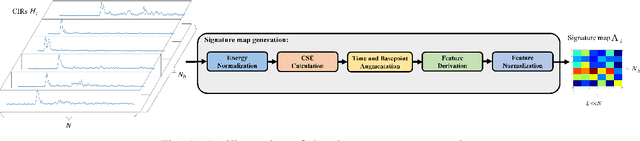
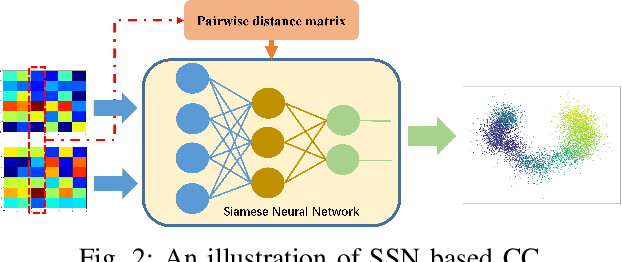
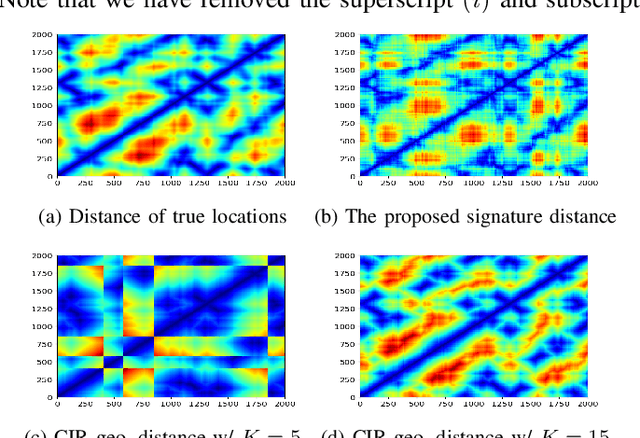
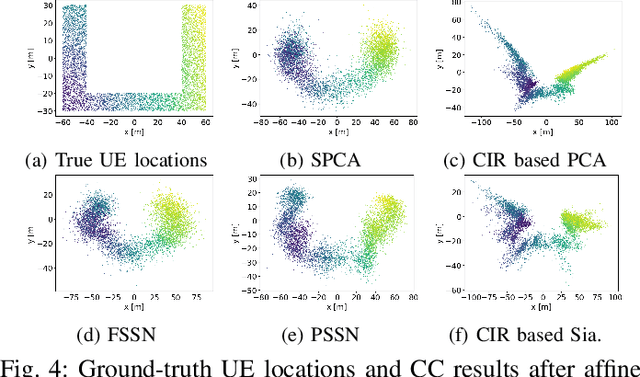
Channel charting, an unsupervised learning method that learns a low-dimensional representation from channel information to preserve geometrical property of physical space of user equipments (UEs), has drawn many attentions from both academic and industrial communities, because it can facilitate many downstream tasks, such as indoor localization, UE handover, beam management, and so on. However, many previous works mainly focus on charting that only preserves local geometry and use raw channel information to learn the chart, which do not consider the global geometry and are often computationally intensive and very time-consuming. Therefore, in this paper, a novel signature based approach for global channel charting with ultra low complexity is proposed. By using an iterated-integral based method called signature transform, a compact feature map and a novel distance metric are proposed, which enable channel charting with ultra low complexity and preserving both local and global geometry. We demonstrate the efficacy of our method using synthetic and open-source real-field datasets.
Rényi Divergence Deep Mutual Learning
Sep 15, 2022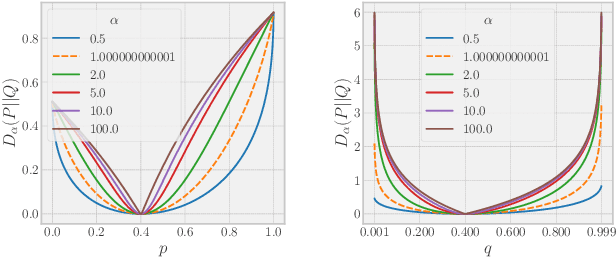

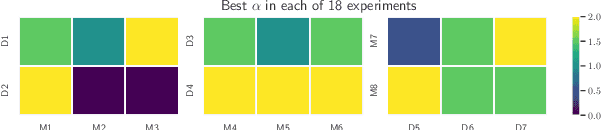

This paper revisits an incredibly simple yet exceedingly effective computing paradigm, Deep Mutual Learning (DML). We observe that the effectiveness correlates highly to its excellent generalization quality. In the paper, we interpret the performance improvement with DML from a novel perspective that it is roughly an approximate Bayesian posterior sampling procedure. This also establishes the foundation for applying the R\'{e}nyi divergence to improve the original DML, as it brings in the variance control of the prior (in the context of DML). Therefore, we propose R\'{e}nyi Divergence Deep Mutual Learning (RDML). Our empirical results represent the advantage of the marriage of DML and the R\'{e}nyi divergence. The flexible control imposed by the R\'{e}nyi divergence is able to further improve DML to learn better generalized models.
AiDroid: When Heterogeneous Information Network Marries Deep Neural Network for Real-time Android Malware Detection
Nov 02, 2018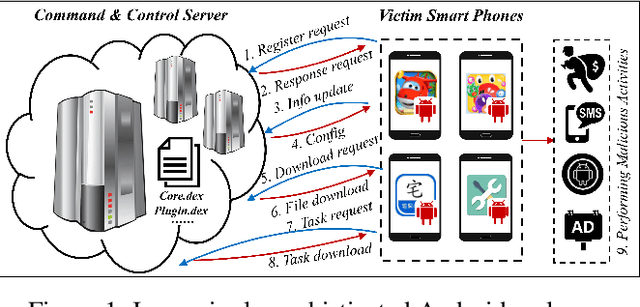
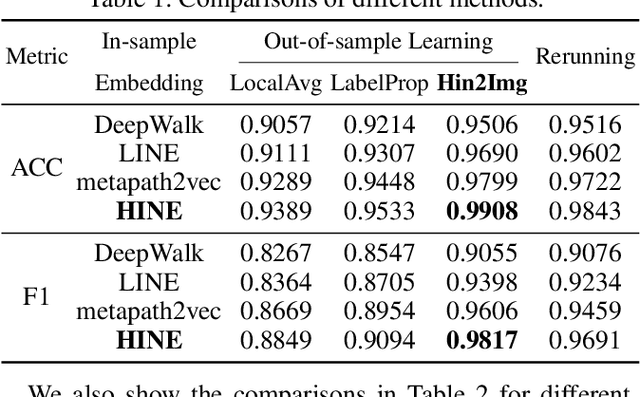
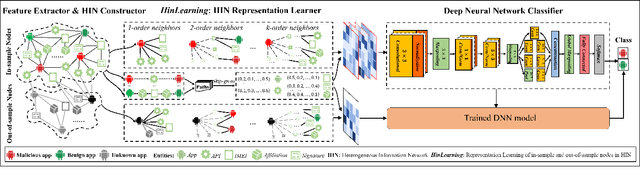
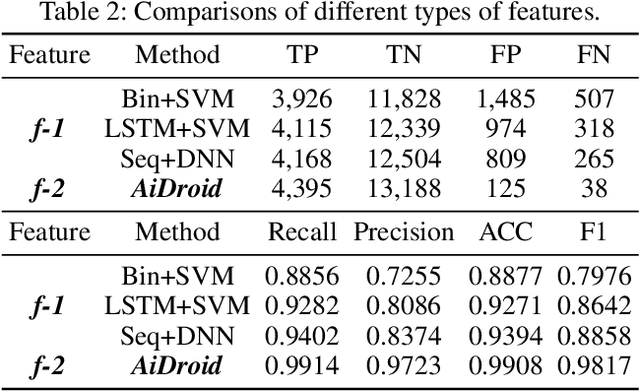
The explosive growth and increasing sophistication of Android malware call for new defensive techniques that are capable of protecting mobile users against novel threats. In this paper, we first extract the runtime Application Programming Interface (API) call sequences from Android apps, and then analyze higher-level semantic relations within the ecosystem to comprehensively characterize the apps. To model different types of entities (i.e., app, API, IMEI, signature, affiliation) and the rich semantic relations among them, we then construct a structural heterogeneous information network (HIN) and present meta-path based approach to depict the relatedness over apps. To efficiently classify nodes (e.g., apps) in the constructed HIN, we propose the HinLearning method to first obtain in-sample node embeddings and then learn representations of out-of-sample nodes without rerunning/adjusting HIN embeddings at the first attempt. Afterwards, we design a deep neural network (DNN) classifier taking the learned HIN representations as inputs for Android malware detection. A comprehensive experimental study on the large-scale real sample collections from Tencent Security Lab is performed to compare various baselines. Promising experimental results demonstrate that our developed system AiDroid which integrates our proposed method outperforms others in real-time Android malware detection. AiDroid has already been incorporated into Tencent Mobile Security product that serves millions of users worldwide.