 Add to Chrome
 Add to Firefox
 Add to Edge
Progress or Regress? Self-Improvement Reversal in Post-training
Jul 06, 2024
Self-improvement through post-training methods such as iterative preference learning has been acclaimed for enhancing the problem-solving capabilities (e.g., mathematical reasoning) of Large Language Models (LLMs) without human intervention. However, as exploration deepens, it becomes crucial to assess whether these improvements genuinely signify progress in solving more challenging problems or if they could lead to unintended regressions. To address this, we propose a comprehensive evaluative framework that goes beyond the superficial pass@1 metric to scrutinize the underlying enhancements of post-training paradigms for self-improvement. Through rigorous experimentation and analysis across diverse problem-solving tasks, the empirical results point out the phenomenon of \emph{self-improvement reversal}, where models showing improved performance across benchmarks will paradoxically exhibit declines in broader, essential capabilities, like output diversity and out-of-distribution (OOD) generalization. These findings indicate that current self-improvement practices through post-training are inadequate for equipping models to tackle more complex problems. Furthermore, they underscore the necessity of our critical evaluation metrics in discerning the \emph{progress or regress} dichotomy for self-improving LLMs.

FRoG: Evaluating Fuzzy Reasoning of Generalized Quantifiers in Large Language Models
Jul 01, 2024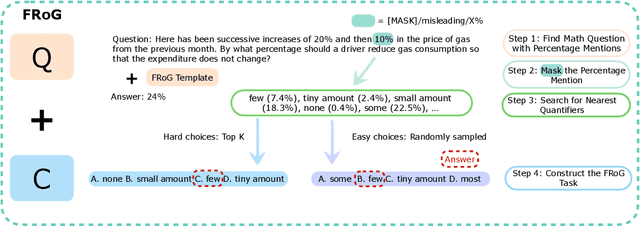
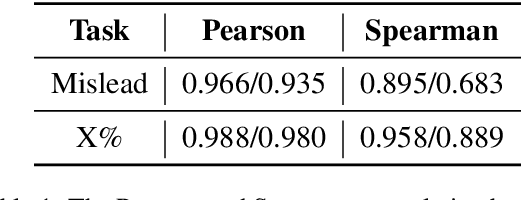
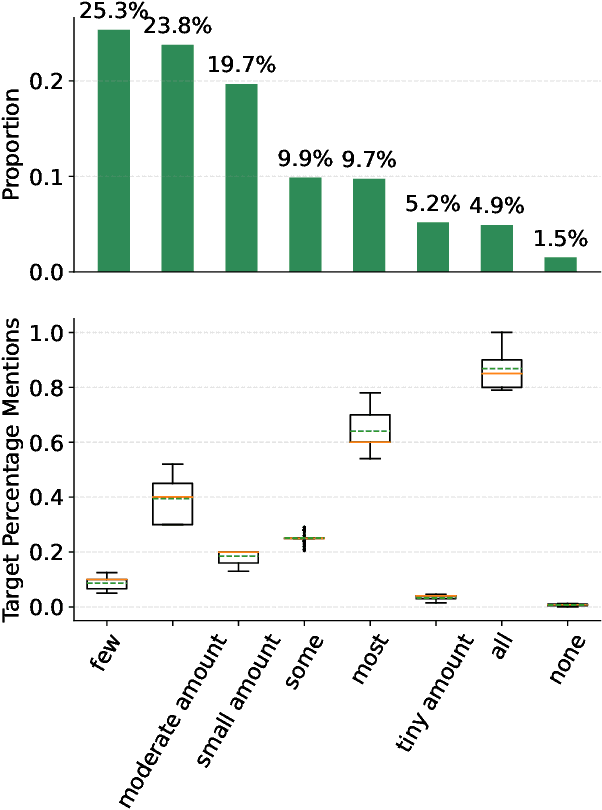
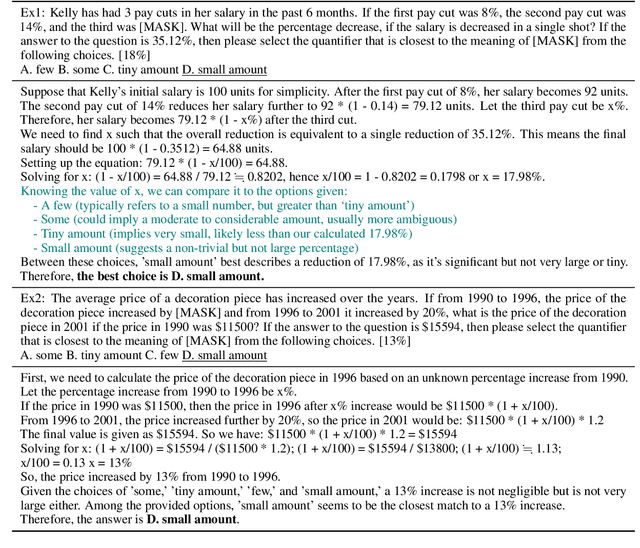
Fuzzy reasoning is vital due to the frequent use of imprecise information in daily contexts. However, the ability of current large language models (LLMs) to handle such reasoning remains largely uncharted. In this paper, we introduce a new benchmark, FRoG, for fuzzy reasoning, featuring real-world mathematical word problems that incorporate generalized quantifiers. Our experimental findings reveal that fuzzy reasoning continues to pose significant challenges for LLMs. Moreover, we find that existing methods designed to enhance reasoning do not consistently improve performance in tasks involving fuzzy logic. Additionally, our results show an inverse scaling effect in the performance of LLMs on FRoG. Interestingly, we also demonstrate that strong mathematical reasoning skills are not necessarily indicative of success on our benchmark.
OlympicArena Medal Ranks: Who Is the Most Intelligent AI So Far?
Jun 26, 2024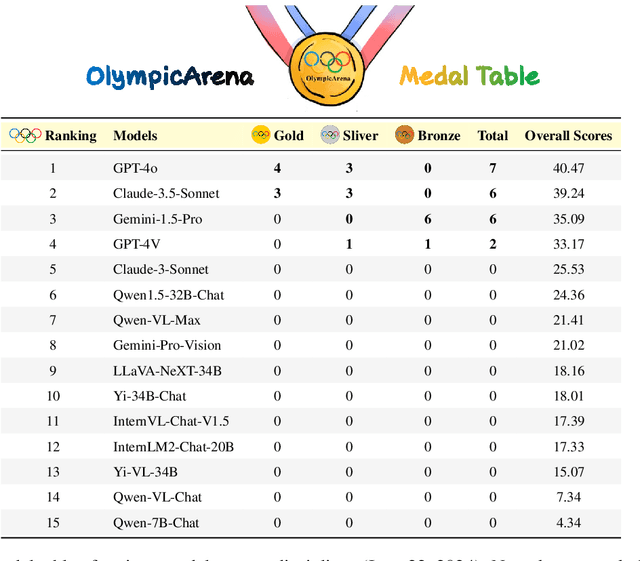
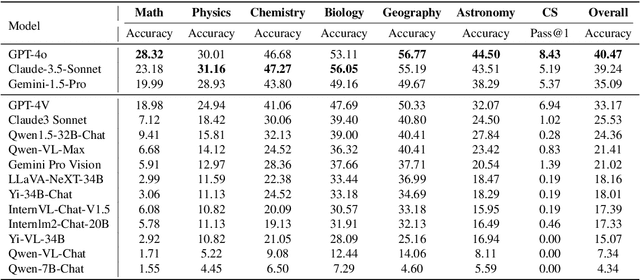
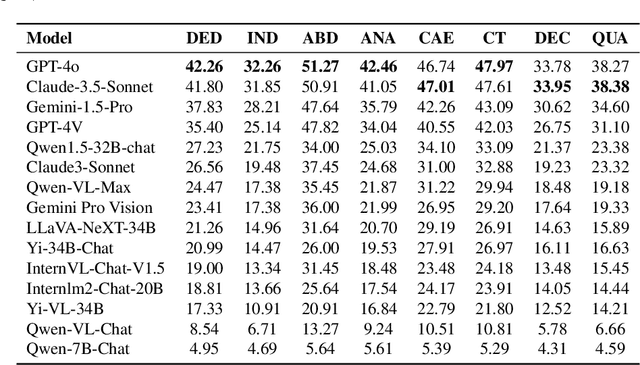
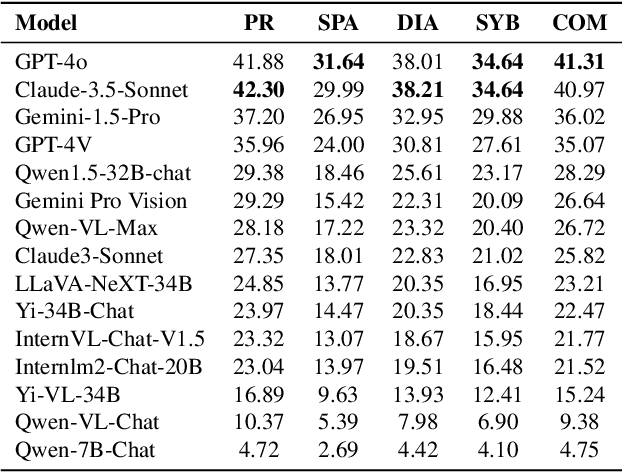
In this report, we pose the following question: Who is the most intelligent AI model to date, as measured by the OlympicArena (an Olympic-level, multi-discipline, multi-modal benchmark for superintelligent AI)? We specifically focus on the most recently released models: Claude-3.5-Sonnet, Gemini-1.5-Pro, and GPT-4o. For the first time, we propose using an Olympic medal Table approach to rank AI models based on their comprehensive performance across various disciplines. Empirical results reveal: (1) Claude-3.5-Sonnet shows highly competitive overall performance over GPT-4o, even surpassing GPT-4o on a few subjects (i.e., Physics, Chemistry, and Biology). (2) Gemini-1.5-Pro and GPT-4V are ranked consecutively just behind GPT-4o and Claude-3.5-Sonnet, but with a clear performance gap between them. (3) The performance of AI models from the open-source community significantly lags behind these proprietary models. (4) The performance of these models on this benchmark has been less than satisfactory, indicating that we still have a long way to go before achieving superintelligence. We remain committed to continuously tracking and evaluating the performance of the latest powerful models on this benchmark (available at https://github.com/GAIR-NLP/OlympicArena).
BeHonest: Benchmarking Honesty of Large Language Models
Jun 19, 2024Previous works on Large Language Models (LLMs) have mainly focused on evaluating their helpfulness or harmlessness. However, honesty, another crucial alignment criterion, has received relatively less attention. Dishonest behaviors in LLMs, such as spreading misinformation and defrauding users, eroding user trust, and causing real-world harm, present severe risks that intensify as these models approach superintelligence levels. Enhancing honesty in LLMs addresses critical deficiencies and helps uncover latent capabilities that are not readily expressed. This underscores the urgent need for reliable methods and benchmarks to effectively ensure and evaluate the honesty of LLMs. In this paper, we introduce BeHonest, a pioneering benchmark specifically designed to assess honesty in LLMs comprehensively. BeHonest evaluates three essential aspects of honesty: awareness of knowledge boundaries, avoidance of deceit, and consistency in responses. Building on this foundation, we designed 10 scenarios to evaluate and analyze 9 popular LLMs on the market, including both closed-source and open-source models from different model families with varied model sizes. Our findings indicate that there is still significant room for improvement in the honesty of LLMs. We also encourage the AI community to prioritize honesty alignment in LLMs. Our benchmark and code can be found at: \url{https://github.com/GAIR-NLP/BeHonest}.
OlympicArena: Benchmarking Multi-discipline Cognitive Reasoning for Superintelligent AI
Jun 18, 2024


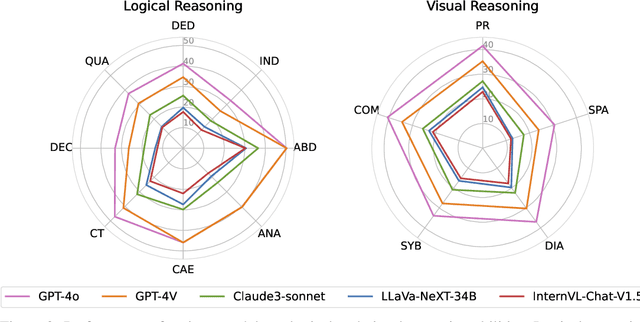
The evolution of Artificial Intelligence (AI) has been significantly accelerated by advancements in Large Language Models (LLMs) and Large Multimodal Models (LMMs), gradually showcasing potential cognitive reasoning abilities in problem-solving and scientific discovery (i.e., AI4Science) once exclusive to human intellect. To comprehensively evaluate current models' performance in cognitive reasoning abilities, we introduce OlympicArena, which includes 11,163 bilingual problems across both text-only and interleaved text-image modalities. These challenges encompass a wide range of disciplines spanning seven fields and 62 international Olympic competitions, rigorously examined for data leakage. We argue that the challenges in Olympic competition problems are ideal for evaluating AI's cognitive reasoning due to their complexity and interdisciplinary nature, which are essential for tackling complex scientific challenges and facilitating discoveries. Beyond evaluating performance across various disciplines using answer-only criteria, we conduct detailed experiments and analyses from multiple perspectives. We delve into the models' cognitive reasoning abilities, their performance across different modalities, and their outcomes in process-level evaluations, which are vital for tasks requiring complex reasoning with lengthy solutions. Our extensive evaluations reveal that even advanced models like GPT-4o only achieve a 39.97% overall accuracy, illustrating current AI limitations in complex reasoning and multimodal integration. Through the OlympicArena, we aim to advance AI towards superintelligence, equipping it to address more complex challenges in science and beyond. We also provide a comprehensive set of resources to support AI research, including a benchmark dataset, an open-source annotation platform, a detailed evaluation tool, and a leaderboard with automatic submission features.
MoPS: Modular Story Premise Synthesis for Open-Ended Automatic Story Generation
Jun 09, 2024A story premise succinctly defines a story's main idea, foundation, and trajectory. It serves as the initial trigger in automatic story generation. Existing sources of story premises are limited by a lack of diversity, uneven quality, and high costs that make them difficult to scale. In response, we introduce Modular Story Premise Synthesis (MoPS) which breaks down story premises into modules like background and persona for automated design and generation. MoPS consists of three phases: (1) Precollect a consistent set of candidates for each module to form a nested dictionary. (2) Extract a key path from the nested dictionary as the premise design. (3) Instruct an LLM to integrate the design into a coherent premise sentence. Thorough evaluations demonstrate that our synthesized premises excel in diversity, fascination, completeness, and originality compared to those induced from large language models and captured from public story datasets. Similarly, the extended novels and scripts generated from our premises also exhibit higher quality. In supplementary materials, we provide the MoPS code suite, along with 7.6k generated premises and 1k extended stories. Code: https://github.com/GAIR-NLP/MoPS.
Prompt Chaining or Stepwise Prompt? Refinement in Text Summarization
Jun 01, 2024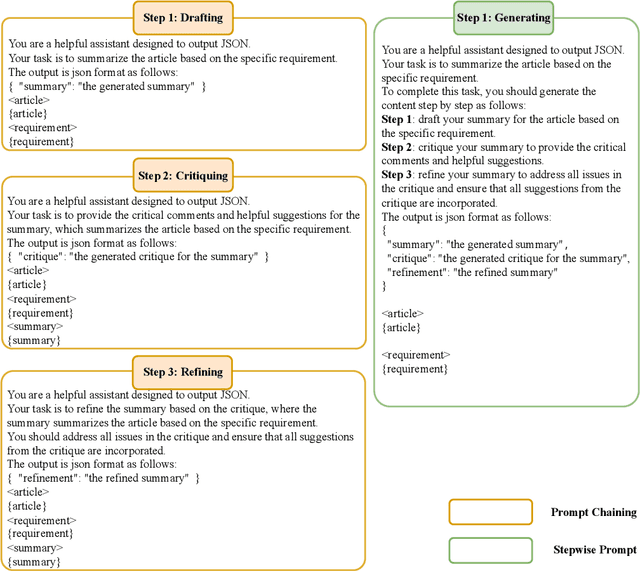
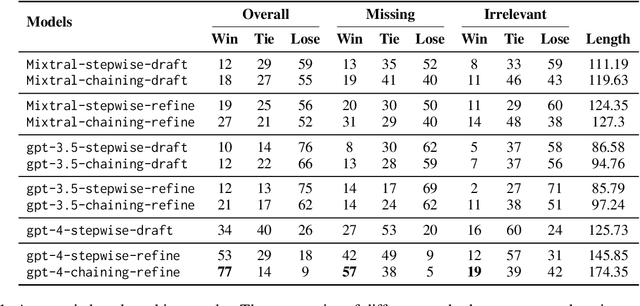
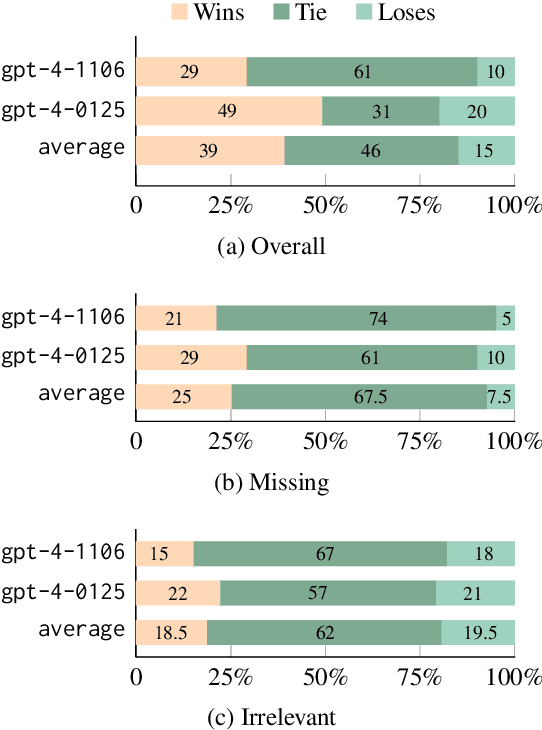
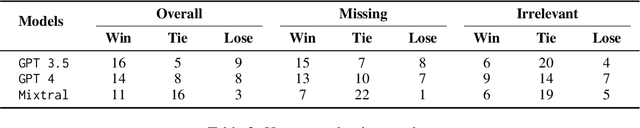
Large language models (LLMs) have demonstrated the capacity to improve summary quality by mirroring a human-like iterative process of critique and refinement starting from the initial draft. Two strategies are designed to perform this iterative process: Prompt Chaining and Stepwise Prompt. Prompt chaining orchestrates the drafting, critiquing, and refining phases through a series of three discrete prompts, while Stepwise prompt integrates these phases within a single prompt. However, the relative effectiveness of the two methods has not been extensively studied. This paper is dedicated to examining and comparing these two methods in the context of text summarization to ascertain which method stands out as the most effective. Experimental results show that the prompt chaining method can produce a more favorable outcome. This might be because stepwise prompt might produce a simulated refinement process according to our various experiments. Since refinement is adaptable to diverse tasks, our conclusions have the potential to be extrapolated to other applications, thereby offering insights that may contribute to the broader development of LLMs.
RefChecker: Reference-based Fine-grained Hallucination Checker and Benchmark for Large Language Models
May 23, 2024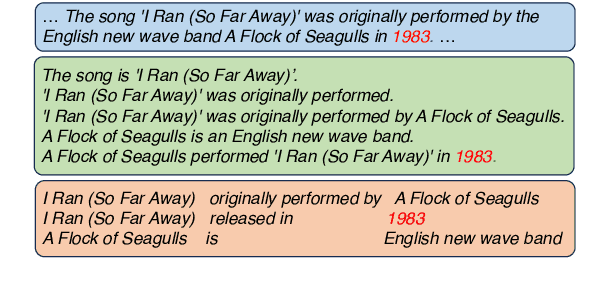


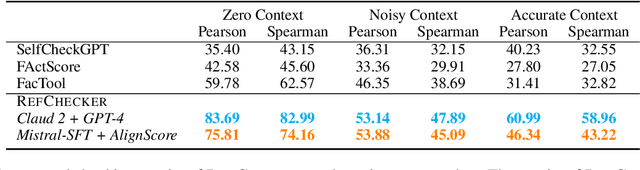
Large Language Models (LLMs) have shown impressive capabilities but also a concerning tendency to hallucinate. This paper presents RefChecker, a framework that introduces claim-triplets to represent claims in LLM responses, aiming to detect fine-grained hallucinations. In RefChecker, an extractor generates claim-triplets from a response, which are then evaluated by a checker against a reference. We delineate three task settings: Zero, Noisy and Accurate Context, to reflect various real-world use cases. We curated a benchmark spanning various NLP tasks and annotated 11k claim-triplets from 2.1k responses by seven LLMs. RefChecker supports both proprietary and open-source models as the extractor and checker. Experiments demonstrate that claim-triplets enable superior hallucination detection, compared to other granularities such as response, sentence and sub-sentence level claims. RefChecker outperforms prior methods by 6.8 to 26.1 points on our benchmark and the checking results of RefChecker are strongly aligned with human judgments. This work is open sourced at https://github.com/amazon-science/RefChecker
Benchmarking Benchmark Leakage in Large Language Models
Apr 29, 2024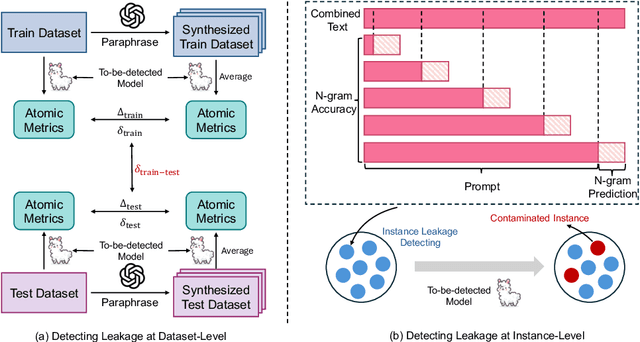
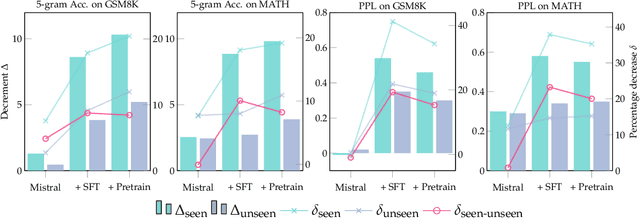
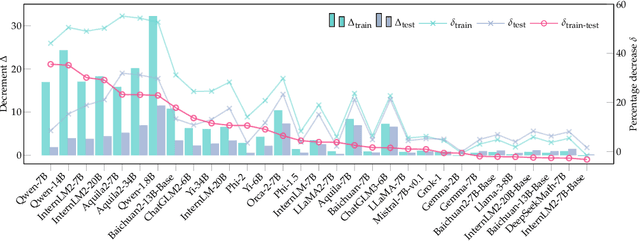
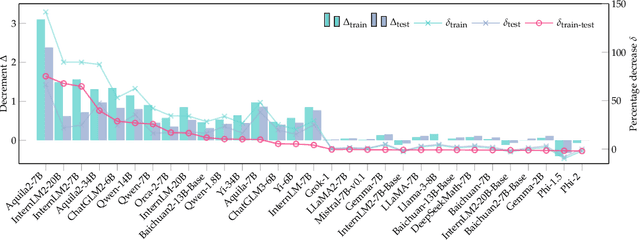
Amid the expanding use of pre-training data, the phenomenon of benchmark dataset leakage has become increasingly prominent, exacerbated by opaque training processes and the often undisclosed inclusion of supervised data in contemporary Large Language Models (LLMs). This issue skews benchmark effectiveness and fosters potentially unfair comparisons, impeding the field's healthy development. To address this, we introduce a detection pipeline utilizing Perplexity and N-gram accuracy, two simple and scalable metrics that gauge a model's prediction precision on benchmark, to identify potential data leakages. By analyzing 31 LLMs under the context of mathematical reasoning, we reveal substantial instances of training even test set misuse, resulting in potentially unfair comparisons. These findings prompt us to offer several recommendations regarding model documentation, benchmark setup, and future evaluations. Notably, we propose the "Benchmark Transparency Card" to encourage clear documentation of benchmark utilization, promoting transparency and healthy developments of LLMs. we have made our leaderboard, pipeline implementation, and model predictions publicly available, fostering future research.
RHanDS: Refining Malformed Hands for Generated Images with Decoupled Structure and Style Guidance
Apr 22, 2024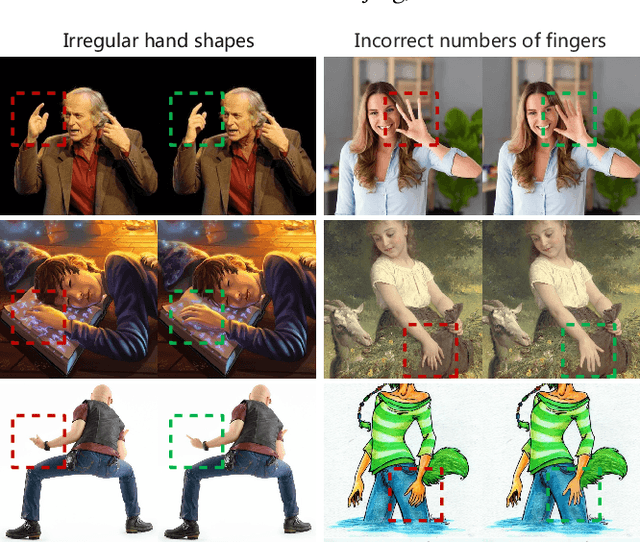
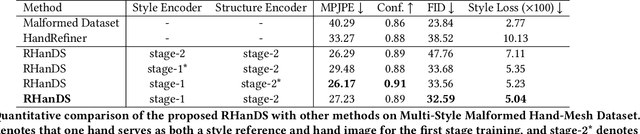
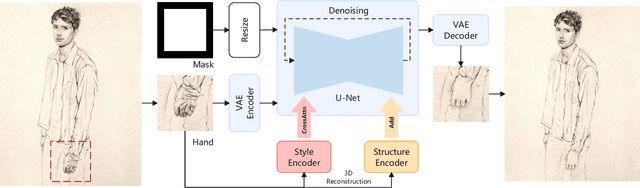
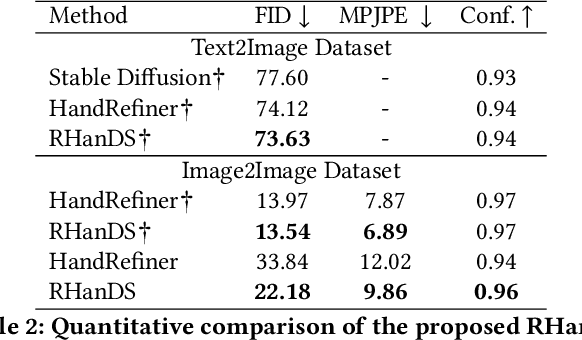
Although diffusion models can generate high-quality human images, their applications are limited by the instability in generating hands with correct structures. Some previous works mitigate the problem by considering hand structure yet struggle to maintain style consistency between refined malformed hands and other image regions. In this paper, we aim to solve the problem of inconsistency regarding hand structure and style. We propose a conditional diffusion-based framework RHanDS to refine the hand region with the help of decoupled structure and style guidance. Specifically, the structure guidance is the hand mesh reconstructed from the malformed hand, serving to correct the hand structure. The style guidance is a hand image, e.g., the malformed hand itself, and is employed to furnish the style reference for hand refining. In order to suppress the structure leakage when referencing hand style and effectively utilize hand data to improve the capability of the model, we build a multi-style hand dataset and introduce a twostage training strategy. In the first stage, we use paired hand images for training to generate hands with the same style as the reference. In the second stage, various hand images generated based on the human mesh are used for training to enable the model to gain control over the hand structure. We evaluate our method and counterparts on the test dataset of the proposed multi-style hand dataset. The experimental results show that RHanDS can effectively refine hands structure- and style- correctly compared with previous methods. The codes and datasets will be available soon.