 Add to Chrome
 Add to Firefox
 Add to Edge
WIDE: Boosting Adaptive LLM Inference via Token-level Dynamic Width Pruning
Jul 30, 2026
Pruning is a promising approach for improving the efficiency of LLMs. Existing static structured pruning methods are hardware-friendly and can deliver practical throughput gains, but their input-agnostic computation allocation often causes substantial accuracy degradation under aggressive sparsity. Recent dynamic sparsity methods improve quality retention by adapting computation to individual inputs, yet they remain largely limited to coarse-grained structural decisions and their practical acceleration under real-world inference scenarios remains challenging. To address these challenges, we present WIDE, the first end-to-end differentiable token-level dynamic width pruning framework designed for both prefill and decode scenarios. WIDE enables fine-grained computation allocation by allowing each token to dynamically select attention-head groups and FFN-channel groups, extending dynamic pruning beyond layer-level decisions to neuron-block-level granularity. Through a two-stage training pipeline, WIDE learns effective token-wise sparse execution patterns and achieves substantially better quality retention than existing approaches. To make such fine-grained dynamic pruning practical, we further propose a pruning--kernel co-design framework that decomposes dynamic sparsity acceleration into mask reordering, hardware-agnostic block-level skipping, and hardware-dependent intra-block skipping, enabling efficient execution across different granularities. At 50% sparsity, WIDE provides 55.1% performance boost when compared to the state-of-the-art dynamic depth pruning under calibration-only settings. Under prefill and decoding inference workloads, WIDE achieves close-to-theoretical kernel-level speedups of up to 1.98x for prefill and 4.95x for decoding, as well as 1.68x and 1.55x end-to-end acceleration. Our code is available at https://github.com/EIT-NLP/LLM-Pruning/tree/main/WIDE.

Beyond FLOPs: Benchmarking Real Inference Acceleration of LLM Pruning under a GEMM-Centric Taxonomy
Jun 08, 2026Pruning has emerged as a dominant paradigm for accelerating large language model (LLM) inference, spanning a broad spectrum of methods that remove computation across tokens, layers, heads, dimensions, and attention patterns. Despite sharing the same objective, these pruning approaches induce fundamentally different execution behaviors, causing realized speedups to depend heavily on hardware and kernel implementations. Consequently, the practical acceleration benefits of different pruning families remain poorly understood. In this work, we introduce a GEMM-centric taxonomy that reorganizes existing pruning methods according to the logical \textbf{M}, \textbf{N}, and \textbf{K} dimensions of general matrix multiplication (GEMM). Leveraging this abstraction, we build a unified benchmarking framework that enables implementation-consistent comparison across the pruning design space and systematically characterizes the acceleration--quality Pareto frontier. Our results show that static depth pruning remains the strongest Pareto-optimal baseline and stays closest to its theoretical acceleration upper bound in memory-bounded scenarios. During prefill, the frontier transitions from static depth at low quality loss (0\%--4\%), to dynamic depth at moderate loss (5\%--16\%), and finally to static width pruning at higher loss levels (17\%--26\%). These findings establish the first unified view of the practical limits of pruning-based LLM acceleration and provide guidance for future pruning research.\footnote{Code is available at https://github.com/EIT-NLP/LLM-Pruning/tree/main/PruningInferSim}
From Static Inference to Dynamic Interaction: Navigating the Landscape of Streaming Large Language Models
Mar 04, 2026Standard Large Language Models (LLMs) are predominantly designed for static inference with pre-defined inputs, which limits their applicability in dynamic, real-time scenarios. To address this gap, the streaming LLM paradigm has emerged. However, existing definitions of streaming LLMs remain fragmented, conflating streaming generation, streaming inputs, and interactive streaming architectures, while a systematic taxonomy is still lacking. This paper provides a comprehensive overview and analysis of streaming LLMs. First, we establish a unified definition of streaming LLMs based on data flow and dynamic interaction to clarify existing ambiguities. Building on this definition, we propose a systematic taxonomy of current streaming LLMs and conduct an in-depth discussion on their underlying methodologies. Furthermore, we explore the applications of streaming LLMs in real-world scenarios and outline promising research directions to support ongoing advances in streaming intelligence. We maintain a continuously updated repository of relevant papers at https://github.com/EIT-NLP/Awesome-Streaming-LLMs.
Results of the 2024 CommonRoad Motion Planning Competition for Autonomous Vehicles
Dec 22, 2025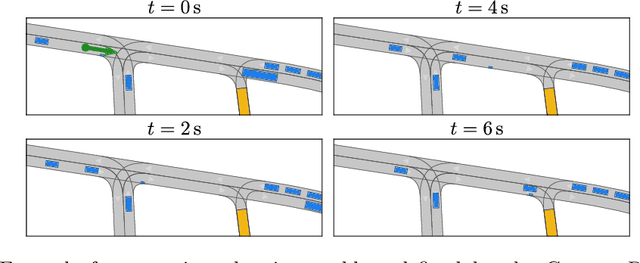

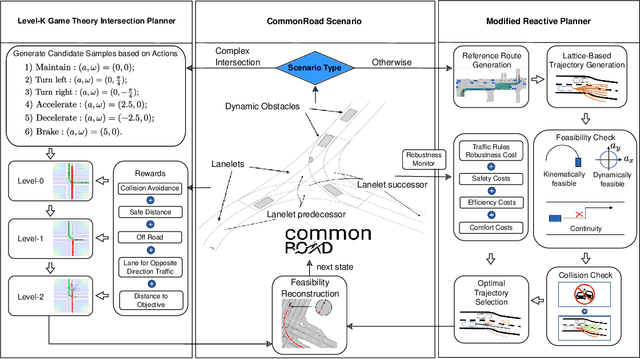
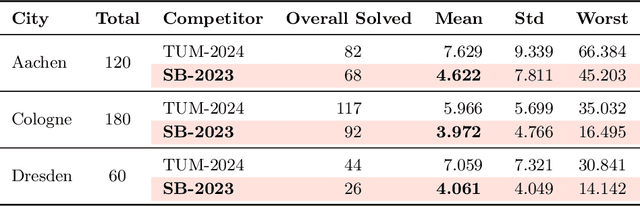
Over the past decade, a wide range of motion planning approaches for autonomous vehicles has been developed to handle increasingly complex traffic scenarios. However, these approaches are rarely compared on standardized benchmarks, limiting the assessment of relative strengths and weaknesses. To address this gap, we present the setup and results of the 4th CommonRoad Motion Planning Competition held in 2024, conducted using the CommonRoad benchmark suite. This annual competition provides an open-source and reproducible framework for benchmarking motion planning algorithms. The benchmark scenarios span highway and urban environments with diverse traffic participants, including passenger cars, buses, and bicycles. Planner performance is evaluated along four dimensions: efficiency, safety, comfort, and compliance with selected traffic rules. This report introduces the competition format and provides a comparison of representative high-performing planners from the 2023 and 2024 editions.