 Add to Chrome
 Add to Firefox
 Add to Edge
MGSA: Multi-granularity Graph Structure Attention for Knowledge Graph-to-Text Generation
Sep 16, 2024

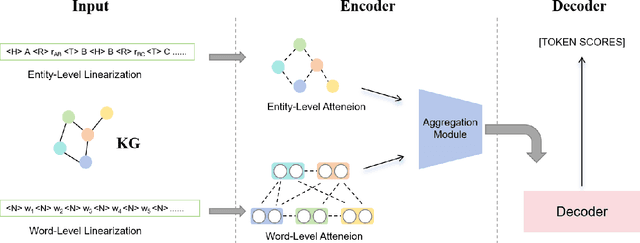
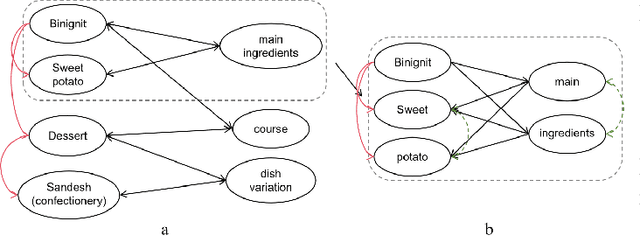
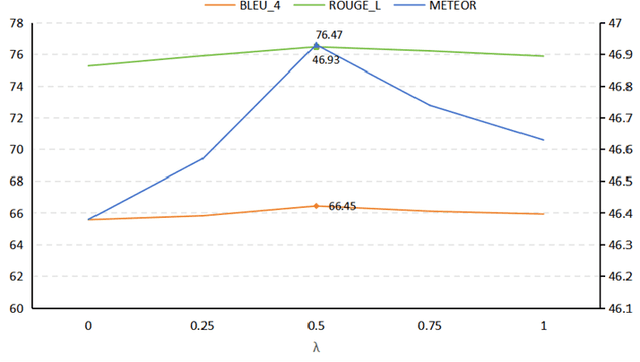
The Knowledge Graph-to-Text Generation task aims to convert structured knowledge graphs into coherent and human-readable natural language text. Recent efforts in this field have focused on enhancing pre-trained language models (PLMs) by incorporating graph structure information to capture the intricate structure details of knowledge graphs. However, most of these approaches tend to capture only single-granularity structure information, concentrating either on the relationships between entities within the original graph or on the relationships between words within the same entity or across different entities. This narrow focus results in a significant limitation: models that concentrate solely on entity-level structure fail to capture the nuanced semantic relationships between words, while those that focus only on word-level structure overlook the broader relationships between original entire entities. To overcome these limitations, this paper introduces the Multi-granularity Graph Structure Attention (MGSA), which is based on PLMs. The encoder of the model architecture features an entity-level structure encoding module, a word-level structure encoding module, and an aggregation module that synthesizes information from both structure. This multi-granularity structure encoding approach allows the model to simultaneously capture both entity-level and word-level structure information, providing a more comprehensive understanding of the knowledge graph's structure information, thereby significantly improving the quality of the generated text. We conducted extensive evaluations of the MGSA model using two widely recognized KG-to-Text Generation benchmark datasets, WebNLG and EventNarrative, where it consistently outperformed models that rely solely on single-granularity structure information, demonstrating the effectiveness of our approach.

SoK: Security and Privacy Risks of Medical AI
Sep 11, 2024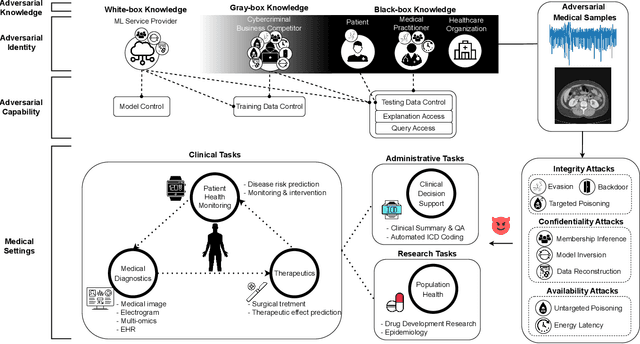
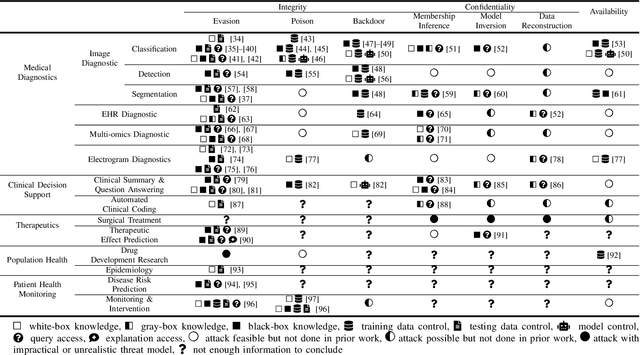
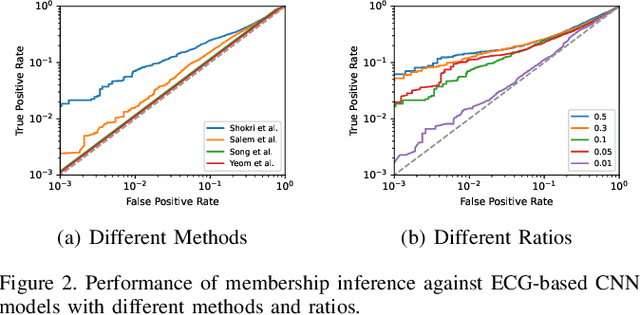
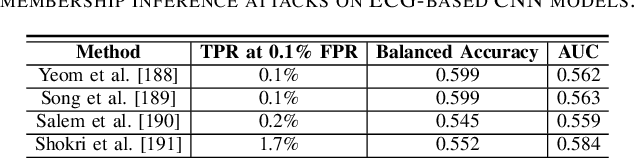
The integration of technology and healthcare has ushered in a new era where software systems, powered by artificial intelligence and machine learning, have become essential components of medical products and services. While these advancements hold great promise for enhancing patient care and healthcare delivery efficiency, they also expose sensitive medical data and system integrity to potential cyberattacks. This paper explores the security and privacy threats posed by AI/ML applications in healthcare. Through a thorough examination of existing research across a range of medical domains, we have identified significant gaps in understanding the adversarial attacks targeting medical AI systems. By outlining specific adversarial threat models for medical settings and identifying vulnerable application domains, we lay the groundwork for future research that investigates the security and resilience of AI-driven medical systems. Through our analysis of different threat models and feasibility studies on adversarial attacks in different medical domains, we provide compelling insights into the pressing need for cybersecurity research in the rapidly evolving field of AI healthcare technology.
Self-Supervised Multi-Scale Network for Blind Image Deblurring via Alternating Optimization
Sep 02, 2024Blind image deblurring is a challenging low-level vision task that involves estimating the unblurred image when the blur kernel is unknown. In this paper, we present a self-supervised multi-scale blind image deblurring method to jointly estimate the latent image and the blur kernel via alternating optimization. In the image estimation step, we construct a multi-scale generator network with multiple inputs and multiple outputs to collaboratively estimate latent images at various scales, supervised by an image pyramid constructed from only the blurred image. This generator places architectural constraints on the network and avoids the need for mathematical expression of image priors. In the blur kernel estimation step, the blur kernel at each scale is independently estimated with a direct solution to a quadratic regularized least-squares model for its flexible adaptation to the proposed multi-scale generator for image estimation. Thanks to the collaborative estimation across multiple scales, our method avoids the computationally intensive coarse-to-fine propagation and additional image deblurring processes used in traditional mathematical optimization-based methods. Quantitative and qualitative experimental results on synthetic and realistic datasets demonstrate the superior performance of our method, especially for handling large and real-world blurs.
Data Exposure from LLM Apps: An In-depth Investigation of OpenAI's GPTs
Aug 23, 2024LLM app ecosystems are quickly maturing and supporting a wide range of use cases, which requires them to collect excessive user data. Given that the LLM apps are developed by third-parties and that anecdotal evidence suggests LLM platforms currently do not strictly enforce their policies, user data shared with arbitrary third-parties poses a significant privacy risk. In this paper we aim to bring transparency in data practices of LLM apps. As a case study, we study OpenAI's GPT app ecosystem. We develop an LLM-based framework to conduct the static analysis of natural language-based source code of GPTs and their Actions (external services) to characterize their data collection practices. Our findings indicate that Actions collect expansive data about users, including sensitive information prohibited by OpenAI, such as passwords. We find that some Actions, including related to advertising and analytics, are embedded in multiple GPTs, which allow them to track user activities across GPTs. Additionally, co-occurrence of Actions exposes as much as 9.5x more data to them, than it is exposed to individual Actions. Lastly, we develop an LLM-based privacy policy analysis framework to automatically check the consistency of data collection by Actions with disclosures in their privacy policies. Our measurements indicate that the disclosures for most of the collected data types are omitted in privacy policies, with only 5.8% of Actions clearly disclosing their data collection practices.
Class-aware and Augmentation-free Contrastive Learning from Label Proportion
Aug 13, 2024
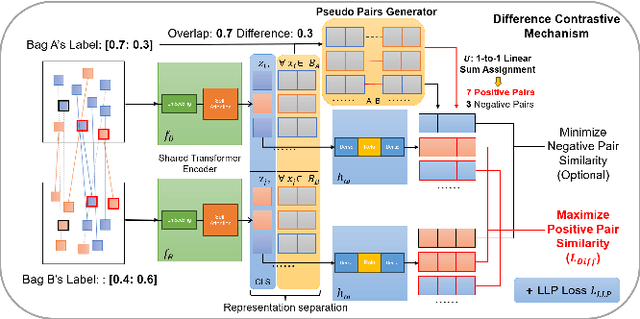

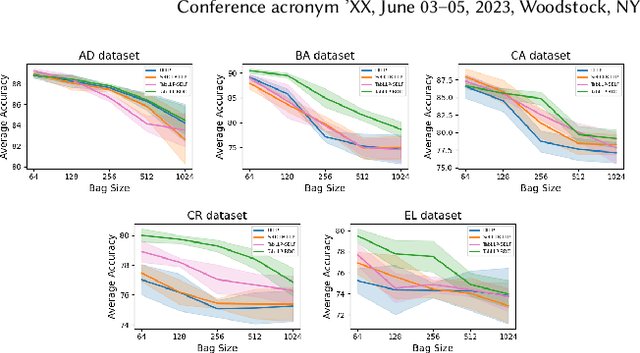
Learning from Label Proportion (LLP) is a weakly supervised learning scenario in which training data is organized into predefined bags of instances, disclosing only the class label proportions per bag. This paradigm is essential for user modeling and personalization, where user privacy is paramount, offering insights into user preferences without revealing individual data. LLP faces a unique difficulty: the misalignment between bag-level supervision and the objective of instance-level prediction, primarily due to the inherent ambiguity in label proportion matching. Previous studies have demonstrated deep representation learning can generate auxiliary signals to promote the supervision level in the image domain. However, applying these techniques to tabular data presents significant challenges: 1) they rely heavily on label-invariant augmentation to establish multi-view, which is not feasible with the heterogeneous nature of tabular datasets, and 2) tabular datasets often lack sufficient semantics for perfect class distinction, making them prone to suboptimality caused by the inherent ambiguity of label proportion matching. To address these challenges, we propose an augmentation-free contrastive framework TabLLP-BDC that introduces class-aware supervision (explicitly aware of class differences) at the instance level. Our solution features a two-stage Bag Difference Contrastive (BDC) learning mechanism that establishes robust class-aware instance-level supervision by disassembling the nuance between bag label proportions, without relying on augmentations. Concurrently, our model presents a pioneering multi-task pretraining pipeline tailored for tabular-based LLP, capturing intrinsic tabular feature correlations in alignment with label proportion distribution. Extensive experiments demonstrate that TabLLP-BDC achieves state-of-the-art performance for LLP in the tabular domain.
EUDA: An Efficient Unsupervised Domain Adaptation via Self-Supervised Vision Transformer
Jul 31, 2024Unsupervised domain adaptation (UDA) aims to mitigate the domain shift issue, where the distribution of training (source) data differs from that of testing (target) data. Many models have been developed to tackle this problem, and recently vision transformers (ViTs) have shown promising results. However, the complexity and large number of trainable parameters of ViTs restrict their deployment in practical applications. This underscores the need for an efficient model that not only reduces trainable parameters but also allows for adjustable complexity based on specific needs while delivering comparable performance. To achieve this, in this paper we introduce an Efficient Unsupervised Domain Adaptation (EUDA) framework. EUDA employs the DINOv2, which is a self-supervised ViT, as a feature extractor followed by a simplified bottleneck of fully connected layers to refine features for enhanced domain adaptation. Additionally, EUDA employs the synergistic domain alignment loss (SDAL), which integrates cross-entropy (CE) and maximum mean discrepancy (MMD) losses, to balance adaptation by minimizing classification errors in the source domain while aligning the source and target domain distributions. The experimental results indicate the effectiveness of EUDA in producing comparable results as compared with other state-of-the-art methods in domain adaptation with significantly fewer trainable parameters, between 42% to 99.7% fewer. This showcases the ability to train the model in a resource-limited environment. The code of the model is available at: https://github.com/A-Abedi/EUDA.
The Llama 3 Herd of Models
Jul 31, 2024Modern artificial intelligence (AI) systems are powered by foundation models. This paper presents a new set of foundation models, called Llama 3. It is a herd of language models that natively support multilinguality, coding, reasoning, and tool usage. Our largest model is a dense Transformer with 405B parameters and a context window of up to 128K tokens. This paper presents an extensive empirical evaluation of Llama 3. We find that Llama 3 delivers comparable quality to leading language models such as GPT-4 on a plethora of tasks. We publicly release Llama 3, including pre-trained and post-trained versions of the 405B parameter language model and our Llama Guard 3 model for input and output safety. The paper also presents the results of experiments in which we integrate image, video, and speech capabilities into Llama 3 via a compositional approach. We observe this approach performs competitively with the state-of-the-art on image, video, and speech recognition tasks. The resulting models are not yet being broadly released as they are still under development.
Enhancing Question Answering on Charts Through Effective Pre-training Tasks
Jun 14, 2024
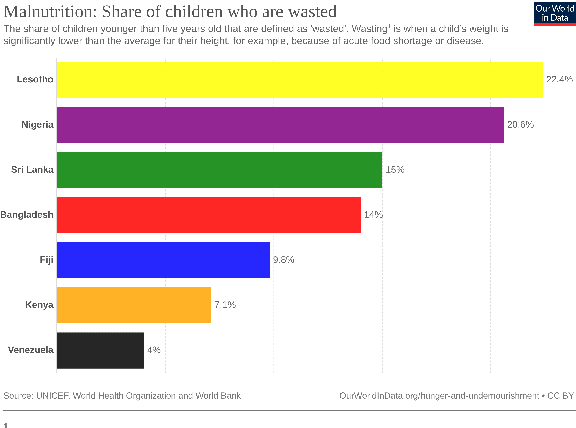
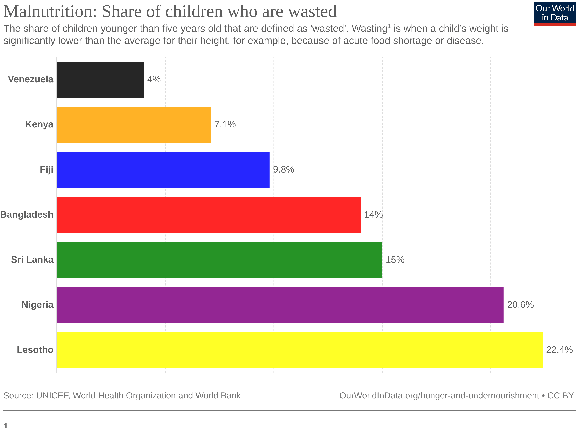

To completely understand a document, the use of textual information is not enough. Understanding visual cues, such as layouts and charts, is also required. While the current state-of-the-art approaches for document understanding (both OCR-based and OCR-free) work well, a thorough analysis of their capabilities and limitations has not yet been performed. Therefore, in this work, we addresses the limitation of current VisualQA models when applied to charts and plots. To investigate shortcomings of the state-of-the-art models, we conduct a comprehensive behavioral analysis, using ChartQA as a case study. Our findings indicate that existing models particularly underperform in answering questions related to the chart's structural and visual context, as well as numerical information. To address these issues, we propose three simple pre-training tasks that enforce the existing model in terms of both structural-visual knowledge, as well as its understanding of numerical questions. We evaluate our pre-trained model (called MatCha-v2) on three chart datasets - both extractive and abstractive question datasets - and observe that it achieves an average improvement of 1.7% over the baseline model.
Active ML for 6G: Towards Efficient Data Generation, Acquisition, and Annotation
Jun 05, 2024This paper explores the integration of active machine learning (ML) for 6G networks, an area that remains under-explored yet holds potential. Unlike passive ML systems, active ML can be made to interact with the network environment. It actively selects informative and representative data points for training, thereby reducing the volume of data needed while accelerating the learning process. While active learning research mainly focuses on data annotation, we call for a network-centric active learning framework that considers both annotation (i.e., what is the label) and data acquisition (i.e., which and how many samples to collect). Moreover, we explore the synergy between generative artificial intelligence (AI) and active learning to overcome existing limitations in both active learning and generative AI. This paper also features a case study on a mmWave throughput prediction problem to demonstrate the practical benefits and improved performance of active learning for 6G networks. Furthermore, we discuss how the implications of active learning extend to numerous 6G network use cases. We highlight the potential of active learning based 6G networks to enhance computational efficiency, data annotation and acquisition efficiency, adaptability, and overall network intelligence. We conclude with a discussion on challenges and future research directions for active learning in 6G networks, including development of novel query strategies, distributed learning integration, and inclusion of human- and machine-in-the-loop learning.
STHN: Deep Homography Estimation for UAV Thermal Geo-localization with Satellite Imagery
May 30, 2024Accurate geo-localization of Unmanned Aerial Vehicles (UAVs) is crucial for a variety of outdoor applications including search and rescue operations, power line inspections, and environmental monitoring. The vulnerability of Global Navigation Satellite Systems (GNSS) signals to interference and spoofing necessitates the development of additional robust localization methods for autonomous navigation. Visual Geo-localization (VG), leveraging onboard cameras and reference satellite maps, offers a promising solution for absolute localization. Specifically, Thermal Geo-localization (TG), which relies on image-based matching between thermal imagery with satellite databases, stands out by utilizing infrared cameras for effective night-time localization. However, the efficiency and effectiveness of current TG approaches, are hindered by dense sampling on satellite maps and geometric noises in thermal query images. To overcome these challenges, in this paper, we introduce STHN, a novel UAV thermal geo-localization approach that employs a coarse-to-fine deep homography estimation method. This method attains reliable thermal geo-localization within a 512-meter radius of the UAV's last known location even with a challenging 11% overlap between satellite and thermal images, despite the presence of indistinct textures in thermal imagery and self-similar patterns in both spectra. Our research significantly enhances UAV thermal geo-localization performance and robustness against the impacts of geometric noises under low-visibility conditions in the wild. The code will be made publicly available.